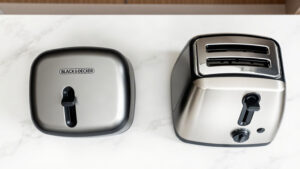
A 2-slice toaster typically lasts between 6 and 10 years with regular household use, though budget models often give out in 3 to 5 years and high-end ones like a Dualit Vario can push well past 15. The single biggest factor isn’t the brand — it’s how the toaster is maintained and whether it gets cleaned regularly. Crumb buildup is the number one silent killer, and most people never empty the tray until smoke starts rising from the slots.
Safety First: Never shake crumbs out over the sink or near water — toasters carry residual electrical charge even when unplugged if the capacitors haven’t fully discharged. Always unplug your toaster, wait 60 seconds, and empty the crumb tray over a bin before any cleaning or inspection. If you see sparking, smell burning plastic, or notice the bread carriage sticking mid-cycle, stop using the unit immediately and don’t attempt to repair heating elements yourself.
Quick Facts: 2-Slice Toaster Lifespan
- Average lifespan: 6–10 years for mid-range models, 3–5 for budget picks, 10–20+ for premium brands like Dualit
- Most common cause of early failure: crumb buildup igniting near the heating elements, or a faulty thermostat that either over-browns or stops browning altogether
- Toaster heating elements typically run between 300°F and 500°F — learn more about how hot a toaster gets and why it matters for food safety
- Cleaning the crumb tray once a week (if you use it daily) can add years to your toaster’s life
- Repair is rarely worth it — a new mid-range 2-slice toaster costs $25–$60, and replacement heating elements aren’t sold separately for most consumer models
What “Average Lifespan” Actually Means in Practice
Let me be specific, because “6 to 10 years” is a pretty wide range and I’ve seen both ends up close. I have a Black+Decker 2-slice that I bought around 2015 and it’s still going, though it now toasts unevenly — the left slot runs hotter than the right. That’s a thermostat issue, and honestly it’s been that way for about two years. I just rotate my bread. Slightly annoying, but it still works.
On the other end, I tested a no-name budget toaster I picked up for $18 at a discount store. It lasted about 14 months. The lever started catching around month 10, the browning was inconsistent from the start, and by month 14 it wouldn’t stay latched at all. Total junk.
The general rule I’ve landed on: spend at least $35 on a 2-slice toaster if you use it daily. Below that, you’re essentially renting one.
How Brand Tier Affects Longevity
| Brand Tier | Example Models | Expected Lifespan | Price Range | Repairable? |
|---|---|---|---|---|
| Budget | Proctor Silex, generic store brands | 1–4 years | $15–$30 | Rarely worth it |
| Mid-Range | Hamilton Beach, Black+Decker, Cuisinart | 5–9 years | $30–$65 | Sometimes (lever, tray) |
| Premium | Breville, KitchenAid | 7–12 years | $60–$120 | Limited, but parts exist |
| Prosumer | Dualit Vario, Magimix | 15–25+ years | $150–$300+ | Yes — spares sold separately |
The Dualit Vario deserves a separate mention. It’s designed to be fully serviced — you can buy replacement heating elements, springs, and timers directly from Dualit. It’s one of the only 2-slice toasters on the consumer market where repair actually makes financial sense. The Dualit Lite, though, is a different story. It looks the same but uses cheaper internals, and in my experience those tend to show problems by year four or five. Worth knowing before you assume all Dualits are made equal.
The Things That Kill a Toaster Early
Toasters don’t usually die dramatically. No bang, no obvious moment. They just gradually get worse until one day the bread pops up completely pale or the lever won’t stay down at all. Here’s what’s actually driving that.
Crumb Buildup
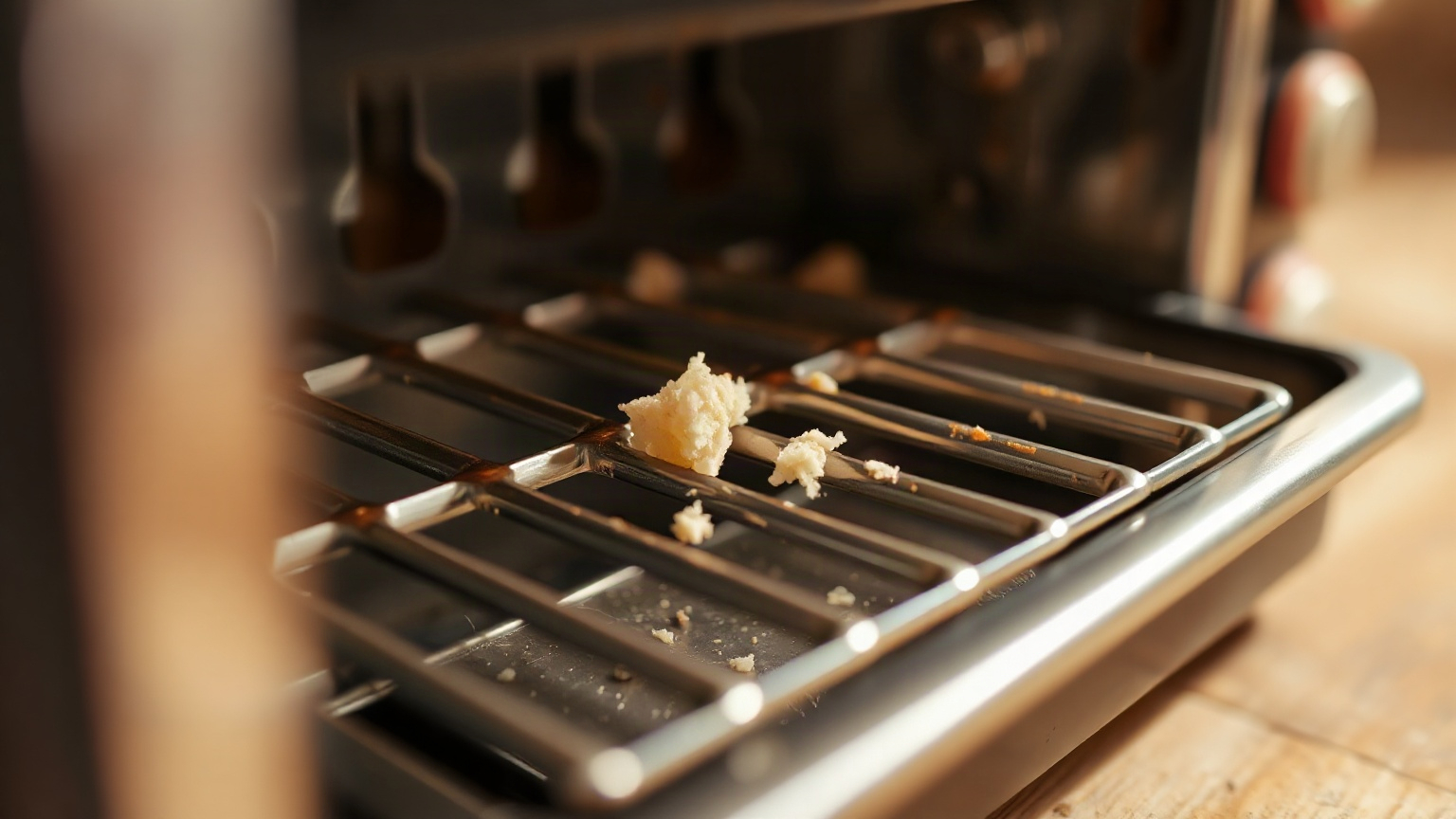
This is the big one. Most people empty the crumb tray when they notice smoke. That’s way too late. Crumbs that collect near the lower heating element can smolder, cause uneven heat distribution, and over time warp the element itself. If you use your toaster every morning, the tray should come out and be emptied at least once a week. Takes 10 seconds. I started doing this after I noticed a faint burning smell on my Black+Decker and found the tray absolutely packed — we’re talking a solid centimeter of compressed crumbs.
Thermostat Wear
The thermostat controls how long the heating cycle runs before the carriage pops up. On a new toaster set to “3” (the middle of most 1–6 or 1–7 dials), you should get lightly golden toast in roughly 2–3 minutes. If that same setting is suddenly taking 4–5 minutes, or the bread is coming out burnt on the same setting it’s used for a year, the thermostat is drifting. It’s not recalibratable on most consumer models. That’s usually the beginning of the end.
Slow toasting and uneven browning are both thermostat symptoms — but they can also mean a heating element is partially failing, which is a different problem. A partially failed element usually shows as one side of the bread toasting and the other side barely warming. If you see that, the toaster’s done.
The Lever Mechanism
Springs weaken. The latch that holds the carriage down during toasting gets sticky with grease and crumb dust over time. A lever that won’t stay latched is sometimes fixable with a careful cleaning — unplug the unit, use a soft dry brush to clear the mechanism, check for anything jamming the latch. But if the spring itself is broken or the latch contact is bent, it’s more or less done. You can find a replacement 2-slice toaster for less than the cost of a repair shop visit.
Moisture Damage
This one’s underrated. Toasters stored near the sink or in humid kitchens corrode faster internally. I’ve cracked open a few older toasters out of curiosity and the ones that lived near the stove or sink always show more rust on the internal chassis. It doesn’t kill them immediately, but it accelerates everything else. Keep yours somewhere dry, away from steam. And for what it’s worth — never, ever put anything with wet batter in a pop-up toaster. That’s what toaster ovens are for.
Signs Your Toaster Is Failing (Before It Fully Quits)
Catching these early won’t necessarily save the toaster, but it’ll at least prevent a burnt-toast situation at 7am when you’re already late.
- Inconsistent browning: One side pale, one side dark — classic element degradation
- Taking longer than usual: If you’ve had to creep up from setting 3 to setting 5 over the past year to get the same result, the thermostat is drifting
- Lever not staying down: Latch mechanism failing — sometimes cleanable, often not
- Sparking or visible arcing: Stop using it immediately. A crumb touching a live element can cause a brief spark — that’s an immediate fire risk
- Burning smell that isn’t crumbs: Plastic or electrical smell means internal insulation is breaking down. Replace it
Worth adding: some of these symptoms show up in brand new toasters too. I’ve seen 2-slice models fail within 2–3 months — usually cheap ones, usually the latch mechanism. A toaster that breaks within the first 90 days is almost certainly a manufacturing defect, not a use problem, and should be returned under warranty. If it’s out of warranty after that short a time… buy a better one.
How to Actually Make Your Toaster Last Longer
None of this is complicated. But I’ll be honest — I ignored most of it for years.
- Empty the crumb tray weekly if you toast daily, monthly if you’re a weekend toaster
- Shake the toaster gently (unplugged, over a bin) every month to dislodge crumbs that miss the tray
- Don’t force oversized items into the slots — bagels that are too thick stress the carriage mechanism and can warp the slots over time
- Store it somewhere with low humidity, away from the stovetop
- Use a toaster dust cover if your kitchen is near a window that gets condensation or you live somewhere humid
One thing I never did but probably should: checking that the toaster is on a stable, level surface. A toaster that tips or vibrates repeatedly can cause the internal wiring connections to loosen at the solder points over years of use. Sounds minor. Adds up.
The Edge Case Nobody Talks About: Hard Water and Mineral Deposits
Here’s something the support forums and FAQ pages almost never mention. If you live in a hard water area and you’re toasting things like frozen waffles or refrigerator-cold bread regularly, condensation forms inside the slots more than you’d think. Over time, mineral deposits from that moisture build up on the element coils. It looks like white residue if you shine a light in there. It doesn’t cause immediate failure, but it creates hot spots on the element that cause uneven toasting — and eventually that localized heat stress causes the element wire to snap.
I noticed this on a Cuisinart 2-slice I was testing. The right slot started toasting lighter than the left around year four, despite the elements looking visually intact. Shining a flashlight in revealed white buildup on about a third of the right element. There’s no practical fix for this short of replacing the element, which isn’t worth doing on a mid-range toaster. But knowing it’s possible means you can slow it down — letting cold items sit at room temperature for a few minutes before toasting reduces condensation significantly.
Should You Repair or Replace?
Almost always replace. I say that reluctantly, because I hate unnecessary waste, but the repair math doesn’t work for most 2-slice toasters. A new mid-range model costs $35–$60. A small appliance repair shop charges $40–$80 in labor alone, before parts. There’s no world where that pencils out.
The exception is if you own a Dualit Vario or a similar prosumer toaster. Those have element replacement kits sold directly by the manufacturer for around $20–$30, and swapping them out is genuinely doable with no electrical experience — just unplug it, let it cool, follow the instructions. I’d also consider fixing a premium Breville model if the issue is just the lever mechanism, since it’s often a spring replacement that costs almost nothing.
For everything else? Buy a decent replacement and move on. If you’re upgrading, it might be worth considering whether a compact toaster oven makes more sense for your kitchen — check out the best mini toaster ovens if you want something that handles more than just bread.
The Bottom Line
A 2-slice toaster should last you at least 6 years if you buy mid-range and look after it. Spend more and you might get 10–15. Spend less and you might be replacing it before your bread subscription renews. The single most useful habit is the crumb tray — genuinely. It takes no time and it makes a real difference.
If your toaster is toasting unevenly, running slow, or smelling off, those are signs it’s on borrowed time. A toaster that sparks or smells like burning plastic needs to go immediately — that’s not a “wait and see” situation. And if you’re buying new, avoid anything under $30 unless it’s a temporary fix. Your morning toast is too important to cheap out on.
For more on how toasters work internally and what those temperatures are actually doing to your bread, the how hot a toaster gets article breaks it down in detail. And if you’re reheating leftovers in yours and wondering why it’s not working great — it’s not supposed to. That’s what a toaster oven is for.
Frequently Asked Questions
How long does a 2-slice toaster last before it stops working?
Most 2-slice toasters last between 6 and 10 years with regular use and basic maintenance. Budget models often fail within 3 to 5 years, while premium brands like Dualit Vario are designed to last 15 to 25 years with part replacements. The biggest variables are build quality, how often you clean the crumb tray, and whether you avoid forcing oversized items into the slots.
Why does my toaster take too long to toast all of a sudden?
Slow toasting usually means the thermostat is drifting — it’s no longer cutting off the heating cycle at the right point, so the bread sits longer before the carriage pops up. It can also signal a partially failing heating element that’s producing less heat than it should. Neither issue is practically repairable on a mid-range toaster, so if you’re creeping up settings to get the same result, start shopping for a replacement.
Is it safe to leave a toaster plugged in all the time?
Technically, modern toasters don’t draw power when they’re not in use, so there’s no ongoing energy cost to leaving them plugged in. The safety concern is more about accumulated crumbs near live contacts — a particularly crumb-heavy toaster left plugged in is a small but real fire risk. Unplugging when not in use is the safer habit, especially if you have a toaster that doesn’t get cleaned regularly.
What is the most common reason a toaster stops working?
The lever latch mechanism is the single most common failure point on budget and mid-range toasters — springs weaken, the latch gets sticky, and eventually the bread won’t stay down. The second most common cause is thermostat failure, which shows up as inconsistent or very slow toasting. Heating element failure is less common but happens, and it usually appears as one-sided toasting where only part of the bread browns.
How do I know when it’s time to replace my toaster?
Replace your toaster if you notice sparking, a burning plastic smell, or the lever won’t stay latched after cleaning. Uneven toasting that can’t be fixed by cleaning the crumb tray and elements is also a sign the appliance is past its useful life. Any toaster that’s more than 10 years old and showing performance issues isn’t worth repairing — a decent replacement costs less than a service call.

Written by
Emma founded Toastera to turn vague appliance advice into clear, researched, safety-first guidance on toasters and toaster ovens.
Free: the Toaster Oven Cheat Sheet
Get the printable cheat sheet (temps, cook times & safety tips) plus new recipes. No spam, unsubscribe anytime.