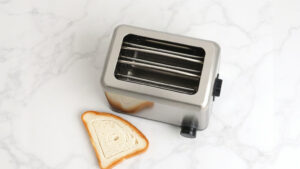
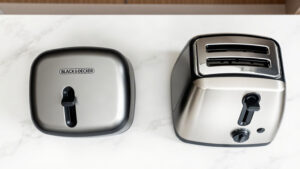
A pop-up toaster uses roughly 800 to 1,800 watts total, but per slice that works out to somewhere between 0.02 and 0.05 kWh for a typical 2–3 minute toast cycle. The exact number depends on how many slots the toaster has, which browning setting you pick, and the wattage of the specific model. At average U.S. electricity rates (around 16 cents per kWh), you’re spending less than a penny to toast a single slice — though it adds up if you’re running a 4-slice toaster on dark setting every morning.
Safety First: Never operate a toaster near water, with a frayed cord, or while it’s pushed against a cabinet or curtain. Toaster heating elements run at extremely high temperatures and can ignite nearby materials within seconds. Always unplug before removing crumbs from the tray. If your toaster sparks, smells like burning plastic, or the carriage stops popping up reliably, stop using it immediately — a malfunctioning toaster is a genuine fire risk, not a “monitor it” situation.
Quick Facts: Toaster Wattage at a Glance
- Most 2-slice toasters run between 800–1,200 watts; 4-slice models pull 1,400–1,800 watts
- Per-slice wattage on a 2-slot toaster: roughly 400–600 watts per slot when both are in use
- A 2-minute toast cycle at 1,000W consumes about 0.033 kWh — around half a cent at typical U.S. rates
- The browning setting changes cycle time, not wattage — darker toast just runs the heating element longer
- Toasting one slice in a 2-slot toaster doesn’t cut the wattage in half — both heating elements usually stay on
The Real Difference Between Rated Wattage and Per-Slice Wattage
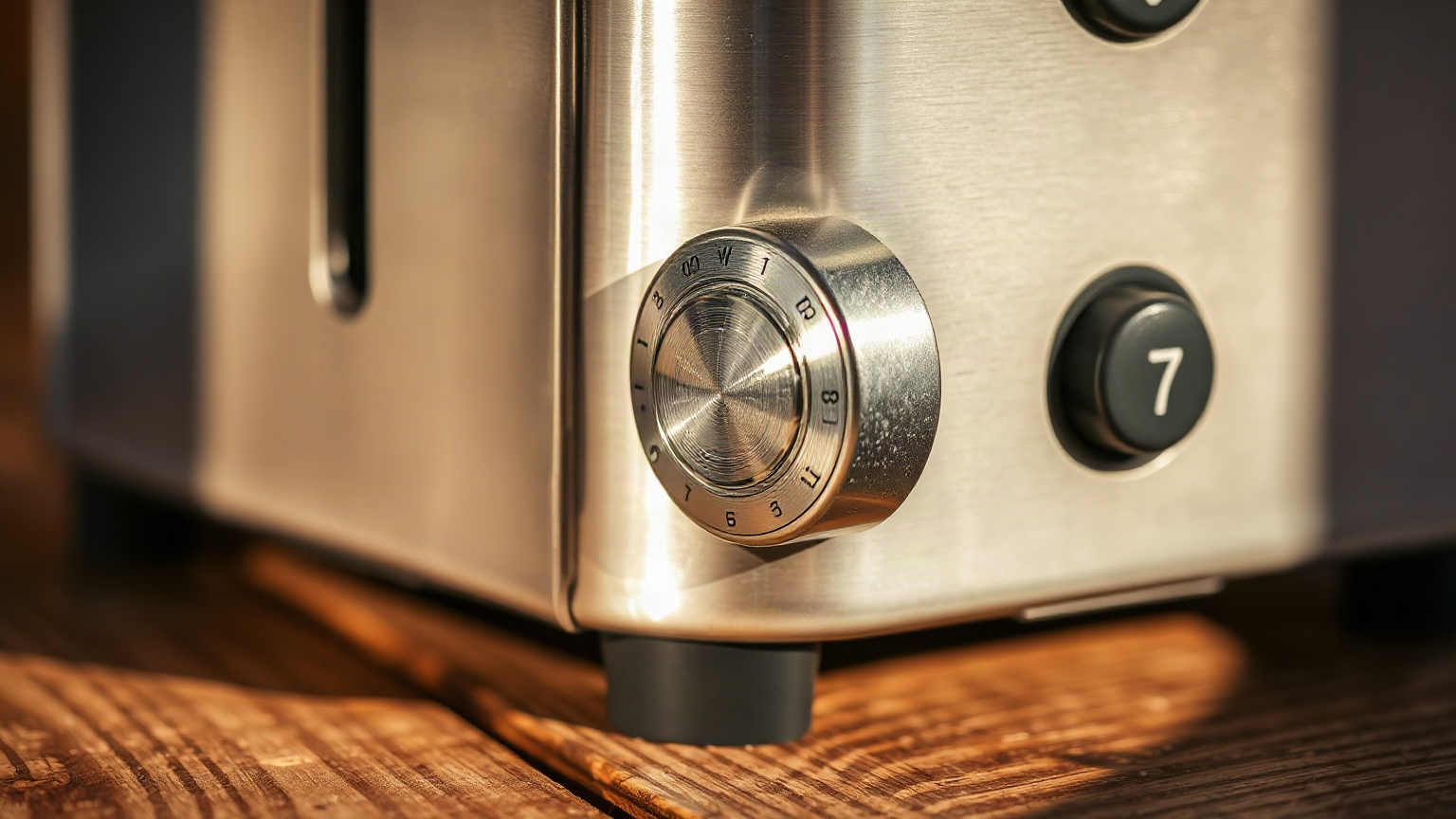
Here’s what tripped me up the first time I started paying attention to this: the wattage printed on the bottom of your toaster is the total draw for the whole appliance, not per slot. My Hamilton Beach 2-slice toaster says 900W on the label. That’s both slots combined. One slice still pulls close to 900W, because both heating elements stay active whether you’ve got bread in one slot or two.
So “per slice” wattage is a bit of a loaded question. What actually matters for your electricity bill is watts × time. And that’s where browning settings become the real variable.
How browning settings affect energy use
I ran my toaster on a kill-a-watt meter through a few settings — nothing fancy, just curious. The wattage reading barely budged between setting 2 and setting 6. What changed was how long the cycle ran. Light toast: about 75 seconds. Dark toast: closer to 3 minutes. That’s a 2.4x difference in energy consumed from the lightest to darkest setting, just from cycle length.
So if you’re trying to cut costs, going a shade lighter actually does save energy. Not a life-changing amount, but it’s real. And for what it’s worth, I think most people toast a shade too dark anyway — slightly under is better for flavor on good bread, especially sourdough.
Wattage by Slot Count: 2-Slice vs. 4-Slice Toasters
Slot count matters a lot more than most people realize. A 4-slice toaster doesn’t just have more slots — it has more heating elements, a bigger chassis, and a noticeably higher power draw.
| Toaster Type | Typical Wattage | Avg. Cycle Time (Medium Setting) | Energy Per Full Load (kWh) | Cost Per Full Load* |
|---|---|---|---|---|
| 2-slice, budget | 800–900W | ~2 min | 0.027–0.030 kWh | ~$0.004–$0.005 |
| 2-slice, mid-range | 900–1,200W | ~2 min | 0.030–0.040 kWh | ~$0.005–$0.006 |
| 4-slice, standard | 1,400–1,600W | ~2.5 min | 0.058–0.067 kWh | ~$0.009–$0.011 |
| 4-slice, high-end | 1,600–1,800W | ~2.5 min | 0.067–0.075 kWh | ~$0.011–$0.012 |
So toasting 2 slices in a 4-slice toaster versus a 2-slice toaster costs you roughly twice as much per session. Not a huge deal in absolute terms, but if you’re buying a 4-slice toaster for a 1-person household, you’re just wasting money and counter space. I see that all the time and I genuinely don’t understand it.
What about toasting just one slice in a 2-slot toaster?
This is the edge case most energy guides skip entirely. You’d think using one slot out of two would cut the draw in half. It doesn’t. Both heating elements on either side of each slot fire together as one circuit on virtually all consumer pop-up toasters. Toasting one slice still pulls the full rated wattage. You just get the same energy use for half the output.
Some higher-end 4-slice toasters (like certain Cuisinart models) have a “2-slice” mode that actually does shut off the rear set of slots, reducing power draw. Worth checking your manual if you regularly only toast one or two pieces on a 4-slice unit. That feature saves more than most people expect over time.
How to Calculate Your Toaster’s Actual Energy Cost
The formula isn’t complicated. Energy (kWh) = Watts ÷ 1,000 × Hours. Then multiply by your local electricity rate.
Say your toaster pulls 1,100W and your cycle runs 2.5 minutes (0.0417 hours):
1,100 ÷ 1,000 × 0.0417 = 0.046 kWh per session. At $0.16/kWh, that’s about 0.74 cents. Per slice (2 slices toasted), that’s roughly 0.37 cents per slice.
Do that every day for a year and you’re looking at about $2.70 annually. So no, your toaster isn’t why your electricity bill is high. But I find the numbers interesting anyway.
If you want to know the actual wattage of your specific toaster, a Kill-A-Watt electricity usage monitor is the most reliable way. Plug your toaster into it and run a full cycle. The label wattage is often a maximum draw, not an average.
Standby power: does an unplugged toaster matter?
Pop-up toasters draw zero standby power when idle. Unlike a toaster oven with a digital clock or keep-warm function, a basic pop-up toaster has no electronics sitting in wait. Unplugging it when not in use is good practice for fire safety, but it’s not saving you measurable electricity. That’s worth knowing before you start obsessively unplugging everything in your kitchen.
Pop-Up Toaster vs. Toaster Oven: Energy Per Slice Compared
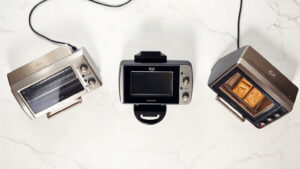
This comparison genuinely surprises people. A toaster oven typically runs 1,200–1,800 watts and takes 4–6 minutes to toast bread properly (longer if it’s not preheated). A pop-up toaster does the same job in 90 seconds to 3 minutes at similar or lower wattage. Per slice, the pop-up toaster wins on energy efficiency every single time for simple toast.
That said, I still think a good toaster oven is worth having for everything else it does. If you’re reheating food in a toaster oven, it destroys a microwave for texture on leftovers. And if you’re interested in a compact version, the best mini toaster ovens can actually bridge the gap pretty well.
But for just toast? Use the pop-up. It’s faster, uses less energy per cycle, and it doesn’t heat up your whole kitchen on a July morning.
For more context on how your toaster generates that heat in the first place, check out this breakdown of how hot a toaster gets inside — the element temperatures are honestly higher than most people expect.
Which Toasters Are Most Energy Efficient? A Quick Model Reality Check
Most pop-up toasters aren’t rated for energy efficiency the way larger appliances are, but wattage and cycle time give you a decent picture. A few observations from models I’ve tested or have solid data on:
Hamilton Beach 2-Slice (22633) — pulls around 850W, consistently quick cycles. Boring, reliable, low draw. My personal preference for a basic 2-slice setup. You can find current pricing and reviews on Hamilton Beach 2-slice toasters on Amazon.
Cuisinart CPT-435 — 4-slice unit rated at 1,800W with a dedicated 2-slice mode. If you use that mode consistently, you’re dropping actual draw significantly. Good toaster, possibly more toaster than most households need.
Breville BTA720XL — around 1,500W for 2 slices, which is high for a 2-slicer. The “A Bit More” button (their term for a second short cycle) adds maybe 20–30 seconds of extra draw. Nice toaster, but you’re paying a premium in both purchase price and wattage for marginally better browning.
Honestly? For energy efficiency per slice, the basic 800–900W 2-slice toasters win. The higher-wattage models justify themselves on toast quality and speed, not efficiency. If you want to keep the draw low and you only ever toast 2 slices, don’t buy a 4-slice toaster. That’s really the whole story.
For a broader look at energy use in compact cooking appliances, the U.S. Department of Energy has a useful appliance energy guide that puts small kitchen appliances in context.
The Bottom Line on Toaster Wattage
A 2-slice pop-up toaster uses somewhere between 800 and 1,200 watts total, and for a typical medium-setting cycle, you’re burning about 0.025 to 0.040 kWh per session — which is fractions of a cent per slice. The browning setting changes your energy use more than anything else, because darker toast equals longer cycle equals more electricity, not higher wattage. And if you’re toasting one slice in a two-slot toaster, you’re pulling full wattage regardless.
None of this is going to change your electricity bill in any meaningful way. But if you’re buying a new toaster with efficiency in mind, stick with a 2-slice model in the 800–1,000W range, skip the 4-slicer if you don’t need it, and don’t leave it plugged in near anything flammable. That’s really the practical takeaway here.
Frequently Asked Questions
How many watts does a 2-slice toaster use per slice?
A 2-slice toaster typically pulls 800–1,200 watts total for the full appliance, not per individual slot. Since both heating elements run simultaneously regardless of how many slices are loaded, each slice effectively shares that total draw. For a 2-minute cycle at 1,000W, you’re using about 0.033 kWh per session — roughly 0.017 kWh per slice.
Does a darker toast setting use more electricity?
Yes, but not because the wattage goes up — the cycle just runs longer. Your toaster pulls the same wattage on setting 2 as setting 6; setting 6 simply keeps the heating element on for more time. Going from a light setting (~75 seconds) to a dark setting (~3 minutes) can more than double your energy use per cycle.
How much does it cost to run a toaster every day for a year?
At the U.S. average electricity rate of about $0.16/kWh, a 1,000W toaster used once daily for a 2-minute cycle costs approximately $1.90–$2.80 per year. That’s assuming one full session per day. Even heavy daily use is unlikely to exceed $5–$6 annually for a standard 2-slice model.
Does a pop-up toaster use electricity when it’s plugged in but not toasting?
No. A basic pop-up toaster has no electronics drawing standby power — no clock, no display, no idle circuit. When the lever is up and nothing is toasting, the circuit is open and draw is zero. Unplugging it is smart for fire safety, but it won’t show up on your electricity bill.
Is a toaster or toaster oven more energy efficient for making toast?
A pop-up toaster is more energy efficient for making toast specifically. It toasts 2 slices in 90 seconds to 3 minutes using 800–1,200W. A toaster oven takes 4–6 minutes at 1,200–1,800W and often needs preheat time on top of that. For basic toast, the pop-up uses less energy and is faster — the toaster oven’s advantages show up for everything else.

Written by
Emma founded Toastera to turn vague appliance advice into clear, researched, safety-first guidance on toasters and toaster ovens.
Free: the Toaster Oven Cheat Sheet
Get the printable cheat sheet (temps, cook times & safety tips) plus new recipes. No spam, unsubscribe anytime.