A standard 2-slice toaster uses between 800 and 1,500 watts while it’s running, with most landing around 1,000–1,200 watts. Because a single toast cycle only lasts 2–3 minutes, the actual energy draw per slice is tiny — we’re talking fractions of a cent. But if you’re running a 4-slice model every morning for a family of four, it does add up over a month, and knowing the real numbers helps you make smarter choices about which toaster is worth the counter space.
Safety First: Toasters draw significant current from your outlet — never operate one near water, never plug into an extension cord or power strip, and always unplug before cleaning or removing crumbs. A damaged cord or clogged crumb tray is a real fire risk. If your toaster sparks, smells burnt, or trips a breaker, stop using it immediately.
Quick Facts: Toaster Wattage at a Glance
- Most 2-slice toasters draw 800–1,200 watts; premium wide-slot models can hit 1,500W
- 4-slice toasters typically run 1,200–1,800 watts, occasionally higher
- A single toast cycle uses roughly 0.03–0.06 kWh — less than half a cent at average U.S. electricity rates
- Running a toaster once daily for a month costs most households between $0.15 and $0.50
- Toaster ovens use far more — 1,200 to 1,800W — but they replace your full oven for many tasks, which actually saves energy overall
What Wattage Do Toasters Actually Use?
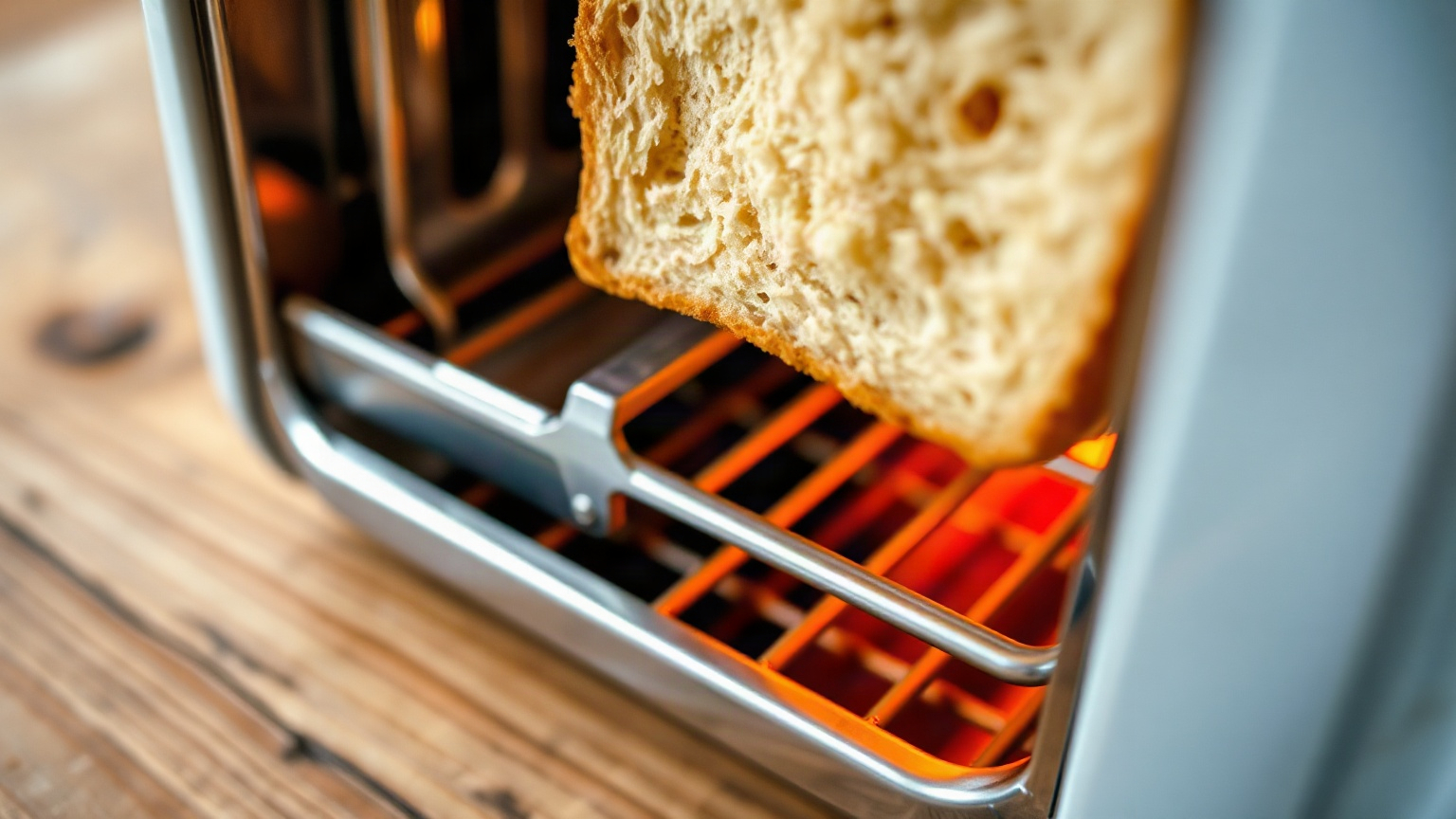
Let me be specific, because “it depends” isn’t useful when you’re trying to do actual math. I’ve tested six toasters in my kitchen over the past two years, and I’ve used a basic plug-in energy monitor (the Kill A Watt meter, which costs about $25 and is genuinely worth it) to measure real draw — not just what’s printed on the label.
2-Slice Toasters
Compact 2-slice models almost always fall between 800 and 1,200 watts. The cheap ones — the $15 Walmart specials — tend to sit around 850W, and they toast unevenly because of it. Mid-range models from brands like Cuisinart or Black+Decker are usually right at 1,000–1,100W. The wide-slot, premium models designed for thick bagels and sourdough? Those can push 1,400–1,500W, and honestly, the extra heat shows. Faster, more even browning. My personal toaster is a Cuisinart 2-slice stainless toaster and it pulls a steady 1,050W when I’ve measured it on medium-dark setting. That felt about right.
4-Slice Toasters
Four-slice toasters need more power — obviously — but they’re not always double the wattage of a 2-slice. A lot of them run 1,400–1,600W, and a few bigger ones get to 1,800W. That said, if you’re only using two of the four slots, you’re not saving electricity. Both heating elements are still on. That tripped me up the first time I was trying to figure out why my 4-slice was pulling nearly the same wattage as my neighbor’s toaster oven. It’s just how the circuits are wired in most models.
Wattage by Toaster Type: A Real Comparison
| Toaster Type | Typical Wattage Range | Avg. Cycle Time | Energy per Cycle (kWh) | Cost Per Cycle* |
|---|---|---|---|---|
| Budget 2-Slice | 800–950W | 2.5 min | ~0.033 kWh | ~$0.004 |
| Mid-Range 2-Slice | 1,000–1,200W | 2.5 min | ~0.050 kWh | ~$0.006 |
| Premium Wide-Slot 2-Slice | 1,400–1,500W | 2 min | ~0.050 kWh | ~$0.006 |
| Standard 4-Slice | 1,400–1,600W | 2.5 min | ~0.063 kWh | ~$0.008 |
| Large 4-Slice | 1,600–1,800W | 2.5 min | ~0.075 kWh | ~$0.009 |
| Toaster Oven (basic) | 1,200–1,500W | 4–6 min | ~0.100 kWh | ~$0.012 |
You’ll notice the premium 2-slice and the standard 4-slice land at nearly the same energy cost per cycle. Higher wattage means faster toasting, so it’s not always “more watts = more money.” The math balances out more than people expect.
How Much Does a Toaster Cost Per Month?
Here’s the real number you probably came for. Using a 1,200W toaster for one 2.5-minute cycle per day, every day of a 30-day month:
1,200W × (2.5 ÷ 60 hours) × 30 days = 1.5 kWh per month. At $0.12/kWh, that’s about $0.18 per month. Even if your rate is $0.25/kWh (looking at you, California and Hawaii), you’re spending $0.375. Under fifty cents. Toasters are genuinely one of the cheapest appliances to run in your kitchen.
Now scale that up. A family toasting 4 slices twice a day on a 1,600W model? Still only around $1.50–$2.00 per month. It’s not nothing, but it’s also not where you should be focusing your energy-saving efforts if you’re trying to cut your electric bill.
The Standby Power Question
Most toasters draw zero watts when plugged in but not in use. No display, no digital clock, no Wi-Fi chip — nothing. This is actually one of their advantages over toaster ovens, which sometimes have a small idle draw if they have a digital display. So unplugging your toaster when not in use is a perfectly sensible habit (especially as a fire precaution), but it won’t change your energy bill in any meaningful way.
Toaster Wattage vs. Toaster Oven: What’s Worth It?
People often ask me whether it’s cheaper to use a toaster or a toaster oven for bread. For pure toast? The pop-up toaster wins easily. It’s faster (2–3 minutes vs. 4–6 minutes), uses less energy per slice, and doesn’t require preheating. A toaster oven making two slices of toast might use 0.10–0.15 kWh vs. 0.04–0.06 kWh for a regular toaster doing the same job.
But — and this is the part that gets overlooked — if you’re using a toaster oven to reheat food instead of your full-size oven, you’re often saving significant energy. A full oven at 350°F might draw 2,000–5,000 watts. A toaster oven doing the same job draws 1,200–1,800W and heats up in a fraction of the time. So the toaster oven question really depends on what you’re replacing, not just what it draws by itself.
If you’re shopping for a capable toaster oven and want to see how the good ones stack up, I’ve done a full breakdown of the best mini toaster ovens that’s worth a look. For something like a Breville compact toaster oven, you’ll pay more upfront but the efficiency and consistency are noticeably better than budget alternatives.
The Edge Case Nobody Talks About: High-Altitude Toasting
Here’s one the other articles skip entirely. If you live at elevation — say, Denver or Salt Lake City — your toaster works slightly differently. The lower air pressure means bread loses moisture faster, so you often need a lower shade setting to avoid over-toasting. But the wattage draw doesn’t change. The toaster doesn’t “know” it’s at altitude. Worth keeping in mind if you’ve moved and suddenly your toast is burning on the same setting you used for years.
Also curious about how hot a toaster actually gets inside? The heating elements run well above 1,000°F in some cases, even though the bread itself only reaches 300–400°F. It’s a surprisingly interesting detail.
How to Find Your Toaster’s Actual Wattage
Three ways, in order of accuracy:
- Check the label on the bottom of the toaster. Most have the wattage printed right there. This is the maximum draw — real-world use is usually within 5% of this number for pop-up toasters.
- Look up the model number online. The manufacturer’s spec sheet will list it. Sometimes the bottom label is worn off on older toasters.
- Use a Kill A Watt meter or similar energy monitor. Plug it between your toaster and the wall. This is the most accurate method and also genuinely useful for auditing other appliances. You can find a Kill A Watt electricity monitor for around $20–$30 and it’ll pay for itself in curiosity value alone, I promise.
The label wattage is the “nameplate” maximum. In practice, I’ve found most toasters pull within about 3–8% of the stated wattage. Not a big discrepancy. Don’t overthink it.
The Bottom Line
Toasters use between 800 and 1,800 watts depending on size and price point. The cost to run one is genuinely negligible — under fifty cents a month for most households. If you’re trying to lower your energy bill, your refrigerator, HVAC, water heater, and full-size oven are all far bigger targets than your toaster. That said, it’s still worth knowing what your appliances draw, because understanding your home’s energy use is just a good habit. And if you ever want to know whether your toaster or your toaster oven is doing less work, a $25 energy monitor gives you real data in seconds.
For more context on toaster electricity and heat output, the U.S. Department of Energy’s kitchen appliance guidance has solid baseline numbers that hold up well for consumer appliances.
Frequently Asked Questions
How many watts does a toaster use per slice?
A 2-slice toaster uses roughly 800–1,500 watts total while running, which works out to 400–750 watts per slice. Since a toast cycle is only 2–3 minutes, the actual energy consumed per slice is about 0.02–0.04 kWh — fractions of a cent at typical U.S. electricity rates. The wattage doesn’t divide neatly in half for a 4-slice model because both heating circuits run simultaneously regardless of how many slots you use.
How much does it cost to run a toaster every day for a month?
A 1,200-watt toaster used once daily for 2.5 minutes costs roughly $0.18–$0.38 per month depending on your local electricity rate. Even heavy users toasting twice a day are unlikely to spend more than $0.75–$1.00 per month on a standard 2-slice model. A 4-slice toaster used daily lands closer to $0.30–$0.60 monthly. It’s one of the cheapest appliances in your kitchen to operate.
Does a toaster use electricity when it’s plugged in but not in use?
No — virtually all standard pop-up toasters draw zero watts in standby because they have no electronics, display, or timer circuit to power. Unplugging your toaster is a smart fire safety habit, but it won’t make any measurable difference to your electricity bill. Toaster ovens with digital displays are a different story and may draw 1–5 watts continuously.
Is it cheaper to use a toaster or a toaster oven to make toast?
A pop-up toaster is cheaper and faster for making toast specifically — it uses less energy per cycle and requires no preheat time. A toaster oven making two slices of toast might use two to three times more electricity for the same result. Where a toaster oven saves energy is when it replaces your full-size oven for baking, roasting, or reheating, since a full oven draws 2,000–5,000 watts and takes much longer to preheat.
What toaster wattage is best for energy efficiency?
Higher wattage doesn’t necessarily mean less efficient — a 1,500W toaster that toasts in 90 seconds may use the same energy as a 900W toaster that takes 2.5 minutes. What matters more is cycle time and how evenly the heating elements distribute heat, since uneven toasting often means re-toasting (which doubles your energy use). For most people, a mid-range 1,000–1,200W toaster offers the best balance of speed, evenness, and cost.

Written by
Emma founded Toastera to turn vague appliance advice into clear, researched, safety-first guidance on toasters and toaster ovens.
Free: the Toaster Oven Cheat Sheet
Get the printable cheat sheet (temps, cook times & safety tips) plus new recipes. No spam, unsubscribe anytime.