To convert a regular oven casserole recipe to a toaster oven, reduce the temperature by 25°F and start checking for doneness about 25% earlier than the original recipe states. Toaster ovens run hotter and more unevenly than full-size ovens because the heating elements are much closer to the food. That proximity means faster browning on top and, if you’re not careful, an undercooked center.
Safety First: Toaster oven heating elements get extremely hot and sit just inches from your food and cookware. Always use oven mitts rated for high heat, never place pans directly on the heating element or leave foil touching the oven walls, and keep the toaster oven at least 4 inches from any surrounding surfaces while it’s running to prevent fire or burns.
Quick Takeaways Before You Preheat
- Reduce temperature by 25°F from whatever your original recipe calls for
- Start checking doneness at 75% of the original cook time
- Use a light-colored metal or ceramic pan — dark pans absorb too much heat from the close elements
- Cover with foil for the first two-thirds of cooking, then uncover to brown
- Position the rack in the center — not the top slot, which is almost always too close to the top element
I’ve burned the top of more casseroles than I care to admit. My first attempt converting a green bean casserole recipe in a Breville Smart Oven went fine until the last ten minutes, when the crispy onion topping went from golden to charcoal. The recipe said 350°F for 45 minutes. I should’ve set it to 325°F and checked it at 30. Now I always do.
Why Toaster Ovens Cook Differently (And Why That Matters)
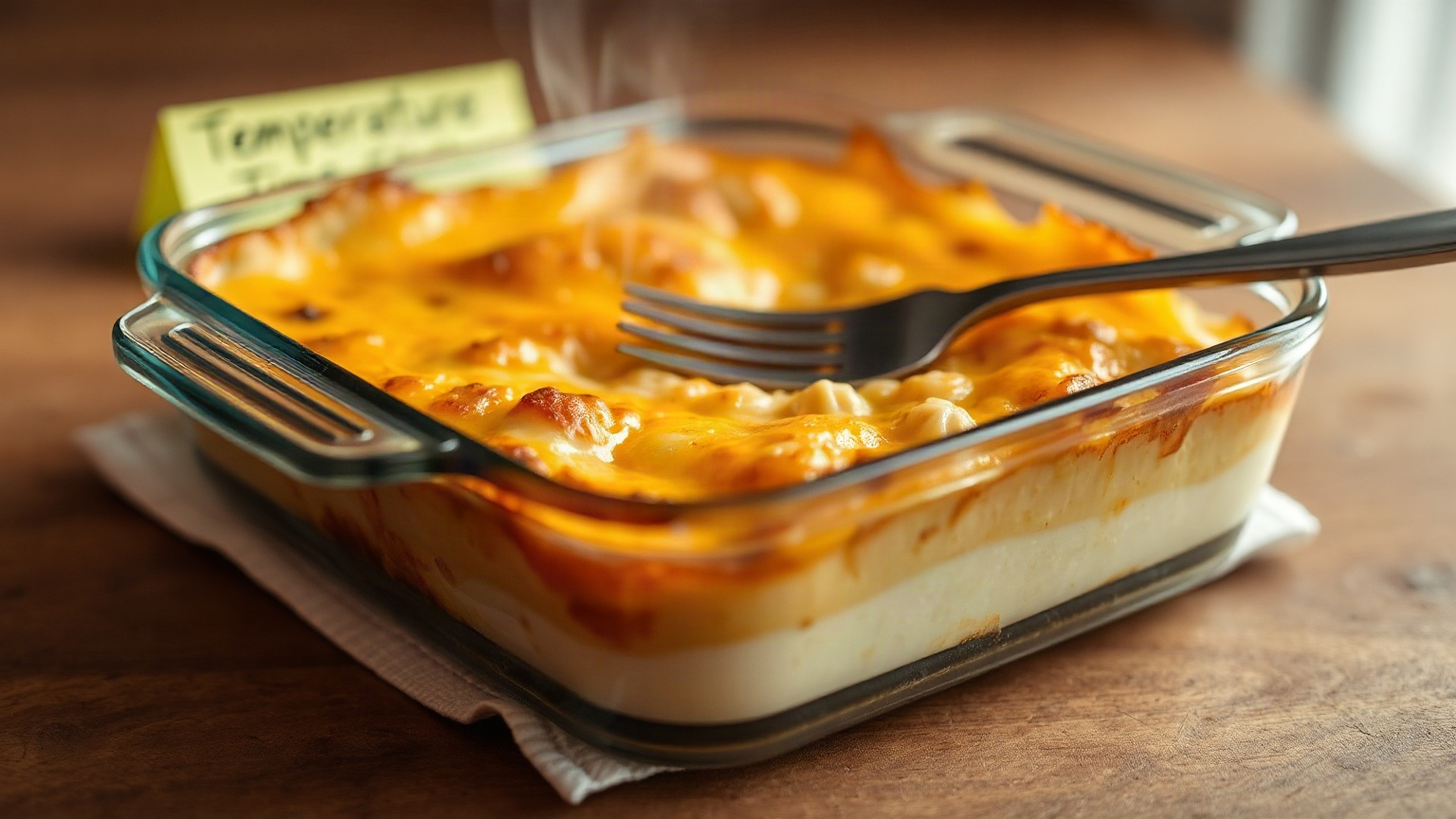
A standard wall oven is a big insulated box. The heating elements are far from the food, there’s a lot of air volume to moderate the heat, and the temperature stays pretty consistent once it’s preheated. Your casserole dish sits in the middle of all that calm, even heat.
A toaster oven is the opposite of that. Small chamber, heating elements just a few inches away, and very little thermal mass to buffer temperature spikes. When you open the door, the temp drops fast. When it cycles back on, it blasts heat hard. It’s a fundamentally different environment, and a recipe written for a big oven doesn’t account for any of that.
The good news: once you understand the logic, the conversion is pretty reliable. It’s not magic. It’s just physics, honestly.
One more thing worth knowing — most toaster ovens don’t have great temperature accuracy. I’ve tested several and found they can run 15 to 30 degrees hotter than the dial says. A cheap oven thermometer (seriously, like a $10 one) is one of the most useful things you can own if you bake in a toaster oven regularly. For context on just how hot these appliances get, check out how hot a toaster gets — the numbers might surprise you.
The Actual Temperature and Time Formula
Temperature: Drop It by 25°F
If your recipe calls for 350°F, set the toaster oven to 325°F. Recipe says 375°F? Go with 350°F. This single adjustment compensates for the intense radiant heat from nearby elements and keeps the top of your casserole from browning before the inside has had a chance to cook through.
Some sources suggest 25°F is a minimum and you could go as low as 50°F under for very shallow dishes. I’ve found that for most casseroles — the kind with a fairly deep dish and a lot of moisture — 25°F works well. If you’re making something shallow and lean, like a thin egg bake, I’d drop it a full 50°F and keep a close eye on it.
Time: Start Checking at 75% of the Original
A 60-minute casserole? Start checking at 45 minutes. A 40-minute recipe? Peek at 30. The smaller space heats up faster, and recipes that develop slowly in a big oven can rush to the finish line in a toaster oven.
“Checking” means more than just opening the door and looking at it. Use an instant-read thermometer for meat-based casseroles — chicken should hit 165°F internally, and a beefy casserole should be at least 160°F. For vegetable or pasta casseroles, you’re looking for bubbling edges and a set (not jiggly) center. Pull it out, prod the middle with a fork. If it feels firm and the liquid is absorbed, you’re done.
Quick Conversion Reference Table
| Original Oven Temp | Toaster Oven Temp | Original Time | Start Checking At |
|---|---|---|---|
| 325°F | 300°F | 60 min | 45 min |
| 350°F | 325°F | 45 min | 33 min |
| 375°F | 350°F | 60 min | 45 min |
| 400°F | 375°F | 45 min | 33 min |
| 425°F | 400°F | 30 min | 22 min |
Pan Size, Rack Position, and Other Stuff That Actually Changes Things
Getting the Right Pan
Most standard casserole dishes — the 9×13 kind — won’t fit in a toaster oven. You’ll usually need an 8×8, a 9×9, or something in the 1.5 to 2-quart range. The recipe probably makes more food than will fit, so either halve it or make it in two batches. Halving is usually simpler. Just keep the depth of the dish similar to what the recipe intended; a thin layer of casserole in a wide pan cooks much faster than a deep dish would.
Light-colored metal or ceramic pans are your friends here. Dark non-stick pans absorb extra radiant heat from the elements and will overbrown the bottom. I learned this the hard way with a potato gratin that had a completely scorched base and a lukewarm top. A good toaster oven baking pan in a lighter material really does make a difference.
Rack Position Matters More Than You Think
Center rack. Always center rack for casseroles. The top rack slot puts your food dangerously close to the top heating element — great for broiling, terrible for a 45-minute bake. The bottom slot can undercook the top and overbrown the base. Center slot gives you the best shot at even heat from both elements.
If your toaster oven only has two rack positions, go with the lower one and cover the casserole with foil for most of the cook time. Uncover only in the last 10 minutes or so if you want the top to brown.
A toaster oven wire rack that fits your specific model is worth picking up if yours came with something flimsy or is missing positions.
The Foil Method
I cover almost every casserole for the first 60-70% of the cook time in a toaster oven. This traps steam, keeps moisture in, and prevents the top from scorching before the center catches up. Then I remove the foil for the last stretch to get some color on top. It’s not complicated, just disciplined.
One important note: keep foil away from the walls and the heating elements. It doesn’t need to drape down over the sides. Tent it lightly over the top of the dish and leave the edges folded onto the rim of the pan, not hanging loose.
Specific Types of Casseroles and How They Behave
Chicken Casseroles
These need to hit a safe internal temperature before you pull them. Use your thermometer. Don’t guess. The outside can look done — bubbling, golden — while the center of a thick chicken piece is still undercooked. For food safety, the USDA recommends poultry reach a minimum internal temperature of 165°F. The foil-on, foil-off method works especially well here because it keeps the chicken from drying out.
Pasta and Rice Casseroles
These can dry out fast in the toaster oven. Add a splash more liquid than the original recipe calls for — maybe 2-3 tablespoons — and keep them covered for longer. Uncover only if you want a crispy, cheesy top. If you’re reheating a pre-made pasta casserole, I’ve got a more detailed breakdown of timing in this piece on reheating food in a toaster oven.
Egg Casseroles and Stratas
Drop the temp a full 50°F for these. Egg dishes are finicky — they go from barely set to rubbery very quickly. In a toaster oven, I’ll usually bake a strata or egg bake at 300°F instead of 350°F, covered, and check every five minutes after the 75% mark. The center should be just set, not puffed and cracked. If it’s cracking, it’s overdone.
Which Toaster Ovens Handle Casseroles Best
Not every toaster oven is built for this. Small, cheap two-slot models are really just for toast — they don’t have the cavity or temperature control for a proper casserole. You want at least a 6-slice capacity, convection if possible, and a reliable thermostat. If you’re shopping for one specifically for cooking (not just reheating), the best mini toaster ovens list is a solid starting point. I’d personally lean toward the Breville Smart Oven series for consistent temperature accuracy — it’s the one I trust most in my own kitchen for anything that needs more than 30 minutes of cooking time.
Convection matters more than most people realize. The fan circulates air and dramatically reduces hot spots, which is the main enemy of an evenly cooked casserole. If your toaster oven has a convection setting, use it. Drop the temp another 25°F on top of the standard conversion (so you’d be cooking at 300°F instead of 350°F), and expect it to finish even faster. Check at 65-70% of the original time instead of 75%.
Serious Eats has a good general breakdown of what makes a toaster oven worth buying if you want more detail on features to look for before you commit.
Final Thoughts on Making This Work
The formula really is simple: 25°F lower, 25% less time, center rack, covered for most of it. The part people skip is the thermometer check, and that’s where things go wrong — either undercooking a chicken casserole or pulling out a pasta bake that’s still soupy in the middle.
It took me a few ruined casseroles to figure this out. Hopefully you’ll skip that part. Once you get comfortable with your specific toaster oven’s quirks (they all have them), converting recipes becomes second nature. My Breville runs about 20°F hot, so I compensate a bit extra. Your mileage will vary. An oven thermometer costs almost nothing and removes all the guesswork.
Toaster oven casseroles aren’t a downgrade from the full-size version. For one or two people, they’re actually more practical — less energy, faster preheat, and you’re not heating up a giant oven for a single 8×8 dish. Once you’ve dialed it in, you’ll probably prefer it.
Frequently Asked Questions
Do I always need to reduce the temperature when cooking a casserole in a toaster oven?
Yes, reduce the temperature by at least 25°F for casseroles. The heating elements in a toaster oven are much closer to the food than in a standard oven, which means more intense radiant heat hits the top of the dish even at the same thermostat setting. For very shallow casseroles or egg-based dishes, dropping 50°F is safer.
Can I use my regular casserole dish in a toaster oven?
Most standard 9×13 casserole dishes won’t fit in a toaster oven — you’ll need to downsize to an 8×8, 9×9, or a smaller 1.5 to 2-quart dish. Glass and ceramic dishes are generally safe to use, but check that the dish is rated for the temperatures you’re using and avoid putting a cold ceramic dish into a preheated toaster oven to prevent cracking. Light-colored pans work better than dark ones in this environment.
How much faster does a casserole cook in a toaster oven compared to a regular oven?
A casserole typically cooks 20-30% faster in a toaster oven than in a standard oven. Start checking for doneness at 75% of the original cook time — for a 60-minute recipe, that means checking at 45 minutes. If you’re using a convection setting, it can be even faster, so check closer to 65% of the original time.
Is it safe to use aluminum foil in a toaster oven when cooking a casserole?
Foil is safe to use in a toaster oven as long as it doesn’t touch the heating elements or the oven walls. Tent the foil lightly over the top of the casserole dish and keep the edges folded over the rim of the pan. Never line the bottom of the toaster oven with foil, as this can block airflow and create a fire risk.
Should I use the convection setting on my toaster oven for casseroles?
Yes, convection is a good choice for casseroles because the circulating air reduces hot spots and promotes more even cooking. When using convection, drop the temperature an additional 25°F beyond the standard 25°F reduction — so if the recipe calls for 350°F, set the convection toaster oven to 300°F. Check for doneness even earlier, around 65% of the original cook time.

Written by
Emma founded Toastera to turn vague appliance advice into clear, researched, safety-first guidance on toasters and toaster ovens.
Free: the Toaster Oven Cheat Sheet
Get the printable cheat sheet (temps, cook times & safety tips) plus new recipes. No spam, unsubscribe anytime.