To convert oven bake time to air fryer for frozen casseroles, reduce the oven temperature by 25°F and cut the cook time by 20–25% as your starting point — then check the internal temperature with a thermometer at that mark, because frozen casseroles often need a few extra minutes depending on density. Air fryers circulate hot air aggressively, which speeds up cooking at the edges but can leave a cold center in thick, dense dishes if you pull them too early. The safe target internal temp for most casseroles is 165°F throughout.
Safety First: Frozen casseroles cooked in an air fryer must reach an internal temperature of 165°F (74°C) at the center before eating — not just on top. Dense, layered dishes can look bubbling and done on the surface while the middle is still partially frozen. Always use an instant-read thermometer inserted into the thickest part of the dish, not the edge. Keep hands and arms clear of the heating element when checking or rotating dishes, as air fryer interiors get extremely hot.
Quick Facts Before You Start
- Reduce oven temperature by 25°F for air fryer cooking (e.g., a 375°F oven recipe becomes 350°F in the air fryer)
- Reduce cook time by 20–25% as your initial estimate — then verify with a thermometer
- Frozen casseroles thicker than 2 inches may only save 15% of time, not 25%, because the center needs longer to thaw and heat
- Always thaw for 20–30 minutes on the counter first if your casserole is in a glass or ceramic dish — thermal shock can crack it
- Cover with foil for the first half of cooking, then uncover to get a browned top
Why Air Fryers Cook Faster (and Why Casseroles Are the Tricky Exception)
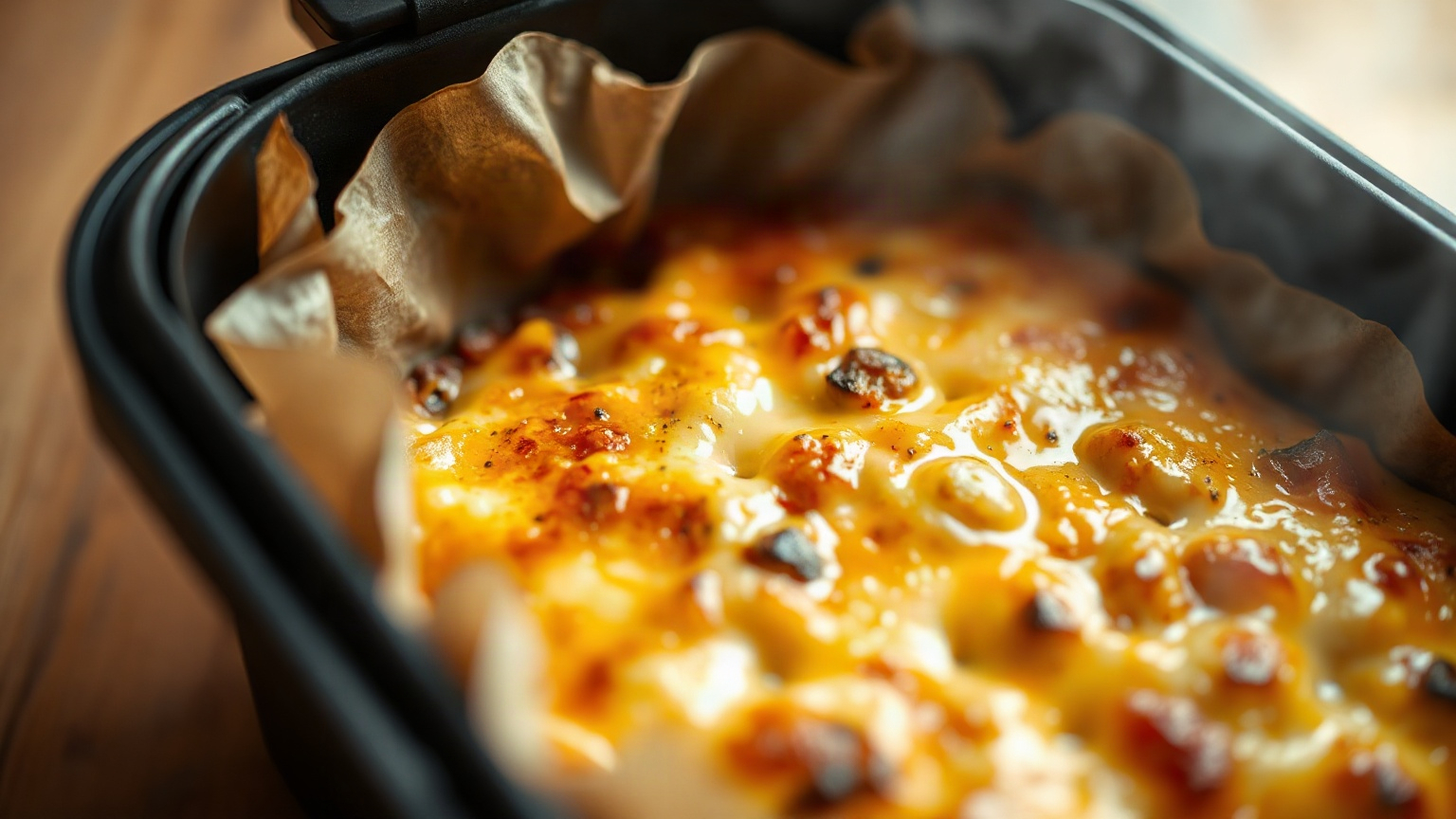
Most air fryer guides will tell you to reduce time by 20–30% and call it a day. That advice works great for chicken wings or frozen fries. Casseroles are different. They’re dense, layered, and often arrive frozen solid in a block that’s 3 inches thick. The hot air blasting around the outside can make the top look perfectly browned in 30 minutes while the center is still 40°F.
I learned this the hard way with a frozen broccoli-cheddar casserole I was convinced was done because the cheese was bubbling. It wasn’t. Center read 118°F. Not great.
The reason air fryers cook faster in general is purely mechanical — a fan forces hot air into constant contact with the food surface, eliminating the still-air zones you get in a regular oven. That’s efficient for thin foods. But for a dense frozen block, the heat still has to conduct inward through the food itself, and that process doesn’t speed up much just because the outside air is moving faster.
So for frozen casseroles specifically, the time savings are more modest than you’d expect. Plan on 15–25% less time, not 30–50%.
The Actual Conversion Formula (With Numbers)
Here’s the formula I actually use:
Air Fryer Temp = Oven Temp − 25°F
Air Fryer Time (starting estimate) = Oven Time × 0.80
Then add 5–10 minutes if the casserole is frozen solid and over 2 inches thick
So if the box says bake at 400°F for 55 minutes in a conventional oven, you’d set your air fryer to 375°F, start checking at 44 minutes, and expect it to actually finish somewhere around 46–50 minutes for a typical frozen lasagna or shepherd’s pie.
Check the center with a thermometer. That’s not optional.
Conversion Table: Common Frozen Casserole Oven Times vs. Air Fryer Times
| Casserole Type | Oven Temp / Time | Air Fryer Temp | Air Fryer Est. Time | Check Temp At |
|---|---|---|---|---|
| Frozen lasagna (standard 9×9) | 375°F / 70 min | 350°F | 54–60 min | 50 min |
| Frozen shepherd’s pie | 375°F / 55 min | 350°F | 44–50 min | 42 min |
| Frozen broccoli cheddar bake | 350°F / 45 min | 325°F | 36–40 min | 34 min |
| Frozen mac and cheese casserole | 350°F / 40 min | 325°F | 32–36 min | 30 min |
| Frozen chicken & rice bake | 400°F / 60 min | 375°F | 48–54 min | 46 min |
| Frozen green bean casserole | 350°F / 35 min | 325°F | 28–32 min | 26 min |
These are starting estimates. Your specific air fryer model, the actual thickness of the frozen block, and whether you thawed it slightly first will all shift these numbers a bit. A reliable instant-read thermometer is the one tool that makes all of this actually work instead of just being educated guesswork.
Dish Size and Pan Type: The Part Everyone Skips
Most air fryer baskets won’t fit a standard 9×13 baking dish. Full stop. If your casserole came in a full-size foil tray, you’re likely going to have to transfer it to a smaller pan or split it up — which actually works in your favor, because thinner portions cook faster and more evenly.
For air fryer-friendly options, a 6×6 or 7×7 square baking pan fits most basket-style air fryers and toaster oven air fryers. I’ve had good luck with a basic small square metal baking pan — metal conducts heat better than glass in this context, and it’s less likely to crack from the rapid temperature changes.
If you’re using a toaster oven with air fry mode (which is honestly my preferred setup for casseroles because you get more interior space), the best mini toaster ovens with air fry functions can actually accommodate a half-size pan, which is much more practical for a real casserole serving.
Don’t use glass dishes directly from the freezer in an air fryer. The thermal shock risk is real — I’ve seen a Pyrex dish crack in half from going straight from freezer to a 375°F air fryer. Let it sit out 20–30 minutes first, or just use aluminum foil pans.
Covering vs. Uncovering During Cooking
For frozen casseroles, cover with foil for roughly the first 60–70% of the cook time. This traps steam and helps the center thaw and heat through without the top burning. Then remove the foil for the last portion so the top can brown. For a 50-minute cook, that’s foil on for about 32–35 minutes, then uncovered for the remaining 15–18.
If you skip the foil entirely, you’ll get a great-looking top and a lukewarm middle. Which, again, is exactly what happened to me that first time.
The Edge Case Everyone Misses: Partial Thaw vs. Frozen Solid
Here’s something the other conversion guides don’t address: the starting state of your casserole matters a lot more than people realize.
A casserole that’s been in the freezer for two months and is frozen absolutely solid at 0°F needs more time than one that’s been sitting in the fridge overnight and is half-thawed at 32–35°F. Obvious in hindsight, but most conversion formulas assume a single frozen state.
Rough adjustment: if your casserole is fully frozen solid, use the standard formula above. If it’s been refrigerator-thawed overnight, reduce the time by an additional 15–20% on top of the air fryer conversion. So a casserole that would take 50 minutes frozen might only need 40–42 minutes when thawed. And the safe internal temp target stays the same: 165°F.
The USDA’s food safety guidelines are clear that any dish containing meat needs to hit 165°F internal before serving, regardless of how done it looks on the outside. You can read more on safe temperatures at USDA’s food safety resources.
Air Fryer vs. Toaster Oven Air Fry Mode: Which Is Better for Casseroles?
Basket-style air fryers are great for a lot of things. Frozen casseroles in a real dish? Not always. The basket shape limits what size pan you can use, and the heating element position in many basket fryers means the bottom of your dish gets very little direct heat while the top gets blasted.
Toaster oven air fryers — the countertop kind with a door that opens like a small oven — handle casseroles much better. You can use a proper rectangular pan, position the dish on the right rack level, and the heat distribution is more oven-like. I genuinely prefer these for anything casserole-related. If you’re reheating and cooking casseroles regularly, it might be worth reading about reheating food in a toaster oven to get a better sense of the differences.
For basket-style air fryers, place a rack accessory under your pan to lift it and allow airflow below. It helps more than you’d think.
The conversion formula stays the same either way. But expect the toaster oven air fry mode to be a bit more forgiving and even, while the basket fryer will be faster at the edges and may need you to rotate the pan halfway through.
Final Thoughts
Converting frozen casserole cook times from oven to air fryer isn’t hard once you accept that the “reduce by 25%” rule is a starting point, not a finish line. Drop the temperature 25°F, cut the time by 20%, add your foil tent for the first two-thirds of cooking, and check the center temperature before you declare it done. For thick, dense casseroles, expect the actual time savings to be more modest than with lighter frozen foods.
The thermometer is non-negotiable. Everything else is just math.
Frequently Asked Questions
How do you convert oven bake time to air fryer for frozen casseroles?
Reduce the oven temperature by 25°F and multiply the oven cook time by 0.80 to get your starting air fryer estimate. For casseroles frozen solid and thicker than 2 inches, add 5–10 minutes to that estimate and always verify with a thermometer that the center reads 165°F before serving.
Can I put a frozen casserole dish directly in the air fryer?
You can use metal or disposable foil pans directly from the freezer in an air fryer. Glass or ceramic dishes should not go from freezer to a hot air fryer — let them sit at room temperature for at least 20–30 minutes first to avoid cracking from thermal shock. Metal is the safest and most practical choice for air fryer casserole cooking.
How much faster does an air fryer cook compared to a conventional oven for casseroles?
For frozen casseroles, the air fryer is typically 15–25% faster than a conventional oven — less than the 30–50% you’ll see advertised for things like frozen fries or chicken nuggets. The dense, layered nature of casseroles slows the heat transfer to the center, so the time savings are real but more modest.
What temperature should I air fry a frozen casserole at?
Set your air fryer to 25°F lower than the package’s oven temperature. Most frozen casseroles call for 350–400°F in a conventional oven, so you’d set the air fryer to 325–375°F. Lower temperatures with longer cook times help the center heat through without burning the top or drying out the edges.
Do I need to cover a frozen casserole with foil in the air fryer?
Yes — cover with foil for the first 60–70% of the total cook time. This keeps moisture in and gives the center time to heat through before the top surface starts to brown and crisp. Remove the foil for the final portion of cooking to get the browned, slightly crisp top that makes a casserole worth eating.

Written by
Emma founded Toastera to turn vague appliance advice into clear, researched, safety-first guidance on toasters and toaster ovens.
Free: the Toaster Oven Cheat Sheet
Get the printable cheat sheet (temps, cook times & safety tips) plus new recipes. No spam, unsubscribe anytime.