To reheat fried chicken in a toaster oven so it stays crispy, set your toaster oven to 400°F, place the chicken on a wire rack over a foil-lined tray, and heat for 15–20 minutes depending on piece size. The wire rack lets hot air circulate under the coating so moisture escapes instead of pooling, which is what turns that crust into sad, greasy mush. Let the chicken come to room temperature for about 15 minutes before it goes in — that alone cuts your reheat time and dramatically reduces the odds of a dried-out interior.
Safety First: Toaster ovens run at high heat and the interior walls, racks, and trays get extremely hot — always use oven mitts rated for at least 400°F when handling any part of the appliance during or after reheating. Keep the toaster oven on a heat-safe, non-flammable surface away from cabinets, and never leave it unattended when reheating greasy foods like fried chicken, as dripping fat can cause smoke or, in rare cases, a small grease fire. If smoke appears, turn the unit off and let it cool before opening.
Quick Takeaways
- 400°F is the sweet spot — hot enough to re-crisp the coating without desiccating the meat inside.
- A wire rack elevated over the tray is non-negotiable if you want crunch on all sides, not just the top.
- Room-temperature chicken before reheating = more even heat, less drying. Pull it from the fridge 15 minutes early.
- Bone-in thighs and drumsticks need closer to 18–20 minutes; boneless breasts or wings are usually done at 12–15.
- Covering with foil for the first half, then uncovering, is a useful trick for very thick pieces — it prevents the outside from burning before the center is hot.
Why Fried Chicken Gets Soggy When You Reheat It
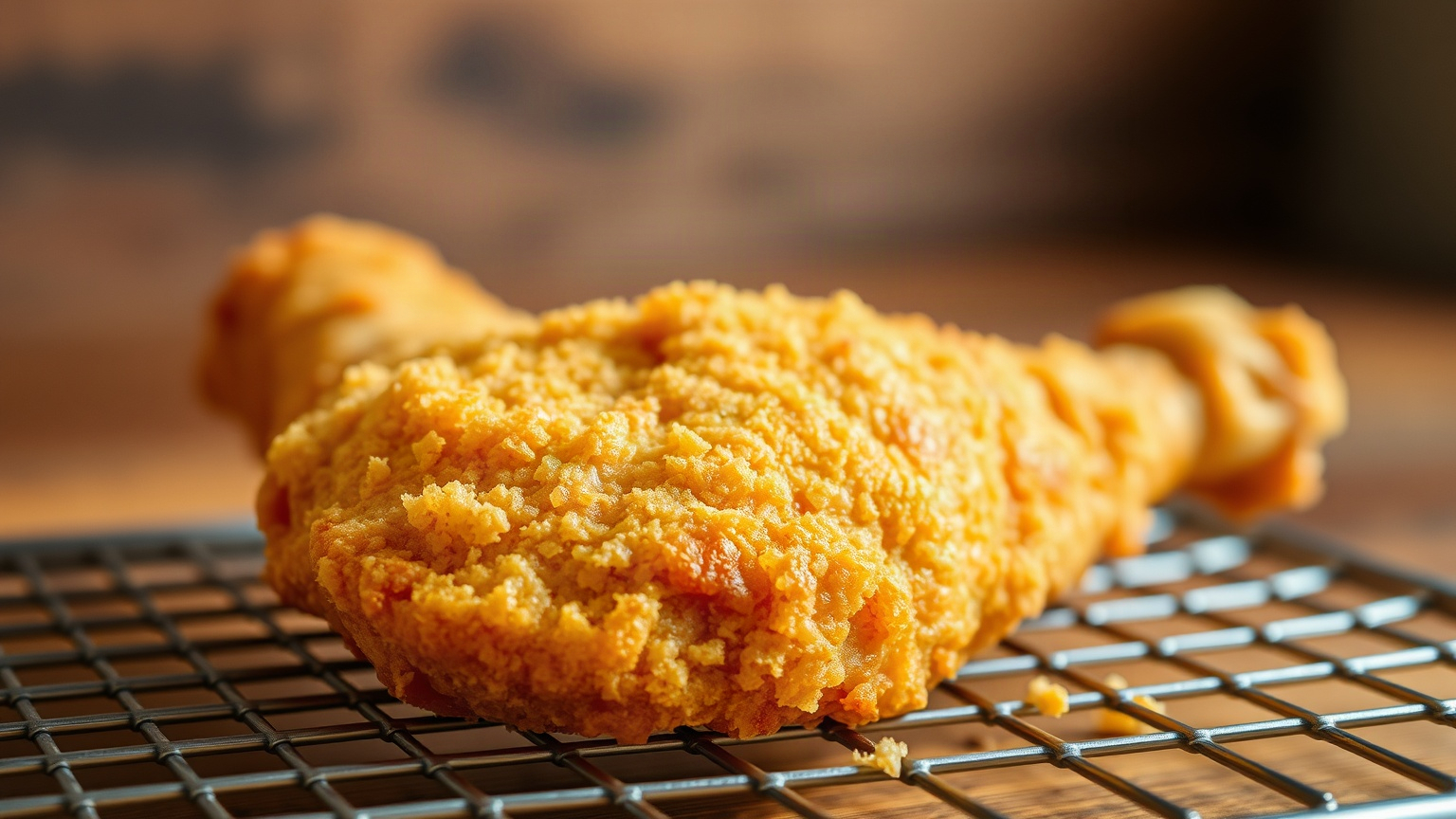
Here’s the thing nobody explains: the crust on fried chicken is basically a sponge after it’s been sitting in the fridge. The coating absorbs moisture from the chicken and from the ambient air inside your container. When you blast it in a microwave, all that trapped steam just… stays there, and you end up with something that has the texture of wet cardboard. Not great.
A toaster oven solves this because the dry, circulating heat evaporates that surface moisture. The fat in the coating can re-crisp properly because there’s no steam smothering it. What you’re essentially doing is re-frying, just without the oil. That framing helped me a lot when I first started testing different reheat methods — think of the toaster oven as a dry environment that mimics the original frying conditions, not just a “warming box.”
For more context on how reheating food in a toaster oven works across different foods, I’ve got a broader guide worth bookmarking. But fried chicken specifically rewards a bit more attention to detail than, say, leftover pizza.
The Exact Method That Works (With the Settings I Actually Use)
I’ve reheated a lot of fried chicken in a lot of toaster ovens. My personal setup is a toaster oven wire rack set on the middle position, with a foil-lined pan underneath to catch drips. No parchment — parchment traps steam, which defeats the whole point.
Step 1: Take the Chicken Out of the Fridge
Pull it out about 15 minutes before you plan to reheat it. Cold chicken going into a hot oven means the outside crisps up long before the center reaches a safe, pleasant temperature. I learned this the hard way: perfectly golden crust, center still weirdly cool. Not ideal.
Step 2: Preheat to 400°F
Don’t skip the preheat. Putting chicken into a toaster oven that’s still climbing to temperature exposes it to a longer period of low, inefficient heat — the fat softens without ever getting hot enough to re-crisp. Preheat fully. Most toaster ovens hit 400°F in about 5–7 minutes, though older or cheaper models can take up to 10.
Set the function to “bake” if your toaster oven has multiple modes. Broil is too aggressive and will scorch the exterior before the inside heats through. Convection bake, if you have it, actually works really well here — the fan accelerates moisture evaporation and you can often knock 3–4 minutes off the total time.
Step 3: Rack Up, Single Layer
Place the chicken pieces directly on a wire rack inside the toaster oven in a single layer. Crowding is the enemy — pieces touching each other create little steam pockets and the crust where they touch will be pale and soft. Spread them out. If you’ve got a lot of pieces, do two batches.
Step 4: Time It Right by Piece Type
This is where most guides get vague, so here are actual numbers based on my testing:
| Piece Type | Temperature | Time (from room temp) | Flip Halfway? |
|---|---|---|---|
| Wings | 400°F | 12–14 minutes | Yes |
| Drumsticks | 400°F | 16–18 minutes | Yes |
| Bone-in Thighs | 400°F | 18–20 minutes | Yes |
| Boneless Breast (whole) | 375°F | 14–16 minutes | Yes |
| Tenders / Strips | 400°F | 10–12 minutes | Optional |
I drop the boneless breast temperature to 375°F on purpose — breast meat has almost no fat to protect it, and at 400°F for more than 15 minutes it gets chalky. The lower temp gives it a little more grace. The USDA recommends reheated poultry reach an internal temperature of 165°F, so if you’re uncertain, a quick instant-read thermometer check is never a bad idea. (USDA food safety guidance on leftovers is worth a quick read if you’re unsure about storage times too.)
Step 5: Flip Halfway and Check for Crunch
Flip the pieces at the halfway mark. The bottom side sitting on the rack can still steam slightly if there’s a lot of rendered fat dripping, so flipping guarantees both sides get exposed to the drier top-of-oven heat. At the end, I give the crust a quick press with my fingertip (carefully — it’s hot) to check for firmness. If it gives softly, it needs another 2–3 minutes. If it snaps a little, you’re done.
The Edge Cases Most Guides Don’t Mention
Reheating Refrigerated Chicken That’s More Than 2 Days Old
Older leftovers have drier meat to begin with, and the coating has had more time to absorb moisture and start breaking down. For chicken that’s been in the fridge 2–3 days, I lightly spritz the skin with a tiny amount of neutral oil from a spray bottle before it goes in. Just a mist. This sounds counterintuitive — aren’t we trying to crisp it? — but a very thin layer of fresh oil on the surface helps the old coating fry up again instead of just drying out completely. Don’t brush on oil with a pastry brush; you’ll get too much and it’ll be greasy.
Frozen Fried Chicken (Store-Bought or Homemade)
Don’t thaw it in the microwave first. That introduces the exact moisture problem you’re trying to avoid. Either thaw overnight in the fridge and reheat as normal, or if you’re reheating from frozen: start at 350°F for 10 minutes covered loosely with foil, then remove the foil and crank to 400°F for another 10–15 minutes. It takes longer but the crust actually recovers reasonably well. I was surprised — my expectations were low.
Extra-Thick Coatings (Korean Fried Chicken, Double-Dredged)
Thick, craggy coatings trap more moisture and take longer to re-crisp. Same 400°F temperature, but budget an extra 3–5 minutes and don’t rush it. Thin coatings — like a light panko crust — can actually start to over-brown at 400°F in a small toaster oven, so watch them after the 10-minute mark. The proximity of the heating elements in a compact toaster oven means radiant heat is more intense than in a full-size oven. Check out the best mini toaster ovens if you’re shopping for one that handles temperature consistency well — it varies more than you’d think between brands.
What to Avoid (Things I’ve Actually Done Wrong)
Covering the chicken with foil the entire time. I did this thinking it would keep it moist — it does, but that’s the opposite of what you want. Foil traps steam, and steam is the enemy of crunch. The only time I’d use foil is loosely tented over very thick bone-in pieces for the first 8 minutes, then removed. And I mean loosely — not crimped around the edges.
Putting chicken directly on the tray. Even a nonstick toaster oven baking pan is a flat surface that blocks airflow to the bottom of the piece. The bottom will never crisp. It’ll be soft and slightly greasy. Worth getting a rack if you don’t have one.
Using the broil setting thinking “hotter = crispier, faster.” Broil is top-down radiant heat only. The top of your chicken will be done in 5 minutes, but the center will still be cold and the coating on the underside won’t crisp at all. Don’t do it. Serious Eats has a solid breakdown of the science behind why fried coatings behave the way they do if you want to go deeper.
Wrapping Up
Reheating fried chicken well is mostly about not overthinking it — and then overthinking exactly two things: temperature and airflow. Get the toaster oven to 400°F, get the chicken off the tray surface, flip halfway, and don’t rush it. The extra 5 minutes of patience compared to microwaving is absolutely worth it. Cold chicken from the fridge to a hot wire rack at 400°F is the move. Everything else is just fine-tuning for your specific piece or situation.
If you’re also curious about general toaster oven heat ranges and how they compare to full-size ovens, the piece on how hot a toaster gets is a quick read that fills in some useful background.
Frequently Asked Questions
How long to reheat fried chicken in a toaster oven at 400°F?
Most pieces take 15–20 minutes at 400°F when starting from room temperature. Wings and tenders are on the shorter end (12–14 minutes), while bone-in thighs and drumsticks need 18–20 minutes. Always flip halfway through and check that the internal temperature has reached 165°F before eating.
Should I cover fried chicken with foil when reheating in a toaster oven?
No — at least not for the whole cook time. Foil traps steam and prevents the crust from re-crisping. The one exception is very thick bone-in pieces, where you can loosely tent foil over them for the first 8 minutes only, then remove it to let the coating firm up for the remainder of the cook time.
What temperature should I reheat fried chicken in a toaster oven?
400°F is the right temperature for most fried chicken pieces. It’s hot enough to re-crisp the coating without scorching it, and it heats the interior through in a reasonable time. Drop to 375°F for boneless chicken breasts, which have less fat to protect them and dry out faster at higher heat.
Can I reheat frozen fried chicken in a toaster oven?
Yes, but it takes a two-step approach. Start at 350°F with a loose foil tent for about 10 minutes to thaw and warm the interior, then remove the foil and increase to 400°F for another 10–15 minutes to re-crisp the coating. Don’t try to microwave-thaw it first — that ruins the texture before you even start.
Why does reheated fried chicken get soggy?
The coating absorbs moisture from the chicken and from the air during storage, and most reheating methods — especially the microwave — trap that moisture as steam instead of letting it escape. A toaster oven at high heat with the chicken on a wire rack lets moisture evaporate so the coating can re-crisp. Keeping the chicken elevated off the tray surface is the single biggest factor in getting crunch back.

Written by
Emma founded Toastera to turn vague appliance advice into clear, researched, safety-first guidance on toasters and toaster ovens.
Free: the Toaster Oven Cheat Sheet
Get the printable cheat sheet (temps, cook times & safety tips) plus new recipes. No spam, unsubscribe anytime.