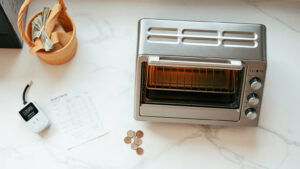
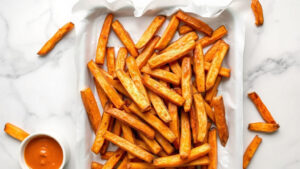
Roast asparagus in a toaster oven at 425°F on the bake setting for 10–14 minutes, depending on stalk thickness. Thin spears (under ½ inch) are done closer to 9–10 minutes; thick stalks need the full 13–14. If your toaster oven has a convection fan, drop to 400°F and start checking at 8 minutes — the circulating air works fast.
Safety First: Toaster ovens run extremely hot — the exterior walls and rack can reach temperatures well above 300°F during roasting. Use dry oven mitts (not a damp towel) when handling the pan or rack, keep the toaster oven at least 4 inches from cabinet walls and combustibles, and never leave it unattended with oiled vegetables inside since dripping fat can smoke or ignite on the heating element. Let the appliance cool fully before moving or cleaning it.
Quick Facts: Toaster Oven Asparagus at a Glance
- Temperature: 425°F bake (or 400°F convection)
- Time for thin spears (under ½”): 9–11 minutes
- Time for medium spears (½”–¾”): 11–13 minutes
- Time for thick spears (over ¾”): 13–15 minutes
- The tell: Tips should look slightly charred and papery; the stem should bend but not snap when you nudge it with tongs
I’ve roasted asparagus more times than I can count — in full-size ovens, in a tiny 4-slice Cuisinart toaster oven on my counter, and once in a Breville Smart Oven in a rental kitchen that ran about 25°F hot. Every single time, the stalk thickness matters more than any other variable. That’s the thing most recipes gloss over.
Why a Toaster Oven Actually Works Well for Asparagus
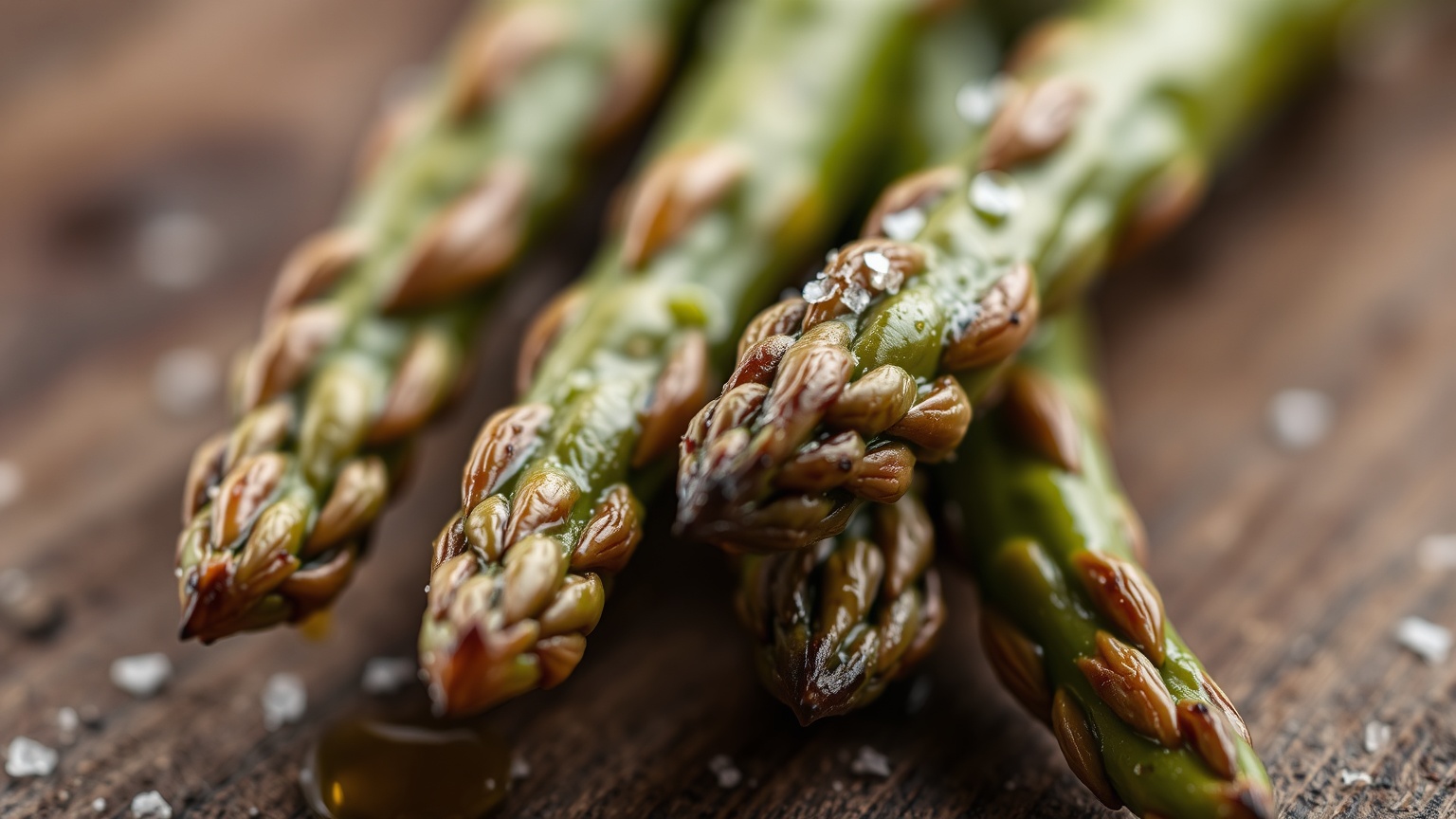
Here’s the honest answer: a toaster oven can produce better roasted asparagus than a standard oven for most home cooks. The smaller cavity heats up faster — usually 5–7 minutes versus 12–15 for a full oven — and the heating elements are closer to the food. That proximity means you get more surface browning without needing to run the broiler separately.
There’s a tradeoff though. Toaster ovens have less air volume, so if you crowd the pan, steam builds up fast. Crowded asparagus steams instead of roasts. You end up with soggy, olive-drab spears that taste fine but have none of that slightly blistered, caramelized bite. I learned this the hard way the first time I tried to roast a full pound in my compact 6-slice oven. It fit — barely — and the result was disappointing. Now I do two batches if needed, or I pull out my toaster oven baking pan that’s sized specifically for the rack.
Exact Temperature and Timing by Spear Size
This is the table I wish I’d had years ago. Asparagus thickness varies wildly — pencil-thin farmers market bunches versus the fat grocery store stalks are genuinely different ingredients from a cooking standpoint.
| Spear Thickness | Bake (425°F) | Convection (400°F) | Visual Cue |
|---|---|---|---|
| Thin — under ½” | 9–11 min | 7–9 min | Tips very brown, stems slightly wrinkled |
| Medium — ½” to ¾” | 11–13 min | 9–11 min | Tips charred at edges, stems hold shape |
| Thick — over ¾” | 13–15 min | 11–13 min | Tips papery, stems tender when pressed |
| Extra thick — 1″ or more | 15–18 min | 13–15 min | Peel first; see note below |
The extra-thick spears are the edge case most recipes skip entirely. If your asparagus stalks are an inch wide or more — this happens with late-season grocery store bunches — peel the bottom two-thirds with a vegetable peeler before roasting. The outer skin gets fibrous and chewy while the interior is still underdone if you don’t. Peel them, and suddenly 15 minutes at 425°F turns them tender all the way through with gorgeous browning on the outside.
Should You Use Bake or Broil?
Bake at 425°F for most situations. If your toaster oven runs cool (a known issue with several budget models — I’ve written about how hot a toaster gets and the variance can be significant), or if you just want more char on the tips, you can do 10–12 minutes on bake followed by 2–3 minutes on broil. But don’t start on broil. The tips will scorch before the stems cook.
Some people swear by 450°F the whole way. I’ve tried it. You get beautiful tips but the window between “perfectly done” and “burnt” shrinks to about 90 seconds, and toaster ovens don’t always maintain temperature consistently enough for that to feel relaxed.
Convection Mode: Worth It?
Yes, if your oven has it. Convection circulates hot air and pulls moisture off the surface of the asparagus faster, giving you that crispy exterior without needing to push the temperature as high. Drop to 400°F and subtract about 2 minutes from the bake times in the table above. Check at 7 minutes the first time — convection toaster ovens vary quite a bit in fan strength. If you’re shopping for an upgrade, check out our picks for the best mini toaster ovens — several of them have solid convection modes that make a real difference for vegetables.
How to Prep Asparagus Before It Goes In
Trim the woody ends. The easiest way is to hold a spear at both ends and bend it — it’ll snap naturally at the point where tough becomes tender, usually about 1–2 inches from the bottom. Then line up the rest of the bunch and cut them all to match. I don’t bother snapping each one individually; that’s more theatrical than useful.
Dry them well. This is the step people skip. If your asparagus is wet from washing, the moisture steams off in the oven and you lose browning. Pat them dry with a kitchen towel or spin them in a salad spinner.
For seasoning: about 1 tablespoon of olive oil per pound, tossed to coat evenly, then salt and pepper. That’s really it. I usually add a few smashed garlic cloves on the pan too — they caramelize alongside the asparagus and taste incredible. If you want to get fancy, a squeeze of lemon after they come out (not before — acid slows browning) and some shaved parmesan. But I’d start plain the first time just to get the timing right.
Use a toaster oven wire rack if you have one. Elevating the spears off the pan surface lets hot air hit them from below and speeds up roasting. It also keeps them from sitting in pooled oil, which contributes to steaming rather than roasting. Not strictly necessary, but it does make a difference.
Common Problems and How to Fix Them
Asparagus Comes Out Soggy
Almost always a crowding or moisture issue. The spears need space — ideally not touching each other. If your toaster oven pan is too small for a full bunch, do it in two rounds. And make sure they’re actually dry before oiling. Even a little surface water will cause steaming.
Tips Are Burnt but Stems Are Still Tough
This usually means you’re mixing very thin and very thick spears on the same pan. Sort your bunch by thickness and cook similar sizes together. If that’s not practical, fold a small piece of foil over just the tips for the first half of cooking, then remove it to let them brown at the end.
No Browning at All
Your oven is probably running cold, or you used too much oil (which causes steaming). Use an inexpensive oven thermometer to check — many countertop ovens run 25–50°F below their set temperature, especially older ones. If you’re consistently under-browning, try 450°F bake for your next batch. Serious Eats has a good breakdown of asparagus roasting science that gets into the Maillard reaction side of things if you want to go deeper on why heat level matters so much.
Storing and Reheating Roasted Asparagus
Roasted asparagus keeps in the fridge for 3 days in an airtight container. It won’t be as crispy when reheated — that’s just the reality. The best method is back in the toaster oven at 375°F for 4–5 minutes, which revives some of the texture. Microwaving makes it limp and weirdly sulphurous-smelling. Don’t do that to yourself.
For reheating other vegetables or leftovers in your toaster oven more generally, I’ve got a full guide on reheating food in a toaster oven that covers times and temperatures across different food types.
The Bottom Line
Roasting asparagus in a toaster oven is genuinely one of the better uses for the appliance. Fast preheat, close proximity to the heating elements, and a small cavity that holds heat well — it all adds up to asparagus that’s done in under 15 minutes with real browning and a tender-but-not-mushy texture. The main things to get right: dry the spears, don’t crowd the pan, and match your time to your stalk thickness. Everything else is adjustable. Once you’ve nailed a basic batch, the variations (garlic, lemon zest, a little balsamic) are pretty hard to get wrong.
Frequently Asked Questions
What temperature should I roast asparagus in a toaster oven?
425°F on the bake setting is the standard target for toaster oven roasted asparagus. If your oven has convection, drop to 400°F — the fan compensates for the lower temperature and you’ll still get good browning. Only push to 450°F if your oven is known to run cold or you want extra char on the tips.
How long does asparagus take to roast in a toaster oven?
Thin spears (under ½ inch) are usually done in 9–11 minutes at 425°F. Medium spears take 11–13 minutes, and thick ones need 13–15 minutes. Start checking a minute or two early the first time you cook a new bunch, since thickness varies a lot between stores and seasons.
Can I roast asparagus in a toaster oven without foil?
Yes — and you’ll get better results without it, actually. Foil traps steam and slows down browning on the underside of the spears. Use a bare baking pan or a wire rack set inside the pan. If cleanup is the concern, a light spritz of cooking spray on the pan is enough to prevent sticking.
Why is my roasted asparagus soggy instead of crispy?
Soggy asparagus almost always comes down to two things: wet spears or an overcrowded pan. Pat them dry before adding oil, and make sure spears aren’t piled on top of each other — they need space for hot air to circulate around them. If you’re roasting more than about ¾ pound in a compact toaster oven, split the batch into two rounds.
Do I need to peel asparagus before roasting it in a toaster oven?
For thin and medium spears, no peeling needed. For very thick stalks — roughly an inch in diameter or more — peeling the bottom two-thirds of each spear makes a real difference. The tough outer skin on thick asparagus stays fibrous even after roasting, while the interior gets cooked through. Peeling takes about two extra minutes and completely fixes the problem. The USDA notes that asparagus is naturally low in calories and high in folate, so it’s worth getting the texture right.

Written by
Emma is a home cook who loves coaxing big flavor out of a toaster oven — from crispy roasted vegetables to easy weeknight dinners and sweet treats. She develops and tests Toastera's recipes for small-appliance kitchens.
Free: the Toaster Oven Cheat Sheet
Get the printable cheat sheet (temps, cook times & safety tips) plus new recipes. No spam, unsubscribe anytime.