To convert an oven baked potato recipe to an air fryer, drop the temperature by about 25°F and cut the cook time by roughly 20–30%. For a standard russet potato that bakes at 425°F for 60 minutes in the oven, that translates to 400°F for 40–45 minutes in a basket-style air fryer, or 375°F for 40–50 minutes in a toaster-style air fryer. The circulating hot air does real work fast, so you’ll end up with a crispier skin in less time — but the exact numbers depend on your potato’s size and your specific machine.
Safety First: Air fryers and toaster oven air fryers run at high heat — up to 400°F or more — and the basket, tray, and any accessories will be extremely hot after cooking. Always use oven mitts when removing potatoes or pulling out the basket. Don’t place a hot basket on a plastic or laminate surface, and keep the vents clear during cooking to prevent overheating. Never wrap potatoes in aluminum foil in a basket-style air fryer; it can block airflow and cause the unit to overheat.
Quick Facts: Air Fryer Baked Potato Conversion
- Standard conversion: reduce oven temp by 25°F, reduce cook time by 20–30%
- Basket-style air fryer: 400°F for 40–45 minutes (medium russet, ~8 oz)
- Toaster-style air fryer: 375°F for 40–50 minutes, flip halfway
- Done when internal temp hits 205–210°F — use an instant-read thermometer, not just a fork
- No foil in the basket; foil is fine on the tray in a toaster-oven style unit
Why the Conversion Isn’t Just “Same Temp, Less Time”
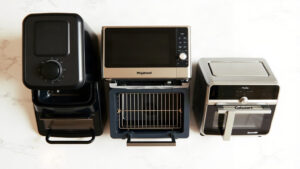
A lot of conversion guides tell you to just knock 25 degrees off and call it a day. That’s a decent starting point, but it misses something important: air fryers aren’t all the same. There’s a real difference between a basket-style countertop air fryer (like a Ninja or Cosori) and a toaster oven with an air fryer setting (like a Breville or a Cuisinart TOA-70). The basket style has the heating element directly above a small, tight chamber — very fast, very intense. The toaster oven style has more volume, so it behaves a bit more like a conventional oven, just with a fan running.
I learned this the hard way. First time I tried converting a baked potato recipe in my toaster oven air fryer, I used the same 400°F and 35-minute timing from a basket air fryer recipe. The outside was fine, but the center was still dense and a little starchy. Needed another 12 minutes. After that I started checking with a thermometer — and that changed everything. If the center of the potato hasn’t hit at least 205°F, it’s not done. Period.
So the conversion is really two variables: temperature and time, and both depend on which kind of machine you’re using. Here’s how to handle each one.
The Exact Time and Temperature Conversion Table
This is the table I wish I’d had on day one. These numbers are based on medium russet potatoes (roughly 7–9 oz each, which is the most common grocery store size). If yours are bigger, add 5–8 minutes. If they’re small, check early.
| Original Oven Recipe | Basket Air Fryer | Toaster Oven Air Fryer | Internal Temp Target |
|---|---|---|---|
| 425°F / 60 min | 400°F / 40–45 min | 375°F / 45–50 min | 205–210°F |
| 400°F / 60 min | 375°F / 40–45 min | 360°F / 45–50 min | 205–210°F |
| 375°F / 75 min | 360°F / 45–50 min | 350°F / 55–60 min | 205–210°F |
| 350°F / 90 min | 350°F / 50–55 min | 340°F / 60–65 min | 205–210°F |
The 350°F row is a bit of an edge case — most baked potato recipes don’t go that low on purpose, but sometimes you’re cooking something else at 350°F and want to throw in a potato at the same time. It works. It just takes longer and the skin won’t get quite as crisp.
What You Actually Need to Adjust (Beyond Just the Numbers)
Oil and Salt the Skin Properly
This isn’t optional. Rub the potato with a light coat of neutral oil — I use avocado oil because it handles high heat without any bitterness — then hit it generously with kosher salt. The air fryer will pull moisture from the skin aggressively, and the oil-and-salt layer is what turns that into crispiness instead of just… toughness. Skipping the oil gets you a leathery skin that nobody wants to eat.
Poke the Potato. Actually Do It.
I know everyone says this and most people skip it. But at 400°F in a small, fast-moving air environment, there’s real pressure buildup inside. Poke it 8–10 times with a fork before cooking. It takes 10 seconds. Do it.
No Foil in a Basket Air Fryer
Foil in a basket-style air fryer blocks airflow, which is exactly the thing that makes the appliance work. You’ll end up with a steamed potato, not a baked one — soft all the way through, pale skin, no texture. If you really want foil (maybe you’re cooking something messy alongside), you can use a small piece that doesn’t cover the entire basket floor, but honestly, just don’t bother for potatoes. In a toaster oven style, foil on the tray underneath is fine for catching drips.
Spacing and Load Size
Don’t stack them. Potatoes need space around them for air to circulate. In a basket air fryer, this usually means 2–4 medium potatoes max, depending on basket size. In a larger toaster oven air fryer, you might fit 4–6, but they still shouldn’t be touching. If they’re crowded, add 5–10 minutes and flip them twice instead of once. Check out our guide on the best mini toaster ovens if you’re still deciding which machine you want — size matters more than most people realize.
Sweet Potatoes: A Slightly Different Story
Sweet potatoes cook a little faster than russets because they have a higher moisture content and their natural sugars start caramelizing quickly at high heat. If you’re converting a sweet potato recipe, use the same temperature adjustments from the table above but reduce the time estimate by another 5 minutes and check earlier. A medium sweet potato at 400°F in a basket air fryer is usually done in 35–40 minutes.
The other thing: sweet potato skin doesn’t crisp up the same way. It gets a little tacky at high heat from the sugars. That’s normal. It’s not burning — unless it actually is, in which case reduce the temp by 15°F and watch it.
Also worth knowing: if you’re using a perforated air fryer baking pan, sweet potatoes won’t roll around and you get more even browning on all sides. Small thing, but I find it makes a difference with longer cooks.
The Edge Cases Most Recipes Miss
Very Large Potatoes (Over 12 oz)
Restaurant-sized baked potatoes — the ones that are basically the size of a shoe — are a problem in air fryers. The outside can reach 400°F and start getting overdone before the center gets to temperature. The fix: start at 375°F for the first 20 minutes, then bump to 400°F for the remainder. It sounds fiddly, but it actually works really well. Alternatively, microwave the potato for 4 minutes first, then finish in the air fryer for 20–25 minutes. You get the crispy skin with a guaranteed cooked center.
Cooking Potatoes From Cold vs. Room Temperature
Straight from the fridge? Add 5 minutes. This is easy to forget when you’re rushing dinner. The internal temperature starts lower, and the air fryer is heating from the outside in. According to Serious Eats, potato starches are also affected by refrigeration, which can make the texture slightly gluey when reheated. Room temperature potatoes cook more evenly and get a better crumb inside. If you have time, pull them from the fridge 20–30 minutes early.
Pre-Salted vs. Salted Right Before Cooking
I’ve done both. Pre-salting the skin (30+ minutes before cooking and patting dry) gives you a slightly crispier result because it draws out surface moisture first. It’s not a dramatic difference, but if crispy skin is your main goal, it’s worth the extra step. Salting right before is perfectly fine for everyday cooking.
What About Preheating?
Most basket air fryers don’t technically require preheating for potatoes. But toaster oven air fryers benefit from a 3–5 minute preheat, especially if your model runs a little uneven. Mine (a Breville Smart Oven Air) has a preheat setting that I actually use — it makes the first few minutes more consistent. If you’re curious about how the heating elements in these machines compare to conventional toasters, I wrote about how hot a toaster gets in a separate piece that gets into the details.
How to Tell When the Potato Is Done
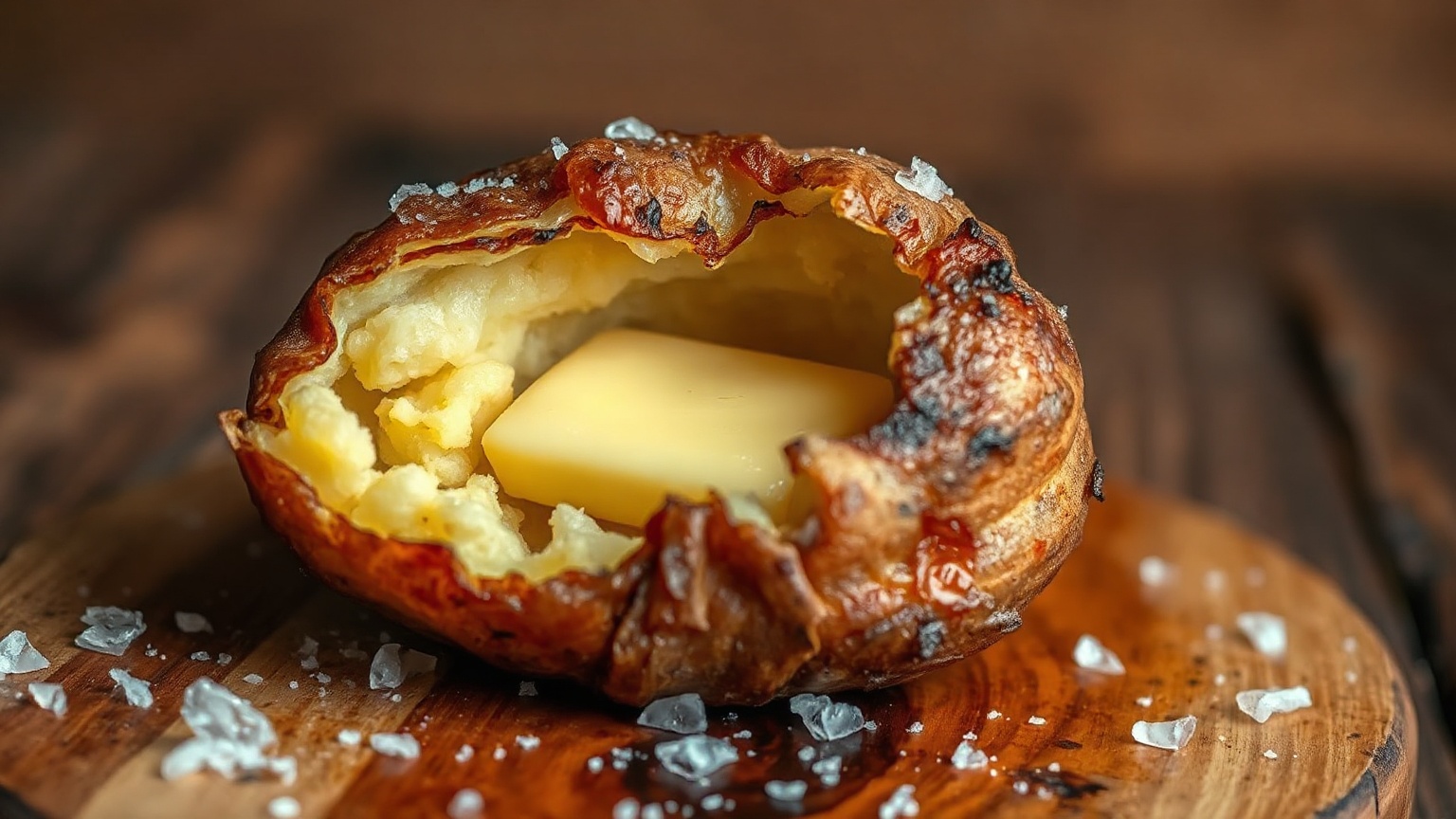
Fork-tender is a fine indicator but it’s imprecise. A fork can slide in at 195°F and the potato will still have a slightly starchy, dense center. The USDA doesn’t set a specific safety temperature for potatoes the way it does for meat, but 205–210°F internal temperature is the target for a fully cooked, fluffy interior. At that range the starches have fully gelatinized. Get an instant-read thermometer — it’s the single most useful thing I own for air fryer cooking.
Visual cues: the skin should look matte and dry, not shiny. The potato should feel a little give when you squeeze it gently with a mitt. If it feels rock solid, it needs more time. If it’s collapsing, it’s slightly overdone (still totally edible, just not ideal texture for holding toppings).
And if you’re reheating a leftover baked potato in the air fryer the next day, that’s a different process entirely — I cover that in detail in the reheating food in a toaster oven guide.
The Short Version
Converting baked potatoes from oven to air fryer isn’t complicated, but it does require adjusting for your specific machine type. Basket air fryer: 400°F, 40–45 minutes, no foil. Toaster oven air fryer: 375°F, 45–50 minutes, flip halfway. Use an instant-read thermometer and shoot for 205–210°F internal. Oil and salt the skin. Don’t crowd the basket. And if your potato is massive, either start at a lower temp or hit it with the microwave first.
Honestly, air fryer baked potatoes beat the oven version most nights — the skin gets crispier than I ever managed to achieve in a conventional oven at the same time investment. That’s not nothing.
Frequently Asked Questions
What temperature do I use to convert an oven baked potato recipe to an air fryer?
Reduce the oven temperature by 25°F for a basket-style air fryer, or by 25–50°F for a toaster oven air fryer. A potato that bakes at 425°F in the oven should cook at 400°F in a basket air fryer or 375°F in a toaster oven air fryer. The circulating fan makes the heat more intense and efficient, so you don’t need as high a temperature to get the same result.
How long does a baked potato take in an air fryer compared to a regular oven?
A medium russet potato that takes 60 minutes at 425°F in a conventional oven takes about 40–45 minutes at 400°F in a basket air fryer, or 45–50 minutes at 375°F in a toaster oven air fryer. That’s a time savings of 15–20 minutes. Always verify doneness with an internal thermometer — aim for 205–210°F in the center.
Can I wrap potatoes in foil in an air fryer?
Don’t use foil in a basket-style air fryer — it blocks the airflow that makes the appliance work and will give you a steamed, not baked, result. In a toaster oven air fryer, foil is fine on the tray underneath the potatoes to catch drips, but don’t wrap the potato itself if you want crispy skin.
Do I need to flip baked potatoes in the air fryer?
In a basket-style air fryer, flipping halfway through is recommended for even cooking and browning on all sides. In a toaster oven air fryer, flipping is more important because the heating element is usually only at the top — skip the flip and the bottom stays pale and soft. Either way, flipping once at the halfway mark takes seconds and makes a noticeable difference.
What internal temperature should a baked potato reach in the air fryer?
A fully cooked baked potato should reach 205–210°F at the center. At this temperature the starches have fully gelatinized, which is what gives you that light, fluffy interior. A fork test can mislead you — a potato can feel “done” at 190°F but still have a dense, slightly gummy center. An instant-read thermometer is the most reliable way to check.

Written by
Emma founded Toastera to turn vague appliance advice into clear, researched, safety-first guidance on toasters and toaster ovens.
Free: the Toaster Oven Cheat Sheet
Get the printable cheat sheet (temps, cook times & safety tips) plus new recipes. No spam, unsubscribe anytime.