Convection bake gets you a better cookie in a toaster oven — crispier edges, more even browning, and faster bake times — but only if you adjust your temperature and timing correctly. The fan circulates hot air instead of letting it sit still, which means cookies don’t just bake from the bottom up. Drop the temperature by 25°F and start checking about 2 minutes early. Ignore those two adjustments and you’ll wonder why your cookies look tan on the outside but feel weirdly raw underneath.
Safety First: Toaster ovens run hot and the exterior walls, rack, and baking pan can cause serious burns — always use dry oven mitts (not a damp towel) when removing pans. Keep the toaster oven on a heat-safe surface with at least 4 inches of clearance on all sides, and never leave it unattended while baking cookies with high-sugar or buttery dough, which can smoke or catch fire if it drips onto the heating element.
Quick Facts: Convection Bake for Cookies in a Toaster Oven
- Reduce your recipe’s temperature by 25°F when switching from regular bake to convection — so a 350°F recipe becomes 325°F.
- Start checking cookies 2–3 minutes before the recipe’s listed time. Convection is faster, and toaster ovens are already small and reactive.
- Convection bake produces noticeably crispier edges and a more even bottom compared to regular bake in the same machine.
- Regular bake still wins for soft, thick cookies (like double-stuffed-style or bakery-thick sugar cookies) where you want a chewy center.
- Small batch baking (6–9 cookies at a time) is where toaster ovens genuinely shine — you’ll heat up a fraction of the energy a full-size oven needs.
What Convection Actually Does (and Why It Matters for Cookies)
Regular bake is passive. The heating element gets hot, air warms up, and your cookie sits there soaking it in — unevenly. The air near the element is hotter. The air near the door? Less so. In a full-size oven that’s annoying. In a toaster oven, where everything is maybe 6 inches from a heating element, it’s a real problem.
Convection adds a fan. That fan keeps moving hot air across the food continuously, which does a few things: it strips away the cool, moist air layer right at the cookie’s surface, it distributes heat more consistently across the pan, and it speeds up the Maillard reaction — that browning process responsible for the slightly caramelized, crispy edge that makes a good chocolate chip cookie actually satisfying.
The result is usually a cookie with more uniform color on the bottom, better edge browning, and a slightly drier (in a good way) texture. For thin-and-crispy styles, it’s hard to argue with. For soft and chewy — honestly, regular bake might suit you better. More on that below.
Convection Bake vs Regular Bake: A Side-by-Side Look
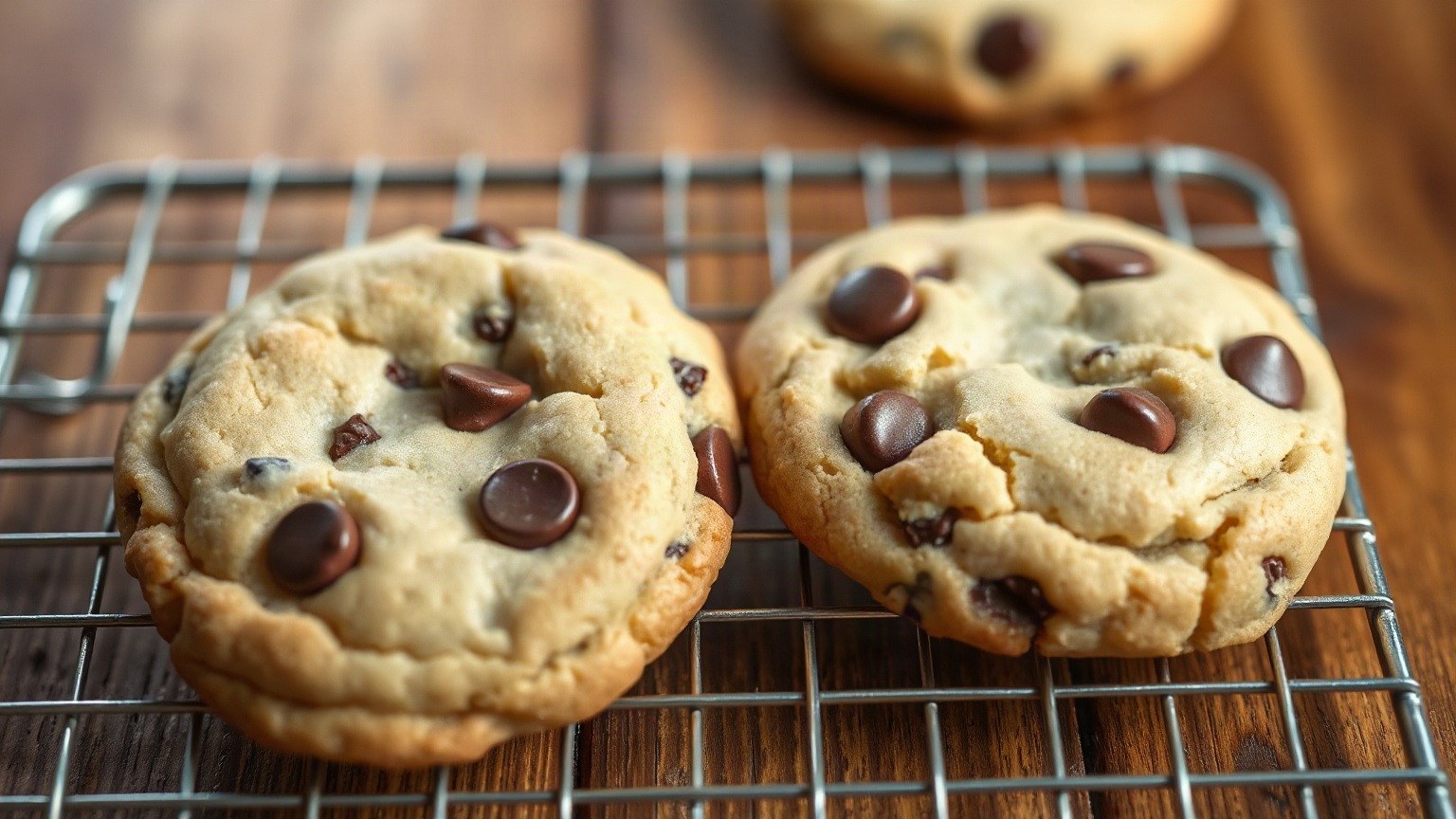
I ran a batch of standard chocolate chip cookies — same dough, same pan, same rack position — through both settings on a mid-range toaster oven to see what actually happened. Here’s what the comparison looked like:
| Factor | Convection Bake (325°F) | Regular Bake (350°F) |
|---|---|---|
| Bake Time (1.5 tbsp dough) | 9–10 minutes | 11–13 minutes |
| Edge Crispness | Defined, golden-brown | Softer, lighter |
| Bottom Color | Even, no pale spots | Slightly darker near element |
| Center Texture | Set, slightly firmer | Softer, more underdone-looking |
| Spread | Moderate, controlled | Slightly more spread |
| Best Cookie Style | Thin-crispy, classic bakery | Thick, soft, chewy |
The convection cookies looked like something from a decent bakery display case. The regular bake batch was fine — actually preferred by one person I tested them on who likes a soft, almost underbaked center. Neither is wrong. They’re just different cookies.
How to Use the Convection Bake Setting for Cookies: Step by Step
Temperature and Time Adjustments
The standard rule: subtract 25°F from whatever your recipe says. If your cookie recipe calls for 375°F, you’re baking at 350°F on convection. If it says 350°F, go to 325°F. Don’t skip this. The fan makes the oven more efficient and the cookies will over-brown fast if you leave the temperature alone.
Time-wise, plan to start checking 2–3 minutes before the recipe says you should. Toaster ovens are small — they preheat fast and respond quickly to changes. I made the mistake of trusting the timer on my first batch and ended up with cookies that were good but more crisp than I wanted. Now I set a timer for 2 minutes under and just peek.
Pan Choice and Rack Position
Use a light-colored, rimless (or low-rimmed) toaster oven baking sheet. Dark pans absorb more heat and will make the bottoms overbrown, especially with convection already pushing hot air around. Rimless or low-rim pans let that circulating air actually reach the cookies instead of bouncing off a 1-inch wall.
Rack position matters more than people realize in a toaster oven because the heating elements are so close. Middle rack is usually the right call for cookies — you want distance from both the top element and the floor. If your toaster oven only has two positions, go with the lower-middle one. The top rack is too aggressive with convection.
Preheat — Properly
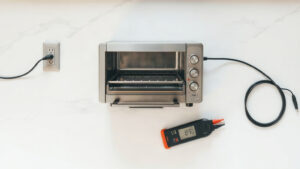
Preheat for at least 5 minutes, preferably 8–10. Toaster ovens cycle on and off during preheating and the internal temperature can be 20–30°F lower than what’s displayed when the preheat light first clicks off. If you’re serious about cookies, an inexpensive oven thermometer will tell you what’s actually happening in there. Mine read 15°F low on convection mode — which explained a lot of disappointing batches before I figured that out.
When Regular Bake Is Actually the Better Choice
Convection bake isn’t automatically superior for every cookie. Here are the situations where I’d switch back to regular bake without hesitation.
Thick, bakery-style cookies. If your dough is portioned big (2–3 tablespoons per cookie) and you want that gooey, almost-raw-in-the-middle thing that thick cookies do, convection can set the outside too fast. The edges firm up before the center has had time to cook through properly. Regular bake gives the heat time to penetrate more gently.
Delicate cookies that spread. Thin, lacy florentines or tuiles — anything with a lot of butter and sugar and not much flour — can get blown around by the convection fan before they’ve had a chance to set. I’ve had florentines come out lopsided because one side caught more airflow. Regular bake for those.
Meringue-based cookies. Totally different problem. Convection pulls moisture out aggressively. Meringues need to dry slowly, not brown. Stick to regular bake on the lowest temperature your toaster oven offers.
And here’s the edge case most articles skip: if you’re baking back-to-back batches, the toaster oven cavity retains heat between rounds. Your second batch in convection mode will likely need 1–2 minutes less than your first. Account for that or the second tray will come out overdone. I’ve ruined more second batches than I’d like to admit.
Toaster Oven Convection Tips That Actually Help
A few specific things I’ve learned from burning more cookies than I should have:
- Chill your dough for at least 30 minutes before baking. Convection bakes faster, and warm dough spreads faster — that combination gives you flat, wide cookies instead of the slight dome you’re looking for.
- Don’t crowd the pan. In a toaster oven you’re already working with limited real estate. 4–6 cookies per batch is realistic for most machines. Crowding blocks airflow and defeats the whole point of convection.
- Use parchment, not greased foil. Greased foil + convection heat = overly browned bottoms. Parchment is more forgiving and easier to slide off the toaster oven wire rack.
- Let the cookies rest on the pan for 2–3 minutes before moving them. Convection-baked cookies firm up quickly as they cool; pulling them too early makes them fall apart.
Serious Eats has a good breakdown of how cookie texture is affected by baking temperature and method — worth reading if you want to get into the science of why butter content and sugar ratios interact differently under convection heat.
Also, if you’re newer to toaster oven baking in general and want to understand how these machines heat up differently than full-size ovens, I wrote about reheating food in a toaster oven which covers a lot of the same heat distribution quirks that apply to baking.
The Verdict
For most cookies — your standard chocolate chip, oatmeal raisin, snickerdoodle — convection bake in a toaster oven is the better setting. You get more even browning, crispier edges, and shorter bake times. You just have to make the adjustments (325°F instead of 350°F, check early, chill your dough, use a light pan). Skip any one of those and the results suffer.
For thick, soft, chewy cookies? Regular bake. For anything delicate? Regular bake. But for the everyday cookie that you want to look and taste like it came from somewhere good, convection is the right call.
If you’re still shopping for a toaster oven that handles baking well, the best mini toaster ovens roundup covers the ones I’d actually recommend — some handle convection far better than others, and the difference in fan placement between models genuinely shows up in cookie results.
Frequently Asked Questions
What temperature should I use for convection bake cookies in a toaster oven?
Reduce your recipe’s stated temperature by 25°F. If the recipe says 350°F, bake at 325°F on convection. Toaster ovens run hotter than full-size ovens to begin with, and convection adds another layer of efficiency — leaving the temperature unchanged will overbrown your cookies.
How do I know when toaster oven convection cookies are done?
Start checking 2–3 minutes before your recipe’s stated time. The edges should be set and lightly golden; the center will look slightly underdone and that’s fine — it firms up as the cookie cools. Pulling them when the center still looks soft is actually the right move for convection-baked cookies.
Can I use convection bake in a toaster oven for any type of cookie?
Most cookies bake well on convection, but not all. Avoid convection for meringues, thin lacy cookies (like florentines), or very thick soft-baked cookies where you want a gooey center. The fan moves air aggressively and can dry out delicate cookies or set the outside of thick cookies before the center cooks through.
Do I need to preheat my toaster oven before baking cookies on convection?
Yes — preheat for 8–10 minutes, not just until the light says ready. Toaster ovens cycle on and off during preheat and the actual internal temperature can lag 15–25°F behind what the dial or display shows. Putting cookie dough in an under-preheated oven changes how the cookies spread and bake.
What pan should I use for baking cookies in a toaster oven on convection?
Use a light-colored, low-rimmed or rimless baking sheet that fits your toaster oven with at least a half inch of space on each side. Dark pans overbrown bottoms under convection heat, and high-rimmed pans block the fan’s airflow from reaching the cookies evenly. Parchment paper on top of the pan makes cleanup easy and prevents over-browning on the bottom.
—
Written by
Emma founded Toastera to turn vague appliance advice into clear, researched, safety-first guidance on toasters and toaster ovens.
Free: the Toaster Oven Cheat Sheet
Get the printable cheat sheet (temps, cook times & safety tips) plus new recipes. No spam, unsubscribe anytime.