A toaster oven reheats soup better than a microwave in almost every situation. It heats more evenly, doesn’t create those weird cold pockets in the center, and won’t turn a creamy bisque into a rubbery mess. The tradeoff is time — a microwave is faster, but if you have five extra minutes and you care about texture, the toaster oven wins.
Safety First: Never put metal bowls, aluminum foil-lined containers, or anything with metallic trim in a microwave. And when using a toaster oven for soup, always use oven-safe cookware (ceramic, glass, or stoneware rated for at least 400°F) — not plastic takeout containers, not paper bowls, and not anything with a lid that isn’t heat-safe. Hot soup can cause serious burns; use oven mitts and keep the oven rack in a low position so you’re not pulling a full bowl of liquid over your face.
Quick Takeaways
- Toaster ovens heat soup more evenly than microwaves, especially thick, chunky, or cream-based soups
- Microwaves are faster (2–4 minutes vs. 10–15 minutes) but tend to create hot spots and can break down delicate textures
- For best toaster oven results, use 300–325°F in an oven-safe bowl, covered loosely with foil
- Broth-based soups tolerate microwave reheating reasonably well; creamy or blended soups really don’t
- Neither method beats reheating on a stovetop — but for countertop appliances, it’s not even close
Why Reheating Soup Is Actually Harder Than It Looks
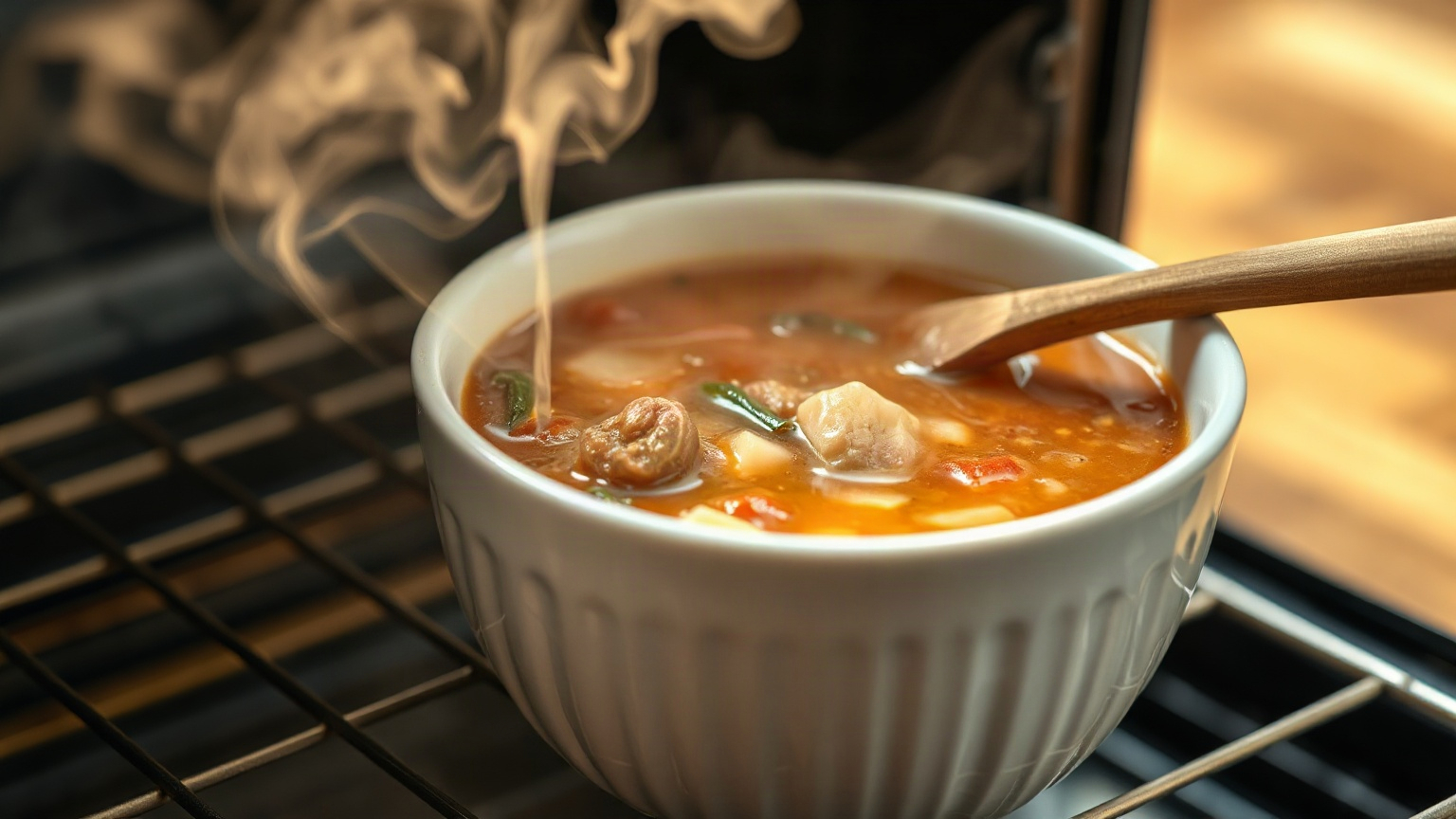
Soup seems simple. It’s liquid, right? Heat it up, done. But anyone who’s nuked a bowl of tomato bisque only to find the edges boiling and the middle still cold knows it’s more complicated than that. Soup has layers — literally. Denser ingredients like potatoes or beans sink, broth sits on top, and fat floats. A microwave heats unevenly because it excites water molecules in a way that isn’t uniform across the dish, especially in something with varying densities.
I’ve scorched the edges of a beautiful white bean soup in the microwave while the center was still lukewarm. It’s deeply annoying. The first time I tried reheating soup in my toaster oven — honestly, only because my microwave was occupied — I was surprised by how much better it turned out. Even temperature, no weird skin on top (I’d covered it loosely with foil), and the texture of the vegetables was still intact.
That said, let’s be honest about what each appliance is actually doing.
How Each Appliance Heats Your Soup
The Microwave Approach
Microwaves use electromagnetic radiation to agitate water molecules, which generates heat. They’re fast, no question. But they heat from the outside in — or more accurately, they heat whatever molecules absorb radiation fastest, which isn’t necessarily uniform. That’s why stirring halfway through actually helps. It redistributes heat that’s built up unevenly.
For thin, broth-based soups like chicken noodle or miso, a microwave is fine. Those soups are mostly water, they heat fast, and the texture isn’t fragile. Two to three minutes on high, stir once, another minute — you’re done. I don’t have strong objections to that.
But a cream of mushroom? A Thai coconut curry soup? A butternut squash bisque? The microwave can cause the dairy or fat emulsion to break, leaving you with a grainy, separated mess that looks sad and tastes slightly wrong. High heat in bursts does that.
The Toaster Oven Approach
A toaster oven heats with radiant heat from electric elements — usually both top and bottom — combined with convection in many modern models. That means the entire oven cavity gets warm, and the heat surrounds your bowl from all sides rather than penetrating it in waves. It’s gentler, more consistent, and much more forgiving for soups with cream, coconut milk, eggs, or anything that can curdle or separate under aggressive heat.
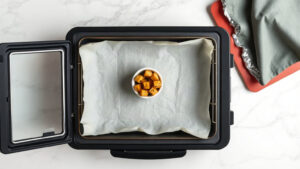
The temperature I use: 300°F, in a ceramic bowl, covered with a small piece of foil (don’t seal it — just tent it loosely to trap steam and prevent a skin from forming). Check it at 10 minutes. Thicker soups might need 12–15. You’re not trying to blast it, just bring it up slowly and evenly.
If your toaster oven has convection, use it. The fan circulation cuts a few minutes off the time and distributes heat even more evenly. For more on reheating food in a toaster oven generally — not just soup — that guide has a lot of useful specifics.
Head-to-Head: Toaster Oven vs Microwave for Soup
| Factor | Toaster Oven | Microwave |
|---|---|---|
| Speed | 10–15 minutes | 2–4 minutes |
| Even heating | Very good | Inconsistent |
| Texture preservation | Excellent | Poor for cream/emulsion soups |
| Risk of overheating edges | Low at 300°F | High without stirring |
| Works for broth-based soups | Yes | Yes (acceptable) |
| Works for cream/blended soups | Yes | Often ruins texture |
| Requires oven-safe dish | Yes | No (microwave-safe only) |
| Needs monitoring | Minimal | Should stir halfway |
What Type of Soup Are You Reheating? It Actually Matters
Broth-Based Soups (Chicken Noodle, Minestrone, Pho)
These are the most forgiving. Thin, water-heavy, no fragile emulsions to break. A microwave handles them well enough — just stir once, don’t overheat the noodles. That said, I still prefer the toaster oven for minestrone because the vegetables stay firmer. Your call. The microwave is a totally reasonable choice here if you’re in a rush.
Cream-Based or Blended Soups (Bisque, Chowder, Butternut Squash)
Use the toaster oven. Seriously. Cream soups heated in a microwave at high power can break — the fat separates, the dairy proteins tighten up, and you get a curdled, slightly grainy texture that no amount of stirring fully fixes. At 300°F in a toaster oven, you’re bringing the soup up gently without that violent burst of energy. Stir once halfway through if you want, but it usually isn’t necessary.
Serious Eats has a good breakdown of how microwaves actually work on food if you want the science — their food lab coverage is worth reading.
Chunky Soups (Beef Stew, Lentil, Chicken and Rice)
Toaster oven, hands down. The microwave will heat the liquid fast while leaving the chunks cold in the middle. With a toaster oven at 325°F, the whole bowl comes up gradually. The meat stays tender. The rice doesn’t turn to mush. And honestly, chunky soups benefit from the slightly lower, ambient heat in a way that actually improves them — it’s closer to what happens when you reheat on a stovetop.
Practical Tips for Reheating Soup in a Toaster Oven
A few things I’ve learned from doing this more times than is probably reasonable:
- Use a ceramic or stoneware bowl. Glass works too, but make sure it’s oven-safe (Pyrex is fine, random diner mugs are not). No plastic, ever.
- Cover loosely with foil. Keeps moisture in, prevents a rubbery skin, and stops soup from bubbling over if it gets enthusiastic. Don’t seal it tight — you want some steam to escape.
- Set the temp to 300–325°F. No higher. You don’t want to boil it aggressively; you want it to come up evenly.
- Check at 10 minutes. Give it a stir if you want. If it’s not warm enough, another 3–5 minutes usually finishes it.
- Use oven mitts. The bowl will be genuinely hot, especially ceramic. This seems obvious until you grab it with a dish towel and regret it immediately.
If you’re using an oven-safe ceramic soup bowl, that’s the ideal vessel. Wide, shallow bowls heat faster than deep, narrow ones. And if you don’t already have a good one, it’s worth picking up — it makes a difference.
One thing that tripped me up early on: I was using a toaster oven that ran hot. I had it set to 325°F and the soup was borderline boiling by the 12-minute mark. If you have a smaller or older toaster oven, it’s worth checking early. The best mini toaster ovens tend to have better temperature accuracy, which matters for things like this more than you’d expect.
What About Containers and Accessories?
One small practical point: a toaster oven sometimes requires a bit more setup. You need an oven-safe container, you need to position it on the rack, and you’ll want to know where your rack is sitting. A low rack position is better for soup bowls — easier to retrieve safely. If you’re regularly reheating things in a toaster oven, having a small toaster oven rack and pan set is actually useful. It gives you more flexibility with placement and makes the whole process feel less improvised.
The microwave, admittedly, asks nothing of you. Any microwave-safe container, 2–3 minutes, done. That convenience is real and I don’t want to dismiss it. If you’re reheating broth soup at 11pm and you’re tired, just use the microwave. But for a Sunday lunch where you actually want to enjoy what you’re eating, take the extra time.
The Bottom Line
The toaster oven is better for reheating soup — not by a little, but by a lot — if texture and even heating matter to you. The microwave is faster and requires less setup, and for thin broth-based soups it’s perfectly adequate. But for anything creamy, blended, or chunky, the toaster oven produces a genuinely better result. That’s not a close call.
My personal rule: if I made the soup from scratch or if it’s something I actually care about eating well, it goes in the toaster oven at 300°F, covered with foil, for about 12 minutes. If it’s a can of soup on a Tuesday afternoon and I need it in three minutes, the microwave is right there. Both appliances have a place. But you asked which is better, and the answer is the toaster oven.
If you’re curious how toaster ovens compare on heating performance more broadly, the how hot a toaster gets breakdown is worth a read — it explains the actual temperature ranges and element behavior in more depth.
Frequently Asked Questions
Can you reheat soup in a toaster oven without it drying out?
Yes — cover the bowl loosely with aluminum foil before placing it in the toaster oven. This traps steam and keeps the soup from losing moisture or forming a skin on top. Set the temperature to 300–325°F and check it at 10 minutes; most soups are ready by 12–15 minutes without any drying out.
What temperature should I use to reheat soup in a toaster oven?
300–325°F is the right range for reheating soup in a toaster oven. Higher temperatures can cause the soup to boil unevenly or cause cream-based soups to separate. Lower temperatures work too, but you’ll be waiting longer without much benefit.
Is it safe to put a ceramic bowl in a toaster oven?
Yes, as long as the bowl is labeled oven-safe or rated for temperatures above 350°F. Most stoneware and proper ceramic soup bowls handle toaster oven temperatures fine. Avoid any bowl with metallic glaze, cracks, or one that’s labeled “microwave-safe only” — that designation doesn’t mean it’s oven-safe.
Why does my soup come out unevenly heated in the microwave?
Microwaves heat by exciting water molecules, and they don’t do it uniformly across the dish — denser areas and the outer edges tend to absorb energy differently than the center. Stirring halfway through helps redistribute heat, but it won’t fully solve the problem with thick or chunky soups. A toaster oven’s ambient heat avoids this issue almost entirely.
How long does it take to reheat soup in a toaster oven?
Most soups take 10–15 minutes at 300–325°F in a toaster oven. Thin broth-based soups are on the shorter end; thick chowders or chunky stews may need closer to 15 minutes. Using convection mode, if your toaster oven has it, cuts a few minutes off the time and heats more evenly.

Written by
Emma founded Toastera to turn vague appliance advice into clear, researched, safety-first guidance on toasters and toaster ovens.
Free: the Toaster Oven Cheat Sheet
Get the printable cheat sheet (temps, cook times & safety tips) plus new recipes. No spam, unsubscribe anytime.