A toaster’s heating elements can reach temperatures between 1,100°F and 1,300°F (593°C–704°C) during normal operation. When you see a spark as bread goes in, it almost always means something conductive — crumbs, foil fragments, or a wet surface — has bridged the gap between the live element and the toaster’s metal chassis. Whether that’s a minor nuisance or a sign to throw the thing out depends entirely on what’s causing it.
Safety First: A sparking toaster can ignite crumbs, melt internal wiring, or deliver a shock if the chassis becomes live. Unplug the toaster immediately when you see sparking — do not just switch it off at the wall. Do not insert any utensil to investigate while it’s plugged in. If sparking is recurring or the toaster smells burnt after the spark, do not use it again until you’ve identified and resolved the cause.
Quick Facts: Toaster Sparking at a Glance
- Heating elements in a standard pop-up toaster run at roughly 1,100–1,300°F — that’s hotter than most people realize (see how hot a toaster gets for a deeper breakdown).
- Crumb buildup is the single most common cause of sparking; an empty crumb tray every week fixes it most of the time.
- Metal in the slot — foil, a twist tie, a too-thin metal skewer — will always spark. Always.
- A single small spark on first use of a new toaster is usually just manufacturing residue burning off. Repeat sparks are not normal.
- If the element itself is visibly cracked or broken, the toaster needs to be replaced, full stop.
I’ve been testing toasters and toaster ovens in my own kitchen for years, and I’ll be honest — the first time my old Cuisinart threw a small spark when I dropped in a slice of sourdough, I nearly knocked my coffee over. Turned out the crumb tray hadn’t been emptied in about three weeks. Embarrassing, in retrospect. But it’s a good lesson: most sparking issues are mundane, fixable, and completely avoidable.
The Most Common Reasons Your Toaster Is Sparking
Let’s work through the actual causes, because they’re not all equally serious.
Crumb Buildup at the Bottom
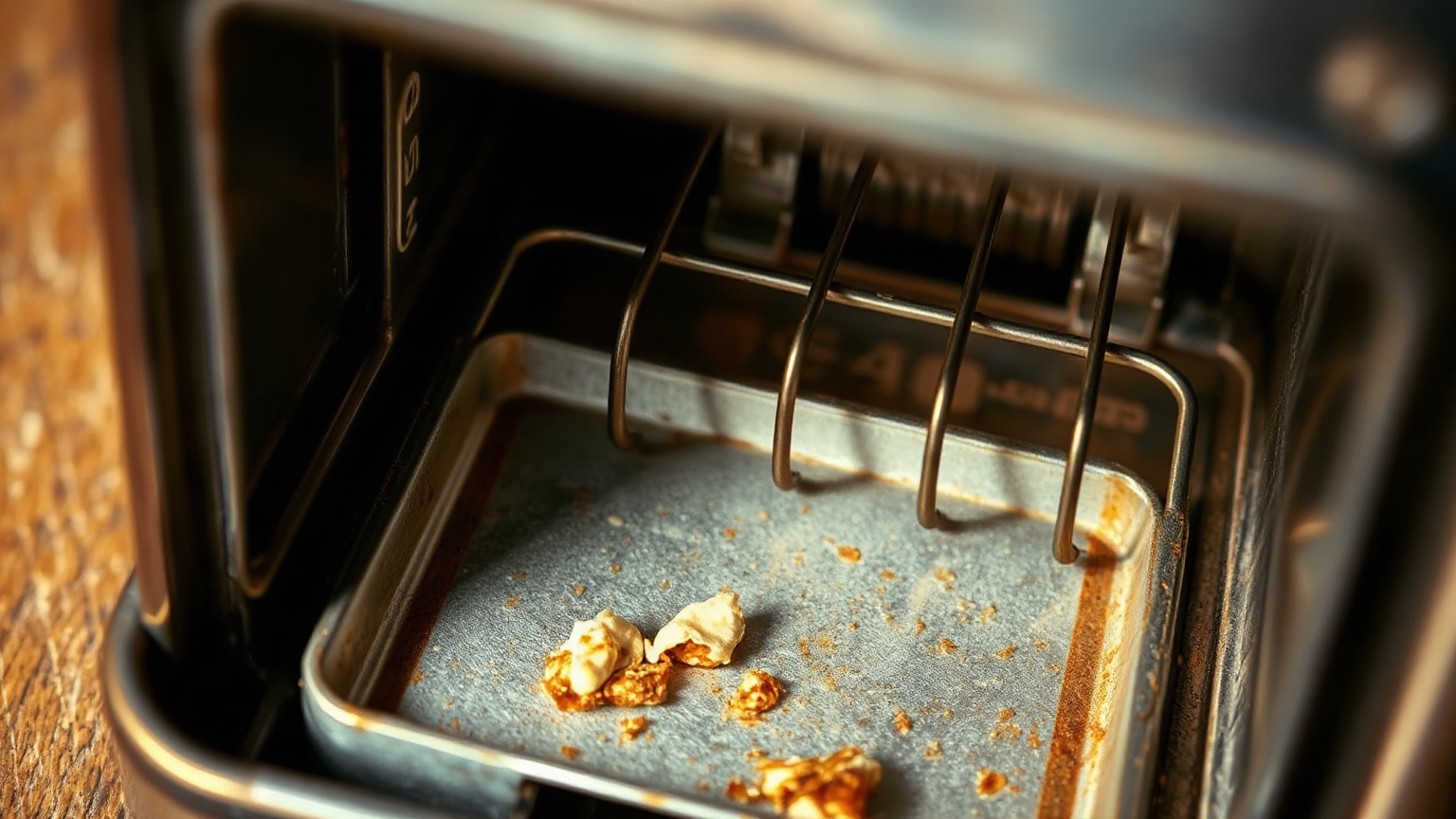
This is, by a wide margin, the most common culprit. Crumbs fall, they accumulate, and eventually a pile of them sits close enough to the heating element that they catch or arc when you drop a new slice in. The spark you see is basically a tiny electrical discharge jumping across the gap between the element and a carbon-rich crumb pile.
Pull the crumb tray out. If it’s got a visible layer of debris — or worse, dark, oily residue from something like a butter-topped English muffin — that’s your answer. Clean it with warm soapy water, let it dry completely before putting it back, and turn the toaster upside down over the sink and give it a gentle shake to dislodge anything stuck inside. Don’t go poking around with a fork. Ever.
Metal Accidentally in the Slot
Metal and toaster slots are a terrible combination. A forgotten twist tie on a bread bag. A foil wrapper that partially came away with the slice. Even a metallic label on the bread’s crust — I’ve seen this happen with some artisan bakery packaging. Metal conducts electricity far too well, and the moment it touches or gets close to a live element running at over 1,000°F, you get a spark. Or worse.
If you know you put something metallic in by accident, unplug the toaster before trying to retrieve it. Use wooden tongs or a dry wooden chopstick — not metal cutlery, not wet hands.
A Damaged or Broken Heating Element
Heating elements in pop-up toasters are thin nichrome wire coils or flat ribbon elements. They’re fragile. If you’ve ever jammed a thick bagel in and forced the carriage down, or if you just have an older toaster that’s seen a lot of use, the element can develop small cracks or breaks. A broken element can arc — that’s the electrical equivalent of a spark gap — every single time current flows through it.
Peer into the slots with the toaster unplugged and held at an angle in good light. If you see a visible gap, a dark scorch mark along the element, or a section that looks physically different from the rest, that element is compromised. A toaster in this state shouldn’t be used. It’s not repairable at home in any practical sense.
Moisture or a Wet Slice of Bread
Water and live electrical components produce sparks. Wet bread — whether you’ve defrosted a slice improperly, tried to toast bread that was still damp from condensation, or the toaster itself got splashed — introduces moisture right next to elements that are drawing serious current. A brief spark on insertion of a damp slice is common. The fix is: let the bread dry for a couple of minutes, and keep your toaster away from the sink splash zone.
First Use of a New Toaster
New toasters sometimes spark or smoke slightly on the first one or two uses. This is manufacturing residue — lubricants, coatings, tiny metal filings from the factory — burning off the elements. I always run a new toaster empty for one full cycle on the highest setting before I use it for actual food, and I do it near an open window. One or two very small sparks during this burn-in are normal. If it’s still sparking on the third or fourth use, something’s wrong and you’d want to contact the manufacturer.
How Serious Is the Risk? A Honest Assessment
Not every spark is a catastrophe. But none of them should be ignored, either.
A small, one-time spark caused by a crumb — and then nothing — is low risk once the crumb tray is cleaned. Recurring sparking is a different matter. Repeated arcing can degrade the element faster, can ignite accumulated crumbs (toaster fires are more common than people think — the National Fire Protection Association consistently lists toasters among the top causes of kitchen fires), and can, in a worst case, damage wiring in ways that affect the chassis ground.
If your toaster sparks every time you use it, smells like burning plastic rather than burning bread, or has ever tripped a circuit breaker, those are signs to replace it rather than keep troubleshooting. Some things just aren’t worth the risk.
| Cause of Sparking | Risk Level | Fix | Replace Toaster? |
|---|---|---|---|
| Crumb buildup | Low–Medium | Clean crumb tray and interior | No (if sparking stops) |
| Metal in the slot | High | Remove metal, unplug first | Inspect element after |
| Damaged heating element | High | None — not DIY repairable | Yes |
| Wet bread or moisture | Medium | Dry bread; reposition toaster | No (if one-time event) |
| New toaster burn-in | Very Low | Run empty first use | No (first 1–2 uses only) |
| Damaged wiring/chassis | Very High | None at home | Yes, immediately |
How to Prevent Toaster Sparking Going Forward
Most of this is maintenance. Genuinely unglamorous, but it works.
Clean the Crumb Tray Weekly
I empty mine every Sunday. Takes about 45 seconds. Wash it, dry it fully before reinserting — a damp tray is its own problem. Also flip the toaster upside down over the bin occasionally to shake out debris that falls past the tray. It’s amazing what accumulates in there.
Check Your Bread Before It Goes In
Quick visual scan. Twist ties, metal clips, foil wrappers — they’re easy to miss when you’re half-awake at 7am. Frozen bread should be defrosted or at least surface-dry before toasting. If you’re toasting directly from frozen, most modern toasters have a defrost setting that runs at lower wattage first; use it.
Don’t Overstuff the Slots
Bagels, thick Texas toast, those enormous supermarket bread slices — force-fitting them can bend or crack the guide wires and eventually damage the element. If it doesn’t drop in without resistance, it’s too big for that toaster. You’d be better off with a wide-slot toaster for thick bread, or switching to a toaster oven for anything oversized.
Position It Away From Water Sources
Right next to the sink is the worst spot for a toaster. Steam from a boiling kettle directly behind it isn’t great either. A foot of clearance from any water source makes a real difference. I learned this after a splashback incident involving pasta water — not one of my better moments.
Know When to Replace It
The average pop-up toaster lasts six to eight years with reasonable care. If yours is pushing a decade, is sparking regularly, and cost $25 new, just replace it. The math on repair-versus-replace doesn’t work in your favor. There are genuinely good options in the $40–$80 range, and if you’re thinking about stepping up to a toaster oven for more flexibility — especially for reheating food or doing more than just toast — it’s worth considering one of the best mini toaster ovens on the market right now.
For replacing standard pop-up toasters, the Cuisinart 2-slice stainless toasters consistently land well in my testing — reliable element consistency, wide slots, easy-to-clean crumb tray. Not exciting, but they work.
When the Sparking Means It’s Already Unsafe
Some signs go beyond “clean the crumb tray.” These are the ones that mean stop using it now:
- Sparking happens every single use, regardless of what you put in or how clean it is.
- You can see scorch marks on the outside of the toaster’s housing.
- The power cord feels warm or has any visible damage.
- The toaster has been wet — dropped in water, or had liquid spilled into it. Even if it “seems fine,” internal corrosion can cause intermittent arcing later.
- It’s tripped your kitchen’s circuit breaker.
The U.S. Consumer Product Safety Commission recommends discarding any appliance that has been submerged or had significant water intrusion, even if it appears to work afterward. I’d extend that to any toaster showing persistent electrical abnormalities. It’s a $40–$80 appliance. It’s not worth the alternative.
The Bottom Line
A spark when bread goes in is usually the toaster telling you something mundane — clean me, or check what you just dropped in. Do that, and nine times out of ten the problem goes away. But if sparking is happening consistently, if the element looks damaged, or if you’ve got any of the serious warning signs above, don’t try to nurse the appliance along. Toasters are cheap enough to replace that it genuinely doesn’t make sense to gamble with one that’s behaving strangely. Unplug it, assess it honestly, and make the call.
Frequently Asked Questions
Why does my toaster spark when I put bread in?
The most common reason is crumb buildup near the heating element — accumulated debris can arc when the element heats up and bread is inserted. Other causes include moisture on the bread, a metal object accidentally in the slot, or a damaged heating element. Clean the crumb tray first; if sparking continues after that, inspect the element with the toaster unplugged.
Is it safe to use a toaster that sparks?
It depends on the cause. A single spark from a dirty crumb tray, followed by no further sparking after cleaning, is generally low risk. Recurring sparking, sparking with a visibly damaged element, or any spark accompanied by a burning plastic smell means the toaster should not be used until the cause is identified — and in most cases, replaced.
How hot does a toaster get?
The heating elements in a standard pop-up toaster reach approximately 1,100°F to 1,300°F (593°C–704°C) during a toast cycle. The air inside the toaster slot gets to somewhere around 300°F–400°F. This is why crumbs, moisture, and metal so easily cause sparks — the operating conditions are extreme.
Can a sparking toaster start a fire?
Yes. Toasters are one of the leading causes of kitchen fires, and sparking near accumulated crumbs is a direct fire risk. A spark can ignite built-up debris in the crumb tray or inside the chassis. Keeping the crumb tray clean and not leaving the toaster unattended with a full crumb tray significantly reduces this risk.
Is it safe to leave a toaster plugged in?
Toasters draw minimal standby power when idle, but leaving them plugged in does carry a small ongoing risk — particularly if the crumb tray is full or the toaster has any existing wiring issues. Unplugging it when not in use is the safest habit, and it’s what I do personally. It takes two seconds and eliminates any residual risk entirely.

Written by
Emma founded Toastera to turn vague appliance advice into clear, researched, safety-first guidance on toasters and toaster ovens.
Free: the Toaster Oven Cheat Sheet
Get the printable cheat sheet (temps, cook times & safety tips) plus new recipes. No spam, unsubscribe anytime.