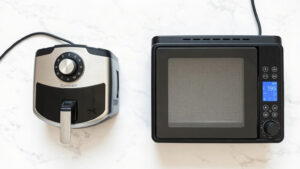
If your toaster turns on but won’t heat up, the most likely culprits are a broken heating element, a faulty thermostat, or crumb buildup blocking proper heat circulation. Most toasters run between 600 and 1,200 watts and reach internal temperatures of around 300–400°F — if something in that chain fails, you’ll get light and movement but no actual toast. The fix is sometimes dead simple (cleaning and a reset), and sometimes it means the toaster’s done for good.
Safety First: Before inspecting or cleaning any part of your toaster, unplug it from the wall — not just turn it off. Toasters can store residual heat in their elements and carry live current even when the lever is up. Never stick metal objects inside a plugged-in toaster. If you smell burning plastic or see scorched wiring, do not attempt a DIY repair; dispose of the unit safely and replace it.
Quick Facts: Toaster Not Heating Up
- A functioning toaster reaches 300–400°F inside; if yours is turning on but not getting hot, the heating element or thermostat has likely failed.
- Crumb tray buildup is the most overlooked cause — packed crumbs can block airflow and, in some models, trigger a safety cutoff.
- Most toaster repairs involving the internal wiring are not worth attempting yourself — the parts cost nearly as much as a new budget toaster.
- A toaster that clicks, lights up, or ejects properly but produces no heat is almost always an element or thermostat issue, not a power problem.
- If your toaster is under a year old and fails like this, check the warranty before touching anything — most brands will replace it free.
What a Toaster Actually Does When It “Turns On”
There’s a common assumption that if the toaster’s lever locks down and the little indicator light comes on, it’s working. That’s not quite right. The locking mechanism and the heating element are separate systems. The lever can engage perfectly — holding your bread in place, triggering the timer, illuminating the light — while the heating element sits there doing absolutely nothing. I made this mistake myself with an old Cuisinart 2-slice that I assumed was fine because the lever clicked satisfyingly into place. Nope. The toast came out exactly as pale and floppy as it went in.
Understanding this separation is actually useful. It narrows down the problem fast. If the mechanical parts work but there’s no heat, you’re dealing with an electrical failure inside the toaster. That’s a specific, diagnosable issue.
The Most Common Reasons a Toaster Won’t Heat Up
1. The Heating Element Has Burned Out
This is the most common cause. Full stop. Toaster heating elements are thin nichrome wire coils or strips that glow red-hot when current passes through them. Over time — especially if you’ve been running the toaster on max heat repeatedly — they fatigue and eventually snap or burn out entirely. When that happens, you get zero heat from the affected element. Some toasters have multiple elements; if one side burns out, you might get uneven browning or one side of your bread just… not toasting at all.
You can usually spot this. Unplug the toaster, hold it up to a light source and look through the slots. The heating elements look like thin coiled wires or flat strips. If any segment looks visibly broken, charred differently from the rest, or has a gap in it — that’s your problem. It’s toast. The toaster, I mean.
2. The Thermostat or Thermal Fuse Has Tripped
Toasters have a thermal fuse — a small safety device designed to blow if the toaster overheats. This protects against fires. But sometimes it trips prematurely, especially in cheaper models or in a toaster that’s been sitting unused for a long time. Once the thermal fuse blows, the toaster won’t heat up no matter what you do. The light can still work. The lever still engages. But the fuse is sitting there like a broken link in a chain, cutting power to the elements.
Replacing a thermal fuse is technically possible if you’re comfortable with a multimeter and some basic soldering. Realistically? On a toaster under $40, it’s rarely worth the effort. The fuse itself might cost $3, but you’ll spend 45 minutes on it and probably compromise the safety integrity of the appliance anyway. I’d only bother if the toaster has sentimental value or cost over $80 new.
3. Crumb Buildup or a Dirty Heating Chamber
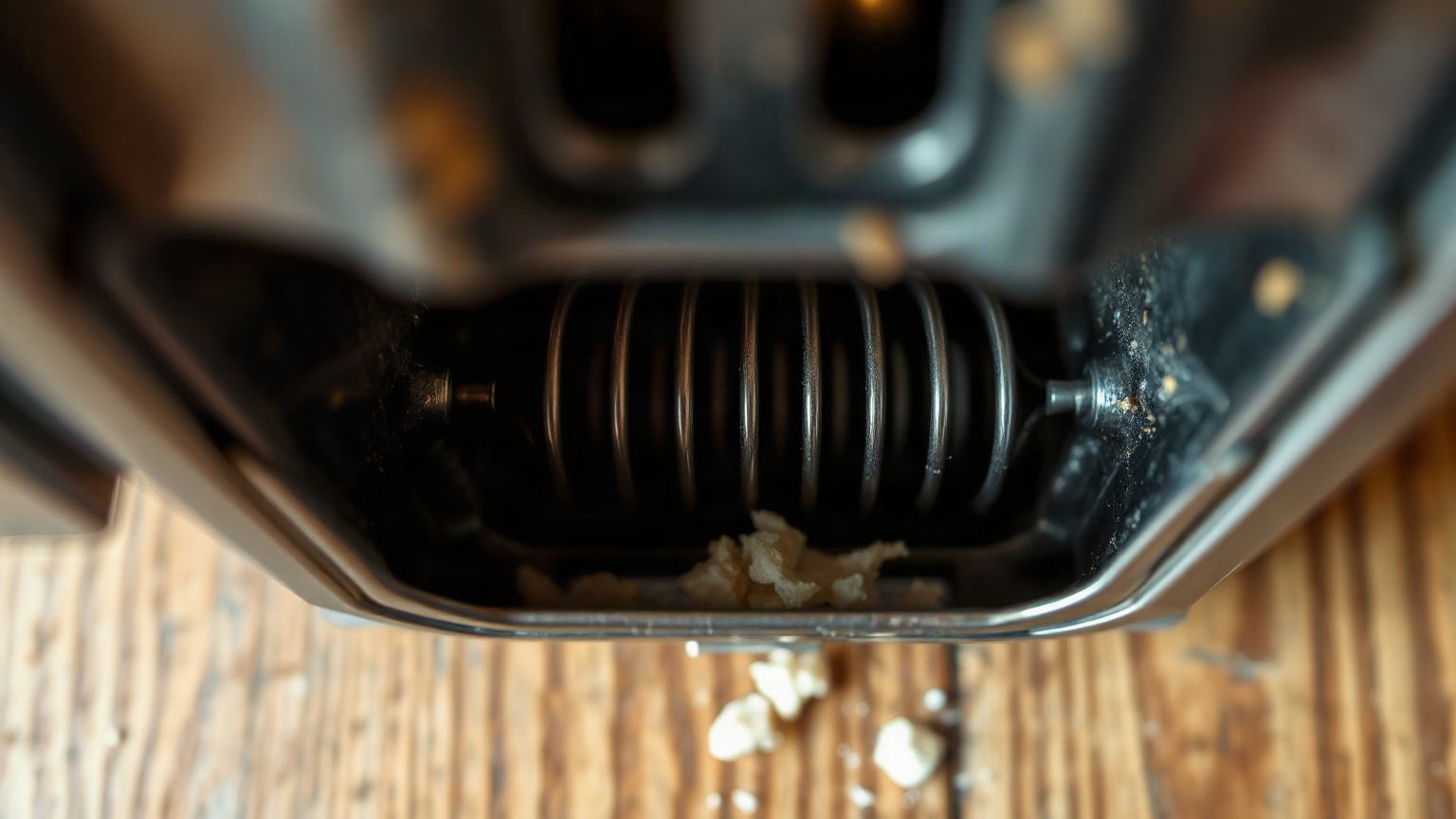
This one surprises people. A toaster that hasn’t been cleaned in months — maybe years, I’m not judging — can accumulate enough crumb debris to partially block the heating elements. In some cases, compressed crumbs actually contact the element directly, causing it to short or triggering the thermal cutoff. It’s one of those situations where the fix is embarrassingly simple.
Unplug the toaster. Let it cool completely. Pull out the crumb tray and tap the whole unit upside down over the trash. You’ll be mildly horrified by what falls out. Clean the tray with a damp cloth, let everything dry fully, then try again. I won’t pretend this solves the heating element problem — it doesn’t — but it rules out the dumb stuff first. And honestly, the number of times I’ve seen people skip this step and go straight to “I need a new toaster” is kind of remarkable.
4. A Wiring or Connection Failure
Less common, but it happens. The internal wiring connecting the element to the control board can corrode, work loose, or get damaged — especially if the toaster took a fall or got moisture inside it. This one you really can’t diagnose without opening the toaster up, and opening the toaster up voids warranties and creates safety risks I’m not willing to casually recommend. If you suspect this, either take it to a small appliance repair shop (they exist, though they’re getting rare) or replace the unit.
How to Diagnose the Problem Yourself (Without Getting Hurt)
Here’s the sequence I’d actually follow if this happened to me. In order.
Step one: Unplug the toaster. Always. Non-negotiable.
Step two: Clean it. Remove the crumb tray, shake it out, let it air for 20 minutes, plug back in and test. If it heats now — great, you’re done, go make some toast.
Step three: Visual inspection through the slots. With the toaster unplugged and held up to a window, look at the elements. Any obvious breaks or damage?
Step four: Try a different outlet. Sounds obvious, but a tripped GFCI outlet will cut power in ways that still let small indicator lights illuminate. Press the reset button on any outlet with one nearby, or plug into a different circuit.
Step five: If it still won’t heat and you see no obvious damage, the element or thermal fuse has likely failed internally. At this point, you’re weighing repair cost vs. replacement. For most people, replacement wins.
For more on how toasters work internally and what normal operating temperatures look like, check out how hot a toaster gets — it gives helpful context for what “working correctly” actually means thermally.
Repair vs. Replace: An Honest Breakdown
I’ve seen people online insisting you should repair every toaster that breaks. I respect the intention — appliance waste is a real problem — but I also live in the real world. Here’s how I actually think about it.
| Toaster Price Paid | Problem Type | Repair Worth It? | Estimated Repair Cost |
|---|---|---|---|
| Under $30 | Any internal failure | No | Near or above replacement cost |
| $30–$60 | Thermal fuse only | Maybe, if handy | $5–15 in parts, 1–2 hours labor |
| $60–$100 | Element failure | Possibly — get a quote | $15–30 in parts |
| Over $100 | Any failure | Yes, check warranty first | Manufacturer repair may be free |
| Any price | Scorched wiring/smell | No — safety risk | Dispose of unit |
My honest take: if the toaster cost under $50 and it’s not heating, buy a new one. You can get a solid wide-slot stainless steel 2-slice toaster for $25–40 that’ll serve you well for years if you clean it regularly. Spending two hours trying to replace a thermal fuse in a $28 toaster is not how I want to spend my Saturday morning.
If you’re in the market for an upgrade anyway, it might be worth looking beyond a basic toaster. I’ve written about the best mini toaster ovens — they cost more upfront but do a lot more, and a dead toaster is honestly a decent reason to make the switch.
When It’s a Toaster Oven, Not a Pop-Up Toaster
Everything above applies primarily to pop-up slot toasters. Toaster ovens that won’t heat up are a slightly different animal. They have more components — upper and lower heating elements, a convection fan in some models, a thermostat dial or digital control board, and sometimes a separate broil element. When a toaster oven turns on (fan runs, light comes on, display works) but doesn’t heat, the most likely issues are a failed bake element, a failed thermostat, or a blown thermal fuse in the oven cavity.
The bake element on a toaster oven is often visible — it’s the coil or bar along the bottom of the oven interior. If it’s not glowing orange-red after about 60 seconds of preheating, it’s probably burned out. Replacement elements for popular toaster oven models like the Breville Smart Oven or Cuisinart TOA-60 are actually available on Amazon and aren’t terribly expensive — usually $15–30. This is one repair where the economics make more sense, especially if the oven cost $100+ new.
You can find toaster oven replacement heating elements for many common models, though you’ll need to know your specific model number before ordering. Also worth checking: the toaster oven door seal. A damaged seal lets heat escape dramatically, which can make it seem like the oven isn’t heating when it’s actually just losing heat too fast to register properly.
If the oven runs but food just isn’t cooking the way you expect, that’s a different troubleshooting path — I’d start with reheating food in a toaster oven to make sure your temperatures and rack positions are right before assuming hardware failure.
Wrapping Up
A toaster that turns on but won’t heat is almost always a heating element, thermal fuse, or (occasionally) a crumb-related issue. Start with the easy stuff — cleaning, checking the outlet, visual inspection through the slots. If none of that reveals the problem, you’re likely looking at an internal electrical failure. At that point, whether you repair or replace comes down to what the toaster cost and how much the repair will run you. For most cheap-to-mid-range pop-up toasters, replacement is the smarter call. For pricier toaster ovens with accessible elements, it’s often worth fixing.
Whatever you decide, don’t keep using a toaster that’s behaving strangely. A toaster that clicks on but doesn’t heat is annoying. One that overheats or has damaged wiring is genuinely dangerous. The U.S. Consumer Product Safety Commission lists toasters among common kitchen fire sources — it’s not alarmist to take a broken appliance seriously. Unplug it, diagnose it properly, and deal with it. Your kitchen will thank you.
Frequently Asked Questions
Why does my toaster turn on but not heat up?
The most common reason is a failed heating element or a blown thermal fuse — both cut power to the heating function while leaving the mechanical and indicator systems working normally. A thorough cleaning and outlet check should be your first step, but if those don’t solve it, the internal electrical components have likely failed. For most budget toasters, replacement is more practical than repair.
How hot does a toaster get inside?
A standard pop-up toaster reaches internal temperatures of roughly 300–400°F during normal operation, with the heating elements themselves glowing at much higher surface temperatures — sometimes over 1,000°F at the element surface. The browning of bread happens through a combination of radiant heat from those elements and the Maillard reaction in the bread itself. If your toaster isn’t reaching even basic warmth, something in the heating circuit has failed.
Can I fix a toaster heating element myself?
Technically yes, but it’s rarely advisable for pop-up toasters — the parts are fiddly, warranty implications are real, and the cost savings over buying a new budget toaster are minimal. For toaster ovens, replacement bake elements are more accessible, cheaper relative to the appliance’s value, and easier to swap out safely. Always unplug the unit fully and let it cool for at least 30 minutes before attempting any internal inspection.
Is it safe to leave a toaster plugged in when not in use?
Most modern toasters are safe to leave plugged in, but it’s not a habit worth keeping. A faulty toaster left plugged in overnight is a real fire risk, and even a healthy one draws a small phantom load continuously. Unplugging after each use is the cleaner and safer approach, and it also protects against power surges. This is especially true if the toaster has been behaving oddly — like turning on without heating — which can indicate an underlying electrical issue.
How long should a toaster last before it stops heating?
A decent quality toaster should last 6–10 years with regular use and basic cleaning. Budget models sometimes fail in 2–3 years, particularly if run consistently on high heat settings or rarely cleaned. If your toaster is under two years old and the heating element has already failed, that’s a warranty issue — contact the manufacturer before spending any money on repair or replacement.
—
Written by
Emma founded Toastera to turn vague appliance advice into clear, researched, safety-first guidance on toasters and toaster ovens.
Free: the Toaster Oven Cheat Sheet
Get the printable cheat sheet (temps, cook times & safety tips) plus new recipes. No spam, unsubscribe anytime.