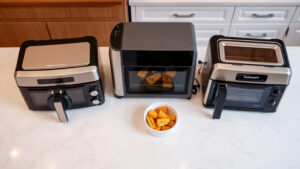
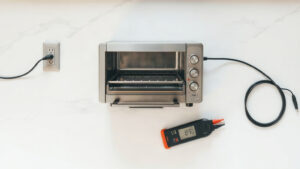
For reheating leftovers, a toaster oven wins almost every time. A standard pop-up toaster tops out around 300°F at the bread surface and can only handle flat, dry items — it’s not really designed for food at all. A toaster oven, by contrast, heats to 400–450°F with circulating air, handles everything from pizza to roasted vegetables, and leaves food tasting like it was cooked fresh rather than nuked into submission. The one exception: if you’re only ever reheating sliced bread or a bagel, the toaster gets it done in about 90 seconds flat and you don’t need anything fancier.
Safety First: Never place foil-wrapped food directly on a toaster oven’s heating element, and don’t use a pop-up toaster to reheat anything moist, greasy, or wrapped — this is a genuine fire risk. Always pull the crumb tray and wipe it clean after reheating fatty foods like pizza or meat. Keep either appliance at least 4 inches from walls or cabinets when in use, and never leave a toaster oven unattended at high heat with greasy food inside.
Quick Facts: Toaster vs Toaster Oven for Reheating
- Toaster ovens reheat at 350–425°F with convection — food stays crispy, not soggy
- Pop-up toasters max out around 300°F at the surface and are only safe for dry, flat bread products
- A toaster oven typically preheats in 3–5 minutes, compared to 15–20 minutes for a full-size oven
- For pizza, fries, or casseroles, the toaster oven produces noticeably better texture than a microwave
- If counter space is tight and you only reheat bread, the pop-up toaster is the smarter buy
What Each Appliance Actually Does to Your Leftovers
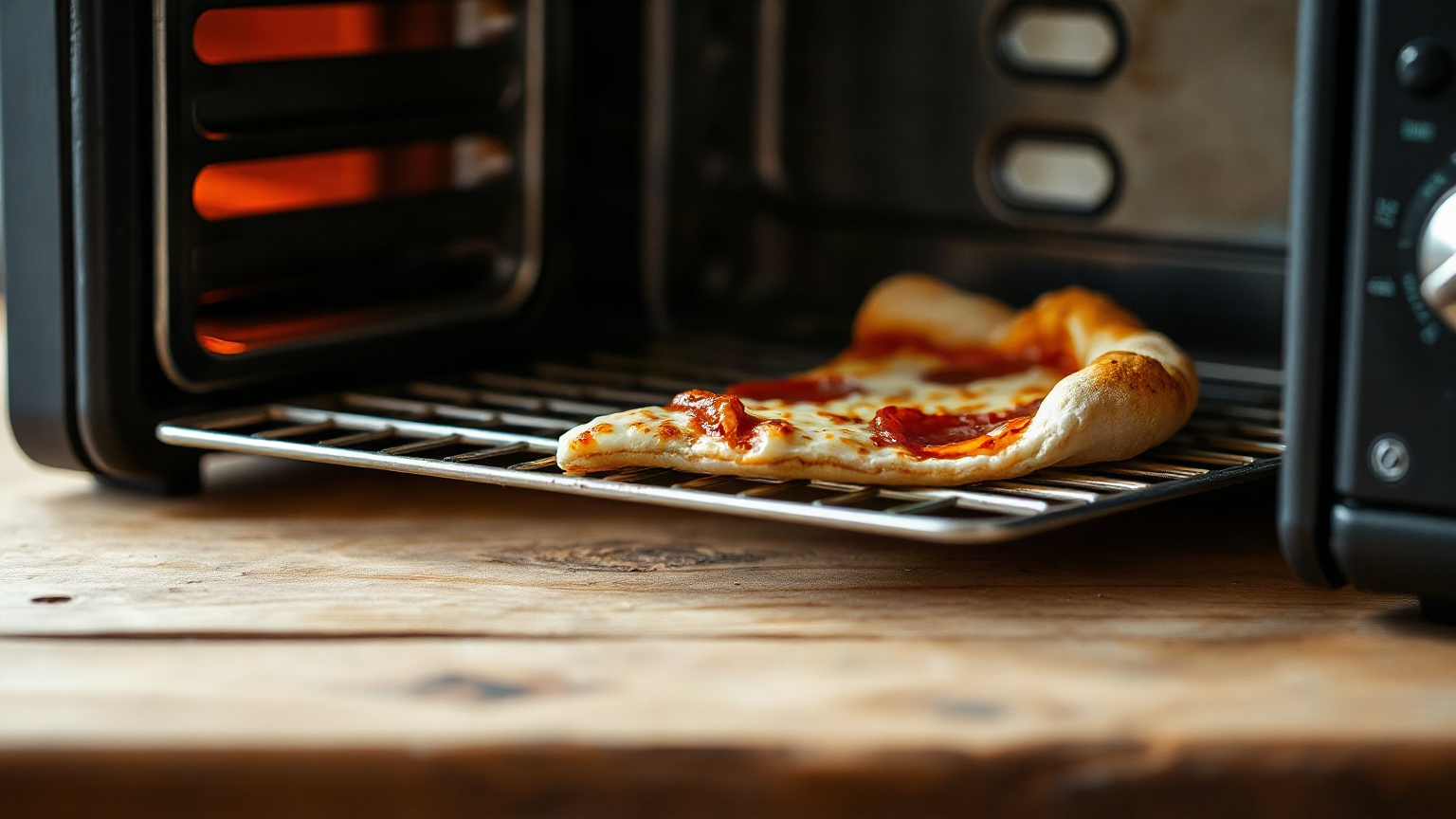
Here’s what I want to clear up first: a pop-up toaster is not a reheating device. It’s a bread-browning device. The heating elements run vertically on both sides of the slot and they’re calibrated for dry bread — toast a soggy slice of pizza in there and you’re looking at grease dripping onto the element, which is both disgusting and dangerous. I made that mistake exactly once with a thin slice of focaccia. Never again.
A toaster oven works completely differently. You’ve got heating elements on top and bottom (and in convection models, a fan that circulates hot air), an actual oven cavity, and real temperature control. That matters. You can learn more about how hot a toaster gets vs a toaster oven — the gap is significant and it explains a lot about why these two appliances shouldn’t even be compared for reheating purposes in most situations.
What the Toaster Does Well
Sliced bread. English muffins. Bagels. Frozen waffles. That’s genuinely the list. For those items, it’s fast — 90 seconds to 2 minutes — and it creates that Maillard browning that makes toast taste like toast. Counter footprint is tiny. Energy draw is low (around 800–1200 watts but only for a couple of minutes, so actual consumption is minimal). If your idea of reheating leftovers is strictly “yesterday’s sourdough,” the toaster is your appliance.
What the Toaster Oven Does Well
Everything else. Pizza, roasted chicken, fries, casseroles, stuffed peppers, spring rolls, leftover steak — a toaster oven handles all of it without turning it into a rubbery, steamed mess the way a microwave does. The dry heat is the key thing. It re-crisps surfaces while heating through from outside in, which is exactly how the food was originally cooked. Texture comes back. You can read a deeper breakdown of reheating food in a toaster oven if you want the specifics for different food types.
Real-World Reheating Test: What I Actually Found
I ran an informal side-by-side over a few weeks with my Breville Smart Oven and a basic 2-slot toaster sitting right next to it. The items I tested: day-old pizza, leftover roasted broccoli, a portion of chicken thighs, some garlic bread, and a plain sourdough slice.
The sourdough? Toaster won. Faster, slightly crispier crust, no preheating. For everything else, it wasn’t even close. The pizza reheated in the toaster oven at 375°F for 6 minutes came out with a crispy bottom — genuinely close to fresh. The chicken thighs at 350°F for 10–12 minutes stayed juicy and the skin re-crisped. The roasted broccoli at 400°F for about 5 minutes lost its sad microwave limpness and actually had texture again.
The garlic bread was interesting — both appliances handled it fine, but the toaster oven at 325°F for 4 minutes gave a more even warm-through without over-browning the top. The toaster made the outside crunchier than I wanted and the interior was barely warm. So even for bread, it depends on what you want out of it.
First time I used the toaster oven for pizza, I had it at 400°F and left it for 9 minutes. The cheese went a little past melted into slightly browned — not ruined, but definitely not ideal. Dropped to 375°F, 6 minutes, and that’s my standing setting now.
Toaster vs Toaster Oven: Side-by-Side Comparison
| Factor | Pop-Up Toaster | Toaster Oven |
|---|---|---|
| Max temperature | ~300°F (surface) | 400–450°F (controlled) |
| Preheat time | None (instant on) | 3–5 minutes |
| Wattage | 800–1,200W | 1,200–1,800W |
| Reheating pizza | Not safe / not suitable | Excellent (375°F, 6 min) |
| Reheating bread/bagels | Excellent (90 sec) | Good (325°F, 4 min) |
| Reheating fries | Not suitable | Very good (400°F, 5 min) |
| Countertop footprint | Small | Medium to large |
| Price range | $20–$80 | $50–$350+ |
| Convection option | No | On many models |
Specific Reheating Scenarios and Which Appliance to Use
Pizza
Toaster oven. Full stop. 375°F, directly on the rack or on a toaster oven pizza pan, 5–7 minutes depending on thickness. Bottom gets crispy, cheese re-melts properly. It’s the method Serious Eats recommends for good reason. The microwave makes it limp; the toaster can’t even attempt it safely.
Fried or Roasted Foods (Fries, Chicken, Vegetables)
Toaster oven with convection if you have it. 400°F, on a toaster oven wire rack so air gets underneath, 5–8 minutes. Fries come back remarkably well. Roasted vegetables lose maybe 20% of their original texture but it’s vastly better than the microwave option. Convection makes a real difference here — if your toaster oven has it, use it.
Casseroles and Dense Dishes
Toaster oven at 350°F in an oven-safe dish, covered loosely with foil for the first half of the time. A portion of lasagna takes about 15–18 minutes. Stuffed peppers, about 20 minutes. These times feel long compared to a microwave but the texture payoff is real. Cover it so the top doesn’t over-brown before the center heats through — that’s the lesson I wish someone had told me earlier.
Bread, Toast, Bagels
Toaster, obviously. It’s faster, it’s what the appliance was made for, and it does it better than a toaster oven for plain, dry bread. If you’re warming a soft roll or something you don’t want crispy, the toaster oven at 300°F for 3–4 minutes is gentler. But for toast? Use the toaster.
The Edge Case: Reheating Soup or Anything Liquid
Neither. Toasters can’t do it at all; toaster ovens technically can if you use an oven-safe bowl, but it’s slow and uneven. This is one place where the microwave wins and I have no argument against it. Same goes for oatmeal, chili, and anything with high liquid content. Just use the microwave for those and save the toaster oven for what it actually excels at.
Which Models Are Worth Considering
If you’re buying specifically with reheating in mind, here’s where I’d point you:
Breville Smart Oven Air Fryer Pro — premium tier, but it’s my personal daily driver and the convection is genuinely excellent for reheating. Six rack positions give you real flexibility. It’s large and the price reflects that, but if you cook for 2–4 people it’s hard to fault. Check it on Amazon.
Cuisinart TOA-70 — mid-range, air fryer combo, good convection. Slightly smaller cavity than the Breville. It runs a little hot in my experience (the temperature dial can be 15–20°F off), so calibrate accordingly. Solid pick for most households.
Ninja Foodi Digital Air Fry Oven — another strong mid-range option, folds up to store vertically which helps with counter space. Reheating performance is good; the air fry function handles fries and fried foods particularly well.
Hamilton Beach Sure-Crisp — budget end, does convection at a low price. Don’t expect premium build quality, but for reheating basics it gets the job done. Good if you’re not ready to commit to a higher-spend model yet.
For the budget toaster end, if you really only need bread/bagel reheating, a basic 2-slot from Cuisinart or Hamilton Beach in the $30–$50 range is genuinely all you need. Don’t overthink it.
More options in the best mini toaster ovens roundup if you’re tight on space but still want proper reheating capability.
The Honest Verdict
Get a toaster oven if you reheat actual food. Get a toaster if you only ever reheat bread. That’s genuinely the whole answer.
Most people have actual food — pizza, leftovers from dinner, takeout the next day — and for all of that, the toaster oven isn’t just “better,” it’s really the only appliance of the two that’s designed for the job. The Food Network’s reheating guides consistently favor oven-based methods over microwave for texture, and a toaster oven delivers most of that at a fraction of the preheating time.
If you have both on your counter and you’re short on space, and you mostly reheat real food? Be honest with yourself and give the toaster away. The toaster oven does everything it does, just slightly slower for the bread. But if you live alone, eat a lot of toast, and rarely reheat meals at home, the toaster is faster and takes up less room. There’s no wrong answer — it just depends on what’s actually in your fridge.
Frequently Asked Questions
Can you reheat pizza in a toaster?
No, not safely. A pop-up toaster isn’t designed for moist, greasy foods — the grease can drip onto the heating element and cause a fire. Use a toaster oven at 375°F for 5–7 minutes instead; you’ll get a far better result anyway, with a properly crispy bottom crust.
How hot does a toaster oven get for reheating?
Most toaster ovens reach between 400–450°F at their maximum setting, though for reheating you’ll typically use 325–400°F depending on the food. Pizza and fries do well at 375–400°F; delicate items like casseroles or bread are better at 300–325°F. The convection setting, if available, circulates heat more evenly and cuts reheating time by 20–30%.
Is a toaster oven faster than a microwave for reheating?
Generally no — microwaves reheat faster but produce worse texture (soggy, steamed results). A toaster oven takes 5–15 minutes depending on the food, versus 1–3 minutes in the microwave. For foods where texture matters (pizza, fried items, roasted meats), the extra toaster oven time is worth it. For soups or liquid-based dishes, the microwave is genuinely the better call.
What’s the best toaster oven setting for reheating leftovers?
For most leftovers, 350–375°F with convection (if available) is the sweet spot. Pizza lands best at 375°F on the rack for 6 minutes; roasted meats do well at 350°F for 10–15 minutes; fries and fried foods benefit from 400°F with convection for 5–6 minutes. Cover dense dishes like casseroles loosely with foil for the first half of the time to stop the top from over-browning before the center heats through.
Is it safe to leave a toaster oven on while reheating food?
You shouldn’t walk away and forget about it, especially with fatty or greasy food. Toaster ovens are safe appliances, but grease can smoke or ignite if left unattended at high heat. Stay nearby, keep the crumb tray clean, and don’t cover the vents. Most modern toaster ovens have an auto-shutoff timer, which is worth using every time.

Written by
Emma founded Toastera to turn vague appliance advice into clear, researched, safety-first guidance on toasters and toaster ovens.
Free: the Toaster Oven Cheat Sheet
Get the printable cheat sheet (temps, cook times & safety tips) plus new recipes. No spam, unsubscribe anytime.