The numbers on a toaster oven dial are temperature settings, not timers — unlike a pop-up toaster, where the dial controls how long the bread toasts. On a toaster oven, those numbers correspond to actual degrees (Fahrenheit or Celsius depending on your model), typically ranging from around 150°F on the low end up to 450°F or even 500°F on higher-end units. That range matters a lot, because it determines what you can actually cook in the thing beyond toast.
Safety First: Toaster ovens reach extremely high surface temperatures during operation — the exterior walls, door glass, and especially the heating elements can cause serious burns on contact. Never leave a toaster oven unattended on high heat settings, keep it at least 4 inches from walls and cabinets, and always use oven mitts when pulling racks or pans. If you smell burning plastic or see smoke that isn’t food-related, unplug the unit immediately.
Quick Facts Before We Get Into It
- Toaster oven dials show temperature (not time) — usually 150°F to 450°F on most home units
- Pop-up toaster dials are different — those control toasting time or current level, not temperature
- The “Toast” function on many toaster ovens runs at a fixed high heat (around 400–450°F) regardless of your dial setting
- Low settings (150–200°F) are genuinely useful for proofing dough, warming plates, or keeping food warm without overcooking
- Most toaster ovens run 25–50°F hotter than the dial says — worth knowing before you blame the recipe
Wait — Toaster Oven Dial vs. Pop-Up Toaster Dial: They’re Not the Same
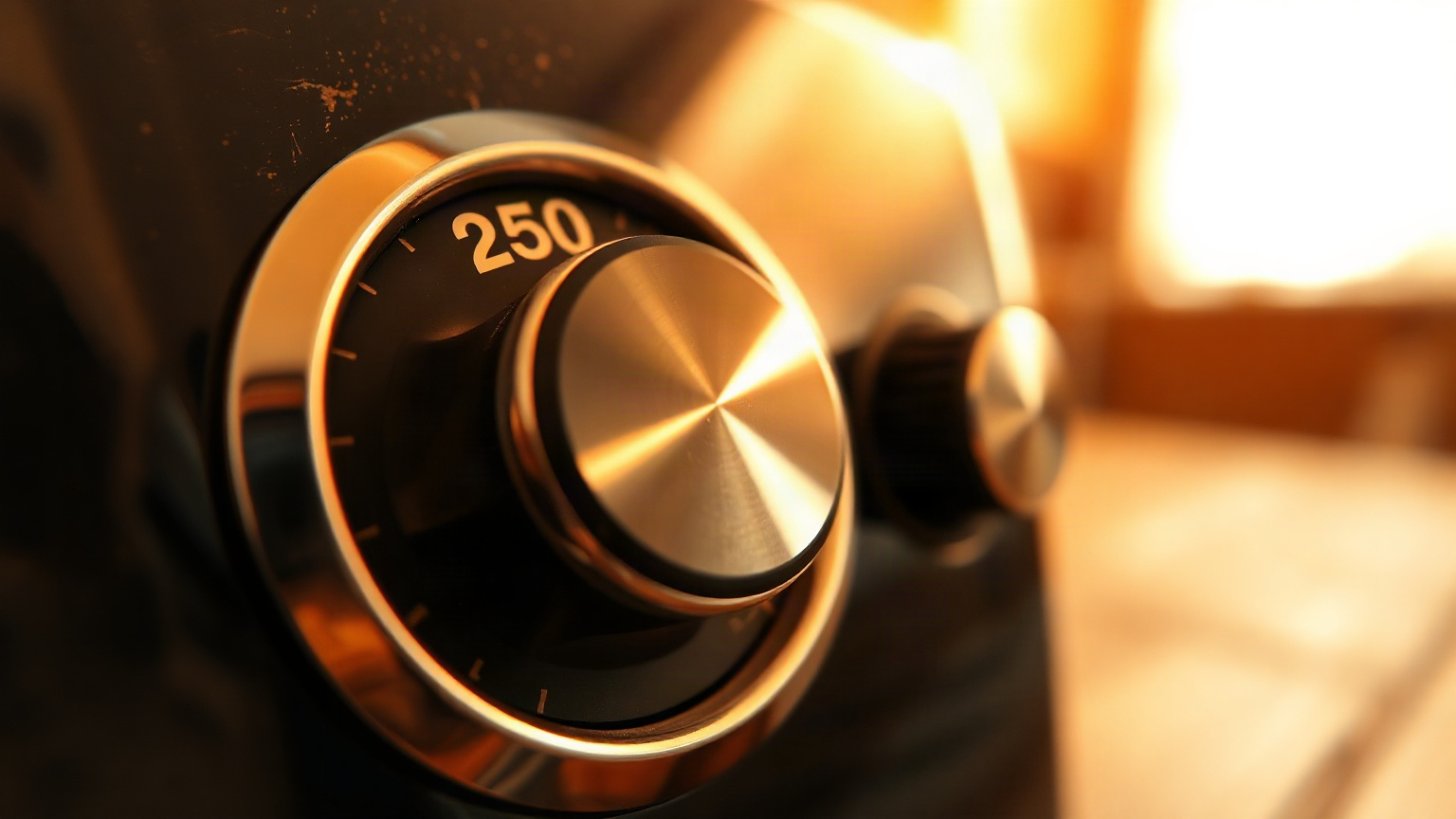
This trips people up constantly, and it tripped me up too the first time I bought a countertop toaster oven and expected it to work like my old two-slot toaster. It doesn’t.
A traditional pop-up toaster doesn’t have a thermostat in the usual sense. Its dial controls either the duration of the toast cycle (a literal timer) or the amount of electrical current flowing to the heating elements, depending on the model. So “5” on a pop-up toaster roughly means “toast longer and darker,” not “heat to 500 degrees.” That’s why the same setting on two different pop-up toaster brands can produce wildly different results — there’s no universal temperature behind that number.
A toaster oven works more like a small conventional oven. It has a thermostat, heating elements (top and bottom, usually), and a dial that actually maps to temperature. When you set it to 350°F, it’s trying to maintain that temperature inside the cavity. Keyword: trying. More on that in a minute.
If you’re curious about how hot a toaster gets internally versus a toaster oven, the difference is pretty significant in terms of usable cooking range.
What the Temperature Numbers on a Toaster Oven Actually Mean
Most toaster ovens sold in the US have dials marked in Fahrenheit, running from somewhere around 150°F up to 450°F. Some premium models push to 500°F. Here’s a rough breakdown of what those ranges are actually good for:
150°F to 200°F — The “Keep Warm” Zone
This is criminally underused. I keep my toaster oven at 170°F when I’m plating a multi-dish meal and need to hold cooked food without drying it out. It’s also the right range for proofing bread dough if your kitchen is cold — set it to 100°F if your model goes that low, or just 150°F with the door cracked. Some people use this range to dehydrate herbs, though it’s slow going compared to a dedicated dehydrator.
250°F to 325°F — Low and Slow Cooking
This range works well for reheating leftovers without turning them rubbery. Pizza at 275°F for about 8 minutes comes back to life better than it has any right to. Also decent for slow-roasting vegetables, melting cheese on something without burning the edges, or baking custards and low-temp egg dishes. If you’re regularly reheating food in a toaster oven, 275–300°F is usually the sweet spot — hot enough to actually heat through, cool enough that you’ve got time to react before things go wrong.
325°F to 375°F — The Baking Zone
Standard baking territory. Cookies, muffins, brownies, small casseroles — this is where most recipes will land. Honestly, 350°F gets more use in my kitchen than any other setting. One thing to watch: toaster ovens have smaller cavities than full-size ovens, which means heat circulates differently. The rack position matters more than it does in a big oven. I always use the middle rack for baking, and I rotate whatever I’m making halfway through because toaster ovens almost always have a hot spot on the element side.
375°F to 425°F — Roasting and Most Proteins
Chicken thighs, fish fillets, roasted vegetables with actual caramelization — this is where things get good. A bone-in chicken thigh at 400°F for 30 minutes comes out properly browned. If you’ve got a toaster oven roasting pan with a rack, this range is where you’ll use it most. The higher heat browns the exterior before the interior dries out. Technically it’s the same principle as a full-size oven, just in a much smaller space with faster preheating.
425°F to 500°F — High Heat, Pizza, and Broil-Adjacent
Not every toaster oven reaches 500°F, but those that do (mostly the higher-end Breville and Cuisinart models) can produce a genuinely good homemade pizza crust. At this range, you’re also getting into broil territory — the heating elements are running nearly flat-out. I’d put a toaster oven baking stone or heavy steel pan in here for pizza work. Watch things closely. Things burn fast at 475°F in a small cavity.
The “Toast” Setting Is Its Own Thing
Here’s something that confuses a lot of people. Most toaster ovens have a dedicated “Toast” function that works differently from the temperature dial. On many models, selecting “Toast” runs both the top and bottom heating elements at full power for a set amount of time — the shade dial (light/dark) on those models controls duration, not temperature. It’s essentially replicating what a pop-up toaster does, just inside an oven cavity.
So if you’re toasting bread and your toaster oven has a Toast mode, you generally want to use that function and adjust the shade setting, not set it to 450°F and hope for the best. That said, I’ve made perfectly fine toast by setting mine to 425°F and watching it. Takes about 4–5 minutes on a standard slice. Not ideal, but it works.
Why Your Dial Setting and Actual Temperature Don’t Match
This is the edge case almost no one talks about, and it matters. Toaster oven thermostats are notoriously inaccurate. I tested my own Cuisinart unit with an oven thermometer sitting in the center of the rack, and found it was running about 35°F hotter than the dial indicated at 350°F. Set it to 350°F, actual temp was closer to 385°F. That explains why my cookies were browning too fast when I first started using it.
The fix is simple: get a cheap oven thermometer and run your own test. Put it in the center, set the dial to 350°F, let it run for 10 minutes, check the reading. If you’re 25°F over, you dial back accordingly and adjust every recipe. It’s a one-time calibration thing, and once you know your machine’s quirk, everything gets easier. Serious Eats has a good breakdown of why oven thermometers matter and how most home ovens drift over time — same applies here.
Also worth knowing: toaster ovens cycle their heating elements on and off to maintain temperature, just like a regular oven. If you open the door mid-cook, the temperature drops fast — faster than a full-size oven because there’s so little thermal mass in the cavity. It recovers quickly too, but it’s something to account for.
Toaster Oven Temperature Range Comparison
| Temperature Range | Best Used For | Notes |
|---|---|---|
| 150°F – 200°F | Keeping food warm, proofing dough | Often labeled “Warm” on the dial |
| 250°F – 325°F | Reheating leftovers, low-temp baking | Good for delicate foods like fish |
| 325°F – 375°F | Baking cookies, muffins, casseroles | 350°F is the most-used setting overall |
| 375°F – 425°F | Roasting chicken, vegetables, fish | 400°F hits a good browning threshold |
| 425°F – 500°F | Pizza, high-heat roasting, crisping | Not all toaster ovens reach this range |
A Few Settings People Miss (or Misread)
“Broil” is usually a separate mode, not a temperature setting on the dial. It cranks the top element to max and is strictly for the last few minutes of cooking — think finishing a gratin, browning cheese, or crisping chicken skin that isn’t browning from regular heat. Using a toaster oven wire rack elevated as high as it’ll go is key for broiling, since proximity to the element matters.
“Convection” is another one. Some toaster ovens have a convection setting that runs a small fan to circulate hot air. If yours does, you generally reduce the temperature by 25°F and shorten cooking time by about 10–15%. The numbers on the dial still mean the same temperatures — the fan just distributes that heat more evenly. It makes a real difference for things like roasted vegetables and anything where browning matters.
If you’re shopping for a new unit and want one with a full temperature range and convection, check out our roundup of the best mini toaster ovens — there are good options at a range of price points.
The Bottom Line
The numbers on a toaster oven dial are temperatures, full stop. They’re not timers, they’re not mystery settings, and they’re not interchangeable with what’s on a pop-up toaster. Once you understand that the dial is just a thermostat — an imperfect one — and that “Toast” is its own separate function, the whole machine starts making more sense.
Get an oven thermometer. Learn where your machine runs hot. Use low temperatures more than you probably do right now. That’s genuinely most of what there is to it. The rest is just cooking.
Frequently Asked Questions
What do the numbers on a toaster oven dial mean?
The numbers on a toaster oven dial represent temperature settings in degrees Fahrenheit (or Celsius on some models), typically ranging from 150°F to 450°F. This is different from a pop-up toaster, where the dial controls time or current level rather than actual temperature. Setting your toaster oven to 350°F tells the thermostat to maintain that heat inside the cavity — though the actual temperature may run slightly higher or lower than indicated.
Are the numbers on a toaster the same as the numbers on a toaster oven?
No — they work completely differently. On a standard pop-up toaster, the numbers control how long the bread toasts or how much electrical current runs through the elements, not actual temperature. On a toaster oven, the numbers are degrees, and there’s a real thermostat trying to hold that temperature. Confusing the two is one of the most common reasons people over- or under-cook things when switching between appliances.
Why is my toaster oven burning food even on the right setting?
Most toaster ovens run hotter than the dial indicates — often 25 to 50°F above the set temperature. The best fix is to place an inexpensive oven thermometer inside and check the actual temperature at your most-used setting, then adjust accordingly. Hot spots near the heating elements also cause uneven browning, so rotating food halfway through cooking helps significantly.
What temperature should I set my toaster oven for toast?
If your toaster oven has a dedicated “Toast” mode, use that — it runs the elements at full power for a timed cycle and gives the most consistent results. If you’re using the temperature dial instead, 425°F for 4–5 minutes works reasonably well for a standard slice of bread. Keep an eye on it, because at that heat, the difference between golden and burnt is about 90 seconds.
What is the lowest temperature setting on a toaster oven good for?
The low end of the dial, usually 150°F to 200°F, is excellent for keeping cooked food warm without drying it out, proofing bread dough in a cold kitchen, or gently reheating delicate items like fish or custard. Many models also label this range simply as “Warm.” It’s one of the most useful settings on the appliance and one of the most ignored.

Written by
Emma founded Toastera to turn vague appliance advice into clear, researched, safety-first guidance on toasters and toaster ovens.
Free: the Toaster Oven Cheat Sheet
Get the printable cheat sheet (temps, cook times & safety tips) plus new recipes. No spam, unsubscribe anytime.