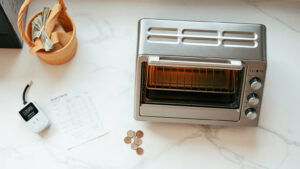
A toaster’s heating elements reach between 300°F and 500°F during a normal cycle. Smoke without burned bread usually means something other than the bread itself is burning — crumbs, grease residue, or a thin coating on new heating elements are the most common culprits. The bread can come out perfectly fine while your kitchen fills with haze, which is confusing but almost always fixable.
Safety First: If your toaster is producing thick, dark smoke, smells like burning plastic or electrical insulation, or you see any sparks — unplug it immediately and do not use it again until you’ve identified the source. Smoke from crumbs or residue is a fire risk even when the bread looks fine. Never leave a smoking toaster unattended, and keep a working smoke detector within range of your kitchen.
Quick Facts: Toaster Smoking Without Burned Bread
- Toaster heating elements hit 300–500°F, hot enough to ignite accumulated crumbs and grease long before the bread itself scorches.
- New toasters often smoke on first use because of a protective factory coating burning off the elements — this is normal and usually stops after 2–3 uses.
- The most common cause of ongoing smoke is a dirty crumb tray that hasn’t been emptied in weeks (or ever).
- A toaster smoking at a lower setting than usual is a warning sign — crumb buildup is catching heat it wasn’t before.
- Regular cleaning — every 1–2 weeks if you toast daily — prevents most smoke issues entirely.
The Most Likely Reason: Your Crumb Tray Is Doing Too Much Work
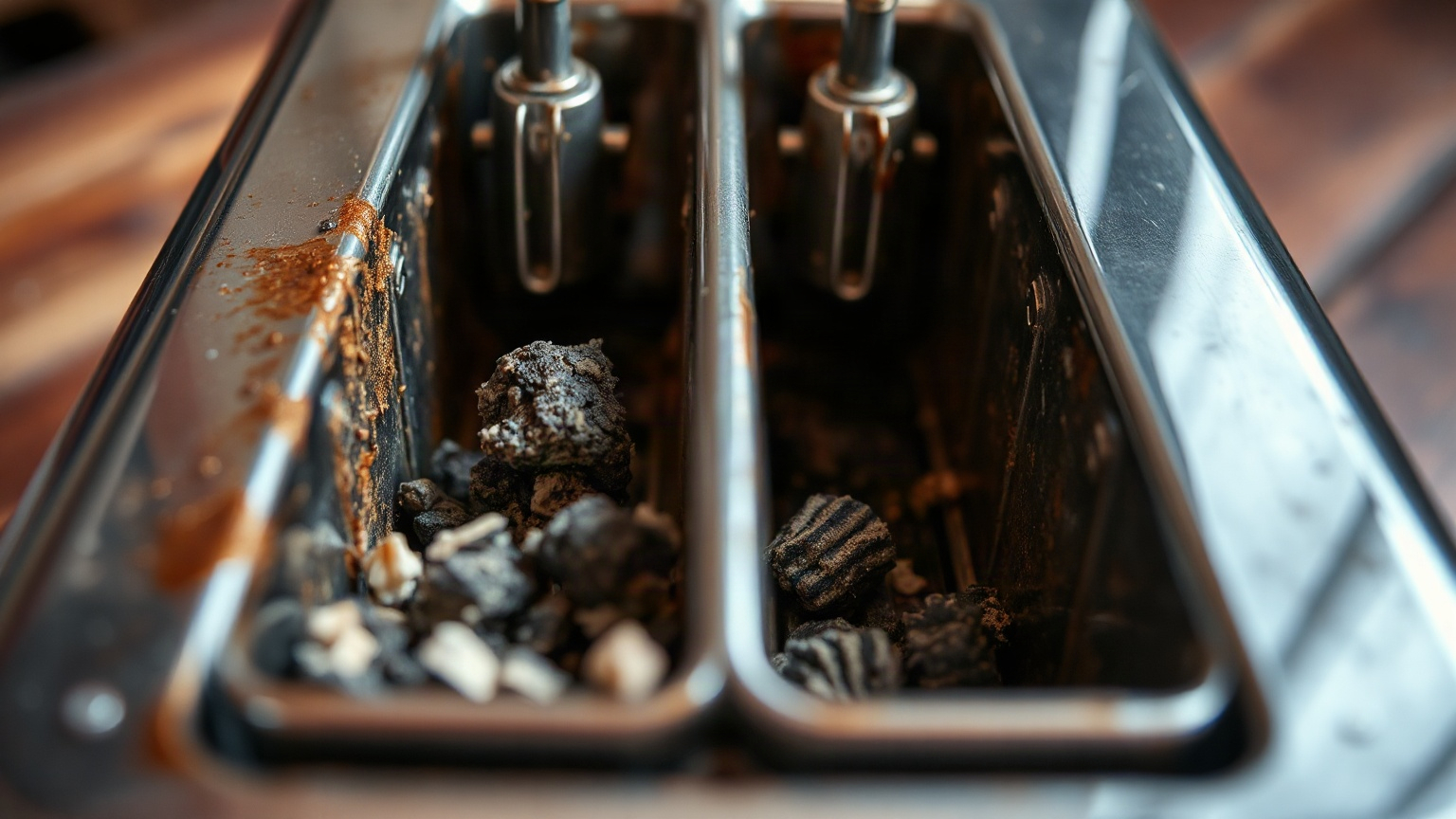
I’ll be honest — the first time my toaster started smoking without burning anything, I immediately assumed something was wrong with the machine. I yanked out the plug and stood there staring at it like it had personally offended me. Turned out I hadn’t cleaned the crumb tray in something like three months.
Crumbs are genuinely flammable. Small, dry, and sitting directly beneath heating elements that top out near 500°F — it doesn’t take much. When there’s enough buildup, those crumbs start to smolder at temperatures that the bread above them can handle just fine. The bread browns at a controlled distance from the element. The crumbs are essentially touching it.
Pull out your crumb tray right now. If it looks like the bottom of a popcorn bag, that’s your answer. Empty it, wipe it down with a damp cloth, and let it dry completely before putting it back. You can learn more about how hot a toaster gets and why that makes crumb management so important.
What About Crumbs That Fell Past the Tray?
This happens more than people realize. Crumb trays don’t catch everything — some bits fall to the sides or get stuck near the heating elements themselves. Tipping the unplugged toaster upside down over the sink and giving it a gentle shake usually dislodges the stubborn stuff. Do this outside if you can. Inside, over the sink, works too, but it’s messier than you’d expect.
Brand New Toaster? The Smoke Is Probably Normal
New appliances often have a thin factory coating or residue on the heating elements from the manufacturing process. When you fire it up for the first time, that coating burns off. It can produce a surprising amount of smoke — sometimes with a faintly chemical or metallic smell — and the bread comes out completely unaffected.
The fix is simple. Run the toaster empty (no bread) on its highest setting for 3–4 minutes, ideally near an open window or with your exhaust fan going. Do that once or twice before you actually toast anything. Most manufacturers actually recommend this in the manual, buried somewhere around page 8 where nobody reads.
After that initial burn-off, the smoke should stop. If it doesn’t by the third use, something else is going on.
Greasy Residue: The Sneaky Culprit Nobody Talks About
If you’ve ever put anything other than plain bread in your toaster — frozen waffles, pastries, anything with butter or glaze on it — there’s probably a thin layer of grease somewhere inside. That stuff bakes onto the interior walls and heating elements over time, and it smokes at lower temperatures than you’d think.
Buttered toast is a classic offender. People butter the bread, then pop it back in for another round. The butter drips. It coats the bottom. And then next time you toast a plain slice of sourdough at medium heat, you get a thin haze and a faint smell of old butter. The bread’s fine. The grease isn’t.
Cleaning grease out of a pop-up toaster is annoying, I won’t pretend otherwise. A slightly damp cloth wrapped around a butter knife (toaster unplugged, obviously) can reach some of the interior. For toaster ovens, it’s easier — you can actually get inside them. If you have a toaster oven and this is a recurring problem, take a look at our guide on reheating food in a toaster oven, which covers managing grease and residue without making it worse.
The Bread Itself Can Also Off-Gas
Worth mentioning: some specialty breads — high-sugar loaves, bread with seeds or added oils — can release a small amount of smoke during toasting even when they’re not technically burning. You might notice this with brioche or a seeded rye. The bread surface is fine, but the sugars or fats are just barely hitting their smoke point. Lower your shade setting by one notch and it usually clears up.
Toaster Temperature vs. Smoke Point: Why the Math Matters
Here’s a quick reference for what’s actually happening thermally inside your toaster. The bread toasts through dry heat and the Maillard reaction — it needs sustained heat to brown. But crumbs and fats have much lower ignition or smoke points, which is why they react first.
| Material | Approximate Smoke/Ignition Point | Typical Risk Level |
|---|---|---|
| Dry bread crumbs | ~400–450°F | High if accumulated |
| Butter residue | ~300–350°F | High — very common cause |
| Plain bread surface | ~450–500°F (burning point) | Lower at normal settings |
| Factory element coating | ~200–300°F | Normal on first use only |
| Plastic or wire insulation | Varies — any smoke = stop immediately | Serious — unplug now |
The toaster elements themselves can reach around 500°F at the highest setting — which is well above the smoke point of most residues. At a medium setting (roughly 350–400°F), you’re already into the danger zone for butter and crumb buildup. The bread at that setting browns gently. Everything else catches.
When Smoke Means Something More Serious
Most toaster smoke is annoying but benign. Some of it isn’t. Here’s how to tell the difference.
Signs It’s Just Residue or Crumbs
- Smoke is thin, whitish or light gray, and dissipates quickly
- Smell is like burned toast or old food — not chemical or sharp
- Toaster is older than two weeks and hasn’t been cleaned recently
- Stops smoking after you clean the crumb tray and interior
Signs You Need to Unplug and Stop Using It
- Smoke is thick, dark, or black
- There’s a burning plastic or sharp electrical smell
- You see any sparks, arcing, or flickering near the elements
- The toaster smokes even right after a thorough cleaning
- The cord, plug, or body feels unusually hot
Burning plastic smell almost always means electrical insulation is degrading. That’s not a cleaning problem — that’s a replacement situation. According to the U.S. Fire Administration, toasters and toaster ovens are among the leading small appliance causes of kitchen fires. A toaster that keeps smoking after cleaning, or smells wrong, should be replaced rather than nursed along. They’re not that expensive, and the risk isn’t worth it.
If you’re in the market for something new, the best mini toaster ovens we’ve tested are a good place to start — some are honestly better than standard pop-up toasters for exactly this kind of reliability. And if you want a replacement toaster with a removable crumb tray and wide slots, that feature alone makes cleaning dramatically less miserable.
How to Actually Keep Your Toaster From Smoking Again
Prevention is faster than cleaning. Here’s what actually works in practice.
- Empty the crumb tray every week if you toast daily. Every two weeks minimum if you’re a lighter user. Takes 30 seconds.
- Don’t butter before toasting. Toast first, then butter. The crumb issue alone is reason enough, but it also gives you better toast.
- Shake it out periodically. Unplug, flip it over the sink, tap the bottom gently. You’ll be amazed what comes out.
- Wipe the interior walls with a barely damp cloth every month or so. Unplugged. Dry completely before using.
- Run a new toaster empty first. High heat, 3–4 minutes, near an open window. Gets the factory burn-off done before your first actual breakfast.
For toaster oven users, the cleaning routine is slightly more involved but you have more access. A toaster oven cleaning kit with non-scratch scrubbers is genuinely useful — the interior walls on some models develop a baked-on film that a damp cloth alone won’t touch. Serious Eats has a solid breakdown of how to clean a toaster properly if you want the full methodology.
Final Thoughts
A smoking toaster that still produces perfect toast is almost always a cleaning problem, not an appliance problem. Crumbs, grease, or a factory coating burning off — those are the three scenarios covering probably 95% of cases. The bread’s fine because the bread isn’t the thing on fire.
Clean the crumb tray, shake out the interior, wipe down what you can reach. If the smoke stops, you’re done. If it doesn’t — or if it smells chemical or electrical at any point — that’s when you unplug it and don’t look back. No piece of toast is worth a kitchen fire.
Frequently Asked Questions
Why is my toaster smoking but the bread is not burning?
The bread is fine because the bread isn’t what’s burning — crumbs, grease residue, or a factory coating on new heating elements are the actual smoke source. These materials have lower smoke points than bread and sit closer to the heating elements, so they react before the bread does. Clean your crumb tray and shake out the interior; that fixes it in most cases.
How hot does a toaster get inside?
Toaster heating elements typically reach between 300°F and 500°F depending on the shade setting, with most medium settings landing around 350–400°F. That’s more than enough heat to smoke butter residue (which starts around 300°F) and dry crumbs (which can ignite around 400°F) while leaving the bread itself just nicely browned. You can read more about how hot a toaster gets and what that means for safe use.
Is it safe to use a toaster that is smoking?
It depends on the type of smoke. Thin, whitish smoke with a food smell is usually crumbs or grease burning off and isn’t immediately dangerous, though it’s a fire risk if ignored. Thick or dark smoke, a burning plastic smell, or any sparks mean you should unplug the toaster immediately and not use it again until you’ve identified the problem — or replace it entirely.
Why does my new toaster smoke the first time I use it?
New toasters often have a thin protective coating or manufacturing residue on the heating elements that burns off during the first few uses. Run the empty toaster on its highest setting for 3–4 minutes near an open window before you put any bread in it — this burns off the coating without affecting your food. The smoke should stop completely after two or three cycles.
Is it safe to leave a toaster plugged in when not in use?
Most modern toasters don’t draw power when idle, but leaving any appliance with heating elements plugged in adds unnecessary risk, especially if there’s crumb buildup inside. Unplugging the toaster when it’s not in use is a simple habit that eliminates any chance of an electrical fault or accidental activation. If you’re going out or going to sleep, unplug it.

Written by
Emma founded Toastera to turn vague appliance advice into clear, researched, safety-first guidance on toasters and toaster ovens.
Free: the Toaster Oven Cheat Sheet
Get the printable cheat sheet (temps, cook times & safety tips) plus new recipes. No spam, unsubscribe anytime.