Toast burns so fast at the end because of a feedback loop between heat and moisture. A toaster’s heating elements reach between 1,000°F and 1,200°F, but the bread itself stays relatively cool and damp for most of the cycle — until the surface moisture evaporates. Once that moisture is gone, the surface temperature spikes rapidly, and the Maillard reaction (the browning process) goes from slow to almost instant. That last 30 seconds isn’t really different from the first 30 — it just feels that way because the bread has finally crossed a threshold.
Safety First: Toaster heating elements operate at extremely high temperatures — over 1,000°F — and can ignite crumbs, paper, or nearby materials instantly. Never leave a toasting cycle unattended if your bread is thick, frozen, or has any added sugar (like raisin bread or cinnamon swirl), as these brown dramatically faster than plain white bread. Keep your toaster on a clear, heat-resistant surface, away from cabinets or curtains. If you smell burning and the bread is stuck, unplug the toaster before trying to remove anything — never use metal utensils inside a live toaster.
Quick Facts: Toast and Heat
- Toaster heating elements typically reach 1,000°F–1,200°F, but bread surfaces hit around 300°F–350°F during normal toasting.
- The Maillard reaction — the browning that makes toast taste good — kicks in around 280°F–330°F on the bread surface.
- Most of the toasting cycle is spent driving off moisture. Browning accelerates sharply once the bread surface dries out.
- The difference between golden and burnt is often less than 20 seconds once that drying threshold is crossed.
- Bread with added sugar, oil, or toppings will always burn faster than plain bread — the chemistry is different.
What’s Actually Happening Inside a Toaster

Most people assume a toaster heats up gradually and evenly the whole time. It doesn’t. The heating elements are already at near-maximum temperature within about 10–15 seconds of you pushing down the lever. What changes over the course of the cycle isn’t the element temperature — it’s the bread’s ability to absorb and dissipate that energy.
Fresh bread has a lot of water in it. Around 35–40% by weight for a standard slice of white sandwich bread. That moisture acts as a heat sink. It absorbs energy and converts it to steam rather than allowing the surface temperature to climb quickly. So for the first minute or two, the bread is essentially protected by its own moisture content. You can read more about the temperature dynamics at play in our piece on how hot a toaster gets — the numbers there might actually surprise you.
Once that moisture is mostly gone? The surface temperature jumps fast. And the Maillard reaction, which was ticking along slowly, suddenly has the thermal energy it needs to accelerate. That’s why the last 30 seconds of a toasting cycle can take bread from lightly golden to smoking and black. It’s not a malfunction. It’s physics.
The Maillard Reaction: Why Browning Isn’t Linear
The Maillard reaction is a chemical process between amino acids and sugars that produces the brown color and complex flavor in toasted bread. It’s also the same thing that makes seared steak taste good, and roasted coffee smell like roasted coffee. Serious Eats has a solid breakdown of how the Maillard reaction works if you want to go deep on the chemistry.
The key thing about the Maillard reaction isn’t just that it needs heat — it’s that it’s exponential. Double the temperature and you don’t just double the reaction speed; you multiply it. This is why a dry bread surface that’s reached 330°F will brown visibly faster than one at 310°F. It sounds like a small difference. It isn’t.
And because the reaction produces its own heat as a byproduct — and because a drier surface conducts heat more efficiently than a moist one — you get a compounding effect. The browner it gets, the faster it browns. That’s the feedback loop that makes the last 30 seconds feel almost violent compared to the first minute and a half of almost no visible change.
Why Some Bread Burns Way Faster Than Others
Not all bread is equal. Raisin bread, cinnamon swirl bread, and anything with added sugar will burn noticeably faster than a plain slice of sourdough. The sugars caramelize — a separate reaction from Maillard, and one that starts at a lower temperature — and they char quickly. I learned this the hard way with a loaf of brioche. Set it to my usual 4.5 setting on a Cuisinart 2-slice, came back 90 seconds later, and it was closer to charcoal than toast. Won’t make that mistake again.
Frozen bread is the opposite problem. It takes longer to start browning (all that extra moisture and cold mass to heat through), so people turn up the setting — then it goes from nowhere to burnt in the final stretch, even faster than room-temperature bread would. If you’re toasting frozen slices regularly, I’d suggest dropping the setting by one notch and adding a second round if needed rather than cranking it up and walking away.
How Toaster Settings Actually Work (They’re Not What You Think)
Most pop-up toasters don’t regulate temperature at all. They regulate time. The browning dial is literally a timer — or in older models, a bimetallic thermostat that measures heat absorbed rather than element temperature. Either way, the elements are running at full blast the entire time. Setting 3 doesn’t mean “medium heat.” It means “stop toasting sooner.”
This matters a lot for understanding why toast burns at the end. Because the elements are always at maximum, the only control you have is duration. And since browning accelerates exponentially at the end of the cycle, small adjustments to the time dial make a huge difference. Moving from setting 5 to setting 6 on most toasters adds maybe 20–30 seconds to the cycle — but those 20–30 seconds happen at the most volatile point in the bread’s journey from pale to burnt.
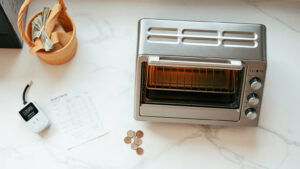
Toaster ovens are a little different. They actually regulate temperature and usually let you set both time and heat level, which gives you more predictable results. That said, even in a toaster oven, the browning still accelerates toward the end for the same moisture-loss reasons. It’s just easier to catch before it goes too far because you can see the bread through the glass.
| Toaster Type | Element Temp | Bread Surface Temp | Controls Time or Temp? | Burn Risk at End of Cycle |
|---|---|---|---|---|
| Standard pop-up toaster | 1,000°F–1,200°F | 300°F–350°F | Time only | High — no visual monitoring |
| Toaster oven (broil mode) | 500°F–550°F (set temp) | 350°F–400°F+ | Time + Temperature | Medium — visible through glass |
| Toaster oven (toast mode) | Varies by model | 300°F–360°F | Time + Temperature | Low-Medium — more controllable |
| Convection toaster oven | Varies by model | Similar but faster | Time + Temp + Fan | Lower — more even browning |
Practical Ways to Stop Burning Your Toast
Once you understand what’s happening, the fixes are pretty obvious. But I’ll be specific because “use a lower setting” is advice that helps nobody.
Lower Your Setting and Toast Twice If Needed
This sounds counterintuitive but it actually works better than a single high-setting pass, especially for thick bread. Set your toaster one notch lower than you normally would. If the bread comes out pale, run it for a second short cycle. You have much more control over the second pass because the bread is already dry — the browning will happen quickly, and you can stop it exactly where you want it.
My usual approach on a Breville 4-slice is setting 4 for the first pass on a thick sourdough slice, then a quick second pass at setting 2 if it needs more color. I’ve been doing this for a couple of years and I almost never burn bread anymore. Almost.
Use a Toaster Oven Instead for Delicate Bread
For anything sugary, buttered, or thin-sliced — brioche, Hawaiian rolls, thin-cut sourdough — I’d skip the pop-up toaster entirely and use a toaster oven. Set it to around 350°F on the toast or bake function, put the bread on a toaster oven wire rack, and watch it. It’ll take 4–6 minutes rather than 90 seconds, but you can pull it out the moment it looks right. Way less drama.
If you’re using a toaster oven regularly for bread and toast, you might want a dedicated toaster oven baking pan as well — it reflects heat more evenly than the wire rack alone and helps avoid hot-spot burning on the bottom crust. Our guide to reheating food in a toaster oven covers some of these same setup tips if you’re using yours for more than just toast.
Don’t Walk Away During the Last 30 Seconds
Honestly, this is the most useful tip of all of them. Once you’re within about 30 seconds of your usual setting, just stand there. That’s it. It sounds annoying. But the window between golden and black is genuinely that small, and no other trick compensates for not being present for the critical moment. If your toaster has a cancel button (most do), use it the second it looks right rather than waiting for the automatic pop.
When Burnt Toast Becomes a Real Problem
Slightly over-toasted bread is annoying. Legitimately burnt bread is a different issue. Charred bread contains acrylamide — a compound that forms in starchy foods cooked at high temperatures and has been flagged as a potential health concern. The FDA has published guidance on acrylamide in food, and their consistent advice is to “go for gold” — aim for a light yellow-to-golden color rather than dark brown. That’s not just a taste preference. It’s actually the right call from a health standpoint too.
Repeated burning also leaves carbonized crumbs in the toaster’s crumb tray, which are a genuine fire risk. If you’re burning bread regularly enough that the tray is filling up fast, it’s worth cleaning it out every couple of weeks. Unplugged, obviously.
Final Thoughts
Toast burns fast at the end because of how heat, moisture, and the Maillard reaction interact — not because toasters are badly designed or unpredictable. Once you know that the last 30 seconds are the most volatile part of the cycle, you can work with that instead of against it. Lower your setting, stay present at the end, and use a toaster oven for anything that’s prone to burning quickly. It genuinely makes a difference.
And if you’re in the market for a toaster oven that gives you better control over this whole process, check out our roundup of the best mini toaster ovens — some of the newer models have pretty good toast modes that handle the end-of-cycle surge better than a basic pop-up ever will.
Frequently Asked Questions
How hot does a toaster get inside?
The heating elements inside a standard pop-up toaster reach between 1,000°F and 1,200°F. The bread surface, however, only reaches around 300°F–350°F during a normal toasting cycle — the moisture in the bread absorbs a lot of that energy before the surface can heat up fully. Once the moisture is gone, the surface temperature rises much faster.
Why does my toast go from pale to burnt so quickly?
The Maillard browning reaction is exponential, not linear — it accelerates as temperature rises, and the bread surface temperature rises sharply once its moisture has evaporated. Most of the toasting cycle is spent drying the bread out; browning happens mostly in the final stretch. The window between perfectly golden and burnt can be under 20 seconds.
Does the type of bread affect how fast it burns?
Yes, significantly. Bread with added sugar — raisin bread, brioche, cinnamon swirl — burns much faster because sugar caramelizes at a lower temperature than plain starches brown. Frozen bread takes longer to start browning but can still burn quickly at the end of the cycle for the same moisture-loss reasons. Thin-sliced bread also burns faster than thick-cut.
Is it safe to leave a toaster plugged in all the time?
Most manufacturers and electrical safety organizations recommend unplugging toasters when not in use, primarily because of crumb buildup and the risk of electrical faults. A toaster left plugged in doesn’t constantly draw power, but crumbs near hot elements are a fire risk if the toaster activates accidentally or malfunctions. Unplugging it after each use is the safer habit.
Can I stop my toaster mid-cycle to prevent burning?
Yes — almost every modern pop-up toaster has a cancel button that stops the cycle and ejects the bread immediately. Use it. If your toaster doesn’t have one, lifting the lever manually also works and won’t damage the appliance. Stopping the cycle 15–20 seconds early when the bread is approaching your preferred color is a much better strategy than letting it run to completion and hoping for the best.
—
Written by
Emma founded Toastera to turn vague appliance advice into clear, researched, safety-first guidance on toasters and toaster ovens.
Free: the Toaster Oven Cheat Sheet
Get the printable cheat sheet (temps, cook times & safety tips) plus new recipes. No spam, unsubscribe anytime.