Toaster ovens and microwaves are both generally safe for everyday kitchen use, but they carry different types of risk. Microwaves operate with non-ionizing radiation that doesn’t linger in food and has no proven health hazard at normal consumer exposure levels; toaster ovens use exposed heating elements that reach 450°F or higher and pose more direct burn and fire risks. For most households, the “safer” choice depends less on the appliance itself and more on how carefully you use it.
Safety First: Both appliances involve significant heat and electrical risk. Never leave a toaster oven unattended while in use, keep at least 4 inches of clearance on all sides to prevent cabinet fires, and never place anything metallic inside a microwave. Unplug both appliances before cleaning. If either appliance sparks, smells of burning plastic, or trips a breaker repeatedly — stop using it immediately.
Quick Facts
- Microwaves emit non-ionizing radiation — the same general category as radio waves — which doesn’t make food radioactive or harmful to eat.
- Toaster oven heating elements regularly hit 450°F; the exterior surface of many models reaches 150–200°F during use, which is hot enough to cause serious burns on contact.
- The leading cause of kitchen fires in U.S. homes is unattended cooking, and toaster ovens are cited more frequently than microwaves in that category by the NFPA.
- Modern microwaves have multiple interlock switches that cut power the moment you open the door — a safety feature most people don’t know exists.
- Neither appliance is inherently dangerous when used correctly; both have specific failure modes you should know about before assuming one is “safer.”
The Radiation Question (And Why It’s Mostly a Non-Issue)
I’ll be honest — I used to be irrationally suspicious of microwaves. Something about the word “radiation” just sounds bad. But after actually reading how they work, I got over it pretty fast.
Microwave ovens use electromagnetic waves at 2.45 GHz to excite water molecules in food, which generates heat. That’s non-ionizing radiation — it can’t alter DNA, it doesn’t make food radioactive, and it doesn’t accumulate in your body. The FDA has regulated microwave oven leakage standards since 1971, and limits are set at 5 milliwatts per square centimeter — an exposure level so low it’s considered negligible even at close range.
The door seals do degrade with age, especially if you’re in the habit of slamming the door (guilty). But even with minor seal wear, leakage levels at 2 inches from the door remain well below the federal limit for basically any consumer microwave made in the last 20 years. A cracked or visibly damaged door is a different story — that’s when you actually stop using it.
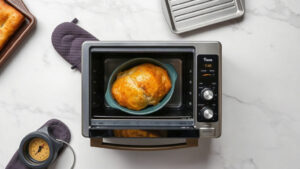
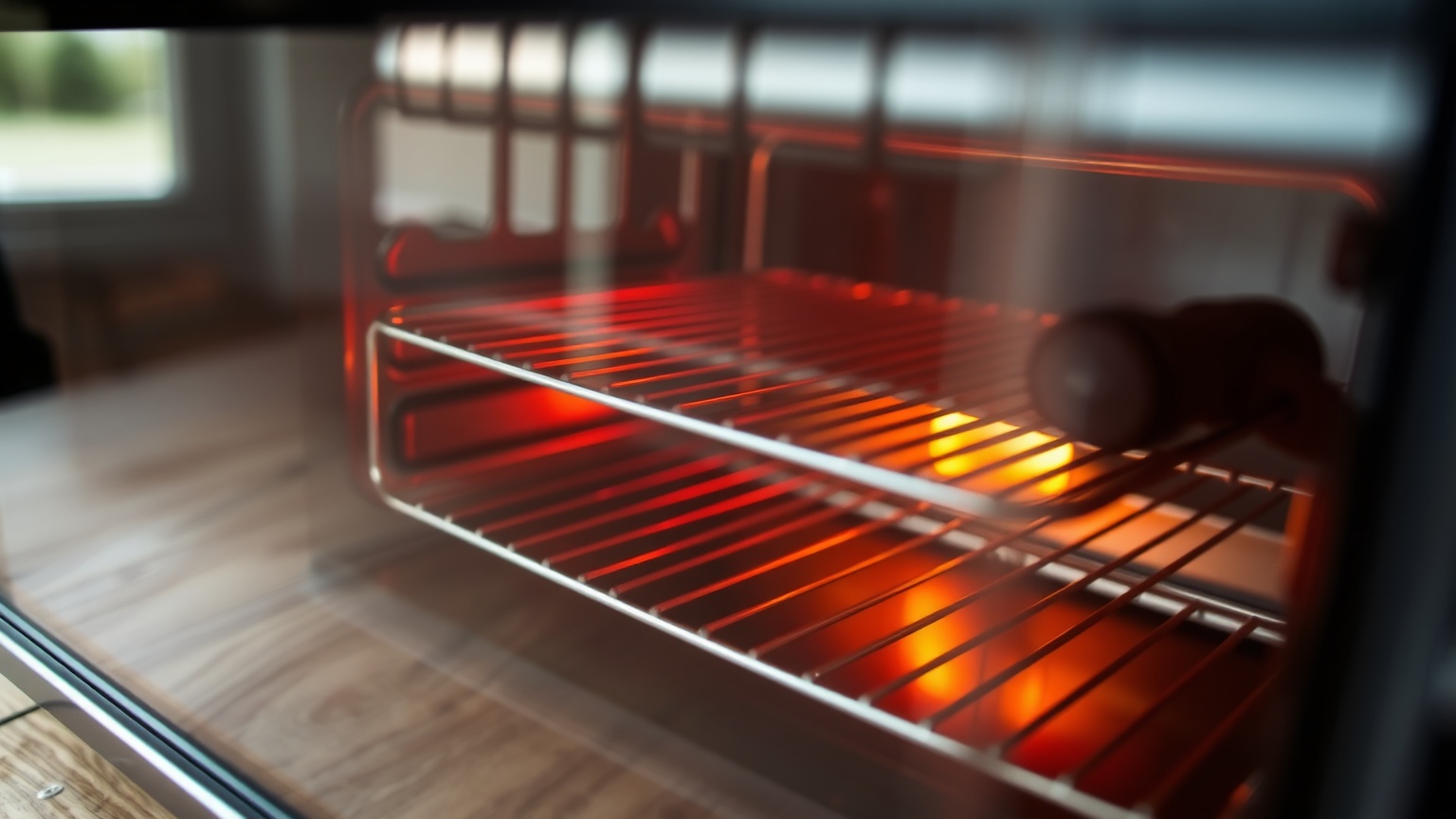
Toaster ovens have zero radiation concerns. What they do have are glowing quartz or nichrome heating elements that you can physically touch if you’re not paying attention. I’ve grazed the top rack of my Breville with the back of my hand while pulling something out — just once, but I remember it vividly. That’s the real safety calculus here: one appliance has a theoretical risk most people wildly overestimate, the other has a very physical risk that’s easy to underestimate.
Fire Risk: Where Toaster Ovens Need More Respect
This is the area where toaster ovens genuinely require more attention than microwaves.
Crumbs, Grease, and Proximity to Cabinets
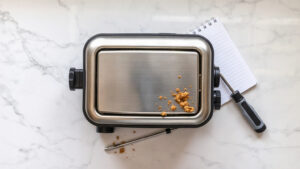
Toaster ovens accumulate food debris on the crumb tray and interior walls. Grease builds up. If you’re cooking bacon or anything fatty at 400°F and the grease drips onto a months-old crumb tray — that’s a real ignition scenario. I clean my crumb tray after every two or three uses, which I’d call the bare minimum. Some people never clean theirs. Those people are operating a fire hazard and don’t know it.
Clearance matters enormously. The instruction manuals for most toaster ovens specify at least 4 inches on the sides and top. I’ve seen dozens of kitchens where the toaster oven sits flush against the upper cabinet, which is a genuine fire risk over time — especially with older cabinetry that might have decades of grease absorbed into the wood.
A heat-resistant silicone mat under your toaster oven won’t prevent a fire, but it does protect the counter surface from the sustained radiant heat that can, over years, dry out and crack certain countertop materials.
The Foil Problem
Aluminum foil inside a toaster oven is fine if it’s laid flat and not touching the heating elements or the walls. What causes problems is when foil gets crumpled or placed too close to an element — it can superheat in spots and potentially ignite anything nearby. In a microwave, foil is simply forbidden; it arcs immediately and can damage the magnetron. Different risks, same advice: be deliberate about what you put inside.
Burn Risk and Physical Safety
Microwaves get hot on the inside — obviously — but the exterior stays relatively cool. You can safely touch the sides of most microwaves during operation without issue. The only real burn scenario is removing food that’s scalding hot, or steam burns when you open a container that’s been sealed during heating. Steam burns are actually underrated as a kitchen injury. Opening a microwave-safe plastic container carelessly can send a burst of 212°F steam directly at your face.
Toaster ovens are a different situation entirely. The exterior gets hot — genuinely hot. The top surface of most countertop toaster ovens reaches 150–200°F during a standard bake cycle. If you’ve got kids, that’s a real concern. The door handle on cheaper models can also get uncomfortable to grab without an oven mitt after 20+ minutes of operation.
Using the right accessories helps. A proper stainless steel wire rack sized for your toaster oven keeps food positioned correctly relative to the elements and reduces the chance of you reaching awkwardly into a hot cavity. I’d also strongly recommend silicone oven mitts over cloth ones for toaster oven use — cloth can catch on the rack and pull a pan toward you.
Side-by-Side Safety Comparison
| Safety Factor | Toaster Oven | Microwave |
|---|---|---|
| Radiation risk | None | Negligible (non-ionizing; regulated by FDA) |
| Fire risk | Moderate — grease/crumb accumulation, proximity to cabinets | Low — mostly limited to specific materials (foil, some plastics) |
| Burn risk (exterior) | High — surfaces reach 150–200°F | Low — exterior stays cool |
| Burn risk (steam) | Low | Moderate — sealed containers can release scalding steam |
| Child safety | More concern — hot exterior, no automatic door lock | Less concern — cooler exterior, door interlock system |
| Unattended use risk | Higher — open heating elements, no auto-shutoff on all models | Lower — auto-shutoff standard; less residual heat |
| Electrical safety | Standard — 1,200–1,800W typical draw | Standard — 600–1,200W typical draw |
| Plastic/chemical leaching | Low risk if you use oven-safe cookware | Moderate risk if non-microwave-safe plastics are used |
The Edge Case Nobody Mentions: Plastics and Chemical Exposure
This is something the other articles I’ve read on this topic gloss over completely, and it’s actually worth a real discussion.
Microwaves and plastics are a legitimate concern — not because of the radiation, but because of heat. Heating food in plastic containers that aren’t labeled microwave-safe can cause plasticizers (including BPA and phthalates) to leach into food. The FDA has a “microwave-safe” designation for plastics, but critics point out that standard doesn’t account for long-term cumulative exposure. Practically speaking: use glass or ceramic in the microwave whenever possible. It’s not complicated.
Toaster ovens don’t really have this problem — you’re not typically putting plastic in a 400°F oven. But they have their own chemical edge case: the first few uses of a new toaster oven often produce a burning smell and light smoke from the factory coatings on the heating elements burning off. This is normal and harmless if you ventilate the kitchen well, but it alarms a lot of first-time users. I made the mistake of doing my first toaster oven “burn-in” cycle in a small apartment kitchen with the windows closed. Not recommended.
Also, non-stick coated toaster oven pans can release fumes at very high temperatures (above 500°F for most PTFE coatings). Standard baking at 350–400°F isn’t a concern, but if you’re cranking your toaster oven to max and using a cheapo non-stick pan, that’s worth knowing. A stainless steel toaster oven baking pan sidesteps the issue entirely and frankly performs better for browning anyway.
For more on getting the most from your toaster oven without these pitfalls, the guide on reheating food in a toaster oven covers safe temperatures and container choices in more detail. And if you’re trying to figure out what temperatures these appliances actually operate at, this breakdown of how hot a toaster gets is useful context.
Practical Safety Habits That Actually Matter
I want to be direct here: most safety incidents with either appliance come down to the same handful of habits. The appliance itself is rarely the problem.
For toaster ovens specifically — clean the crumb tray. Seriously. And keep the interior walls wiped down after anything fatty. Maintain clearance around the unit. Don’t use it on top of the refrigerator (it happens more than you’d think). Check that the door closes fully and the seal isn’t compromised. And if your model doesn’t have an automatic shutoff, set a physical timer. My old Hamilton Beach didn’t have auto-shutoff, and I walked out of the kitchen twice during a 20-minute bake. I got a Cuisinart with a shutoff feature shortly after. The best mini toaster ovens all include it now, thankfully.
For microwaves — don’t microwave anything in sealed containers without leaving a vent. Check the Serious Eats microwave safety guide for a thorough rundown of what should and shouldn’t go in. Keep the interior clean (splattered food can arc over time). And retire any microwave with a cracked door seal or one that runs when the door is open — that’s the one scenario where the radiation concern becomes a real one.
The Verdict
Microwaves are slightly safer from a fire and burn perspective, mostly because they don’t have exposed heating elements and their exteriors stay cool. But “safer” doesn’t mean risk-free, and the plastic/steam concerns with microwaves are genuinely underappreciated. Toaster ovens require more active attention — more cleaning, more spatial awareness, more caution about placement. They’re not dangerous appliances. They just don’t tolerate inattention as gracefully.
My honest take: if you have young children or tend to leave appliances running and walk away, a microwave is the lower-maintenance choice from a safety standpoint. If you’re a reasonably attentive cook who cleans up after yourself, a toaster oven is perfectly manageable — and frankly produces better food. Both can share your kitchen just fine.
Frequently Asked Questions
Is microwave radiation dangerous to your health?
Microwave radiation is non-ionizing, meaning it cannot alter DNA or make food radioactive — it only generates heat by exciting water molecules. The FDA has regulated leakage limits since 1971 and sets the allowable level at 5 mW/cm², which is considered negligible for human exposure. The one real exception is a microwave with a physically cracked or broken door seal, which should be replaced immediately.
Can a toaster oven start a fire?
Yes, a toaster oven can start a fire if crumbs or grease accumulate on the crumb tray and ignite near the heating elements, or if the unit is placed too close to cabinets or flammable materials. The NFPA identifies unattended cooking in small appliances as a leading cause of residential kitchen fires. Cleaning the crumb tray regularly and maintaining at least 4 inches of clearance on all sides significantly reduces that risk.
Are toaster ovens safe to leave unattended?
Toaster ovens should not be left unattended, particularly models without an automatic shutoff feature. If your toaster oven doesn’t have a built-in timer with auto-shutoff, use a separate kitchen timer and stay within earshot. Models with automatic shutoff — which most mid-range and premium toaster ovens now include — are considerably safer for brief moments away from the kitchen.
Which uses more electricity, a toaster oven or a microwave?
Toaster ovens typically draw 1,200–1,800 watts, compared to 600–1,200 watts for most microwaves. However, because microwaves cook much faster, the actual energy consumed per task is often comparable or even lower for the microwave. For reheating a single serving of leftovers, a microwave will almost always use less total electricity than a toaster oven doing the same job.
Is it safe to use plastic containers in a toaster oven or microwave?
Plastic containers should never go in a toaster oven — the temperatures are far too high and most plastics will melt or release harmful compounds. In a microwave, only containers specifically labeled “microwave-safe” should be used, and even then, glass or ceramic is the more cautious choice to minimize any potential leaching of plasticizers into food.

Written by
Emma founded Toastera to turn vague appliance advice into clear, researched, safety-first guidance on toasters and toaster ovens.
Free: the Toaster Oven Cheat Sheet
Get the printable cheat sheet (temps, cook times & safety tips) plus new recipes. No spam, unsubscribe anytime.