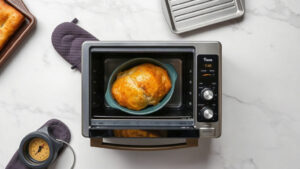
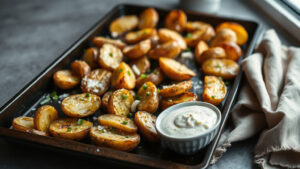
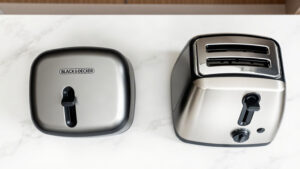
You can use aluminum foil in a toaster oven, but lining the bottom — specifically the crumb tray or the oven floor — is where things get genuinely risky. Most toaster oven manufacturers explicitly say not to do it, and there are real reasons beyond legal boilerplate. Here’s what’s actually safe, what isn’t, and a few workarounds that work better anyway.
Safety First: Never place aluminum foil directly on the crumb tray or oven floor of a toaster oven. Foil that contacts or sits too close to exposed heating elements can ignite grease drippings, cause electrical arcing, or melt onto the oven interior — creating a fire hazard and potentially damaging the appliance beyond repair. Always check your specific model’s manual before using foil in any configuration.
Quick Facts: Aluminum Foil and Toaster Ovens
- Toaster ovens typically reach between 200°F and 500°F — heating elements themselves can hit 900°F or higher.
- Foil on the crumb tray is banned by virtually every major manufacturer (Breville, Cuisinart, Hamilton Beach) in their official documentation.
- Using foil on a baking pan or rack as a food liner is generally fine, as long as it doesn’t touch the walls or elements.
- Foil can reflect heat unevenly, leading to burned bottoms and undercooked tops — something I’ve experienced firsthand.
- Parchment paper (rated to 425°F) and purpose-made toaster oven liners are safer alternatives for most tasks.
Why People Want to Line the Bottom in the First Place
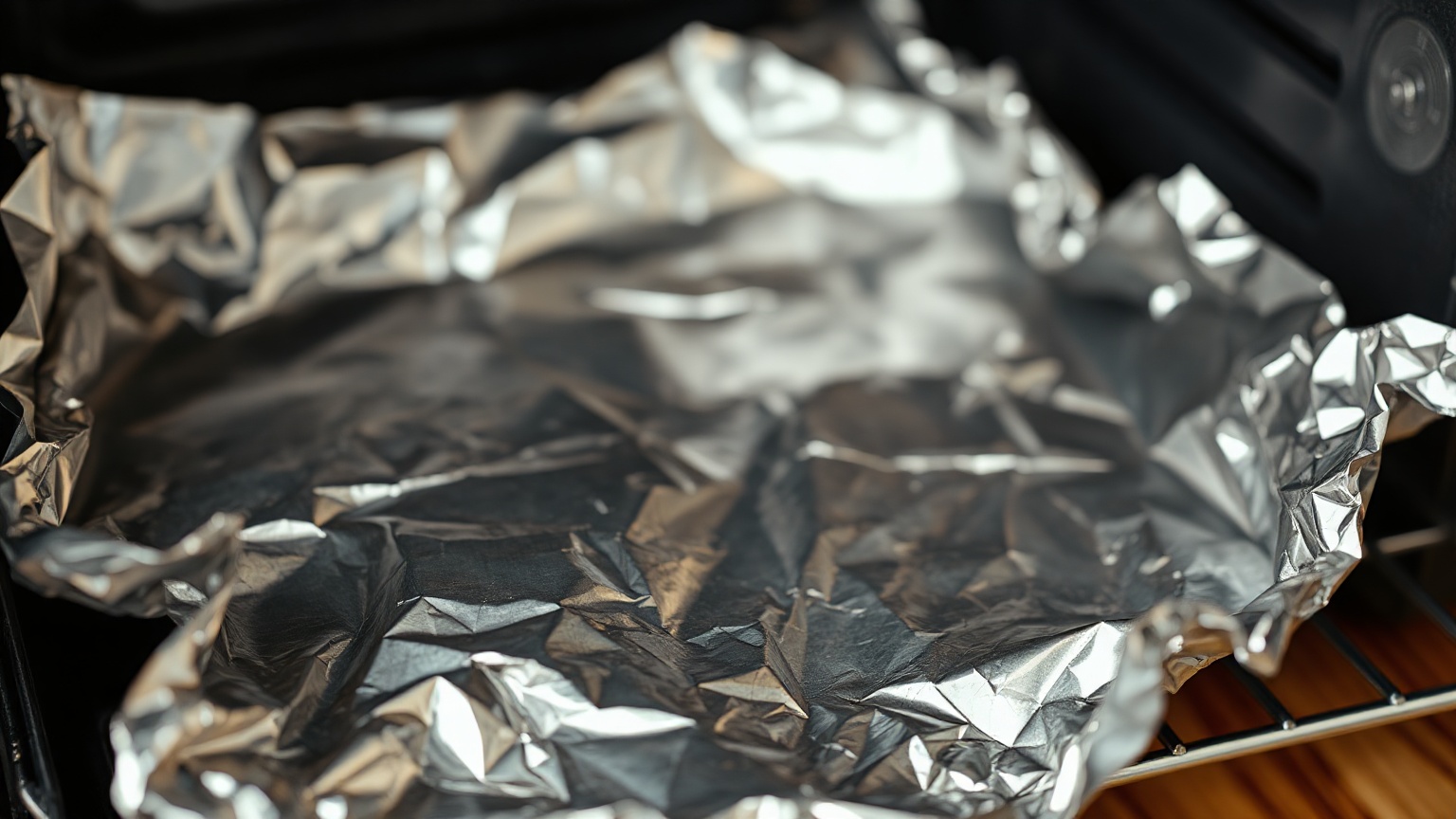
Honestly? Cleanup. That crumb tray is annoying to wash, grease bakes onto the oven floor, and foil feels like an obvious fix. I get it. I used to line my old Black+Decker with foil every single time I cooked sausage, mostly because I was lazy about scrubbing. It worked fine — until it didn’t.
The problem isn’t the foil itself. It’s the placement. Toaster ovens are compact, which means the heating elements are much closer to the oven floor than in a full-size range. In a standard kitchen oven, the bottom element might be 10–12 inches from your food. In a toaster oven, we’re often talking 2–4 inches. That proximity changes everything about how heat behaves and how dangerous a misplaced piece of foil can become.
There’s also the issue of airflow. Toaster ovens rely on convection (even non-convection models use radiant heat that circulates). Covering the bottom blocks that circulation, which throws off cooking times and can cause hot spots. I once covered the full bottom of a Cuisinart TOA-60 and watched my frozen pizza cook completely unevenly — blackened in one corner, raw dough in another. Not great.
What Happens When Foil Touches a Heating Element
This is the part people underestimate. Aluminum foil conducts electricity. Toaster oven heating elements carry electrical current. If foil contacts or gets close enough to arc with an element, you can get a spark, a flash, or in worst cases, a small fire. It’s not theoretical — there are documented appliance fires traced to foil-element contact.
Even if there’s no spark, foil sitting on the crumb tray can catch drippings. Fat drips onto foil, pools, gets very hot, and ignites. The foil itself doesn’t burn, but what’s sitting on it does. I’d describe the smell of burning grease in a tiny enclosed oven as deeply unpleasant, and that’s putting it politely.
And then there’s the heat reflection issue. Foil bounces radiant heat back toward the elements, which can cause them to overheat and shorten their lifespan. You’ll notice your oven running hotter than the set temperature, which then overcooks your food. Read more about how hot a toaster gets and why those temperature numbers matter more than most people think.
Where Foil Is Actually Fine to Use
Here’s the thing — foil isn’t banned from toaster ovens entirely. It’s specifically the crumb tray and oven walls that are off-limits. Using foil correctly is fine and actually useful.
On a Baking Pan or Rack
Lining a toaster oven baking pan with foil works well. You’re creating a barrier between the food and the pan, not between the heat source and the oven cavity. Just fold the edges up so foil stays on the pan and doesn’t drape down toward the element. Keep it taut. Loose foil can shift during cooking and touch something it shouldn’t.
As a Tent Over Food
Tenting foil loosely over food — like covering a small roast to prevent the top from burning — is completely legitimate. I do this with chicken thighs at 400°F when I want the skin to crisp toward the end but not char from the top element throughout. Just make sure the foil doesn’t touch the top heating element. There should be at least an inch of clearance, ideally more.
Wrapping Individual Foods
Wrapping garlic, potatoes, or small packets of vegetables in foil and placing them on the rack is fine. The foil is self-contained around the food, not touching anything else. This is actually a great method for reheating food in a toaster oven without drying it out.
Foil vs. Other Liner Options: A Real Comparison
If cleanup is the goal — and it usually is — here’s how different liner options actually stack up. I’ve used all of these at various points.
| Liner Type | Max Safe Temp | OK on Crumb Tray? | OK on Pan/Rack? | Cleanup Benefit |
|---|---|---|---|---|
| Aluminum Foil | Doesn’t melt (element contact risk) | No | Yes (with care) | High |
| Parchment Paper | ~425°F | No | Yes | High |
| Silicone Baking Mat | ~480°F | No | Yes (pan only) | Very High |
| Toaster Oven Liner (PTFE) | ~500°F | Check model specs | Yes | Very High |
| Nothing (bare crumb tray) | N/A | Yes | Yes | Low — must wash |
Personally, I’ve switched almost entirely to silicone mats on my pans. They’re reusable, easy to rinse, and don’t shift around like foil does. The one downside is they don’t work well for high-heat broiling — above 480°F, I go back to foil on the pan, not the oven floor.
PTFE-coated toaster oven liners are worth mentioning because they’re specifically designed for this purpose. They’re flexible, cut to size, and rated for high heat. Some can be placed on the crumb tray, but you need to check your oven’s manual — not all models approve it. Food Network’s guide on aluminum foil usage also notes that foil can interfere with cooking results in enclosed ovens, which lines up with what I’ve seen.
The Edge Case Nobody Talks About: Acidic Foods and Foil
Here’s something the other articles skip over entirely. Aluminum foil reacts with acidic foods — tomatoes, citrus, anything with vinegar. At high heat, this reaction speeds up significantly. The result is a slight metallic flavor transfer into your food and, over time, pitting of the foil surface. This isn’t a catastrophic safety issue, but it does affect food quality in ways people don’t expect.
I noticed it first with a tomato-based chicken dish I made in a foil-lined pan at 375°F. The sauce tasted faintly off. Not dangerous, just weird. Now I use parchment for anything with a tomato base and save foil for proteins and roasted vegetables. Small adjustment, noticeably better results.
The Serious Eats piece on aluminum leaching goes into the science if you want the full picture. The short version: the amounts involved are generally considered safe by health authorities, but the flavor impact is real and annoying.
What the Manufacturers Actually Say
I looked through manuals for several common models — Breville BOV845BSS, Cuisinart TOA-70, and Hamilton Beach 31127D. All three explicitly state not to line the crumb tray or oven bottom with foil. Breville’s language is the clearest: covering the crumb tray can cause overheating and is a fire risk. Hamilton Beach goes further and says it voids the warranty.
That warranty point matters more than people realize. If your toaster oven starts a small fire because of foil placement and the manufacturer determines misuse caused it, you’re not covered. Not worth it for a cleanup shortcut. If you’re shopping for a reliable model anyway, our roundup of the best mini toaster ovens covers which models are easiest to clean without needing any liner at all — nonstick interiors make a real difference.
The simplest replacement for lining the bottom is just to use a toaster oven wire rack with a drip pan underneath, kept clean by a quick soak after each use. Five minutes of soaking versus a potential fire. That math isn’t complicated.
Final Thoughts
The honest answer is this: foil in a toaster oven isn’t categorically dangerous, but it’s very easy to use it wrong. On a pan, wrapped around food, or tented over a dish — all fine. On the crumb tray, the oven floor, or touching the walls — not fine, and not something I’d ever do again after seeing what scorched grease in a tiny enclosed box actually looks like.
If cleanup is the real goal, a silicone mat or a quick-soak drip pan will get you there without the risks. Save the foil for wrapping and tenting. Your toaster oven will last longer, your food will cook more evenly, and you won’t spend an afternoon explaining to your landlord why the kitchen smells like burning metal.
Frequently Asked Questions
Can you put aluminum foil on the bottom of a toaster oven?
No — placing foil directly on the crumb tray or oven floor is a fire hazard and is explicitly prohibited by most toaster oven manufacturers. The heating elements in a toaster oven sit very close to the bottom surface, and foil can trap grease, reflect heat dangerously, or contact live elements. Use foil only on a baking pan or wrapped around food instead.
Is it safe to use aluminum foil in a toaster oven at all?
Yes, foil is safe in a toaster oven when used correctly. Lining a baking pan, wrapping food, or tenting foil loosely over a dish are all acceptable uses. The key restriction is that foil should never touch the heating elements, the oven walls, or the crumb tray — those placements create heat, fire, and electrical risks.
What can I use instead of foil to line a toaster oven?
Parchment paper (safe up to about 425°F), silicone baking mats (up to ~480°F), and PTFE-coated toaster oven liners are all better alternatives for most cooking tasks. Silicone mats are reusable and easy to clean, making them the most practical swap for everyday use. For broiling above 450°F, foil on a pan — not the oven floor — is still the most heat-resistant option.
Will aluminum foil in a toaster oven cause a fire?
It can, under specific conditions. Foil on the crumb tray can pool dripping grease, which ignites at high heat. Foil that contacts or arcs near a heating element can cause electrical sparking. The risk isn’t constant or inevitable, but the consequences are serious enough that it’s not worth testing — especially in an appliance with elements just inches from the food.
Does aluminum foil affect how food cooks in a toaster oven?
Yes. Foil reflects radiant heat, which can cause uneven cooking — burned bottoms, undercooked tops, or hot spots within the oven cavity. Foil also reacts with acidic foods like tomatoes or citrus at high temperatures, which can transfer a faint metallic flavor. Using foil only as a pan liner or food wrap (not as an oven liner) minimizes both of these effects.

Written by
Emma founded Toastera to turn vague appliance advice into clear, researched, safety-first guidance on toasters and toaster ovens.
Free: the Toaster Oven Cheat Sheet
Get the printable cheat sheet (temps, cook times & safety tips) plus new recipes. No spam, unsubscribe anytime.