Toast a sourdough English muffin on your toaster’s lowest or second-lowest setting — typically equivalent to around 300–325°F at the heating element — and you’ll get golden nooks without scorched edges. The problem is that those deep crevices trap heat and dry out faster than the dense crumb around them, so high heat turns them to charcoal before the rest of the muffin even warms through. Keep it low, keep it slow, and if your muffin is thick, a second short toast cycle beats one aggressive one every time.
Safety First: Toaster heating elements reach temperatures well above 300°F and can ignite crumbs, butter drips, or loose muffin pieces lodged in the slot. Empty your toaster’s crumb tray before toasting English muffins — their nooks shed more debris than regular bread. Never toast a muffin that’s heavily buttered before toasting; butter dripping onto a hot element is a real fire risk. Keep the toaster clear of cabinets and curtains while in use.
Quick Facts: Toasting Sourdough English Muffins
- Best toaster setting: Level 2 out of 6, or “light” on models with descriptive dials
- Best toaster oven setting: 325°F, toast mode, 4–5 minutes on the rack (not the tray)
- Frozen sourdough English muffins need one extra minute, not a higher temperature
- Splitting the muffin by hand (fork-splitting) preserves more nooks than knife-cutting
- If nooks are burning before the center is warm, your toaster runs hot — drop one setting and run a second cycle
Why Sourdough English Muffins Are Harder to Toast Than Regular Ones
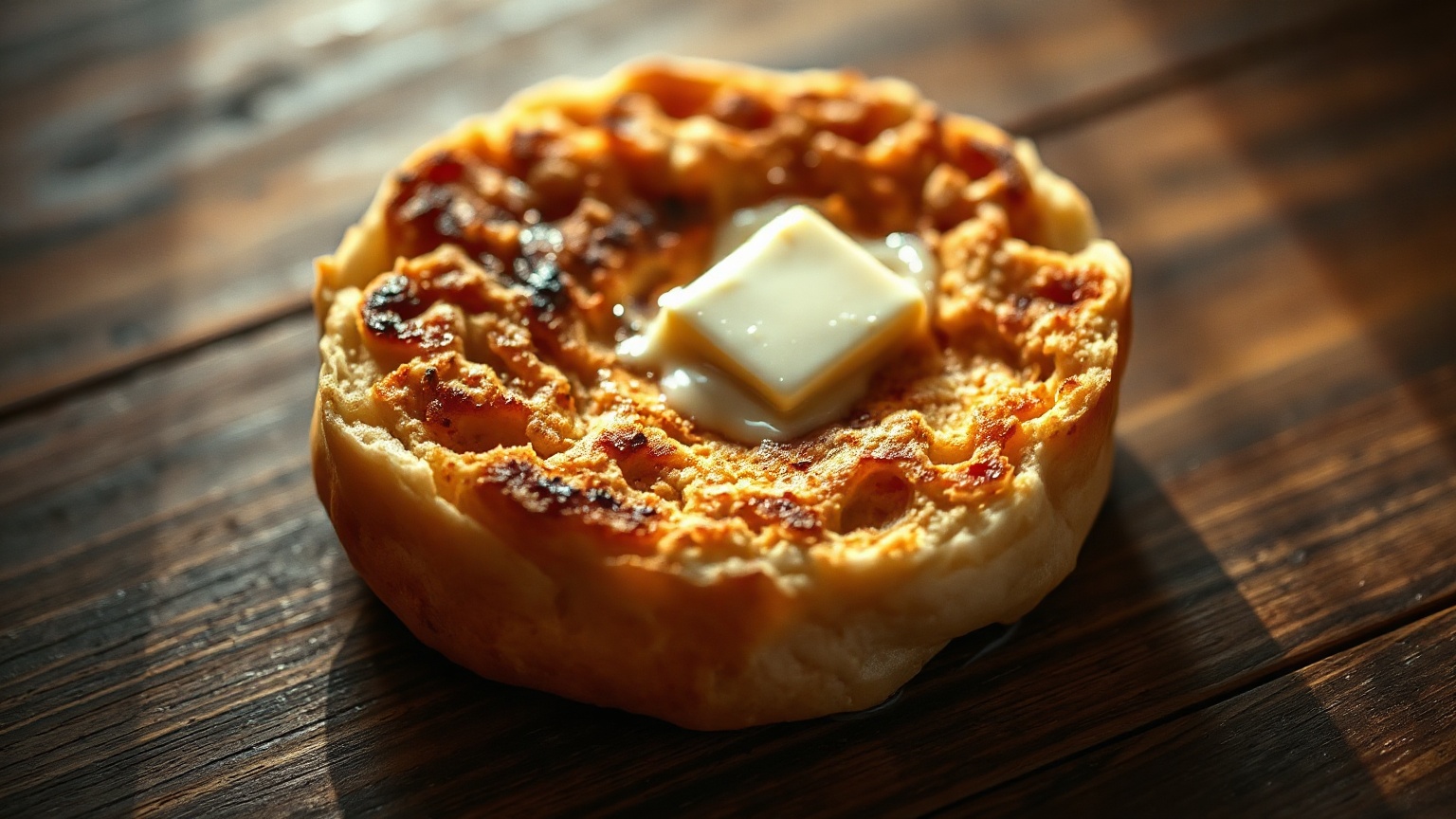
Regular English muffins are already pretty forgiving in a toaster. Sourdough ones? A little trickier. The fermentation process gives them a chewier, denser interior and, usually, deeper nooks and crannies than their commercial counterparts. That’s the whole point. But those deep pockets are also tiny chimneys — they focus radiant heat right into the muffin’s most exposed surfaces and dry out almost instantly on high settings.
I burned my first batch of homemade sourdough English muffins badly. Set my toaster to 4 out of 6 like I usually do with sandwich bread, walked away for literally 90 seconds, and came back to perfectly charred nooks with a cold, dense center. The outside looked done. The inside was just warm. That mismatch is the core problem with anything that has an uneven surface.
The nooks also tend to be drier than the crumb itself, especially if the muffin has been sitting out or was refrigerated. Dry surfaces toast — and burn — faster. Worth keeping that in mind if you’re working with day-old muffins.
The Right Way to Split Them (It Actually Matters)
Before you even get to toaster settings, how you split the muffin matters more than most people realize. Use a fork. Seriously. Push the tines of a fork around the equator of the muffin and gently pull the two halves apart. This is called fork-splitting, and it exposes the irregular, cratered interior instead of slicing through it cleanly.
A knife gives you a smooth, flat cut surface. It actually seals some of those nooks. Fork-splitting tears along the natural air pockets, leaving you with more texture, more surface area, and a better toast overall. Serious Eats has written about this technique for English muffins generally, and it holds especially true for sourdough versions where the crumb structure is more open. Serious Eats covers the science if you want to go deep on fermentation and crumb structure.
Once split, check the surface. If it looks very wet or underbaked on the inside (common with homemade sourdough muffins that didn’t quite cook through on the griddle), give it 30 seconds face-down on a dry skillet over medium-low before toasting. That pre-dry step alone prevents a lot of burning because you’re not asking the toaster to do two jobs at once.
Toaster Settings: What Actually Works
Most pop-up toasters run their heating elements somewhere between 300°F and 450°F depending on the setting. (You can read more about how hot a toaster gets if you want the full breakdown.) For sourdough English muffins, you want the element operating at the lower end of that range — long enough to warm the interior, not so hot that the nooks vaporize.
Pop-Up Toaster
Set it to 2 out of 6, or “light” if your toaster uses descriptive labels. Run one full cycle. Check it. If the nooks are golden but the center still feels cold to the touch, run a second cycle at the same setting — don’t bump it up. Two light cycles beats one medium cycle every time for thick muffins.
My personal preference is setting 2 for the first cycle, then a quick 30-second second cycle if needed. Never setting 3 or above. Once I crossed that threshold with sourdough muffins, the thin edges of the nooks went from golden to bitter almost immediately.
Also — and this is a pet peeve of mine — make sure the muffin halves actually fit in the slots properly, cut side facing the element. Some wider toasters have slots wide enough for this to be easy. Narrow slots sometimes squish the muffin, compressing those nooks before they even toast. If that’s happening, the toaster oven is genuinely the better tool.
Toaster Oven
This is actually my preferred method for sourdough English muffins. Set the toaster oven to 325°F, toast or bake mode, and place the muffin halves cut-side up on the wire rack — not the tray. The rack lets air circulate under the muffin slightly, which helps the bottom not go soggy while the top toasts. I’ve tested this on both a Breville compact and a basic BLACK+DECKER, and the rack-vs-tray difference is real.
Time: 4 to 5 minutes. Check at 4. If the nooks are just starting to go golden and the edges look dry, you’re done. Pull them. The residual heat carries it another 30 seconds or so on the rack anyway.
If you want to get nerdy about positioning, place the rack in the middle slot, not too close to the top element. Proximity to the upper element is the main reason nooks burn in a toaster oven — the radiant heat is direct and aggressive up there. A good adjustable toaster oven wire rack can make positioning much easier if you don’t love the one that came with your machine.
Toaster vs. Toaster Oven: A Quick Comparison
| Method | Best Setting | Approximate Time | Burn Risk | Best For |
|---|---|---|---|---|
| Pop-up Toaster | Level 2/6 (Light) | 2–3 min per cycle | Medium-High | Quick, thin muffins |
| Toaster Oven (Toast Mode) | 325°F, middle rack | 4–5 minutes | Low-Medium | Thick homemade muffins |
| Toaster Oven (Broil) | Low broil, 12″ from element | 2–3 minutes, watch constantly | High | Not recommended |
| Skillet (no toaster) | Medium-low heat, dry pan | 3–4 min per side | Low | If you have no toaster nearby |
Frozen Sourdough English Muffins: Different Rules
Frozen muffins are their own situation. A lot of people crank the heat to compensate for the cold center, and that’s exactly backwards. The outside toasts at the same rate whether the muffin is frozen or not — the inside just takes longer to thaw. Higher heat means burned nooks and an ice-cold middle.
The fix is simple. Add one minute of time, not one level of heat. In a toaster oven, go 325°F for 6 minutes instead of 5. In a pop-up toaster, run two full cycles at setting 2. Or — and this works really well — microwave the frozen muffin for 20 seconds first, then toast normally. That 20-second micro-blast just takes the chill off the interior without doing anything visible to the outside, and then the toaster finishes the job cleanly.
The Edge Case Nobody Talks About: Freshly Baked, Same-Day Muffins
Here’s something the other guides skip over: freshly baked sourdough English muffins — still slightly warm from the griddle or oven — toast differently than cooled ones. The interior is still soft and a little moist, which is wonderful, but it means the nooks are also moister than usual and will take slightly longer to crisp up without burning.
If you’re toasting same-day muffins, let them cool for at least 20 minutes first. I know, it’s hard. But toasting a warm muffin generates steam inside the toaster slot, which can make the outside go rubbery before it crisps. Twenty minutes on a wire cooling rack makes a real difference. And no, a muffin ring mold set won’t help you here — that’s a making problem, not a toasting one.
Once cooled, toast them exactly the same as any other muffin: setting 2, light, or 325°F in the toaster oven. They don’t need special treatment at that point. For more on reheating food in a toaster oven without drying it out, we’ve got a full guide on that too.
Butter: Before or After?
After. Always after. Butter before toasting is how you start a small fire. Butter drips off the surface, lands on the heating element or the crumb tray, and smokes. It can also make the nooks go greasy-crisp instead of dry-crisp, which is a texture I personally don’t enjoy — it’s a bit like eating a crouton that’s been soaked in oil. Not what you want.
Toast plain, then butter immediately off the toaster while the muffin is still hot. The butter melts into those warm nooks and the result is genuinely better. If you want to add honey or jam on top, butter first, then toppings. That layering keeps the toast from going soggy.
One exception: if you’re using the toaster oven and want a slightly richer, more restaurant-style finish, you can add a thin scrape of butter to the cut surface in the last 60 seconds of toasting. Not pooled butter — a light smear. It crisps beautifully. But watch it. One minute, not two. And keep an eye on it. The best mini toaster ovens usually have a glass door that makes this easy to monitor.
The Bottom Line
Toasting sourdough English muffins without burning the nooks isn’t complicated, but it does require you to fight your instincts a little. Low heat, two cycles if needed, rack position in the toaster oven, and butter after not before. Fork-split them, cool them if they’re fresh, and add time not temperature for frozen ones.
I’ve burned enough of these to know that the toaster oven at 325°F is the most reliable setup I’ve found. Pop-up toasters work fine on setting 2, but they’re less forgiving if your machine runs hot. When in doubt, err lower. A slightly under-toasted sourdough English muffin is still delicious. A scorched one is just sad. You can also check Food Network for topping inspiration once you’ve nailed the toast itself — that part’s the fun part.
Frequently Asked Questions
What toaster setting should I use for English muffins?
Use setting 2 out of 6, or the “light” setting on your toaster. English muffins — especially sourdough ones — have irregular surfaces that toast faster than flat bread, so starting low and running a second cycle if needed is far safer than starting at a medium or high setting. Most people who burn them are using setting 3 or above.
How do I keep English muffin nooks from burning in the toaster?
The nooks burn because they’re thinner and more exposed than the surrounding crumb, so they overheat first. Use the lowest or second-lowest toaster setting, and if your muffin is still cold in the center after one cycle, run a second short cycle at the same setting rather than increasing the heat. In a toaster oven, place the muffin halves cut-side up on a middle rack at 325°F for 4–5 minutes.
Can you toast a sourdough English muffin from frozen?
Yes, but don’t turn up the heat — add time instead. A 20-second microwave blast before toasting takes the chill off the interior without affecting the exterior, then toast normally at your usual low setting. Alternatively, run two full light-setting cycles in a pop-up toaster, or toast at 325°F for 6 minutes in a toaster oven instead of the usual 4–5.
Should I butter an English muffin before or after toasting?
Always after. Butter applied before toasting can drip onto the heating element or crumb tray and smoke or catch fire. It also creates a greasy texture in the nooks rather than the dry, crisp finish you’re after. Butter immediately after toasting while the muffin is still hot — the residual heat melts it straight into the nooks.
Is a toaster oven better than a pop-up toaster for English muffins?
For thick, homemade sourdough English muffins, yes — a toaster oven at 325°F gives you more control and lower burn risk than most pop-up toasters. Pop-up toasters work fine on the light setting, but they vary a lot between brands and can compress the muffin in narrow slots. A toaster oven lets you watch the process and pull the muffin at exactly the right moment.
—
Written by
Emma founded Toastera to turn vague appliance advice into clear, researched, safety-first guidance on toasters and toaster ovens.
Free: the Toaster Oven Cheat Sheet
Get the printable cheat sheet (temps, cook times & safety tips) plus new recipes. No spam, unsubscribe anytime.