The defrost setting on a toaster extends the heating cycle — typically adding 30 to 60 extra seconds of lower-intensity heat before the full browning phase kicks in. This gives frozen bread time to thaw through before the toaster tries to brown the outside, so you don’t end up with toast that’s charred on the surface and still icy in the middle. It’s a small thing, but it makes a real difference if you keep bread in the freezer.
Safety First: Never try to manually defrost frozen bread by running a standard toaster on a higher heat setting or by leaving it unattended on max browning. Excess moisture from frozen food can drip onto heating elements and cause smoking or, in poorly maintained toasters, a fire. Always make sure your crumb tray is clean and empty before toasting frozen items — ice melt drips down.
Quick Facts: Toaster Defrost Setting
- The defrost function adds roughly 30–60 seconds of low heat before standard toasting begins — it doesn’t use a separate heating mode, just extra time.
- Most toasters with a defrost button operate between 300°F and 450°F total; the defrost phase stays toward the lower end of that range.
- It works best on bread, bagels, waffles, and English muffins — not great for thicker frozen items like pastries stuffed with filling.
- If your toaster doesn’t have a defrost button, you can replicate it: run a light-toast cycle first, then a second cycle at your preferred browning level.
- Toaster ovens handle defrosting differently — they can use a dedicated low-temperature setting around 150°F–170°F with the convection fan.
How the Defrost Setting Actually Works
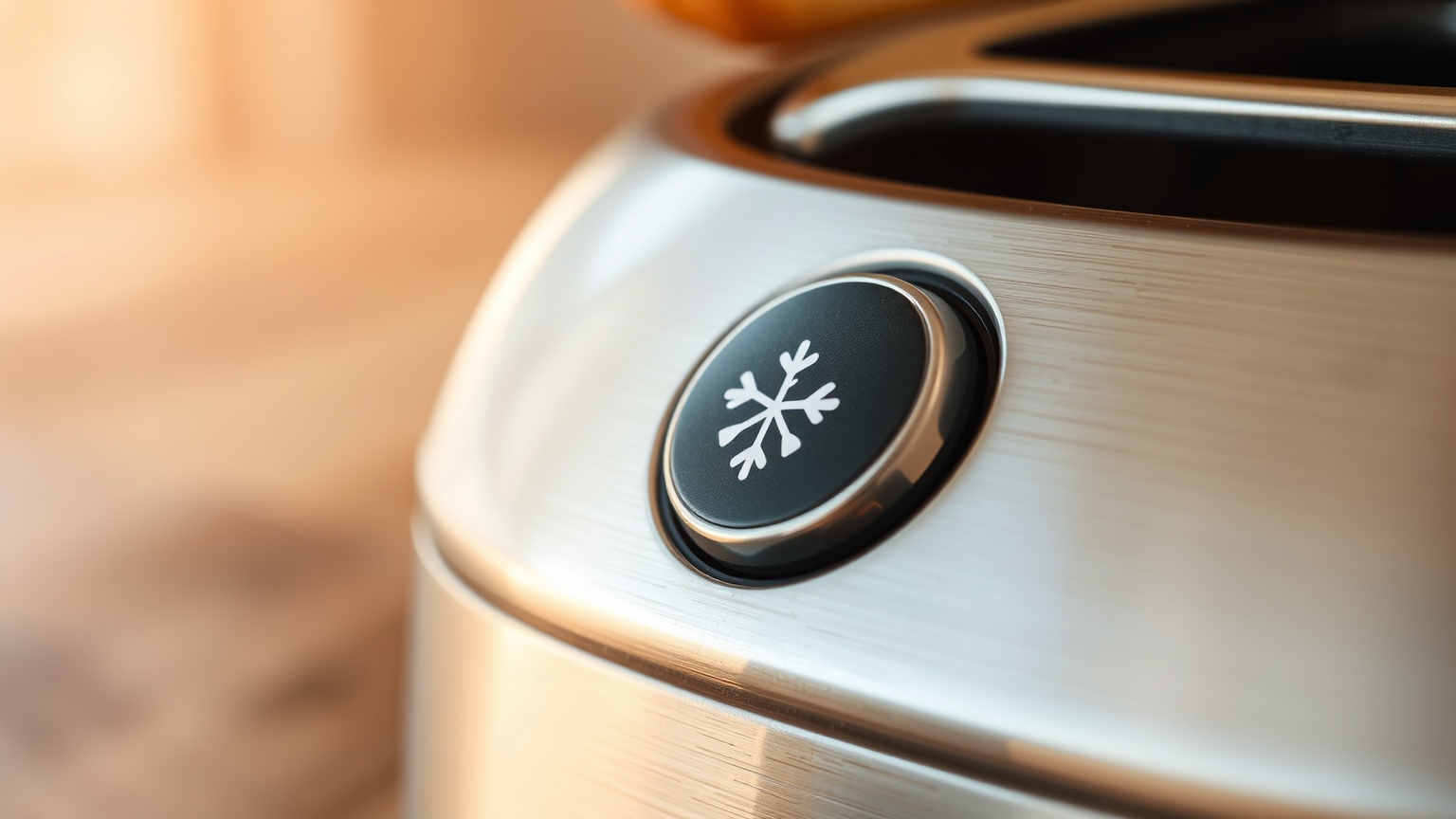
Here’s the thing that surprised me the first time I looked into this properly: the defrost setting on most pop-up toasters isn’t a separate heating mode at all. There’s no “defrost temperature” being set. What actually happens is the toaster’s timer gets extended. The heating elements still run, but the cycle is lengthened so the bread can warm gradually from frozen before the browning stage takes over.
Think about what happens without it. You put a frozen slice of bread in, set it to medium browning, and the elements blast full heat immediately. The outside of the bread hits the browning threshold fast — maybe too fast — while the center is still cold and dense. You pull out something that looks fine but feels wrong: crispy outside, slightly gummy or even cold in the middle. Not ideal.
With defrost engaged, that initial phase gives the ice crystals in the bread time to melt and the moisture to redistribute a bit. Then the regular toasting cycle finishes the job. The total process takes maybe 1.5 to 2 times longer than a standard toast cycle. On a mid-range toaster I tested — a 2-slice Cuisinart — that meant about 3 minutes 40 seconds on defrost+medium versus 2 minutes 10 seconds on standard medium. Not a huge wait, and the result was noticeably more even.
Worth knowing: how hot a toaster gets overall affects how well defrost works. A toaster running at higher wattage (1,800W) will still push through the defrost phase faster than a cheap 800W model, which might struggle to get frozen bread fully thawed before browning unevenly.
Defrost on a Pop-Up Toaster vs. a Toaster Oven
These are genuinely different things, and people mix them up constantly.
Pop-Up Toasters
On a standard 2-slice or 4-slice pop-up toaster, the defrost button does exactly what I described above: it runs a longer heating cycle. Nothing more technical than that. Some brands call it “Frozen,” some call it “Defrost,” and at least one budget model I own just has a snowflake icon with zero explanation in the manual. They all do the same thing.
One quirk I ran into: some older toasters with a mechanical timer rather than an electronic one don’t handle defrost as cleanly. The extended cycle can overshoot on high browning settings, and I’ve burnt a few slices that way. If you’re using defrost mode, I’d actually dial the browning down one notch from where you’d normally set it for fresh bread. That adjustment alone improved my results noticeably.
Toaster Ovens
Toaster ovens are more flexible. A decent countertop toaster oven with convection can actually defrost food gently using low heat — around 150°F to 170°F — with the fan circulating air. This is closer to real defrosting rather than just “toast it slower.” You can do it without browning anything, which is useful if you want to defrost a slice of bread to use for a sandwich rather than toast.
The method: set the toaster oven to its lowest temperature (usually 150°F–200°F depending on the model), place the frozen bread on the rack, and give it 3–5 minutes. No browning, no drying out. Then if you want it toasted, run a normal toast cycle after. For more on getting the most out of your appliance, see our guide on reheating food in a toaster oven.
| Feature | Pop-Up Toaster (Defrost) | Toaster Oven (Low Temp Defrost) |
|---|---|---|
| Defrost method | Extended heating cycle (same elements) | Low heat (150°F–170°F) with fan |
| Can defrost without toasting? | No | Yes |
| Typical defrost time | 3–4 minutes total | 3–5 minutes defrost only |
| Best for | Frozen bread slices, bagels, waffles | Bread, pastries, rolls, thicker items |
| Risk of uneven results | Moderate (depends on wattage) | Low |
When You Should (and Shouldn’t) Use the Defrost Setting
Use it whenever you’re toasting bread straight from the freezer. That’s the obvious answer. But there are a few situations where it really earns its keep, and a couple where it falls short.
Good Uses for Defrost Mode
- Frozen sandwich bread: Standard sliced bread that’s been frozen works great. The thin profile means the extended heat gets through it evenly.
- Frozen bagels: These are probably my most-used defrost scenario. I keep bagels in the freezer constantly. Slice them before freezing if you haven’t already — trying to cut a frozen bagel is its own hazard.
- Frozen Eggo-style waffles: Works fine, though honestly the package instructions often suggest a toaster anyway without mentioning defrost — using the defrost button gets you a better texture than blasting them on high.
- English muffins from frozen: Same principle as bagels. Just make sure they’re split before they go in.
Where It Won’t Help Much
Thick frozen pastries — like a frozen croissant or a stuffed breakfast pastry — don’t do well in a pop-up toaster regardless of settings. The defrost cycle isn’t long enough or gentle enough to thaw the interior, and the exterior will over-brown. Use a toaster oven for those. Also, if your frozen bread has frost or ice crystals actually on the surface (meaning it wasn’t wrapped well), defrost mode can handle light frost but not a heavily iced-over slice. That one needs to sit on the counter for a few minutes first.
And here’s an edge case none of the other articles seem to mention: if you’re toasting very thin frozen bread — like sandwich thins or some artisan slices that are cut quite narrow — defrost mode can actually over-do it. The bread is so thin it thaws almost immediately and then keeps cooking through the extended cycle, coming out drier than you’d want. For those, I skip defrost and just use one notch lower than my normal setting on regular mode.
Tips for Better Results With Frozen Bread
A few practical things I’ve figured out over time, mostly through getting it wrong first.
- Freeze bread in single slices if possible. Separating slices before freezing (with parchment between them) means you can pull one slice without fighting a frozen block. Sounds obvious, but I spent months ripping bread because I froze the whole loaf at once.
- Lower your browning setting by one notch when using defrost mode. The longer cycle runs hotter at the end, so your usual “4” setting might come out like a “5” when combined with defrost.
- Clean your crumb tray before toasting frozen items. Moisture drips. Old crumbs plus new moisture is a smoke situation waiting to happen.
- Don’t stack or overlap frozen slices. If you’re putting two slices in a 2-slice toaster, they both need full air circulation. Frozen bread is often slightly swollen from ice expansion — force it in and you’ll jam the toaster.
If you’re in the market for a toaster oven that handles frozen foods particularly well, the ones with a dedicated low-temp setting and convection make the biggest difference. Check out our picks for the best mini toaster ovens if you’re working with limited counter space. And for longer baking needs, a quality toaster oven baking rack gives you better airflow for even defrosting and heating.
According to Serious Eats, freezing bread is actually one of the best ways to preserve its texture — so learning to defrost it properly is worth the small effort. And the USDA confirms that freezing bread at 0°F keeps it safe indefinitely, though flavor and texture are best within 3 months.
What If Your Toaster Doesn’t Have a Defrost Button?
Plenty of toasters don’t have one. Especially budget models or older ones. You’ve got two options.
First option: run two shorter cycles. Set the toaster to the lowest browning setting and run a full cycle — this essentially acts as the defrost phase. Then run a second cycle at your normal setting. It takes a bit longer than built-in defrost but produces very similar results. I’ve done this on a basic 2-slice toaster for years and it works fine.
Second option: let the bread sit for 2–3 minutes at room temperature before toasting. Even a brief thaw on the counter takes the deep freeze off the bread and lets you toast normally without special settings. Not always practical when you’re rushing, but it’s reliable.
The Bottom Line
The defrost button is a genuinely useful feature, not a gimmick. It solves a real problem — uneven toasting of frozen bread — with a simple fix: more time, lower intensity at the start. It’s not complicated, and once you know what it’s doing, you’ll use it (or replicate it manually) every time you pull bread from the freezer.
My take? If you keep bread in the freezer regularly, it’s worth having a toaster with this feature. And if your current model lacks it, the two-cycle method works nearly as well. The result in either case — properly toasted, evenly browned, not gummy in the middle — is worth the extra minute or two.
Frequently Asked Questions
Does the defrost setting toast bread differently than regular toasting?
Yes — the defrost setting runs the heating elements for longer before reaching peak browning temperature, giving frozen bread time to thaw before it gets toasted. Regular toasting goes straight to full heat, which browns the outside before the inside has warmed through. The end texture is noticeably more even with defrost engaged on frozen bread.
Can I use the defrost setting on fresh bread?
You can, but there’s no point. On fresh bread, defrost mode just adds unnecessary time and slightly extends the heating cycle, which can leave you with drier or over-browned toast. Stick to regular toast mode for anything that isn’t frozen.
How long does the defrost setting take on a toaster?
Most toasters with a defrost function take roughly 3 to 4 minutes total for a standard slice of frozen bread — compared to about 2 minutes for a normal toast cycle at medium browning. The exact time depends on the wattage of your toaster and the browning level you’ve selected. Higher-wattage toasters (1,500W+) complete the cycle faster.
Why does my toast come out burnt when I use the defrost setting?
This usually happens because the browning level is set too high for the extended defrost cycle. Try lowering your browning setting by one notch when using defrost — the longer cycle adds heat that effectively increases browning beyond what the dial setting alone would suggest. Also check that the bread isn’t too thin, as very thin slices thaw quickly and keep browning through the rest of the cycle.
Is defrost mode on a toaster oven the same as on a pop-up toaster?
No — they work quite differently. A toaster oven’s defrost setting uses low heat (typically 150°F–170°F) with a convection fan to gently thaw food without browning it at all. A pop-up toaster’s defrost mode simply extends the standard heating cycle and always results in toasted bread. Toaster ovens give you more control and can defrost without toasting if you want.
—
Written by
Emma founded Toastera to turn vague appliance advice into clear, researched, safety-first guidance on toasters and toaster ovens.
Free: the Toaster Oven Cheat Sheet
Get the printable cheat sheet (temps, cook times & safety tips) plus new recipes. No spam, unsubscribe anytime.