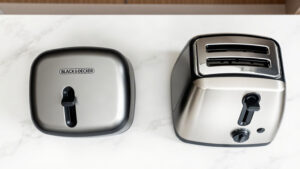
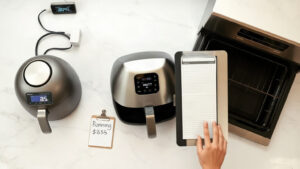
An air fryer uses significantly less electricity than a full-size oven — typically 1,400–1,700 watts versus 2,400–5,000 watts for a standard electric oven. Because air fryers are smaller and preheat in under five minutes, they reach cooking temperature faster and hold it more efficiently. For everyday meals and smaller portions, the savings add up faster than most people expect.
Safety First: All three appliances discussed here involve high-wattage heating elements and get hot enough to cause serious burns. Never leave any of them unattended on a cluttered countertop, keep flammable materials at least 6 inches away, and always plug high-draw appliances directly into a wall outlet — not a power strip or extension cord, which can overheat under sustained load.
Key Takeaways
- A full-size electric oven draws 2,400–5,000 watts; an air fryer draws 1,400–1,700 watts; a toaster oven sits in between at roughly 1,200–1,800 watts.
- At the U.S. average electricity rate of about 16 cents per kWh, running a full-size oven costs roughly 40–80 cents per hour. An air fryer runs closer to 22–27 cents per hour.
- Preheat time matters as much as wattage — an oven wastes 10–15 minutes of energy before food even goes in.
- For large roasts, baking multiple sheet pans, or feeding six-plus people, the full oven still wins on practicality regardless of cost.
- A toaster oven often hits the sweet spot: nearly as fast as an air fryer for reheating and small bakes, but with more usable surface area.
I’ve spent a fair amount of time obsessing over this exact question — partly because my electricity bill made me grumpy last winter, and partly because I cover this stuff for a living. I tracked actual cook times and did rough watt-hour math for about three weeks across a Cuisinart toaster oven, a Cosori air fryer, and my ancient GE freestanding range. Here’s what I found.
The Real Numbers: Wattage, Cost Per Hour, and What That Actually Means
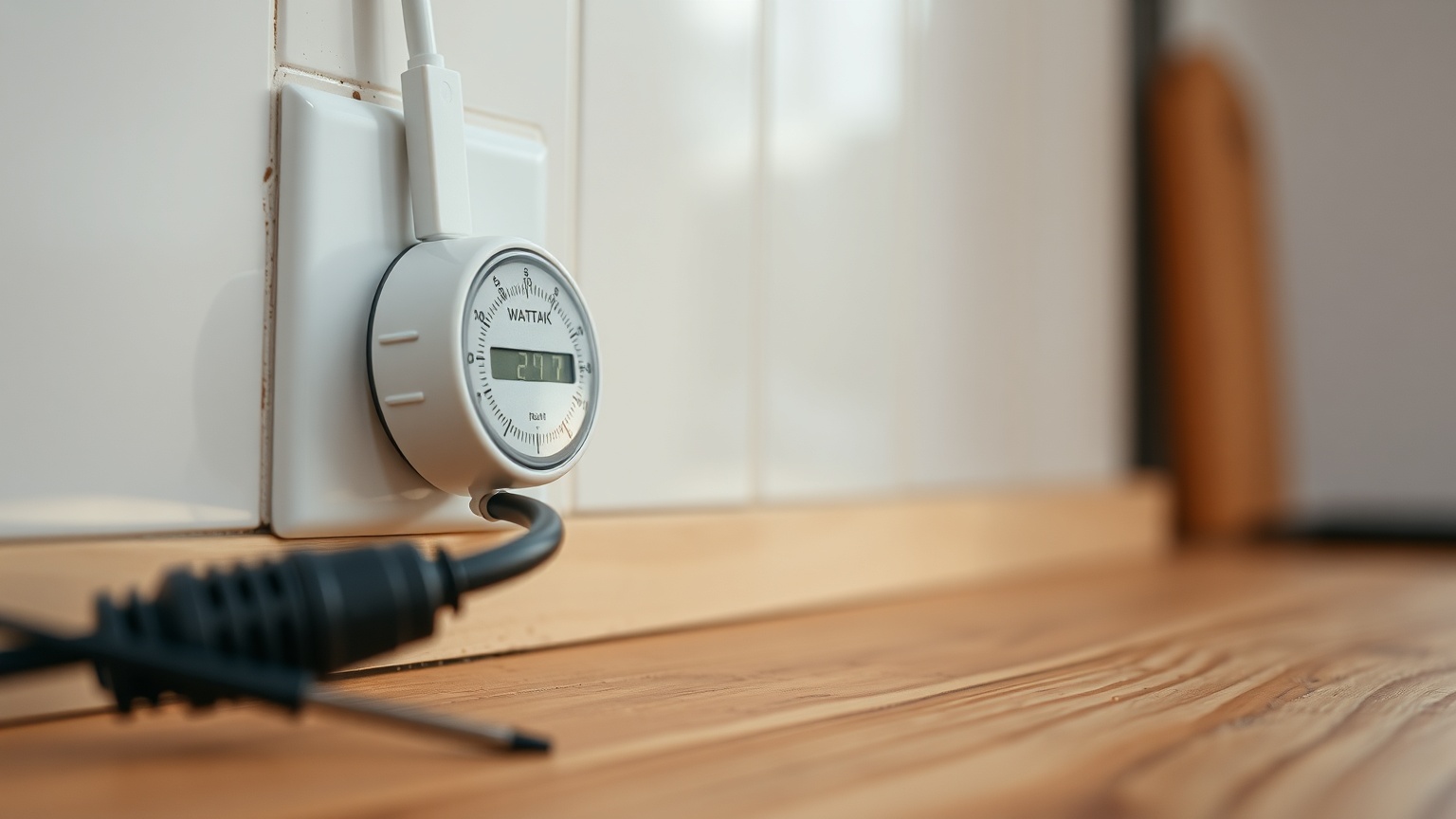
Wattage comparisons are everywhere, but they’re only half the story. The number that matters is watt-hours — how many watts you’re pulling, multiplied by how long you’re pulling them. A 3,000-watt oven running for 20 minutes uses the same energy as a 1,500-watt air fryer running for 40 minutes. So cook time matters just as much as the nameplate wattage.
That said, here’s a side-by-side of what you’re actually dealing with:
| Appliance | Typical Wattage | Avg. Preheat Time | Cost Per Hour (@ $0.16/kWh) | Cost for 25-Min Cook |
|---|---|---|---|---|
| Full-Size Electric Oven | 2,400–5,000W | 10–15 min | $0.38–$0.80 | $0.24–$0.50 |
| Toaster Oven (convection) | 1,200–1,800W | 3–6 min | $0.19–$0.29 | $0.12–$0.18 |
| Air Fryer | 1,400–1,700W | 2–4 min | $0.22–$0.27 | $0.11–$0.17 |
Those “cost for 25-min cook” figures include preheat. That’s the honest comparison — because you’re paying for those 12 minutes of oven warming whether or not it shows up on a recipe card. Over a year of daily cooking, that preheat gap alone can add up to $30–$60 of pure waste on the oven side.
Gas Ovens: A Quick Note
Gas ovens don’t pull electricity in the same way, so this comparison gets murkier there. Current U.S. natural gas prices make gas cooking cheaper per hour than electric in most regions — but not everywhere, and the gap is narrowing. If you’ve got a gas range and you’re reading this trying to justify an air fryer purchase, the energy savings argument is honestly weaker for you. The speed argument, though, still holds.
My Actual Test: Chicken Thighs Three Ways
I cooked four bone-in chicken thighs — same batch, split across three sessions on different days — and tracked total active time from cold appliance to food on the plate. Same temp target: 400°F (or as close as the air fryer’s 400°F setting gets, which in my Cosori runs a touch hot).
The full oven took 13 minutes to preheat, then 32 minutes to cook. 45 minutes total. The convection toaster oven hit temp in about 5 minutes and finished the thighs in 28 minutes. The air fryer was ready in 3 minutes and done in 22 minutes. Huge difference in feel, even if the raw watt-hour math is closer than you’d think.
What the numbers don’t show: the oven heated my kitchen noticeably. It was February, so I wasn’t complaining. But in July, running a full-size oven for 45 minutes forces your A/C to work harder — and that’s an indirect electricity cost that almost no comparison article accounts for. More on that in a minute.
The air fryer skin was crispier, for the record. Not the point of this article, but you should know.
Where the Toaster Oven Fits (And Why It’s Often the Smarter Buy)
A lot of energy-use articles skip over the toaster oven entirely, or lump it in with the air fryer as “basically the same thing.” They’re not. A quality convection toaster oven — like the ones I’ve covered on this site — can handle a 9×13 pan, a small roast, or a full rack of cookies. An air fryer can’t. And yet the toaster oven’s wattage is essentially competitive with an air fryer, especially in the 1,200–1,500W range.
If you’re cooking for two adults and don’t regularly roast a turkey or bake four dozen cookies at once, a toaster oven is likely the only countertop oven you need. Check out the best mini toaster ovens if you’re shopping — there are solid options under $100 that preheat in under five minutes and handle nearly everything a full oven does.
The one thing I’d say toaster ovens are genuinely better at than air fryers: reheating food. Pizza, leftover roasted vegetables, a wedge of frittata — the broader surface area and gentler airflow gets things hot without drying them out or making them weirdly rubbery.
The Edge Cases Most Comparisons Miss
Summer Heat Load and Cooling Costs
Here’s the one that genuinely surprised me when I did the math. A full-size oven running for 45 minutes in summer can add 2,000–3,000 BTUs of heat to your kitchen. If your home has central air running at standard efficiency, removing that heat costs roughly an extra 5–10 cents per oven session. Small? Yes. But multiply it across five weekly oven uses from June through September and you’re looking at another $10–$15 tacked onto your indirect cooling costs. An air fryer’s smaller cavity radiates dramatically less ambient heat — not zero, but far less.
Batch Cooking Flips the Math
If you’re meal prepping for the week — roasting two sheet pans of vegetables, baking a casserole, and finishing it with a tray of energy balls — the full oven wins on cost per unit of food cooked. You’re using one preheat cycle for 90 minutes of cooking across multiple dishes. Three separate air fryer sessions covering the same food would likely cost more in total. The oven’s inefficiency is front-loaded (preheat), not sustained, so long multi-dish sessions close the gap considerably.
Standby and Preheat Overshoot
Full-size ovens cycle their heating elements on and off to maintain temperature — they don’t run at full wattage the entire time. The average sustained draw during cooking is closer to 1,500–2,000W on a 3,000W oven, once it’s up to temp. That’s worth knowing. It makes the oven look slightly better during active cooking than the nameplate wattage suggests. But the preheat phase still runs near maximum draw, so the first 12–15 minutes are expensive regardless.
For more detail on how toaster ovens and smaller appliances handle heating cycles differently, the Serious Eats toaster oven guide has solid technical notes on convection airflow and element behavior worth reading.
Practical Advice: Which Appliance to Use for What
Forget trying to find one winner. The honest answer is that you should probably own both a full-size oven and at least one countertop appliance — and then actually use the countertop appliance for the 80% of cooking that doesn’t need the big oven.
Here’s how I break it down in my own kitchen:
- Full oven: Big roasts, multi-rack baking, anything over about 3 lbs, holiday cooking, or when I’m cooking four dishes at once.
- Air fryer: Frozen foods, anything that benefits from ultra-crisp texture (fries, wings, breaded stuff), quick weeknight proteins under about 1.5 lbs.
- Toaster oven: Reheating, small bakes (a pan of brownies, four chicken legs), toast obviously, anything where I want oven-style results without waiting 15 minutes for preheat.
A good convection toaster oven in the 1,500–1,800W range genuinely handles most of what a full oven does for one or two people. And if you’re doing a lot of air frying, grabbing a combo air fryer toaster oven gets you both in one footprint, which is worth considering if counter space is tight.
The U.S. Energy Information Administration tracks average residential electricity rates by state if you want to plug your own rate into the watt-hour math — rates vary from about 11 cents (Louisiana) to over 30 cents (Hawaii) per kWh, so your personal savings will differ from the national average figures I’ve used here.
The Verdict
An air fryer does use less electricity than a full-size oven — meaningfully so, especially once you account for preheat. But “less electricity” doesn’t automatically mean “better” for every situation. A toaster oven competes closely with an air fryer on energy use while offering more cooking flexibility. The full oven earns its keep for large or complex meals but is genuinely wasteful for quick, small jobs.
My practical take: if you’re currently using your full oven every night for one or two portions of food, swapping that habit for a toaster oven or air fryer will save you real money — probably $50–$100 a year depending on your rates and cooking habits. That’s not going to change your life. But it’s free money, and the food often comes out better anyway.
If you want to go deeper on how smaller appliances handle heat in general, the piece on how hot a toaster gets covers the heating element mechanics in more detail than you probably want — but it’s useful context if you’re trying to understand why small appliances heat so differently from full ovens.
Frequently Asked Questions
Does an air fryer use less electricity than a full-size oven?
Yes — an air fryer typically draws 1,400–1,700 watts, while a full-size electric oven draws 2,400–5,000 watts. The gap widens further because air fryers preheat in 2–4 minutes versus 10–15 minutes for a full oven, so total energy consumed per meal is substantially lower. At average U.S. electricity rates, air frying costs roughly 22–27 cents per hour compared to 38–80 cents per hour for a full oven.
Is a toaster oven more energy efficient than an air fryer?
They’re very close. A convection toaster oven runs at 1,200–1,800 watts, which overlaps almost entirely with the air fryer range. The bigger practical difference is that toaster ovens have more interior space and flatter cooking surfaces, making them more efficient for foods that don’t need intense circulated airflow. For most everyday cooking, the energy difference between a toaster oven and an air fryer is negligible.
How much money can you save by using an air fryer instead of an oven?
Switching from a full-size electric oven to an air fryer for one daily meal can save roughly $50–$100 per year at average U.S. electricity rates, assuming the oven session is replaced entirely (including preheat). Savings will be higher in states with expensive electricity, like California or Hawaii, and lower in states with cheap power. The indirect cooling savings in summer months add a small additional amount on top of the direct electricity savings.
Should I use an air fryer or oven for cooking chicken?
For portions up to about 1.5 lbs — a few thighs, drumsticks, or breasts — an air fryer at 400°F cooks chicken faster, uses less energy, and produces crispier skin. For a whole chicken or larger cuts, the full oven is more practical since the air fryer basket simply can’t fit them. A toaster oven splits the difference nicely for mid-size portions of around 2–3 lbs. The USDA safe internal temperature for poultry is 165°F regardless of which appliance you use.
Does running a full-size oven raise my electricity bill significantly?
It depends on how often you use it and for how long, but yes, a full-size oven is one of the higher-draw appliances in a typical kitchen. An hour of daily oven use at average U.S. rates adds roughly $18–$35 per month to your electricity bill — more if your oven is older and runs less efficiently. Replacing half those sessions with a toaster oven or air fryer is one of the simpler ways to trim your kitchen energy costs without changing what you eat.

Written by
Emma founded Toastera to turn vague appliance advice into clear, researched, safety-first guidance on toasters and toaster ovens.
Free: the Toaster Oven Cheat Sheet
Get the printable cheat sheet (temps, cook times & safety tips) plus new recipes. No spam, unsubscribe anytime.