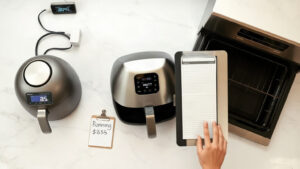
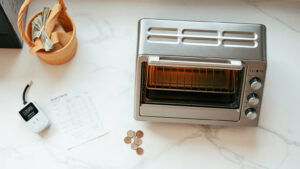
A 2-slice toaster typically draws between 800 and 1,200 watts, while a 4-slice model usually runs from 1,200 to 1,800 watts. The bigger size means more heating elements, so the wattage goes up proportionally. But here’s the thing most wattage comparisons skip: because a 4-slice toaster finishes a full batch in roughly the same time as a 2-slice toaster does half that batch, the real cost difference is smaller than you’d expect.
Safety First: Never leave a toaster unattended during operation, and always plug it directly into a wall outlet — not a power strip or extension cord. Overloaded circuits are a genuine fire risk, especially with high-wattage 4-slice models running at 1,500+ watts. If your outlet feels warm after toasting, stop using it and have an electrician check the circuit before plugging anything back in.
Key Takeaways
- 2-slice toasters typically run 800–1,200 watts; 4-slice models run 1,200–1,800 watts
- A single toast cycle (roughly 2–3 minutes) costs a fraction of a cent regardless of slice count — the annual difference is usually under $5
- Wattage alone doesn’t tell the full story: a 4-slice toaster toasting 4 slices costs about the same per slice as a 2-slice doing 2
- Budget 2-slice models often cluster around 850W; premium 4-slice models can hit 1,800W but toast noticeably faster and more evenly
- If you only ever toast 1–2 slices a day, a 2-slice toaster is the more efficient choice, full stop
Actual Wattage Numbers: What the Labels Say vs. What I Measured
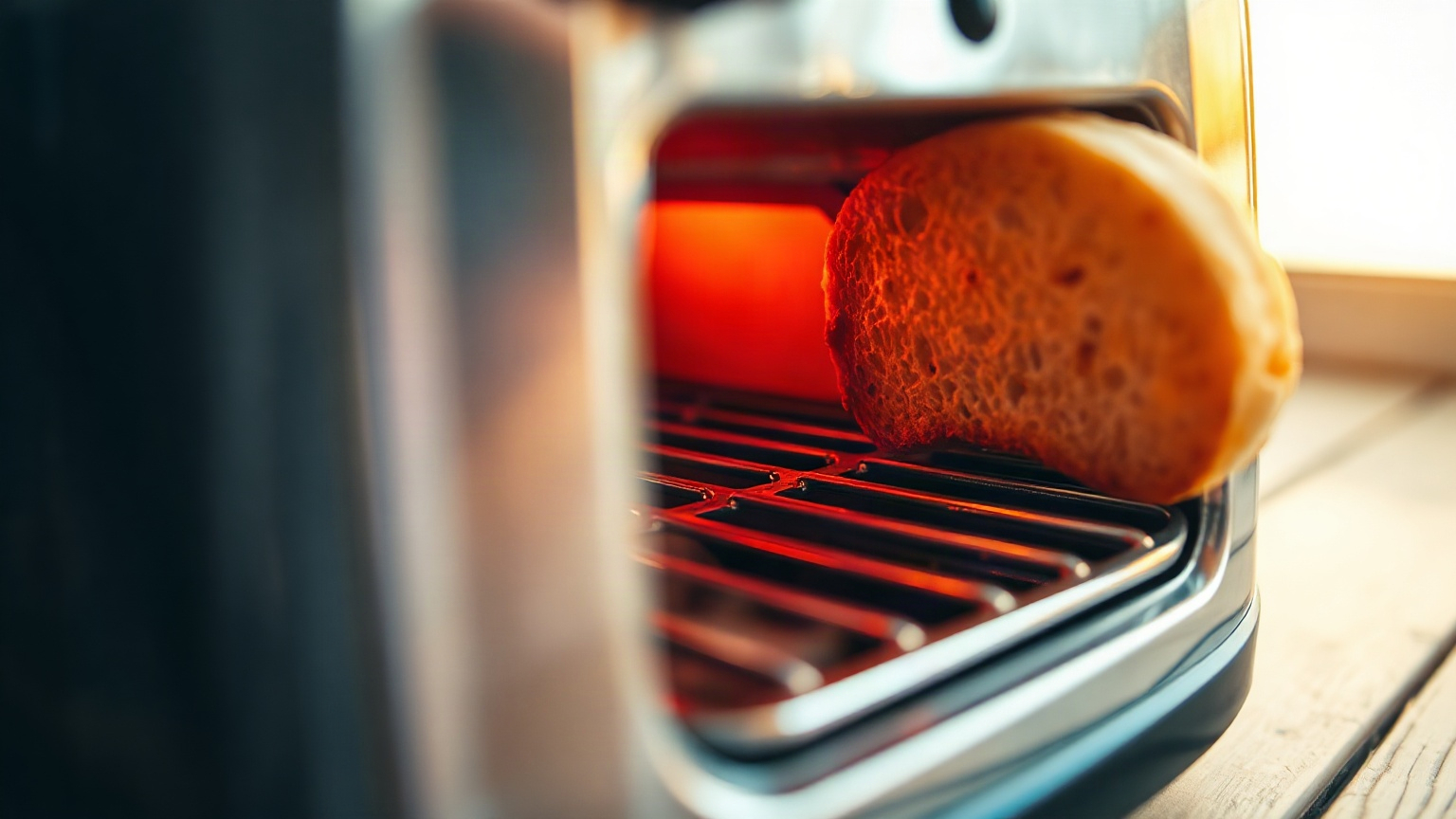
I’ve tested a fair number of toasters on my kitchen counter over the past few years, and I started using a plug-in energy monitor (a Kill A Watt meter, about $25 on Amazon) after I got skeptical of the numbers printed on the bottom of appliances. Manufacturers list the maximum rated wattage, not what the thing actually pulls during a normal cycle.
My Black+Decker 2-slice is rated at 850W. Under the Kill A Watt, toasting at a medium-dark setting (level 4 out of 6), it drew a consistent 820–840W. Close enough. My Cuisinart 4-slice, rated at 1,500W, pulled 1,460–1,480W under the same conditions. Again, pretty accurate. What surprised me was a cheap no-name 2-slice I picked up for testing — rated at 900W, it was actually drawing closer to 960W. So: trust the nameplate as a ballpark, not gospel.
The range you’ll see across the market looks roughly like this:
| Toaster Type | Typical Wattage Range | Average Cycle Time | Energy Per Cycle (Wh) | Cost Per Cycle (at $0.16/kWh) |
|---|---|---|---|---|
| 2-slice, budget | 800–950W | 2.5–3 min | ~37–48 Wh | ~$0.006–0.008 |
| 2-slice, mid-range | 950–1,200W | 2–2.5 min | ~40–50 Wh | ~$0.006–0.008 |
| 4-slice, budget | 1,200–1,400W | 2.5–3 min | ~50–70 Wh | ~$0.008–0.011 |
| 4-slice, mid/premium | 1,400–1,800W | 2–2.5 min | ~47–75 Wh | ~$0.008–0.012 |
The $0.16/kWh figure is the U.S. average as of mid-2024 according to the U.S. Energy Information Administration. Your rate may be higher (California, Hawaii) or lower (parts of the South), so adjust accordingly.
The Cost Math Nobody Actually Runs
Let’s do this properly, because most articles just quote wattage and stop there. That’s not useful.
Per-Cycle Cost
Take a 1,000W 2-slice toaster running for 2.5 minutes. That’s 1,000W × (2.5/60) hours = 41.7 watt-hours, or 0.0417 kWh. At $0.16/kWh, that’s $0.0067 per toast cycle. Less than a cent. Now a 1,500W 4-slice running 2.5 minutes: 62.5 Wh, or $0.01 per cycle. Still less than a cent, just slightly more.
Annual Cost at Different Usage Levels
This is where it gets interesting. Say you toast twice a day, every day — that’s 730 cycles a year.
- 2-slice at 1,000W: 730 × $0.0067 = ~$4.89/year
- 4-slice at 1,500W: 730 × $0.01 = ~$7.30/year
That’s a $2.41 annual difference. I’ll be honest — I spend more than that on a single fancy coffee. The electricity cost between a 2-slice and a 4-slice toaster is not a meaningful financial decision for most households. Where it might matter: very high electricity rates (above $0.35/kWh, which some California and Hawaii residents pay) or unusually heavy use like a small café or B&B kitchen.
The Per-Slice Efficiency Argument
Here’s what I find more interesting than raw wattage. If you need to toast 4 slices for a family breakfast and you only have a 2-slice toaster, you’re running two back-to-back cycles. That doubles your energy use and your time. The 4-slice does it in one cycle, using roughly 1.5x the power but not 2x. Per slice, the 4-slice often wins on efficiency when you’re actually filling it up. The only time the 2-slice wins on a per-slice basis is when you’re only toasting 1 or 2 slices — which is exactly what most solo households do every morning.
Specific Models and What They Actually Draw
Abstracts are fine, but real model numbers help. Here are a few popular ones I’ve either tested or have reliable spec data on:
2-Slice Options
The Cuisinart CPT-122 runs at 900W — it’s been my daily driver for about 18 months and I genuinely like it. Nothing flashy, toasts evenly, easy to clean. The Breville BTA820XL sits at 1,800W, which is eye-catching for a 2-slice. It’s fast — noticeably faster than anything else I’ve used at that slot count — but it costs more to buy and pulls more power. The Hamilton Beach 2-slice budget models hover around 850W and are perfectly adequate for basic bread.
4-Slice Options
The KitchenAid 4-Slice toaster runs around 1,500W and is mid-range in terms of both price and performance. The Breville Die-Cast 4-Slice hits 1,800W and is genuinely premium — even toasting across all four slots, which is harder than it sounds. Cheaper 4-slice models (think Hamilton Beach, Black+Decker) tend to cluster around 1,200–1,400W and toast unevenly in my experience, especially the slots nearest the edges.
One thing I’ve noticed with cheaper 4-slice models: they sometimes run two independent 2-slice heating zones rather than a unified 4-slice element arrangement. That sounds fine, but it means inconsistent browning if you load all four slots simultaneously. Worth checking reviews for that specifically before buying.
Edge Cases Most Comparisons Miss
Standby Power
Most toasters draw zero standby watts when idle — they’re purely mechanical switches in most designs. But some newer models with digital displays or LED indicators draw 1–3W continuously. If you leave one plugged in 24/7, that adds up to 8–26 kWh a year, which at $0.16/kWh is $1.28–$4.16. Not huge. But it’s more than some of the toast-cycle savings people obsess over. Unplug your toaster when you’re not using it — good advice regardless, since it also eliminates any fire risk from a faulty element cycling on by itself (rare, but it happens).
High-Altitude and Voltage Variation
This one genuinely surprises people. In the U.S., standard household voltage runs 120V, but it can vary from about 110V to 125V depending on your grid and how far you are from the transformer. At lower voltages, your toaster draws slightly less power but also toasts more slowly — so the cycle runs longer and the net energy use barely changes. If you’re in an older building with notoriously low voltage, your toaster will underperform before it under-consumes. Something to keep in mind if you’ve ever wondered why toast takes forever in your apartment.
Toaster Ovens vs. Pop-Up Toasters on Wattage
Quick aside: toaster ovens typically use 1,200–1,800W but take 4–8 minutes to toast bread, which means they use significantly more energy per slice than a pop-up toaster. If you’re purely trying to minimize electricity use for toast specifically, a pop-up toaster wins. I covered this in more detail in the piece on how hot a toaster gets and how that affects browning speed.
If you’re curious about more versatile options that also reheat leftovers and do small bakes, check out our picks for the best mini toaster ovens — a few of those actually match or beat pop-up toasters on wattage while doing far more.
So Which One Should You Actually Buy?
My honest take: if you live alone or with one other person and you’re toasting 1–2 slices most mornings, get a 2-slice. The energy savings are marginal but the counter space savings are real. A good 2-slice like the Cuisinart CPT-122 will do everything you need and take up half the footprint.
If you’ve got kids, regularly make a full breakfast spread, or just hate running batches, the 4-slice is worth it. The electricity cost difference is so small it’s not a factor. What matters more is build quality — specifically, whether the 4-slice model you’re considering has independent or unified heating zones. Read reviews, look for mentions of uneven toasting.
For households somewhere in the middle — two adults, occasional guests — I’d still probably go 2-slice with a wide-slot model that handles bagels and thick bread easily. More flexible than it sounds.
The wattage difference between 2-slice and 4-slice toasters is real but not worth stressing over financially. Focus on toast quality, slot width, and ease of cleaning the crumb tray instead. Those are the things you’ll care about on day 200 of ownership. And if you want to understand more about how heating elements affect browning and texture, the guide on reheating food in a toaster oven has a good breakdown of how element temperature relates to results.
For a broader take on toaster energy use and kitchen appliance efficiency, Serious Eats has done some solid equipment testing that’s worth reading alongside the numbers here.
The Bottom Line
A 4-slice toaster uses more watts than a 2-slice — usually around 1,400–1,800W vs. 800–1,200W. But the actual annual cost difference, for a typical household, is somewhere between $2 and $5. That’s it. The more useful question isn’t which uses fewer watts. It’s which one fits how you actually cook in the morning. Buy the right size for your household, check that it toasts evenly (especially important on 4-slice models), and don’t worry too much about the electricity bill.
Frequently Asked Questions
How many watts does a 2-slice toaster use?
Most 2-slice toasters use between 800 and 1,200 watts, with the majority of mid-range models clustering around 900–1,000W. Budget models tend to sit at the lower end, while premium fast-toasting models like certain Breville units can reach 1,800W. The wattage is rated at maximum draw, so you’ll often measure slightly less in practice.
How many watts does a 4-slice toaster use?
A 4-slice toaster typically draws 1,200 to 1,800 watts. Budget 4-slice models often run at 1,200–1,400W, while mid-range and premium models hit 1,500–1,800W. Higher wattage generally means faster, more even toasting — but only if the heating element design supports all four slots simultaneously rather than running as two paired 2-slice zones.
Does a 4-slice toaster cost more to run than a 2-slice?
Yes, but barely. The annual electricity cost difference for typical daily use is roughly $2–$5 at average U.S. electricity rates. Per cycle, you’re looking at less than a cent difference. If you’re toasting 4 slices at once in the 4-slice model versus running two back-to-back cycles in a 2-slice, the 4-slice is actually more efficient per slice.
Is it safe to leave a toaster plugged in when not in use?
Technically most toasters draw no standby power when idle, but unplugging is still the safer habit. Faulty heating elements can occasionally cycle on without user input, and a plugged-in toaster near crumbs or a dish towel is a fire risk. Unplugging also eliminates any small continuous draw from models with LED displays or digital controls.
Does higher wattage mean a toaster toasts faster?
Generally, yes. A 1,800W toaster will reach browning temperatures faster than an 850W model, which is why premium high-wattage toasters advertise speed as a selling point. However, the difference in cycle time is often only 30–60 seconds, and a longer slower cycle can sometimes produce more even browning on lower-quality bread. Wattage matters less than element design and slot coverage for consistent results.

Written by
Emma founded Toastera to turn vague appliance advice into clear, researched, safety-first guidance on toasters and toaster ovens.
Free: the Toaster Oven Cheat Sheet
Get the printable cheat sheet (temps, cook times & safety tips) plus new recipes. No spam, unsubscribe anytime.