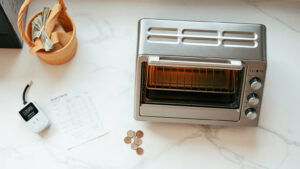
Yes, an air fryer uses significantly less electricity than a full-size oven for reheating. A typical air fryer draws 1,000–1,800 watts and preheats in under 3 minutes, while a full-size electric oven pulls 2,000–5,000 watts and can take 10–15 minutes just to reach temperature. For everyday reheating tasks — leftovers, pizza, fries — the air fryer will almost always cost less to run.
Safety First: Both air fryers and ovens produce high heat and draw significant electrical current. Never leave either appliance completely unattended while reheating, keep flammable materials (paper towels, plastic wrap) well clear of vents and heating elements, and always plug your air fryer directly into a wall outlet — not an extension cord or power strip, which can overheat under sustained high-wattage loads.
Key Takeaways
- Air fryers typically use 1,000–1,800 watts; full-size electric ovens use 2,000–5,000 watts (gas ovens are different — more on that below).
- Shorter preheat time is where the air fryer wins most of its savings — the oven’s 10–15 minute warm-up can easily cost more energy than the actual cook time.
- For small portions, an air fryer will consistently cost less per session. For large batches, the math gets closer than people think.
- At the U.S. average electricity rate of roughly $0.16 per kWh, reheating a slice of pizza costs about $0.02–$0.03 in an air fryer vs. $0.10–$0.15 in a full-size oven.
- A toaster oven air fryer combo (like the Breville Smart Oven Air Fryer) can split the difference nicely if you regularly cook for more than two people.
The Real Numbers: Wattage, Time, and Cost Per Reheat
Let’s get specific, because vague wattage comparisons don’t actually help you decide anything. Here’s how the math plays out in a real kitchen.
A compact air fryer (say, a 4-quart basket model) typically runs at around 1,400–1,500 watts. A larger 6-quart or oven-style air fryer sits closer to 1,700–1,800 watts. A standard full-size electric oven bake element is usually 2,500–3,000 watts, and the broil element can hit 4,000–5,000 watts. The oven doesn’t run its element continuously — it cycles on and off to hold temperature — but it still averages significantly higher consumption than an air fryer over the same reheat window.
The preheat phase is the killer. I timed my own full-size electric oven (a mid-range Whirlpool, nothing special) preheating to 375°F — it took just over 12 minutes. During that time it was drawing close to full wattage almost continuously. My 5.8-quart Cosori air fryer, set to the same approximate temperature (380°F is my usual reheat setting), was ready in 2.5 minutes. That’s roughly 10 minutes of wasted energy before the oven even sees the food.
Here’s a quick reference table:
| Appliance | Typical Wattage | Preheat Time to 375°F | Est. Energy for One Pizza Slice Reheat | Est. Cost at $0.16/kWh |
|---|---|---|---|---|
| Full-size electric oven | 2,500–3,000 W | 10–15 min | ~0.75–0.90 kWh | $0.12–$0.14 |
| Air fryer (basket, 4–6 qt) | 1,400–1,800 W | 2–3 min | ~0.10–0.15 kWh | $0.02–$0.02 |
| Toaster oven (no air fry) | 1,200–1,800 W | 4–6 min | ~0.20–0.35 kWh | $0.03–$0.06 |
| Toaster oven with air fry | 1,500–1,800 W | 3–5 min | ~0.15–0.25 kWh | $0.02–$0.04 |
These are estimates based on typical usage cycles, not laboratory measurements. Your actual cost depends on your local electricity rate and how well-insulated your specific oven is. But the order of magnitude gap is real and consistent.
What I Actually Tested (and What Surprised Me)
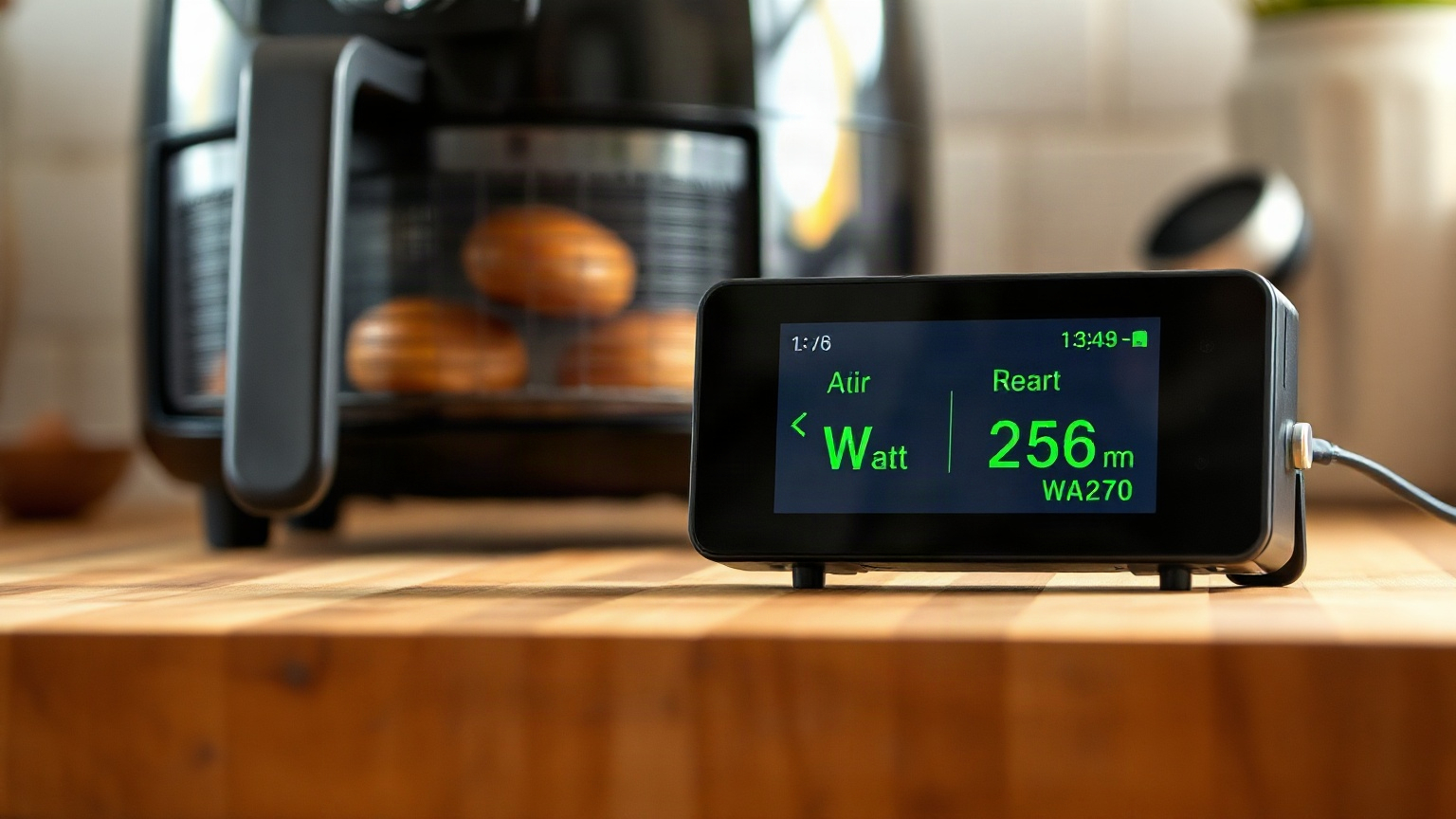
I ran a deliberately simple test over two weeks: the same four reheating tasks done twice each — once in my full-size oven, once in the air fryer. Pizza slices, leftover roasted chicken thighs, a portion of french fries, and a small casserole dish of pasta bake. I used a cheap Kill-a-Watt meter plugged in between the air fryer and the outlet, and I noted the oven’s cycle behavior using a separate watt meter on that circuit.
Pizza and fries? The air fryer won by a wide margin, both on energy and on result. Fries came out actually crispy, not sad and chewy like they get in a regular oven. The chicken thighs were close — both worked fine, and the energy difference was still there but smaller because the chicken needed a longer reheat anyway.
The pasta bake is where things got interesting. My air fryer basket couldn’t fit the dish I wanted to use. I had to transfer to a smaller container, and I lost some of the top layer. The oven, annoying as it is to wait for, just accepted the dish as-is. That convenience factor matters. It’s not always about energy cost in isolation.
The first time I tried reheating chicken in the air fryer, I forgot to flip it halfway through — and the bottom side came out dry while the top was fine. Once I added the flip at the 4-minute mark (at 375°F for about 8 minutes total), it was genuinely excellent. Better than the oven, honestly. I’ve been doing it that way ever since.
For more on reheating food in a toaster oven more generally, that article covers a broader range of foods and techniques worth bookmarking.
The Gas Oven Edge Case Nobody Mentions
Almost every comparison I’ve seen online focuses on electric ovens vs. air fryers. Makes sense — most air fryer owners are also electric oven owners. But if you have a gas oven, the calculation shifts.
Gas is still cheaper than electricity per BTU in most parts of the U.S. A gas oven running at 350–375°F for a 15-minute reheat (including preheat) might cost you roughly $0.04–$0.07 depending on your local gas rate and the oven’s efficiency. That’s closer to air fryer territory than you’d expect.
That said, gas ovens still take 10+ minutes to preheat, and you’re heating a large cavity for a small task. The air fryer still makes more practical sense for reheating small portions — even from a cost standpoint, it’s roughly a wash or slightly cheaper, and it’s faster. But the dramatic “you’re wasting 5x the energy” claims you see on social media are specifically about electric ovens. Gas is different. Worth knowing.
When the Full-Size Oven Actually Wins
I don’t want to oversell the air fryer here, because there are real situations where the oven is just better.
Large Batch Reheating
Reheating a full lasagna for six people? The oven makes sense. You’d have to run the air fryer in multiple rounds to match that volume, and at that point you’re likely using more energy and definitely more time. The energy cost gap narrows fast when you’re doing multiple air fryer runs vs. one oven run.
Delicate Dishes That Need Even, Gentle Heat
Soufflés, custards, anything with a delicate texture — the blasting fan in most air fryers can mess with the surface and dry things out. The oven’s still heat is genuinely better here. And Serious Eats has noted this in their reheating guides: not everything benefits from high-velocity hot air.
Dishes in Large or Awkward Baking Vessels
As I mentioned — if your food is already in a 9×13 baking dish, you’re not getting it in a basket-style air fryer. An oven-style toaster oven with air fry mode handles this better. If you cook a lot of casseroles and want the air fry efficiency, that format makes much more sense than a basket unit. Check out our guide to the best mini toaster ovens — several on that list include air fry modes and will actually fit a standard baking pan.
Specific Models Worth Considering
If you’re actively deciding between appliances (or wondering if your current one is the efficient option), here’s how the popular models break down for everyday reheating use.
| Model | Type | Wattage | Capacity | Price Tier | Best For |
|---|---|---|---|---|---|
| Breville Smart Oven Air Fryer Pro | Toaster oven + air fry | 1,800 W | 0.9 cu ft | Premium | Families, baking + air frying |
| Cuisinart TOA-70 | Toaster oven + air fry | 1,800 W | 0.6 cu ft | Mid-range | Couples, versatile daily use |
| Ninja Foodi DT201 | Digital air fry oven | 1,800 W | 0.9 cu ft | Mid-range | Large batches, sheet pan meals |
| Cosori 5.8 qt Basket Air Fryer | Basket air fryer | 1,700 W | 5.8 qt basket | Budget–mid | 1–3 people, quick daily reheating |
| Hamilton Beach Sure-Crisp | Basket air fryer | 1,500 W | 4 qt basket | Budget | Solo users, tight countertop space |
My honest take: if you’re mostly reheating for one or two people, the Cosori basket or any comparable 5–6 quart basket fryer does the job well and is easy to clean. If you regularly cook for three or more, or you want to fit actual baking dishes in there, go for the Breville Smart Oven Air Fryer or the Ninja Foodi DT201. The Breville is expensive, but the build quality is noticeably better — more even heat, better interface, fewer hot spots. The Cuisinart TOA-70 is the practical middle-ground pick if the Breville price stings.
The U.S. Department of Energy notes that small countertop appliances use significantly less energy than range ovens for small-portion cooking — that applies directly to everything discussed here.
The Actual Daily Impact on Your Electricity Bill
Numbers are more useful when they’re annualized. Say you reheat something in the oven once a day — a generous estimate, but useful for the math. At roughly $0.13 per session in energy cost (oven) vs. $0.02 (air fryer), that’s a difference of about $0.11 per day. Over a year, that’s roughly $40. Not life-changing, but not nothing either. And if you’re reheating multiple times a day, it adds up faster.
The bigger unquantified cost is heat load on your kitchen. In summer, a full-size oven running for 20–25 minutes adds meaningfully to room temperature, which your air conditioning then has to compensate for. An air fryer’s small cavity loses far less heat to the room. That’s hard to put a precise dollar figure on, but it’s real.
You can also look at the related question of how hot a toaster gets to understand how different small appliances compare on heat output more broadly.
The Bottom Line
For reheating everyday portions — leftovers, pizza, fries, a couple of chicken pieces — the air fryer uses less electricity than a full-size oven. Not slightly less. Significantly less. The preheat savings alone justify it. The results are often better too, at least for anything that benefits from a crispy exterior.
That said, it’s not a perfect replacement. Large batches, awkward dish shapes, and certain delicate foods still favor the oven. And if you have a gas oven, the energy cost argument is weaker than you might expect.
My everyday setup now: air fryer for anything under two portions, toaster oven (with air fry) for three or four portions or anything in a baking dish, full-size oven reserved for actual cooking — roasts, full sheet pans, baking. The oven barely runs during the week anymore. My electricity bill reflects that, and honestly, so does the quality of my reheated food.
Frequently Asked Questions
Does an air fryer use less electricity than a full-size oven for reheating?
Yes, consistently. An air fryer typically uses 1,000–1,800 watts and preheats in 2–3 minutes, while a full-size electric oven draws 2,500–3,000 watts and needs 10–15 minutes to reach temperature. For a typical reheating session, the air fryer uses roughly 5–7 times less energy than the oven when you factor in preheat time.
How much does it cost to reheat food in an air fryer vs. an oven?
At the U.S. average electricity rate of about $0.16 per kWh, reheating a single portion in an air fryer costs roughly $0.02–$0.03 per session. The same task in a full-size electric oven — including preheat — runs closer to $0.10–$0.15. Over a year of daily use, that gap works out to approximately $30–$45 in savings.
Is an air fryer better than an oven for reheating pizza?
For one to three slices, the air fryer is better on both cost and results. Set it to 375–380°F for 3–4 minutes and the crust comes out genuinely crispy, not soggy like a microwave or dry like an oven can make it. The oven only makes sense for reheating a half-pizza or more in a single session.
Does a toaster oven use less electricity than a full-size oven?
Yes, a standard toaster oven uses roughly 1,200–1,800 watts compared to a full-size oven’s 2,500–3,000 watts, and it preheats much faster. It won’t match the energy savings of a basket air fryer exactly, but it’s still significantly more efficient than the full-size oven for small-portion reheating — and it accepts larger, flat baking dishes that a basket fryer can’t fit.
Should I replace my oven with an air fryer to save electricity?
Not entirely — the full-size oven is still necessary for large batch cooking, baking, and anything requiring a big even heat environment. But using an air fryer or toaster oven air fryer combo for daily reheating and small meals, while reserving the main oven for larger tasks, is a practical way to reduce electricity use without giving anything up. Most people find they run the full oven far less often once they have a good countertop alternative.

Written by
Emma founded Toastera to turn vague appliance advice into clear, researched, safety-first guidance on toasters and toaster ovens.
Free: the Toaster Oven Cheat Sheet
Get the printable cheat sheet (temps, cook times & safety tips) plus new recipes. No spam, unsubscribe anytime.