A toaster reaches internal slot temperatures of around 300–400°F and produces dry, direct radiant heat that crisps frozen waffles fast — usually in 2–3 minutes. A toaster oven runs at a dial-set 350–425°F with more airflow and surface area, giving you crunchier exteriors without the occasional soggy center a toaster can leave behind. For most people, the toaster oven wins on texture; the regular toaster wins on speed and counter space.
Safety First: Both toasters and toaster ovens reach temperatures high enough to cause serious burns — never reach into a toaster slot with metal utensils to retrieve a stuck waffle, and never leave a toaster oven unattended on a high broil setting. Keep both appliances at least 4 inches from cabinets, curtains, or paper towels. Unplug before any cleaning.
Quick Facts
- A standard two-slot toaster uses 800–1,200 watts and finishes frozen waffles in roughly 2–3 minutes on a medium-high setting.
- A toaster oven set to 375°F on the toast or bake function takes 6–9 minutes but delivers more even browning across the whole waffle surface.
- Thick Belgian-style frozen waffles often don’t fit standard toaster slots — a toaster oven handles them every time.
- Toaster ovens also let you do 4–6 waffles at once without stacking or waiting for multiple cycles.
- If you care about crispiness above everything else, bump your toaster oven to 400°F and use the wire rack, not the solid tray.
How Each Appliance Actually Heats a Frozen Waffle
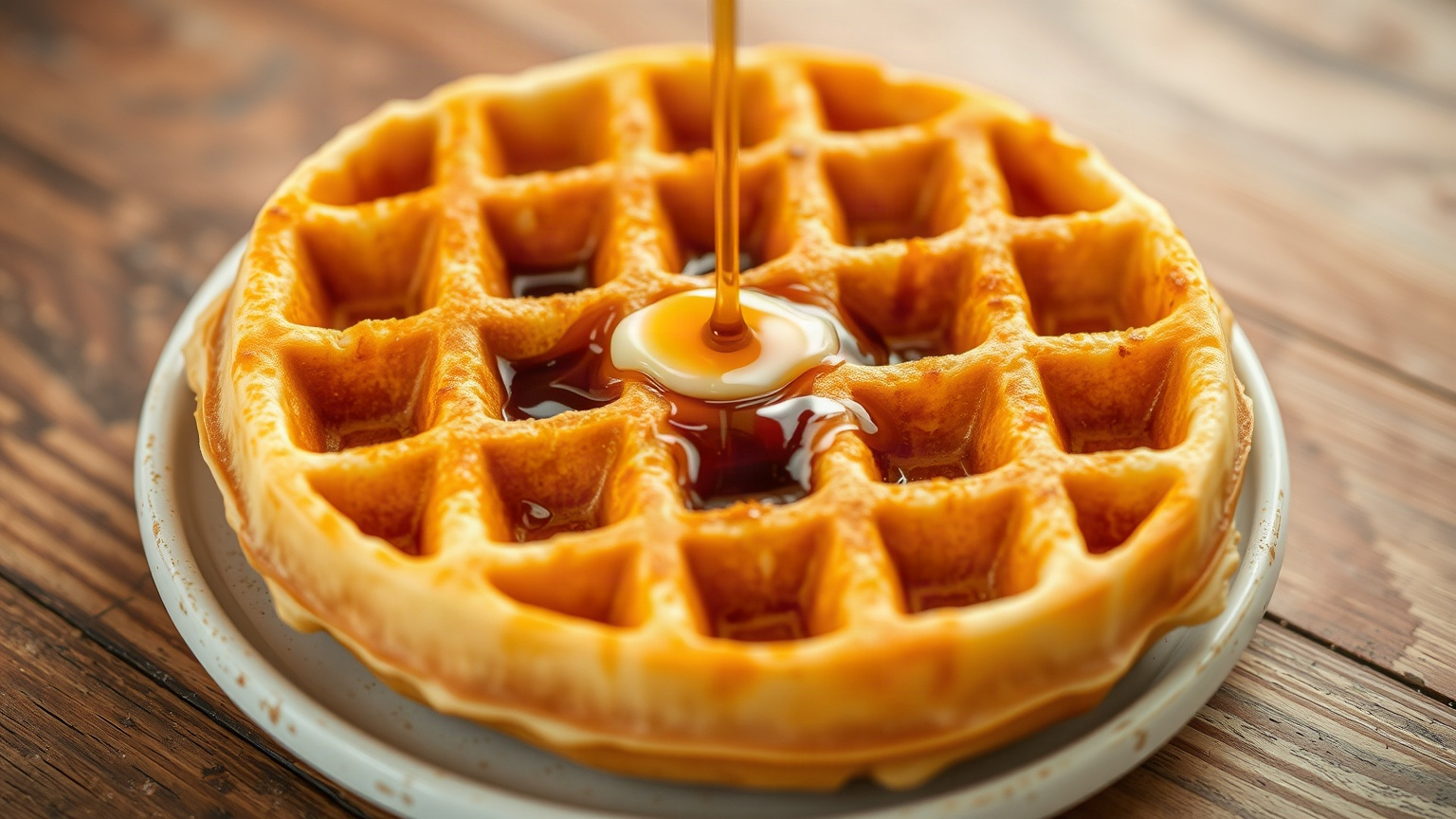
It sounds obvious, but the heating method makes a real difference in the final texture. A pop-up toaster works through radiant heat — the coils glow hot, the sides of the slot blast infrared energy directly at the waffle’s surface. Fast and direct. The problem is that the center of a thick waffle can still be slightly doughy while the edges are already browning. I’ve had that happen more times than I’d like to admit with Eggo Thick & Fluffy waffles.
A toaster oven uses a combination of radiant heat from the top and bottom elements plus convection if you have that option. The air has more room to move. That means the heat gets into the pockets and grooves of the waffle, which is exactly where you want it. You know that lattice pattern on a frozen waffle? A toaster oven actually browns those raised edges instead of just scorching one flat side.
Check out our breakdown of how hot a toaster gets if you want the full technical picture on slot temperatures — it’s more interesting than it sounds.
My Side-by-Side Test: What I Actually Found
I tested this with a box of Kellogg’s Eggo Original waffles and a box of Van’s Gluten Free waffles, because the textures are meaningfully different before cooking. Two appliances: a Black+Decker 2-slice toaster at its medium-high (5 out of 7) setting, and a Cuisinart TOA-70 toaster oven at 375°F on the bake setting with the rack in the middle position.
Toaster results: 2 minutes 40 seconds. Crisp edges, nice golden color on both flat faces. But the interior grid pockets — those little waffle squares — were soft and almost steamy. Didn’t hate it. But it wasn’t what I’d call fully crispy.
Toaster oven at 375°F: 7 minutes even. The whole surface was uniformly golden. The grid pockets had a slight chew to them, not rubbery, just toasted all the way through. Honestly a noticeably better waffle. With the Van’s gluten-free waffles specifically, the toaster oven was the clear winner — those tend to turn oddly chewy in a regular toaster.
One thing I got wrong the first time: I used the solid baking tray instead of the wire rack in the toaster oven. The underside of the waffle sat in its own steam and stayed soft. Swap to the wire rack. Immediately better.
The Convection Factor
If your toaster oven has a convection setting, use it. Drop the temperature to 350°F and set the timer for 5–6 minutes. The moving air accelerates browning without drying out the interior. I ran this with the Cuisinart TOA-70’s air fry mode at 350°F — 5 minutes, flipped once at the 3-minute mark — and it produced the crispiest frozen waffle I’ve tested. Edges almost shatteringly crisp. The interior still soft. That’s the combo you want.
Toaster vs. Toaster Oven: The Numbers
| Factor | Pop-Up Toaster | Toaster Oven (Bake) | Toaster Oven (Convection) |
|---|---|---|---|
| Typical cook time | 2–3 min | 7–9 min | 5–6 min |
| Temperature range | ~300–400°F (slot) | 350–425°F (dial) | 325–400°F (dial) |
| Wattage | 800–1,200W | 1,200–1,800W | 1,200–1,800W |
| Waffle capacity | 1–2 (if they fit) | 4–6 per batch | 4–6 per batch |
| Handles thick Belgians? | Often no | Yes | Yes |
| Crispiness (overall) | Good edges, soft pockets | Uniform, good | Best overall |
| Counter footprint | Small | Medium to large | Medium to large |
When a Regular Toaster Is Still the Right Call
Look, I don’t want to oversell the toaster oven. There are real situations where the pop-up toaster is the better choice.
Speed is one. If you’re half-asleep at 7 a.m. and need waffles in under 3 minutes, no toaster oven is keeping up. The toaster wins that race completely. It’s also dead simple — no preheating, no rack positioning, no timer to set. Drop waffle in, push lever, walk away.
Counter space matters too. If you live in a small apartment (I did for four years), a toaster oven is a real commitment. The Black+Decker 2-slice I mentioned takes up about 1/4 of the counter space of the Cuisinart. Not nothing.
And honestly, for thin, standard-sized frozen waffles — original Eggo, store-brand stuff — the toaster does a perfectly fine job. You’re not missing out dramatically. The gap between the two methods is biggest with thick waffles, gluten-free waffles, and anyone who wants that across-the-board crunch rather than crispy-outside-soft-inside.
The Edge Case Nobody Mentions: Oversized Waffles
Here’s something I haven’t seen covered anywhere. Some frozen Belgian waffles — the round ones, not the rectangular Eggo shape — are too wide for a standard toaster slot AND too thick. I’m looking at you, Nature’s Own Perfectly Crafted waffles. They get jammed. Partially cooked, you’re fishing them out with a wooden chopstick. The toaster oven has no such opinion about the shape of your waffle. It just browns it. For anyone buying the fancier, thicker frozen waffle products, a toaster oven isn’t optional — it’s the only thing that actually works cleanly.
Which Toaster Oven Models Are Actually Worth Using for Waffles
If you’re already shopping, here are the models I’d point you toward — and one I’d steer you away from for this specific use case.
Cuisinart TOA-70 (Air Fryer Toaster Oven): Mid-range price, solid convection, fits up to six Eggo waffles at once. This is what I tested with. The air fry mode is genuinely good for waffles, not just a marketing add-on. The only pet peeve: the interior light makes everything look darker than it is, so I always pull the rack out to check color.
Breville Smart Oven Air Fryer (BOV900BSS): Premium tier. Overkill for just waffles, but if you’re cooking for a family of four every morning, the capacity and precise temperature control are worth it. The Breville Smart Oven Air Fryer nails consistent results every single time. It’s a big footprint, though.
Ninja Foodi Digital Air Fry Oven (SP101): Budget-to-mid-range, flips up to store flat against the wall. Genuinely clever for small kitchens. Waffles come out well on the air fry setting. The rack is a bit fiddly to clean, and the digital interface has a slight learning curve, but it’s a solid pick for anyone tight on space.
Hamilton Beach Countertop Toaster Oven (31127D): Budget. Fine for standard waffles on bake mode, but no convection means longer cook times and less even browning. I wouldn’t buy it specifically for waffles, but if you already own one, it gets the job done at 375°F for about 9 minutes with flipping at the halfway mark.
For waffles specifically, I’d rank them: Cuisinart TOA-70 first (best balance of results and price), Breville second (best results, higher cost), Ninja SP101 third (best for tight spaces), Hamilton Beach last. None of them are bad. They’re just suited to different situations.
You’ll also want a proper wire rack setup — the toaster oven wire rack that comes with most models works fine, but if yours went missing or rusted, a replacement makes a real difference versus using the solid pan.
For more ideas on what these ovens can handle beyond breakfast, see our guide to reheating food in a toaster oven — there’s more range there than most people use. And if you’re not sure which size to get, our roundup of best mini toaster ovens covers the compact options that won’t eat your entire counter.
Tips That Actually Improve Your Results
A few things I wish someone had told me earlier:
- Don’t thaw waffles first. Cook from frozen. Thawing makes them soggy before they even hit the heat.
- In a toaster oven, flip the waffle at the halfway point. Sounds fussy but makes a visible difference in the underside color.
- A light spray of cooking oil on the wire rack before placing waffles prevents sticking and adds a tiny bit of extra crispness.
- If your toaster leaves one side darker than the other (common with older models), flip the waffle and run a second short cycle at a lower setting.
- For a crowd, the toaster oven is practically the only choice. Six waffles in one batch beats running a two-slot toaster three times.
Serious Eats has a useful piece on waffle texture and how heat affects batter structure that’s worth reading if you want to understand why the grid pockets behave differently under different heat sources — applies to frozen waffles too, not just fresh.
The Bottom Line
For thin, standard-sized frozen waffles and mornings when you have four minutes and zero patience, the toaster is fine. Totally acceptable. But if you want genuinely crispy waffles — the kind with texture in every pocket, not just on the outside edges — the toaster oven at 375°F on bake (or 350°F on convection) beats a pop-up toaster every time I’ve tested them side by side. The wire rack matters. The flip at the halfway point matters. And thick Belgian-style waffles shouldn’t go near a standard toaster slot at all.
My personal pick for daily waffle cooking: Cuisinart TOA-70 with the convection air fry setting, 350°F, 5–6 minutes, flipped once. That’s the setup I keep coming back to. Simple enough for a weekday, good enough that you don’t feel like you settled.
Frequently Asked Questions
How hot does a toaster get for frozen waffles?
The slot temperature inside a standard pop-up toaster ranges from roughly 300°F to 400°F depending on the setting and the model. That’s hot enough to crisp the surface of a frozen waffle in 2–3 minutes, though the heat is concentrated on the flat sides and doesn’t reach deeply into the waffle’s grid pockets the way a toaster oven’s circulating air does.
Can you cook frozen waffles in a toaster oven?
Yes, and they often come out better than in a regular toaster. Set the toaster oven to 375°F on bake, place the waffles on the wire rack (not the solid tray), and cook for 7–9 minutes, flipping halfway through. If you have a convection or air fry setting, use 350°F for 5–6 minutes instead — the moving air gets them crispier faster.
Why are my frozen waffles soggy in the toaster oven?
The most common cause is using the solid baking tray instead of the wire rack. The solid surface traps steam underneath the waffle and keeps the bottom soft. Switch to the wire rack so air can circulate under the waffle, and don’t let them sit in the oven after the timer goes off — they’ll steam themselves soggy in about two minutes if left inside.
Is it faster to use a toaster or toaster oven for frozen waffles?
A pop-up toaster is faster — 2–3 minutes versus 7–9 minutes in a toaster oven on bake, or 5–6 minutes on convection. However, a toaster oven requires no preheating if you start it and place the waffles in simultaneously, so the real-world gap is smaller than it looks. Speed is the toaster’s clearest advantage.
What’s the best way to make frozen waffles crispy?
The crispiest results come from a toaster oven with convection or air fry capability, set to 350°F, with waffles on the wire rack and flipped once at the halfway point. A light spray of cooking oil on the rack and cooking straight from frozen (never thawed) also help significantly. If you only have a regular toaster, run two cycles at a medium setting rather than one cycle on high — it browns more evenly without burning the edges.

Written by
Emma founded Toastera to turn vague appliance advice into clear, researched, safety-first guidance on toasters and toaster ovens.
Free: the Toaster Oven Cheat Sheet
Get the printable cheat sheet (temps, cook times & safety tips) plus new recipes. No spam, unsubscribe anytime.