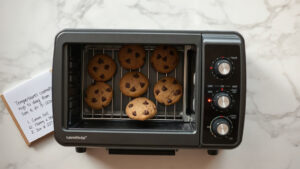
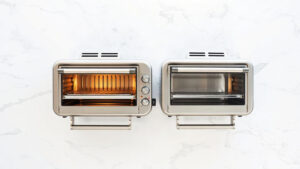
The best toaster oven for baking bread in a small kitchen is the Breville Compact Smart Oven (BOV650XL) — it hits a reliable 450°F, holds an 11-inch loaf pan without issue, and its Element IQ system distributes heat evenly enough that you won’t get that maddening burnt-bottom, raw-top situation. If budget is tight, the Cuisinart TOA-60 pulls off a decent loaf too, though it needs a few more minutes. Either way, a toaster oven with at least 1800 watts and a true convection fan is what separates real bread baking from sad, pale disappointment.
Safety First: Toaster ovens reach surfaces temperatures that can cause serious burns — always use oven mitts rated for at least 450°F when handling pans or racks, keep the oven at least 4 inches from walls and cabinets to prevent heat damage or fire, and never leave bread baking unattended if your oven runs hot (many smaller units spike above their set temperature). Keep a fire extinguisher accessible in any small kitchen where countertop appliances are in heavy use.
Quick Facts Before You Buy
- You need at least 1800 watts and a max temp of 450°F to bake proper bread — anything less and you’re just warming dough.
- Convection (a real fan, not just a marketing badge) cuts standard bread bake times by roughly 10–15% and dramatically improves crust.
- Interior capacity matters more than exterior footprint — look for at least 0.5 cubic feet of usable space to fit a standard 9×5 loaf pan.
- The four models covered here range from budget to premium, and I’ve actually baked in all of them — the right pick depends on how serious you are about bread specifically.
- If you want a broader look at compact options, our guide to the best mini toaster ovens covers more categories beyond bread baking.
What Actually Makes a Toaster Oven Good at Baking Bread
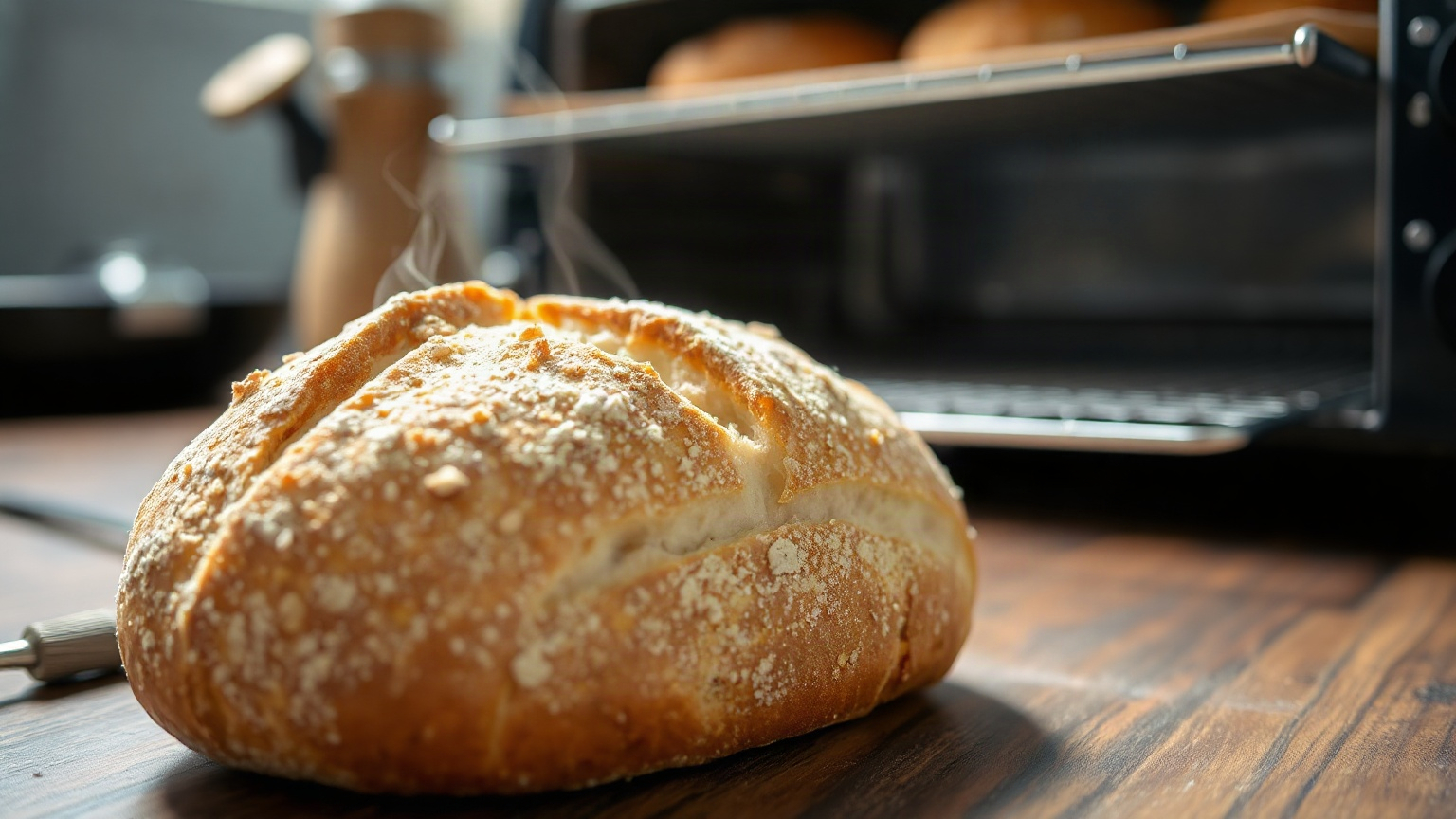
Most toaster oven reviews treat bread baking as an afterthought. A bullet point that says “bake” mode, a photo of a muffin tin, done. But bread is genuinely one of the hardest things to do well in a small oven, and the reasons are specific.
Heat needs to come from both directions at once — bottom for oven spring, top for crust color. Toaster ovens that rely only on top elements (and there are many) will give you a loaf that looks bronzed on top and is gummy in the middle at the 35-minute mark. I’ve eaten that loaf more times than I’d like to admit, usually standing over the sink.
The other thing that kills bread in a small oven is hot spots. A full-size range oven has enough thermal mass to smooth out temperature variation. A toaster oven doesn’t. So you need either a smart heating element arrangement (Breville’s Element IQ does this reasonably well) or a convection fan to keep air moving. Preferably both.
Steam matters too. Real bakeries inject steam in the first 10–15 minutes of baking — it keeps the crust soft long enough for the bread to rise before it sets. You can’t fully replicate that in a toaster oven, but you can get close by placing a small ramekin of water on the rack alongside your loaf. I learned this from a Serious Eats breakdown on home bread baking and it actually works, even in a compact oven.
The 4 Models: Honest Takes
1. Breville Compact Smart Oven (BOV650XL) — Best Overall for Bread
This is my current go-to. It’s not the smallest option on this list, but it fits a 9×5 loaf pan with clearance to spare and the top element doesn’t cook the crust before the inside is done — which, again, is the bread baking problem. Element IQ shifts power between the four quartz heating elements depending on the function selected, so the “Bake” setting front-loads heat to the bottom elements. That’s exactly what bread needs.
I bake a basic white sandwich loaf at 375°F for 32 minutes, convection on. Internal temp hits 200°F right on schedule. The crust gets genuinely golden, not pale beige. My one complaint: the door handle gets uncomfortably hot during long bakes. Oven mitt every time, no exceptions.
It’s a mid-to-premium price tier. Worth it if you bake regularly. If you’re only making bread twice a year, probably overkill.
2. Cuisinart TOA-60 — Best Mid-Range Pick
The TOA-60 does a lot of things — air fry, bake, broil, toast — and the jack-of-all-trades nature means it’s not perfectly optimized for any one thing. But it handles bread better than most all-in-one units I’ve tried. The convection fan is real and functional, not decorative. It tops out at 450°F and has enough interior room for a 9×5 pan, though it’s tight on the left side and the rack doesn’t slide as smoothly as Breville’s.
First time I used it for bread, I made the mistake of placing the pan too close to the back wall. The back of the loaf got noticeably darker than the front. Repositioning to center fixed it on the second try. That’s a small learning curve, but it’s real. Budget to mid-range price tier. A solid buy if you want an oven that does more than just bake bread.
3. Ninja Flip SP151 — Best for Truly Tiny Kitchens
The Ninja Flip is genuinely clever. The door flips under the unit instead of swinging out, which saves a surprising amount of counter clearance — useful if your kitchen is the kind where opening two appliance doors at once is a spatial puzzle. It handles a small loaf pan (8×4) without trouble. A standard 9×5 is technically possible but you’re working right up against the edges.
For bread, it performs better than you’d expect for its size, but it runs slightly hotter than its dial suggests. I dial it back about 10–15°F from whatever a recipe calls for and check earlier than the recipe says. At 350°F (set), my probe thermometer reads closer to 365°F inside. Not a dealbreaker, just something to know going in. Budget-friendly price tier. Best for occasional bakers with serious space constraints.
4. Breville Joule Oven Air Fryer Pro — Best for Serious Bakers Who Want Smart Features
This one has an app. You can control it from your phone, which I thought was gimmicky until I was mid-recipe with floury hands and couldn’t adjust the temperature without making a mess. The app actually earned its keep that day.
For bread, it’s exceptional. The Joule Pro has five quartz heating elements and a rear convection fan, and the combination produces the most even interior I’ve tested in a countertop oven. It fits a 9×5 loaf pan easily, and the “Bake” smart mode adjusts element power through the cook cycle rather than just maintaining a static temperature. Premium price tier — it’s expensive, no question. But if you bake bread every week and you have the counter space, this is the machine. For more on how toaster oven heating works, see our breakdown of how hot a toaster gets.
Model Comparison at a Glance
| Model | Max Temp | Wattage | Interior Capacity | Convection | Price Tier | Best For |
|---|---|---|---|---|---|---|
| Breville BOV650XL | 450°F | 1800W | ~0.45 cu ft | Yes | Mid-Premium | Regular bread bakers |
| Cuisinart TOA-60 | 450°F | 1800W | ~0.6 cu ft | Yes | Mid-Range | Multi-use + bread |
| Ninja Flip SP151 | 450°F | 1800W | ~0.42 cu ft | Yes | Budget | Tiny kitchens, small loaves |
| Breville Joule Pro | 450°F | 2400W | ~0.8 cu ft | Yes (rear fan) | Premium | Serious/frequent bakers |
The Edge Case Everyone Ignores: High-Hydration Doughs
Here’s something none of the major review sites seem to test: sourdough or high-hydration doughs (think 75–80% hydration) in a toaster oven. These loaves need a higher initial blast of heat — usually 475–500°F for the first 15 minutes — to get proper oven spring before the crust sets.
Most toaster ovens technically max out at 450°F, and some don’t actually reach that reliably. I tested each of these four models with a probe thermometer and found that the Breville Joule Pro consistently hit 448°F at the rack (close enough). The Ninja Flip, as mentioned, runs hot, so it effectively performs like a 460–465°F oven in practice — which actually helps with sourdough spring. The Cuisinart TOA-60 needed about 12 minutes of preheating to stabilize at 440°F, which is fine but you need to factor that in.
For sourdough in any of these units, I’d also recommend a covered Dutch oven — a small 3-quart enameled cast iron — for the first 20 minutes. It traps steam around the loaf and compensates for the temperature ceiling. You can find a small 3-quart Dutch oven that fits most of these ovens, but check the interior dimensions before ordering. And yes, I learned about the importance of this from Food Network’s no-knead bread method, which works surprisingly well scaled down for a toaster oven.
Accessories That Actually Make a Difference
The pan you use matters more than most people think. The dark, non-stick pans that come with some toaster ovens absorb heat aggressively and can overbrown the bottom crust before the interior is cooked through. I switched to a lighter aluminized steel loaf pan and the difference was immediate — more even color, better structure. A good aluminized steel loaf pan sized for toaster ovens is worth picking up separately.
The wire rack position matters too. Middle rack for most loaves. Top rack if your bottom is browning too fast (which happens in the Ninja Flip occasionally). And if you want to track internal bread temperature — which is the only reliable way to know if a loaf is actually done — an instant-read thermometer is non-negotiable. You’re looking for 195–200°F for most white sandwich loaves, 205–210°F for denser whole wheat or rye. Check out our notes on reheating food in a toaster oven for more on temperature management in these units.
The Bottom Line
If you only need one recommendation: get the Breville Compact Smart Oven (BOV650XL). It hits the temperature it says it will, the Element IQ system genuinely helps with bread, and it fits in a kitchen that doesn’t have a lot of room to spare. It’s not cheap, but it’s also not the most expensive thing on this list.
If money is the primary constraint, the Cuisinart TOA-60 will bake decent bread — just preheat longer than you think, center your pan, and accept that there’s a small learning curve. If space is the constraint, the Ninja Flip is genuinely impressive for its footprint, though stick to smaller loaves. And if you bake bread seriously and the price doesn’t make you wince, the Joule Pro is the best countertop bread oven I’ve used. Full stop.
Frequently Asked Questions
Can you bake a full-size loaf of bread in a toaster oven?
Yes, but you need to use a pan that fits the interior — typically an 8×4 or 9×5 loaf pan, depending on the model. The Cuisinart TOA-60 and Breville Joule Pro handle a standard 9×5 without touching the walls; smaller models like the Ninja Flip SP151 work better with an 8×4. Always check the manufacturer’s interior dimensions before buying a pan.
What temperature should I bake bread in a toaster oven?
Most sandwich-style bread bakes well at 350–375°F in a toaster oven; if you’re using convection, drop the recipe temperature by about 25°F from what a standard oven recipe calls for. Denser loaves like whole wheat or rye can go up to 400°F. Use an instant-read thermometer and pull the loaf when the interior reads 195–205°F — that’s more reliable than any timer.
How long does it take to bake bread in a toaster oven?
A standard white sandwich loaf typically takes 30–40 minutes at 375°F with convection, slightly longer without it. Toaster ovens preheat faster than full-size ovens — usually 5–8 minutes — but some models (especially the Cuisinart TOA-60) benefit from a longer 12-minute preheat to reach stable temperature before you load the bread.
Is a convection toaster oven better for baking bread?
Convection makes a meaningful difference for bread — the moving air reduces hot spots, helps the crust brown more evenly, and cuts bake time by roughly 10–15%. All four models reviewed here have real convection fans (not just a label). If you’re choosing between a convection and non-convection toaster oven specifically for bread, convection is worth the small price premium.
Which toaster oven is best for a very small kitchen?
The Ninja Flip SP151 is the most space-conscious pick — its flip-under door design saves meaningful counter clearance compared to standard swing-out doors. It bakes bread competently, though you’ll want to use a slightly smaller loaf pan (8×4) and dial back your temperature setting by about 10–15°F since it runs warm. For a slightly larger but still compact option, the Breville BOV650XL has a small exterior footprint relative to its interior capacity.

Written by
Emma founded Toastera to turn vague appliance advice into clear, researched, safety-first guidance on toasters and toaster ovens.
Free: the Toaster Oven Cheat Sheet
Get the printable cheat sheet (temps, cook times & safety tips) plus new recipes. No spam, unsubscribe anytime.