A toaster that’s been sitting unused for months can smell like burning rubber or chemicals when you first fire it up again — and in most cases, it’s not dangerous. Dust, oxidized lubricants on the heating elements, and tiny crumb residue all burn off at operating temperatures that can reach 900°F (482°C) at the element surface, producing that sharp, rubbery odor. The smell typically fades within one or two cycles if the cause is benign, but there are a handful of situations where it’s a genuine warning sign you shouldn’t ignore.
Safety First: Never lean over an active toaster to sniff the source of a smell — heating elements can reach over 800°F and cause serious burns in seconds. If the smell is accompanied by visible smoke, sparks, or tripping a circuit breaker, unplug the toaster immediately (don’t just switch it off at the outlet), let it cool completely, and don’t use it again until you’ve identified the cause. Burning electrical smells that persist beyond two full toasting cycles should be taken seriously.
Quick Facts: Burning Rubber Smell in a Stored Toaster
- Toaster heating elements can reach 800–900°F (427–482°C) during normal use — hot enough to burn off dust and oxidized coatings in seconds.
- A rubber-like smell after long storage is most commonly oxidized mineral lubricants on the nichrome wire burning off — harmless, usually gone within 2 cycles.
- If the smell persists past 3 uses, there’s a physical source you need to find and remove before using it again.
- Melted plastic inside the crumb tray or chassis is a different, more serious problem than simple dust burn-off — the smells are distinct once you know what to look for.
- Unplugging a toaster during long storage periods (more than 4–6 weeks) is genuinely good practice, not just paranoid advice.
Why Sitting Unused Makes It Worse (Not Better)
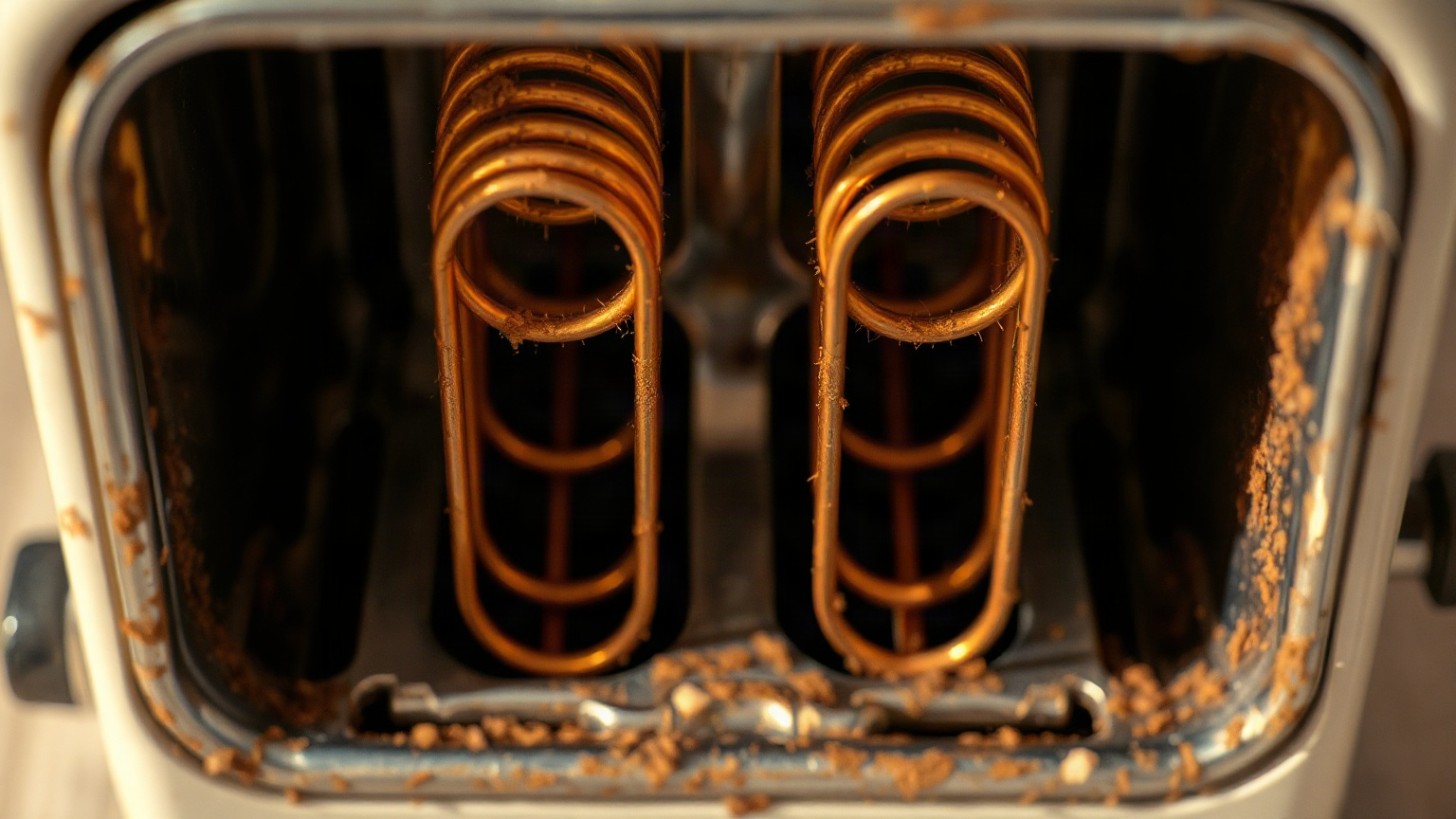
You’d think a toaster that hasn’t been touched in four months would be cleaner than one used daily. And in some ways it is — but storage creates its own problems. Dust settles on the heating elements, inside the slots, and across the crumb tray. That dust contains everything from kitchen grease particles to skin cells to whatever was floating around your pantry. When you run the toaster again, all of that burns simultaneously instead of gradually, and the smell hits you at once.
There’s also oxidation to consider. The nichrome wire used in most toaster heating elements doesn’t corrode the way iron does, but it does develop a thin oxide layer when it sits cold for extended periods. When that layer first heats up, it can produce a faintly chemical or rubbery smell. It’s not toxic — nichrome oxide is stable — but it smells terrible for about 60–90 seconds. I noticed this specifically with a Cuisinart 2-slice toaster I’d packed away during a kitchen renovation. First toast after three months smelled strongly of something like burnt plastic wrap, despite the toaster being completely clean when I stored it. Second cycle? Fine. Completely normal.
The rubber-specifically quality of the smell is interesting. It usually comes from one of two things: the oxidized metal layer I just mentioned, or very fine crumb residue that’s absorbed ambient kitchen smells (cooking oils, especially) over months and is now burning all at once. Neither is dangerous in a properly functioning toaster.
The Causes, Ranked by How Worried You Should Be
Cause 1: Dust and Accumulated Crumbs (Low Concern)
This is the most common cause by a wide margin. Even a “clean” toaster accumulates fine dust during storage. Run it empty on medium-high for a full cycle (most toasters run about 2–3 minutes at the medium setting) with the windows open. The smell should peak at about 30–45 seconds and then fade. If it doesn’t, clean the crumb tray before the second run.
Cause 2: Oxidized Heating Elements (Low Concern)
As described above — normal, self-resolving, gone by cycle 2 in my experience. No action needed beyond ventilating the kitchen.
Cause 3: A Plastic Object or Wrapper Inside the Toaster (Medium Concern)
This one’s more common than you’d think. Bread bag clips, small bits of plastic packaging, even a rubber band that fell in while the toaster was stored — these things are invisible until they start melting. The smell from actually-melting plastic is sharper and more acrid than oxidized metal. It doesn’t fade; it gets worse as the cycle continues. If this is what’s happening, stop the toaster mid-cycle, unplug it, let it cool for 20 minutes, then flip it upside down over the sink and shake it out. Use a flashlight to look inside before the next use.
Cause 4: Grease or Oil on the Elements (Medium Concern)
If your toaster lived near the stovetop before being stored, it may have absorbed airborne grease. That grease can coat the heating elements and produce a burning-oil smell that’s easy to mistake for burning rubber. It’s not immediately dangerous but it’s not nothing either — grease on elements is a fire risk if it builds up enough. Clean the interior with a dry soft brush (never water near elements) and run an empty cycle outside or with serious ventilation.
Cause 5: Electrical Issue — Wiring Insulation Breaking Down (High Concern)
This is the edge case that the other articles don’t address clearly enough. Toasters stored in damp environments — a garage, a basement, under a leaky cabinet — can develop problems with the insulation on internal wiring. Moisture accelerates the degradation of the rubber and plastic coating around wires, and when you heat those wires up after months of storage, the insulation can begin to break down. This produces a distinctive burning rubber smell that doesn’t stop after one or two cycles. It may also come with a slight electrical buzz or the toaster running unevenly (one slot hotter than the other, toast coming out unevenly). This scenario calls for replacing the toaster entirely. Repairing the internal wiring on a toaster yourself isn’t worth attempting — the economics don’t make sense, and neither does the risk.
Per the U.S. Consumer Product Safety Commission, toasters are among the most common small appliance sources of kitchen fires. Most of those fires aren’t from normal use — they’re from damaged or malfunctioning units. Worth keeping that in mind.
How to Tell the Difference: Smell Identification Table
| Smell Description | Most Likely Cause | Persists After 2 Cycles? | Action Needed |
|---|---|---|---|
| Faint burnt dust or slightly metallic | Dust/oxidized element | No | Ventilate, run empty cycle |
| Sharp acrid, gets worse mid-cycle | Melting plastic inside | Yes | Stop, unplug, inspect interior |
| Oily, greasy smoke smell | Grease on heating elements | Sometimes | Clean crumb tray, dry brush interior |
| Burning rubber that won’t stop | Wire insulation degrading | Yes | Discard and replace toaster |
| Chemical/solvent smell, new unit | Factory coating burning off | No (2–3 cycles max) | Normal break-in, ventilate |
What to Actually Do When Your Toaster Smells Off
Here’s the sequence I actually follow, and it takes maybe 10 minutes total.
First: unplug the toaster and take it outside or to a well-lit spot. Pull out the crumb tray and empty it — after months of storage, there’s more in there than you’d expect. Rinse the crumb tray with warm water, dry it completely (I mean really completely — leave it for an hour, not two minutes), and put it back in.
Second: flip the toaster upside down and give it a few firm taps over the sink or a trash can. Crumbs and dust fall out. Use a small appliance cleaning brush to gently sweep the interior slots if you have one. Don’t use compressed air — it just moves debris around inside rather than out.
Third: plug it back in and run a full empty cycle at medium-high, with the windows open. Stand nearby and pay attention. Smell should peak and then fade within the first minute. If it fades, run a second cycle. If it fades again, you’re done — use it normally.
If the smell is still strong after two empty cycles, go through the identification table above and figure out which category you’re dealing with. Don’t just keep toasting and hope it works out. That’s how you end up with a real problem.
For what it’s worth, I’ve never had a toaster completely fail from the “harmless” causes. Every time I’ve had a burning-rubber smell that wouldn’t quit, it turned out to be something physical inside the toaster — once a melted bread clip (embarrassing but true), and once a unit that had been stored in a basement laundry room and had genuine moisture damage. Both were replaced. If you’re in the market, our rundown of the best mini toaster ovens is a good starting point.
Storage Tips That Prevent the Problem Next Time
If you’re putting a toaster away for more than a few weeks, these make a real difference. Clean it thoroughly before storing — crumbs left in a stored toaster don’t just sit there quietly, they attract moisture and pests and get much harder to deal with later. Store it in a cool, dry place. Not the garage in winter, not under the sink. A pantry shelf or a kitchen cabinet is fine.
Cover the slots with a folded piece of paper or a small cloth to keep dust out. Some people use the original box, which is genuinely useful for this purpose. And unplug it — there’s no reason to leave a stored appliance plugged in, and it eliminates any risk of slow electrical degradation while it’s sitting idle. Simple.
Also: if your toaster is more than 8–10 years old and has been stored, seriously consider whether it’s worth the risk of continuing to use it. Older units, especially those without auto-shutoff or with worn power cords, are statistically more likely to cause problems. The National Fire Protection Association data on kitchen fires consistently points to older or malfunctioning appliances as a disproportionate source of ignition. Sometimes a toaster that smells wrong after long storage is just telling you something useful.
Final Thoughts
The burning rubber smell from a stored toaster is almost always benign — dust, oxidation, or absorbed kitchen odors burning off in the first cycle or two. Clean the crumb tray, run it empty, ventilate the kitchen, and see if it resolves. That covers probably 85% of cases. The remaining 15% are situations where the smell is telling you something real: melted plastic inside, moisture-damaged wiring, or a toaster that’s simply past its useful life. Those situations have clear signals — the smell gets worse instead of better, it doesn’t stop after two cycles, or it comes with visible smoke and uneven performance. Trust those signals. A $25–$50 replacement toaster is not worth a kitchen fire. And if you’re curious about what your toaster is actually doing thermally when it runs, our piece on how hot a toaster gets might surprise you.
Frequently Asked Questions
Is it normal for a toaster to smell like burning rubber after not being used for a while?
Yes, it’s common and usually harmless. Dust settling on the heating elements and a thin layer of oxidation on the nichrome wire both produce a rubbery or chemical smell when the toaster first heats up after long storage. The smell should fade within one or two full empty cycles — if it doesn’t, there’s a physical cause inside the toaster that needs investigation before you continue using it.
How hot does a toaster get?
Toaster heating elements typically reach between 800°F and 900°F (427°C–482°C) at their surface during normal operation. The air temperature inside the toaster slot is lower — around 300°F–350°F — but the element itself is extremely hot. This is why even small debris like crumbs or dust burns off quickly and why you should never reach inside a toaster that’s been running recently.
Why does my toaster smell like burning plastic specifically?
A burning plastic smell that gets sharper or worse mid-cycle almost always means something plastic is physically inside the toaster — a bread bag clip, a piece of packaging, a rubber band. Stop the toaster immediately, unplug it, let it cool for at least 20 minutes, then carefully inspect the interior with a flashlight before using it again. Factory coating burn-off (common with new toasters) produces a similar smell but fades after 2–3 uses.
Is it safe to leave a toaster plugged in when not in use?
For everyday use it’s generally fine, but for storage periods longer than 4–6 weeks, unplugging is a smart habit. Leaving any heating appliance plugged in long-term creates a small but unnecessary risk, and unplugged toasters can’t be accidentally activated. It also helps prevent slow electrical degradation in the power cord over time.
When should I throw out a toaster that smells bad?
Replace the toaster if the burning smell persists past three full empty cycles, if it’s accompanied by smoke, sparks, or tripped breakers, or if the toaster was stored in a damp environment like a garage or basement. Any toaster showing signs of uneven heating alongside a persistent smell is also a candidate for replacement rather than continued use. A toaster that’s over a decade old and showing these symptoms isn’t worth trying to salvage.

Written by
Emma founded Toastera to turn vague appliance advice into clear, researched, safety-first guidance on toasters and toaster ovens.
Free: the Toaster Oven Cheat Sheet
Get the printable cheat sheet (temps, cook times & safety tips) plus new recipes. No spam, unsubscribe anytime.