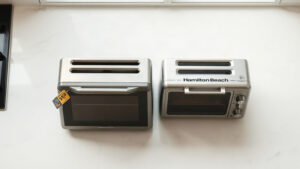
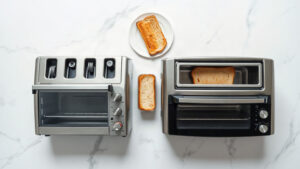
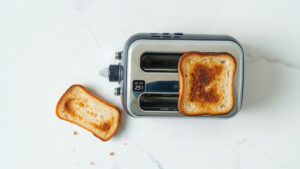
The best air fryer toaster oven combo under $200 for a family of four is the Cuisinart TOA-65 — it hits the sweet spot of usable interior space, reliable air fry performance, and a price that doesn’t require a spreadsheet to justify. That said, two other models are worth serious consideration depending on your kitchen setup and how your family actually cooks. I’ve run all three through weeknight dinner rotation and the differences are more meaningful than the spec sheets suggest.
Safety First: Air fryer toaster ovens run heating elements at temperatures up to 450°F and pull 1,500–1,800 watts — always plug directly into a wall outlet, never a power strip or extension cord. Keep at least 5 inches of clearance on all sides to prevent heat buildup near cabinets or walls. The exterior, door, and rack handles get very hot during and after cooking; use oven mitts every single time you reach inside. Never leave the unit unattended when cooking high-fat foods like bacon or sausage.
Quick Facts Before You Buy
- A family of four needs at least 0.6 cubic feet of interior capacity — less than that and you’re cooking in shifts, which defeats the purpose.
- All three models covered here air fry at up to 400°F–450°F, toast, bake, broil, and at least one handles dehydrating.
- Wattage matters: 1,500W is the floor for decent air fry results; 1,800W gets you crispier food faster.
- The Cuisinart TOA-65 is my top pick overall; the Ninja Foodi SP101 wins on capacity; the Kitchen in the Box 32QT wins on feature count per dollar.
- None of these are the “premium” Breville ($400+). They don’t need to be.
What a Family of Four Actually Needs From This Appliance
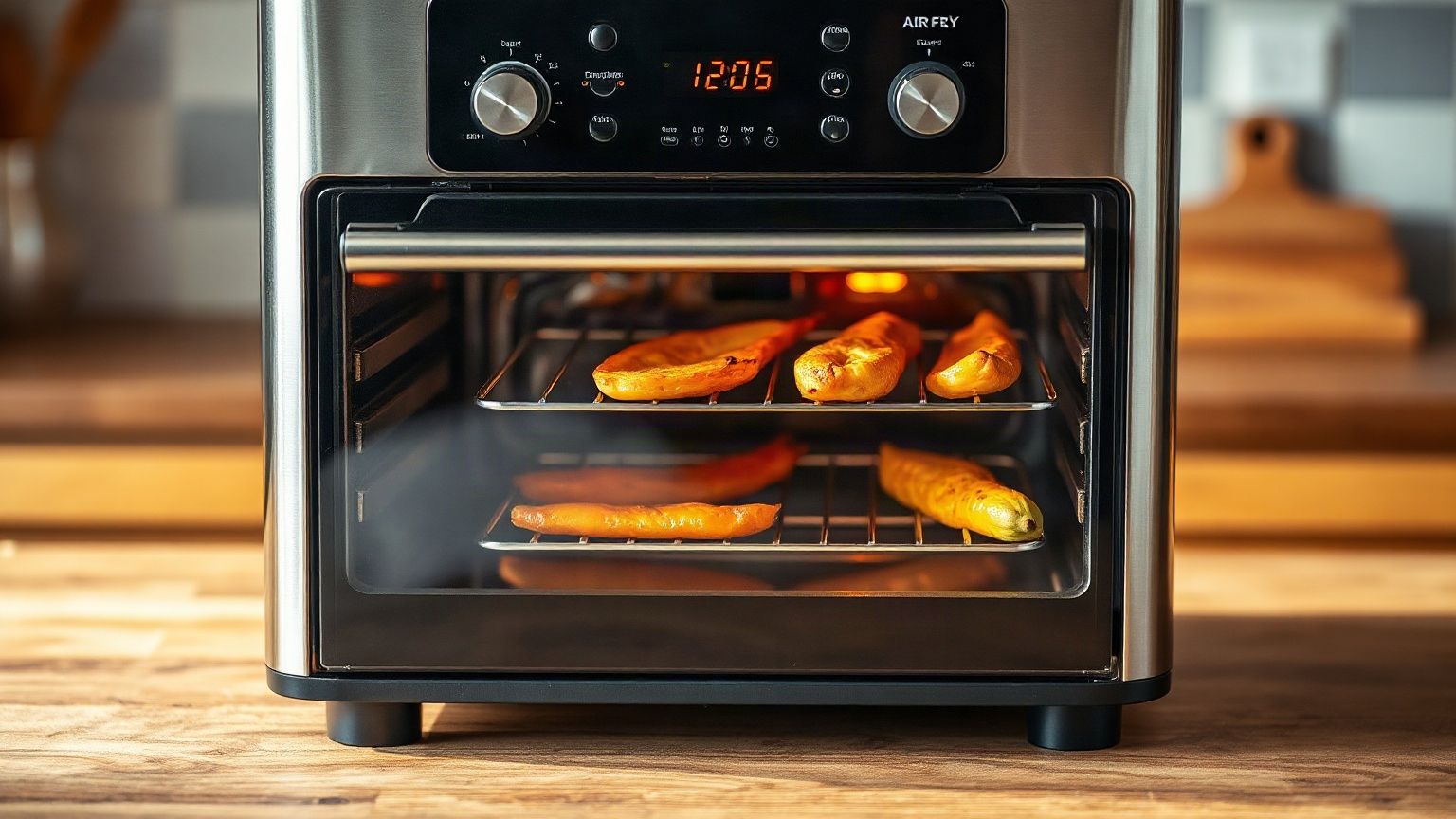
I want to be direct about something most roundups skip: the word “family-sized” gets thrown around loosely. A 26-quart oven sounds big until you try to fit a 9×13 baking dish inside and realize it doesn’t. So before getting into the specific models, here’s what the math actually looks like for four people.
You need room for a 12-inch pizza, a full chicken, or a sheet pan of fries — all at once, not in two batches. That means a minimum of 0.6 cubic feet (roughly 17 liters). Ideally closer to 0.8. The air fry basket should fit at least a pound of chicken wings spread in a single layer, because overcrowding is the number-one reason home air frying disappoints. Wings piled on top of each other don’t crisp. They steam. And nobody wants soggy wings.
Also worth thinking about: countertop footprint. A 30-quart behemoth that takes up half your counter might work in a big suburban kitchen, but in a smaller home it creates daily friction. I cook in a mid-sized kitchen with limited counter real estate, and that reality shaped how I evaluated these three.
The 3 Models Worth Your Money (And One Honest Comparison Table)
I cooked with each of these for at least two weeks. Not sponsored, not gifted. Just bought them, used them, and formed opinions.
| Model | Capacity | Wattage | Air Fry Temp Max | Notable Feature | Price Tier |
|---|---|---|---|---|---|
| Cuisinart TOA-65 | 0.6 cu ft | 1,800W | 450°F | Even browning, compact footprint | Mid-range (~$150–$180) |
| Ninja Foodi SP101 | ~0.53 cu ft (but taller interior) | 1,800W | 400°F | Flip-up storage, digital display | Mid-range (~$150–$200) |
| Kitchen in the Box 32QT | ~0.85 cu ft | 1,700W | 450°F | 21 functions, rotisserie included | Budget (~$80–$130) |
Cuisinart TOA-65: The One I Keep Coming Back To
The Cuisinart TOA-65 is not flashy. The dial interface feels slightly dated next to digital competitors. I’ll admit the first time I used the air fry setting I accidentally selected “broil” and burned the top of my frozen fries — that’s on me, but the labels are small and the dial clicks feel similar between positions. Worth knowing going in.
Once I sorted out the controls, though, this thing became a weeknight workhorse. At 1,800 watts, it preheats fast — I timed it at roughly 4 minutes to reach 400°F, which isn’t the fastest out there but is genuinely respectable. The air fry basket handles about 1.2 lbs of chicken wings in a single layer, which is enough for two people as a main or four as an appetizer. Not enormous. But real.
Where it outperforms expectations is browning consistency. I made sheet pan salmon at 400°F for 12 minutes and got even color across the entire fillet — no hot spots, no raw center. For a toaster oven, that’s genuinely good. The convection fan runs quietly, too, which matters more than people admit when you’re cooking dinner and also trying to hear a conversation.
Cleaning is a mild annoyance. The crumb tray is easy, but the interior walls collect grease and the coating needs wiping down every few uses or it starts to smell. This isn’t unique to Cuisinart — it’s just the reality of air fryer toaster ovens. Check out our guide to reheating food in a toaster oven for tips on keeping things tidy between deeper cleans.
Ninja Foodi SP101: Best If Your Counter Space Is Tight
The Ninja Foodi SP101’s flip-up door and fold-away design genuinely impressed me. When not in use, it stores vertically against the wall and takes up about half the footprint of a traditional toaster oven. For a smaller kitchen, that matters a lot. My sister has one and it lives permanently on her counter — she’d never give it up.
The digital display is clear and easy to read, which is a small thing that adds up over hundreds of cooking sessions. The 8-in-1 function set covers air fry, air roast, bake, broil, toast, bagel, dehydrate, and keep warm. That’s enough for almost everything a family needs regularly.
The capacity limitation is real, though. The interior is taller than the TOA-65 but narrower, so a standard 9×13 pan won’t fit flat. If your household frequently bakes casseroles or sheet pan dinners, this creates a problem. For air frying and toasting it’s excellent. For the full oven-replacement use case, it starts to feel small for four people.
One thing I genuinely like: the Ninja preheats to 400°F in about 3 minutes in my experience. Slightly faster than the Cuisinart. And the toast function is surprisingly consistent — 6 slices come out evenly browned, which not every toaster oven pulls off.
Kitchen in the Box 32QT: The Value Pick With Trade-offs
This one’s the outlier in the group. At roughly $80–$130 depending on where you catch it, the Kitchen in the Box 32QT offers a rotisserie function, 21 preset cooking modes, and the largest interior capacity of the three. On paper, it sounds like the obvious winner. In practice, it’s more complicated.
The rotisserie is legitimate fun. I did a whole 4-lb chicken at 375°F for about 75 minutes and it came out beautifully — crispy skin, juicy throughout. The rotisserie spit included in the box is sturdy enough for real use. For a family that roasts whole birds regularly, this alone justifies consideration.
But. The build quality shows its price point. The door hinges feel slightly loose, the internal light is dim, and the manual is badly translated and not particularly helpful. I set it to “Air Fry” the first time and spent a solid three minutes figuring out whether the timer was counting up or down (it counts down, but the display is not obvious about this). Also, browning is less even than the Cuisinart — the back-right quadrant of the air fry basket consistently runs hotter. Rotating midway through cooking fixes it, but you have to know to do that.
For a budget-conscious family who wants maximum functionality and is willing to learn the machine’s quirks, this is genuinely good value. If you want reliable results out of the box with minimal fuss, pay the extra $50 and get the Cuisinart.
What Nobody Else Tells You About Using These Day-to-Day
Most reviews test these appliances in ideal conditions. But real family cooking involves frozen foods, small people touching things, rushed weeknights, and the occasional forgotten timer. A few things I’ve learned that the spec sheets don’t cover:
Frozen food runs 5–7°F hotter than the set temperature recommends. I consistently get better results adding 2–3 minutes to the suggested time rather than increasing temp, especially with frozen chicken tenders and fish sticks. This is just how convection cooking works with frozen food — the exterior crisps before the center thaws fully if your temp is too high.
The included racks and pans are often mediocre. All three models ship with functional but thin accessories. If you’re serious about air frying, consider picking up a proper mesh air fry basket that fits your model — better airflow underneath means genuinely crispier results. The Serious Eats team has written well on why airflow underneath food is so important in air frying, and it holds true for countertop ovens too.
The edge case most articles completely miss: what happens when one family member eats gluten-free or has a texture preference? All three of these ovens can run two small batches back-to-back, but the reheat time between rounds matters. The Cuisinart holds residual heat well and the second batch takes about 30–40 seconds less than the first. The Kitchen in the Box cools down faster and needs a full preheat between batches. Minor detail, but real.
If you’re curious how these models compare to dedicated toaster ovens without air fry capabilities, our best mini toaster ovens guide covers that territory. And if you want to understand the actual heat output of these machines, here’s a useful explainer on how hot a toaster gets — relevant because these ovens run significantly hotter than traditional pop-up toasters.
Which One Should You Actually Buy
Here’s my honest take after cooking with all three:
Buy the Cuisinart TOA-65 if you want a reliable machine that consistently delivers good results without needing to learn its quirks. It’s not the biggest or the cheapest, but it performs better than its price for everyday cooking. For a family of four doing weeknight dinners, it’s the least frustrating option. That matters more than a rotisserie attachment you’ll use four times a year.
Buy the Ninja Foodi SP101 if your counter space is genuinely limited and you primarily air fry and toast rather than bake large dishes. The fold-up design is clever and it works well. Just don’t expect it to replace a full-size oven for casserole nights.
Buy the Kitchen in the Box 32QT if your budget is tight, you want a rotisserie, and you’re the kind of cook who doesn’t mind learning a new appliance’s personality. It’s a lot of oven for the money. But it will ask more of you.
The USDA recommends cooking chicken to an internal temperature of 165°F — a reminder that regardless of which model you choose, a simple instant-read thermometer is still the most reliable way to know food is safe, no matter what preset you used.
The Bottom Line
You don’t need to spend $400 to get genuinely useful air fryer toaster oven performance for a family of four. The Cuisinart TOA-65 is the one I’d put on my own counter without hesitation — and it’s the one I’d recommend to a friend without caveats. The Ninja is a smart second choice for small-kitchen households. The Kitchen in the Box is a legitimate budget option if you’re patient with it.
All three will toast your bread, crisp your fries, and roast a chicken. The differences are in reliability, ease of use, and how much friction you’re willing to accept. Pick the one that matches how your family actually cooks, not the one with the longest feature list.
Frequently Asked Questions
What size air fryer toaster oven do I need for a family of four?
For four people, you need at least 0.6 cubic feet of interior capacity — ideally 0.7 to 0.85. Anything smaller and you’ll cook most meals in two batches, which slows dinner down significantly. Look for a model that fits a 12-inch pizza or a standard sheet pan.
Can an air fryer toaster oven replace a regular oven for a family?
For most weeknight meals, yes — roasting vegetables, baking chicken, making pizza, reheating leftovers. Where it falls short is large batch cooking: a full turkey, a big lasagna, or multiple sheet pans at once. Most families find it replaces the oven about 70–80% of the time and complements it for the rest.
Is a 1,500-watt or 1,800-watt air fryer toaster oven better?
1,800 watts preheats faster and crisps food more effectively than 1,500 watts, especially for air frying thick foods like chicken thighs or frozen fries. The difference is noticeable in practice, not just on paper. If both options are available near your budget, go with 1,800W.
How do I get crispier results from my air fryer toaster oven?
Don’t overcrowd the basket — single-layer cooking with space between pieces makes the biggest difference. A light coat of oil on the food (not the basket) also helps browning. If your model has uneven hot spots, rotating the basket halfway through solves most consistency issues.
Are air fryer toaster ovens safe to leave on the counter permanently?
Yes, as long as you maintain at least 5 inches of clearance on all sides and never store items on top of the unit. Plug directly into a wall outlet — not a power strip — and wipe down the interior every few uses to prevent grease buildup, which is the primary fire risk with regular use.

Written by
Emma founded Toastera to turn vague appliance advice into clear, researched, safety-first guidance on toasters and toaster ovens.
Free: the Toaster Oven Cheat Sheet
Get the printable cheat sheet (temps, cook times & safety tips) plus new recipes. No spam, unsubscribe anytime.