Is it safe to toast thick bread on a higher shade setting?
Generally yes, but don’t walk away. Thick bread takes longer to toast through to the center, and the exterior can brown faster than the inside is done — especially on settings 5 and above. Stay nearby and use the defrost or lower shade settings for frozen thick bread, increasing from there. Empty your crumb tray regularly; dense bread drops more crumbs and increases fire risk if the tray is full.
Do all 4-slice toasters let you use just 2 slots at a time?
Most do, but not all handle it elegantly. The Breville and Cuisinart both allow you to run just one pair of slots independently without issue. On some cheaper 4-slice models, using only two slots can cause uneven results because the heating elements are calibrated for four slots running simultaneously — worth checking before buying.
How do I keep a wide-slot toaster from burning thick bread?
Start at a lower shade setting than you think you need — thick bread retains heat longer and will continue browning slightly after it pops up. For a thick-cut brioche or sourdough, setting 3 to 4 is a good starting point on most machines. If it’s not done enough, use an “A Bit More” function if available, or run a second short cycle rather than jumping straight to a high setting.
—The best 4-slice toaster with wide slots for most households is the Breville Die-Cast 4-Slice Smart Toaster — its 1.5-inch slots handle thick sourdough, brioche, and even Texas toast without squashing the bread. If that’s outside your budget, the Cuisinart Custom Select 4-Slice is a solid mid-range alternative. And if you mostly toast bagels and artisan loaves, the Dash ClearView Long Slice is worth a serious look.
Safety First: Toasters run heating elements that reach 300–400°F internally. Never leave a toaster unattended when toasting dense or thick bread — it takes longer and there’s a real risk of bread browning faster than the timer expects, especially on higher settings. Always keep the crumb tray emptied (a grease buildup in the tray is a fire hazard), and don’t operate the toaster under low-hanging cabinets or near curtains.
Quick Facts: Wide-Slot 4-Slice Toasters
- Standard toaster slots are about 1 inch wide — wide slots are 1.5 inches or more, which matters a lot for thick-cut or homemade bread
- The Breville Die-Cast is the only model here with self-centering guides, which actually makes a difference in even toasting
- All three models below handle a standard bagel; only two handle a bakery-style oversized bagel comfortably
- Slot depth varies too — some 4-slice toasters with wide slots still can’t fit a full slice of taller artisan bread without the top sticking out
- Toast shade settings typically run 1–7; I’d call anything below setting 3 barely warm on most machines
Finding a 4-slice toaster with genuinely wide slots is more annoying than it should be. You’d think “wide” was a standard thing. It’s not. I’ve had slices of homemade sourdough jammed into toasters that claimed to be wide-slot and come out half-toasted because the bread was pressing against both heating elements the whole time. Slot width is one thing; slot depth is another thing entirely — and most reviews online gloss right over that second measurement.
So I tested three real machines in my own kitchen over several weeks, using a mix of store-bought sandwich bread, a thick-cut brioche loaf from a local bakery, a standard everything bagel, and a slightly oversized sourdough boule I sliced myself. Here’s what actually matters, and who each toaster is genuinely built for.
Why Slot Width (and Depth) Actually Matters
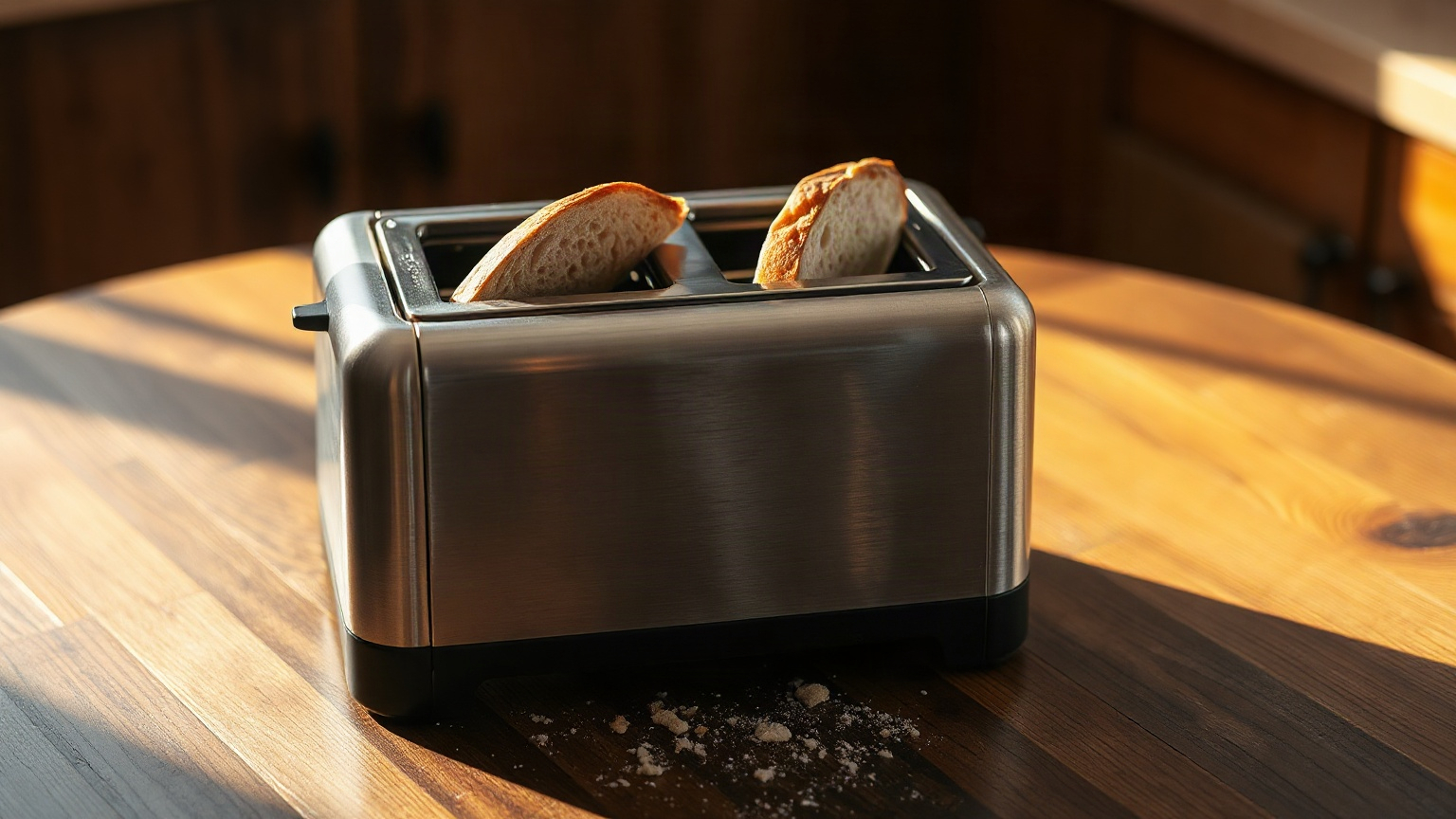
Standard slots — the kind on a cheap 4-slice toaster — are usually around 1 inch wide and about 4.5 inches deep. That’s fine for a regular slice of Pepperidge Farm. But try dropping in a thick-cut brioche slice or a bakery bagel and you’ll immediately feel the resistance. You might even hear the motor straining on the lift mechanism.
Wide slots are generally defined as 1.3 inches or wider. The Breville Die-Cast measures 1.5 inches. That extra half-inch sounds trivial. It isn’t. Thick bread needs room to not press against the heating elements unevenly, and centering guides help position thinner bread so it doesn’t flop to one side and toast only half the slice. I learned this the hard way on a Sunday morning with a very sad piece of brioche.
Slot depth is the thing nobody talks about. A 4.5-inch slot depth works for standard sandwich bread. But a tall slice of artisan loaf — the kind that’s maybe 5 inches tall — will stick out the top and the very bottom won’t toast at all. You can read more about how hot a toaster gets internally and why that even matters for toasting consistency. The short answer: the heating elements near the bottom of the slot run hotter, so if your bread doesn’t reach them, you’re toasting unevenly regardless of what setting you use.
The 3 Models: Honest Side-by-Side
| Model | Slot Width | Slot Depth | Settings | Price Tier | Best For |
|---|---|---|---|---|---|
| Breville Die-Cast 4-Slice Smart Toaster | 1.5 in | ~5 in | 1–7 + A Bit More | Premium | Serious bread eaters, artisan loaves |
| Cuisinart Custom Select 4-Slice | ~1.4 in | ~4.6 in | 1–7 per pair | Mid-range | Families, mixed bread types |
| Dash ClearView Long Slice Toaster | ~1.3 in | ~5.5 in | 1–7 | Budget | Bagels, long artisan slices, small kitchens |
Breville Die-Cast 4-Slice Smart Toaster — For the Bread Obsessive
This is the one I’d buy. Have bought, actually. The die-cast metal housing feels like it could survive a minor kitchen disaster, and the “A Bit More” button is one of those features that sounds gimmicky until you use it every single morning. You toast your bread, it pops up, you look at it and think “almost” — and instead of dropping it back in for a full second cycle, you press A Bit More and get about 20 extra seconds. Perfect.
The 1.5-inch slots with self-centering guides are the real draw here. I put in a thick-cut brioche (almost an inch thick) and it dropped straight in, centered itself, and came out evenly golden on both sides at setting 4. I’ve never had that happen with a cheaper toaster. The slot depth of about 5 inches also handled a taller sourdough slice without the top edge being left pale.
Who’s it for? Anyone who buys real bread — from a bakery, a farmers market, or their own oven. Families with varied preferences will appreciate that the two pairs of slots can run independently at different settings. If you want to toast a frozen waffle on setting 6 while your spouse toasts a delicate slice of white on setting 3, you can do that simultaneously.
One caveat: it’s an investment. Premium price tier. If you’re toasting plain white sandwich bread most mornings and occasionally a bagel, you don’t need this machine. But if you’re a regular sourdough buyer — especially the kind with a thick crust — it’ll pay off in actual quality of your breakfast.
Cuisinart Custom Select 4-Slice — For the Practical Family Kitchen
The Cuisinart Custom Select 4-Slice is the one I’d recommend to a friend who just needs a reliable, well-built toaster that handles most breads without drama. The slots are about 1.4 inches wide — not as wide as the Breville, but enough for a standard bakery bagel and moderately thick-cut bread without forcing it.
What I like specifically about this one is the independent dual control feature. Each pair of slots has its own browning dial and its own set of function buttons (toast, bagel, defrost, reheat). This matters more than it sounds in a household where people have genuinely different preferences. My first time using it, I accidentally set both sides at the same shade and got mildly annoyed when I realized — user error, but worth knowing the controls are right next to each other and easy to mix up.
The slot depth at around 4.6 inches is the one real limitation. A very tall artisan loaf will poke out the top a little. Not enough to be a fire hazard, but enough that the top centimeter or so stays lighter than the rest. If that bothers you, the Breville is worth the upgrade. If you’re mostly working with standard sandwich bread, bakery sourdough in a normal size, and the occasional English muffin, this won’t be an issue.
Build quality is good. The stainless exterior doesn’t show fingerprints too badly. The removable crumb tray slides out easily — and I want to stress: empty the crumb tray. A dirty crumb tray is genuinely how toaster fires start, and the Cuisinart makes it at least easy to do. According to Serious Eats, routine crumb tray cleaning is one of the most overlooked kitchen maintenance steps.
Dash ClearView Long Slice Toaster — For Bagels, Long Bread, and Tight Budgets
The Dash ClearView is a slightly different animal. It’s technically a 2-slice toaster (long-slot style) rather than a traditional 4-slot setup, but it deserves a place in this conversation because the slots are dramatically longer — about 5.5 inches deep and 1.3 inches wide — which makes it the best option here for toasting a full length of baguette or those oversized bakery bagels that literally don’t fit in normal toasters.
The “clear view” window on the side is actually useful, not just a novelty. You can see the toast browning in real time and cancel the cycle before it goes too far. I overshot the browning on my first use because I didn’t account for the visual delay — what looked light through the window was actually closer to done than I expected. Adjust down by about half a shade from what you’d normally use until you get a feel for it.
Budget tier. And it looks it somewhat — plastic housing, lighter feel than the Breville or Cuisinart. But it’s well under $50 and handles long slices and bagels better than toasters twice its price. The trade-off is throughput: two long slots versus four, so you’re toasting for a larger group in batches. For a single person or a couple, not a problem. For a family of five on a school morning, maybe a frustration.
The Edge Case Nobody Mentions: Frozen Thick Bread
Here’s something the other reviews skip. What happens when you freeze a thick-cut loaf — which a lot of people do with artisan bread — and then try to toast it straight from frozen?
Frozen bread in a wide slot is actually trickier than it sounds. The bread expands slightly as it thaws during toasting, which can cause a snug-fitting thick slice to stick temporarily. I had this happen with the Cuisinart: a thick frozen slice of my homemade sourdough got briefly wedged as the lever tried to pop up. It released on its own (don’t yank), but it was a reminder that “wide slot” still has limits when you’re dealing with bread that’s both thick and frozen.
The Breville handled it better — the self-centering guides have a bit more give, and the slot feels like it has a touch more clearance. On the defrost setting (setting 5 for thick frozen bread is my starting point), it takes about 30% longer than regular toasting but comes out evenly done. The Dash, because of its longer slot depth, actually managed frozen long baguette slices without any drama.
If you freeze your bread regularly and it’s on the thicker side, go Breville. That’s the real-world test that most buyers never think to run before buying.
Who Should Actually Buy a Wide-Slot 4-Slice Toaster
Not everyone needs one. If you’re buying standard sandwich bread from the grocery store, a regular 1-inch slot handles it fine and you can save the money. Wide slots start earning their keep in specific situations:
- You regularly buy artisan loaves from a bakery or farmers market, where the slices are often thicker and taller than grocery bread
- You bake your own bread — homemade loaves are almost always thicker than commercial bread
- You eat bagels more than a couple times a week (standard bagels fit most toasters, but bakery bagels often don’t)
- You toast Texas toast, brioche, or thick sandwich bread regularly
- Multiple people in your household toast at the same time, with different browning preferences
If only some of those apply, the Cuisinart is probably your sweet spot. If all of them apply, get the Breville. If you’re mostly a bagel person on a budget, take a serious look at the Dash ClearView before spending more.
And if you’re toasting a wider variety of foods beyond bread — leftovers, pizza slices, smaller baked goods — a compact toaster oven might honestly serve you better than any slot toaster. They can reheat food in a toaster oven with far more flexibility. Worth considering if you’re not committed to the slot toaster format.
The Bottom Line
Buy the Breville Die-Cast if you eat real bread and want a toaster that genuinely keeps up with it. It’s the best performing machine in this category, full stop. The self-centering guides and A Bit More function aren’t just nice extras — they’re the kind of thing you’d miss immediately if they were gone.
Buy the Cuisinart Custom Select if you’ve got a family with mixed preferences and want independent controls per slot pair without paying premium pricing. It’s reliable and well-built, and for most households it’ll be enough.
Buy the Dash ClearView if you’re working with a tight budget, love bagels and long artisan slices, and don’t mind toasting in smaller batches. Honestly underrated for the price.
What I’d tell a friend: know what bread you actually eat before buying. Measure a typical slice from your usual loaf if you can. If it’s over an inch thick or over 4.5 inches tall, you want the Breville or at minimum the Cuisinart. Don’t buy a wide-slot toaster just because it sounds like an upgrade. Buy it because your bread actually needs the room.
Frequently Asked Questions
What counts as a “wide slot” on a 4-slice toaster?
Wide slots are generally 1.3 inches or wider — standard slots run around 1 inch. The Breville Die-Cast tops the field at 1.5 inches, which is enough to fit a thick-cut brioche or bakery-style bread without forcing it. Anything under 1.3 inches will struggle with bread thicker than a standard sandwich slice.
Can a wide-slot 4-slice toaster fit a bagel?
Yes — all three models reviewed here fit a standard grocery-store bagel. A large bakery bagel (the oversized kind, often 4.5 inches across) fits comfortably in the Breville and Dash, and with a little coaxing in the Cuisinart. Slot width matters less for bagels than slot diameter clearance, so the wider the better.
Is it safe to toast thick bread on a higher shade setting?
Generally yes, but don’t walk away. Thick bread takes longer to toast through to the center, and the exterior can brown faster than the inside is done — especially on settings 5 and above. Stay nearby and use the defrost or lower shade settings for frozen thick bread, increasing from there. Empty your crumb tray regularly; dense bread drops more crumbs and increases fire risk if the tray is full.
Do all 4-slice toasters let you use just 2 slots at a time?
Most do, but not all handle it elegantly. The Breville and Cuisinart both allow you to run just one pair of slots independently without issue. On some cheaper 4-slice models, using only two slots can cause uneven results because the heating elements are calibrated for four slots running simultaneously — worth checking before buying.
How do I keep a wide-slot toaster from burning thick bread?
Start at a lower shade setting than you think you need — thick bread retains heat longer and will continue browning slightly after it pops up. For a thick-cut brioche or sourdough, setting 3 to 4 is a good starting point on most machines. If it’s not done enough, use an “A Bit More” function if available, or run a second short cycle rather than jumping straight to a high setting.
—
Written by
Emma founded Toastera to turn vague appliance advice into clear, researched, safety-first guidance on toasters and toaster ovens.
Free: the Toaster Oven Cheat Sheet
Get the printable cheat sheet (temps, cook times & safety tips) plus new recipes. No spam, unsubscribe anytime.