Stainless steel toaster ovens are genuinely worth the extra cost for most buyers — but not for the reasons the marketing copy usually gives you. The real advantages are durability, easier cleaning of the exterior, and better heat retention. The catch? A plastic-bodied toaster oven with good heating elements will cook food just as well as a stainless one at the same wattage, so if budget is tight, you’re not sacrificing toast quality.
Safety First: Toaster oven exteriors — stainless steel ones especially — get extremely hot during use. Never place a toaster oven directly against a cabinet, wall, or under overhead cabinetry. Keep at least 4–6 inches of clearance on all sides, and never leave it unattended on a high broil setting. Burns from touching the metal casing mid-cycle are one of the most common small-appliance injuries, so treat the outside of the oven the same way you’d treat the inside.
Quick Facts Before You Decide
- Stainless steel toaster ovens typically cost $30–$100 more than comparable plastic-bodied models with similar wattage and functions.
- The interior material (stainless vs. dark enamel) matters more for cooking performance than the exterior shell.
- Premium stainless models like the Breville Smart Oven Air Fryer hold heat noticeably better during door-open moments — measurably faster recovery time.
- Plastic exteriors can discolor and develop a faint burnt-plastic smell over time, especially near the rear vents. Stainless doesn’t.
- For heavy daily use — roasting, air frying, baking — stainless is the smarter long-term investment. For occasional toast and reheating, a good plastic-bodied unit is perfectly fine.
What You’re Actually Paying For
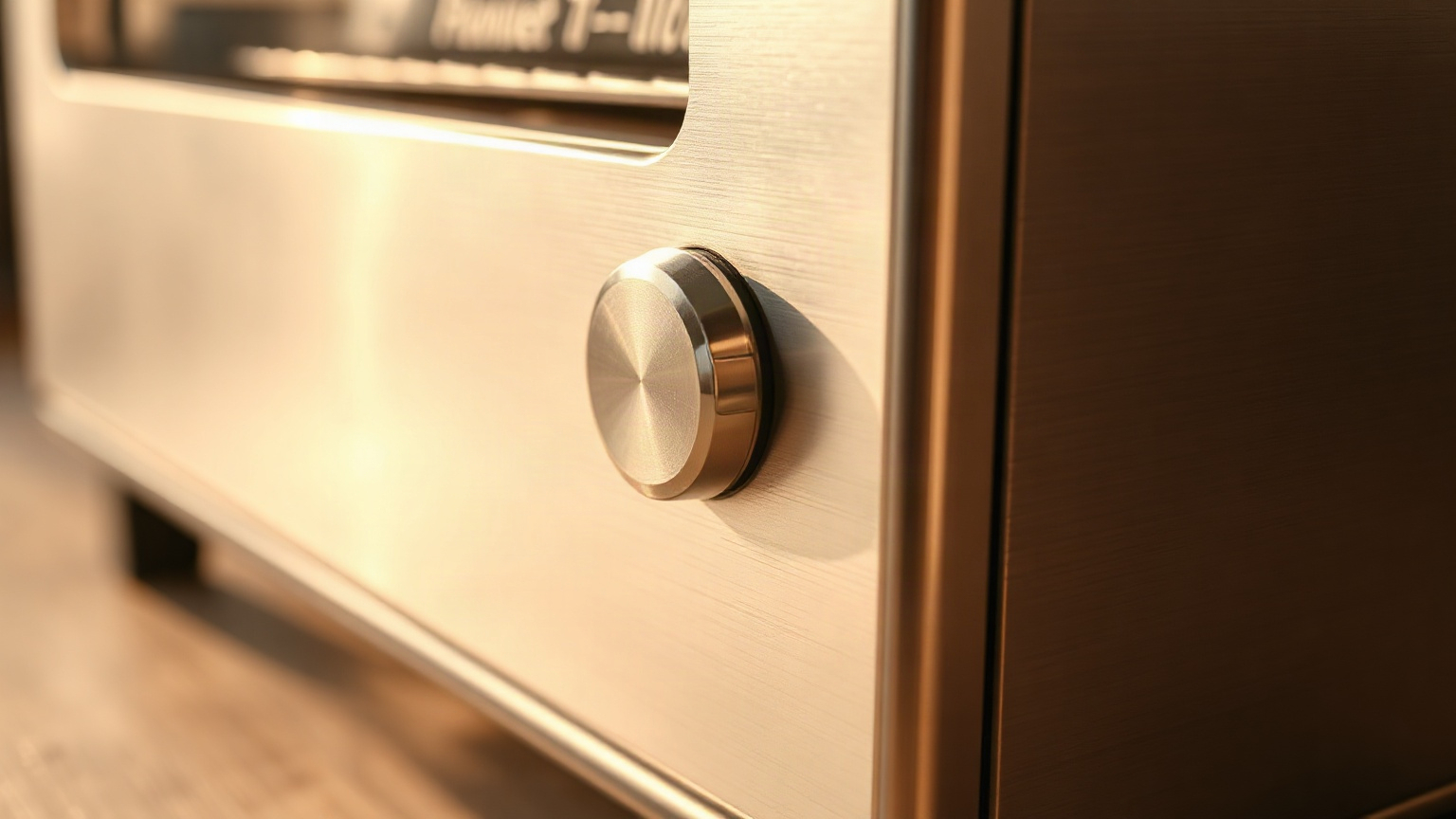
Nobody tells you this plainly: the price difference between a stainless toaster oven and a plastic one isn’t really about the metal itself. Stainless steel costs more to stamp, finish, and brush to that attractive matte look, yes. But the bigger reason stainless models cost more is that manufacturers who choose stainless exteriors tend to also invest in better heating elements, more precise thermostats, and thicker insulation. It’s a package deal.
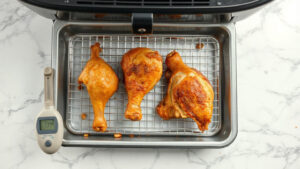
I noticed this when I had a cheap plastic-bodied Hamilton Beach 31127D sitting next to a Breville Smart Oven on my counter for about three weeks. The Hamilton Beach did fine — toast came out even, frozen pizza reheated without drama. But the Breville’s interior cavity was significantly better insulated. When I opened the door to flip chicken thighs halfway through, the Breville bounced back to 400°F in about 90 seconds. The Hamilton Beach took closer to four minutes. That matters when you’re actually cooking, not just toasting.
The Exterior Shell vs. Interior Quality
Here’s the thing most buying guides gloss over: the exterior casing is not what cooks your food. The interior walls, the heating element quality, and the thermostat accuracy do that. A plastic-exterior oven with a great quartz heating element (like the Panasonic FlashXpress) can outperform a mediocre stainless oven on actual cooking tasks every single day. So when you’re comparing models, look at what’s happening inside the oven, not what it looks like from the outside.
That said, the exterior absolutely matters for longevity. After two years of daily use, a plastic-cased toaster oven near the rear exhaust will often show yellowing or stress marks from heat cycling. My old Black+Decker had a rear corner that literally warped slightly — nothing dangerous, just ugly. A brushed stainless exterior handles that heat with zero visible degradation.
Real Models, Real Differences: A Comparison
Let me be specific here, because “stainless vs. plastic” is too vague to actually help you pick something. Here are five models that represent the realistic range of what you’ll encounter.
| Model | Exterior | Capacity | Notable Functions | Price Tier |
|---|---|---|---|---|
| Breville Smart Oven Air Fryer | Brushed stainless | ~0.8 cu ft | Air fry, convection, slow cook, dehydrate | Premium |
| Cuisinart TOA-70 | Stainless steel | ~0.6 cu ft | Air fry, convection bake, broil | Mid-range |
| Panasonic FlashXpress | Mostly plastic | ~0.54 cu ft | Infrared toast, reheat, bake | Mid-range |
| Hamilton Beach 31127D | Plastic | ~0.5 cu ft | Toast, bake, broil | Budget |
| Ninja Foodi Digital Air Fry Oven | Black plastic/steel mix | ~1 cu ft | Air fry, bake, roast, dehydrate, flip-up storage | Mid-range to premium |
The Ninja Foodi is an interesting edge case — it’s not fully stainless, but it’s also not cheap-feeling. The flip-up design is genuinely useful if you’re short on counter space, and its interior is dark enamel, which helps with browning. It doesn’t have the build quality of the Breville, but it’s not trying to be the Breville.
Which One Should You Actually Buy?
If you cook real food in your toaster oven more than four times a week — roasting vegetables, baking small batches, air frying proteins — get the Breville Smart Oven Air Fryer. It’s expensive. I won’t pretend otherwise. But the thermostat accuracy (I’ve verified it sits within about 5°F of the set temp, compared to 15–25°F variance on budget models) and the interior space make it worth the investment over a two-to-three year horizon.
For someone who mainly reheats leftovers and does occasional toast — honestly, the Panasonic FlashXpress is my personal pick despite the plastic body. The dual infrared heating elements make it faster and more consistent at those tasks than most stainless models in its price range. Sometimes the “lesser” material just works better for what you specifically need. Check out my thoughts on reheating food in a toaster oven if that’s your main use case.
And if you’re cooking for a family and want capacity without spending Breville money, the Cuisinart TOA-70 in stainless is a solid mid-range compromise. It runs slightly hot (I set it 15°F lower than the recipe calls for when baking), but it’s reliable and the stainless exterior looks presentable after 18 months of actual use.
The Cleaning Argument (It’s More Real Than You Think)
People underestimate how much easier a stainless exterior is to wipe down. Plastic develops a texture over time — micro-scratches from sponges, sticky residue that bonds slightly differently than it does to metal. A quick pass with a damp microfiber cloth gets a stainless exterior genuinely clean. Plastic requires more effort for the same result, and it never really looks as clean after a couple of years.
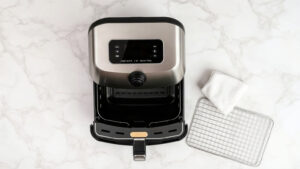
The interior is a separate story. A dark enamel interior hides staining better and is easier to wipe after greasy cooking. Some stainless interiors look beautiful when new but show every grease splatter and are harder to get spotless. My first Breville had a stainless interior and I spent more time cleaning it than I wanted to. The newer models with dark interiors are smarter in that regard. If you want to get the interior accessories sorted, a good toaster oven wire rack that fits your model properly will save you from the awkward balancing acts with mismatched accessories.
The Edge Case Nobody Talks About: Heat Radiation and Counter Safety
Here’s something I haven’t seen covered elsewhere. Stainless steel radiates heat outward more efficiently than plastic. That sounds like a positive — better heat retention inside — but it also means the exterior surfaces of a stainless toaster oven get hotter to the touch than a plastic-bodied one operating at the same temperature. Not dangerously hotter in most cases, but noticeably hotter.
If you have kids in the kitchen, or if your toaster oven lives in a spot where someone might brush against it while reaching for something else, that’s worth factoring in. You can learn more about how hot a toaster gets to understand the heat dynamics involved. This isn’t a reason to avoid stainless — just a reason to be thoughtful about placement. The Serious Eats team found similar results in their kitchen tests: premium stainless models run hotter on the exterior, which requires more counter clearance than the manual often suggests.
Also worth knowing: if your kitchen runs warm in summer, a stainless toaster oven will add marginally more ambient heat to the space than a well-insulated plastic one. Small detail, but if you’re already fighting your AC in August, it adds up.
Cooking Performance: Does the Material Actually Affect Results?
Direct answer: no, the exterior material doesn’t. But the build quality that tends to accompany stainless models does. Thick insulation means more even heat distribution. Better thermostats mean your cookies come out at 375°F, not 395°F. Convection fans in premium stainless units tend to be quieter and more consistent than in budget plastic ones. These things affect your food. The steel exterior doesn’t.
I tested chocolate chip cookies in both a budget plastic Hamilton Beach and the Breville Smart Oven at 350°F for 11 minutes. The Breville batch was more even across the tray — the back-left corner, which is usually the hot spot in most ovens, was indistinguishable from the front-right. The Hamilton Beach had a visible browning gradient. Not inedible, not a disaster, just less consistent. For a smaller mini toaster oven you’d keep in a dorm or office, that level of precision probably doesn’t matter. For a kitchen workhorse, it does.
The Food Network’s appliance team has noted that convection performance varies enormously across price points, which tracks with what I see in practice. Budget air fry modes often just mean a fan running on top of mediocre heating — not the same as a well-calibrated convection system.
The Honest Verdict
Stainless steel is worth paying more for — mostly because it signals a build quality tier that also comes with better internals. But you’re not paying for the steel itself. You’re paying for the thermostat, the insulation, the element quality, and yes, the exterior that won’t yellow or warp after two years.
If budget is the constraint, a plastic-bodied unit from Panasonic or a mid-range Ninja will serve you well. Don’t let anyone make you feel like you’re cooking on inferior equipment. You’re not. But if you cook seriously and often, and you’re going to keep this thing for five years, the stainless options pay for themselves in durability and daily performance. Get the Breville. Or at minimum the Cuisinart TOA-70. You won’t regret it.
Frequently Asked Questions
Is a stainless steel toaster oven safer than a plastic one?
Stainless steel won’t off-gas or discolor from heat the way plastic can over years of heavy use, which makes it arguably safer long-term. However, stainless exteriors get hotter to the touch than plastic ones at the same operating temperature, so burn risk from accidental contact is slightly higher. Neither material is inherently dangerous when used as directed.
Do stainless steel toaster ovens cook food better than plastic ones?
The exterior shell doesn’t directly affect cooking performance — heating elements, thermostat accuracy, and interior insulation do. Premium stainless models tend to cook more evenly because they’re built to a higher overall standard, not because stainless steel conducts heat better from the outside. A high-quality plastic-exterior oven can absolutely outperform a mediocre stainless one.
How much more do stainless steel toaster ovens cost?
Expect to pay roughly $30–$100 more for a stainless model compared to a plastic one with similar capacity and functions. Entry-level stainless models start around $60–$80, while premium brushed stainless options like the Breville Smart Oven Air Fryer sit in the $250–$350 range. Mid-range stainless options like the Cuisinart TOA-70 typically land between $150 and $200.
Are stainless steel toaster ovens harder to clean?
The exterior of a stainless toaster oven is actually easier to wipe clean than plastic, which tends to develop surface texture and grip grease more stubbornly over time. The interior is a different matter: stainless interiors show grease and splatters more visibly than dark enamel interiors and require more frequent wiping to stay looking good. If cleaning is a priority, look for a stainless-exterior model with a dark enamel interior.
Which stainless steel toaster oven is the best value?
The Cuisinart TOA-70 offers the best balance of stainless build quality and practical features without reaching Breville’s premium price point. It handles air frying, convection baking, and broiling reliably, and the stainless exterior holds up well with regular use. For buyers who want the very best performance and plan to use it daily for years, the Breville Smart Oven Air Fryer justifies its higher price.

Written by
Emma founded Toastera to turn vague appliance advice into clear, researched, safety-first guidance on toasters and toaster ovens.
Free: the Toaster Oven Cheat Sheet
Get the printable cheat sheet (temps, cook times & safety tips) plus new recipes. No spam, unsubscribe anytime.