The Breville BOV900BSS costs roughly $150 more than the Cuisinart TOA-70, and for most home cooks, the Cuisinart is the smarter buy. The Breville edges ahead on build quality, preset flexibility, and interior capacity — but those advantages only matter if you’re cooking for a crowd or you bake seriously. If you mostly air fry, reheat, and toast, the Cuisinart does 90% of what the Breville does at a meaningfully lower price.
Safety First: Both of these appliances reach internal temperatures of 450°F or higher. Never leave either unit unattended during high-heat air fry cycles, keep at least 4 inches of clearance on all sides, and always use oven mitts when pulling the tray — the exterior of both units gets genuinely hot, not just warm. Keep them away from cabinet undersides and curtains.
Key Takeaways Before You Read Any Further
- The Cuisinart TOA-70 air fries, toasts, bakes, and broils competently — and it does it for significantly less money than the Breville BOV900BSS.
- The Breville BOV900BSS has a larger usable interior (1 cubic foot vs. roughly 0.6 cubic feet on the TOA-70) — a real difference if you’re cooking for four or more people regularly.
- Toast quality is noticeably better on the Breville; the Cuisinart can produce uneven browning depending on rack position.
- Neither unit is “budget” — but the TOA-70 lands firmly in the mid-range tier, while the BOV900BSS is premium.
- The edge case most reviews miss: the Cuisinart’s smaller footprint can genuinely matter in apartments or galley kitchens where counter space is tight.
What You’re Actually Comparing Here
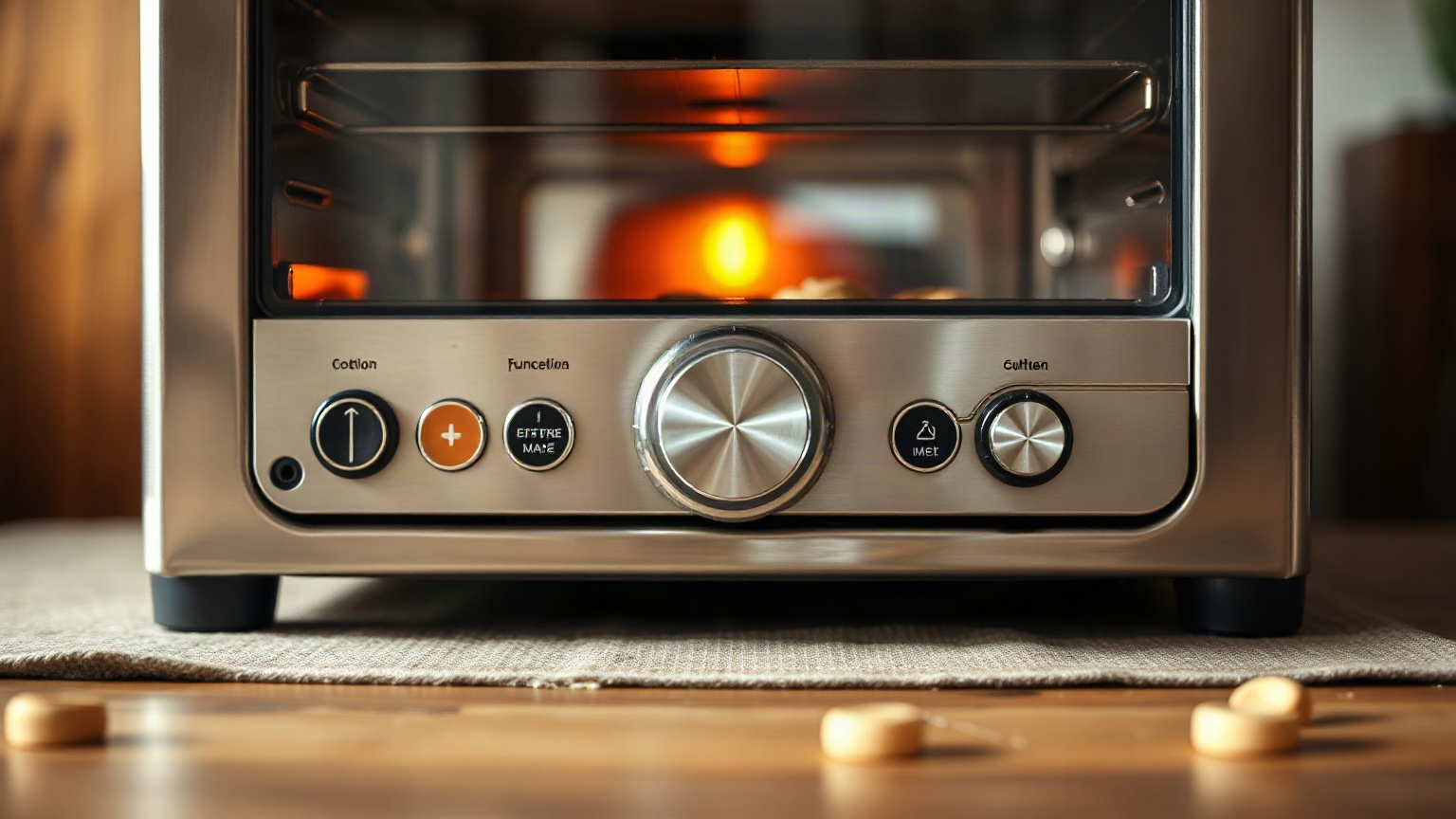
These two get compared constantly, and honestly the comparison makes sense — they’re both serious appliances targeting the same broad buyer: someone who wants to retire their standalone air fryer and toaster and consolidate into one unit. But they’re not really aimed at the same person once you look closer.
The TOA-70 is Cuisinart’s attempt to pack real air fry performance into a reasonably compact body. It runs on 1800 watts, fits a 12-inch pizza, and has seven cooking functions. The BOV900BSS is Breville’s flagship countertop oven. It pulls 1800 watts too — same wattage, interestingly — but it’s got 13 cooking functions, a bigger cavity, a smarter heating element arrangement (Breville calls it their “Element IQ” system), and frankly a much more satisfying build quality. The knobs on the Breville feel like you’re adjusting something on a professional range. The Cuisinart’s controls are perfectly fine and not embarrassing.
I’ve run both through their paces over several weeks. Here’s what actually matters.
Side-by-Side Specs: The Numbers That Actually Matter
| Feature | Cuisinart TOA-70 | Breville BOV900BSS |
|---|---|---|
| Price Tier | Mid-range | Premium |
| Wattage | 1800W | 1800W |
| Interior Capacity | ~0.6 cu ft | ~1.0 cu ft |
| Max Temperature | 450°F | 450°F |
| Cooking Functions | 7 | 13 |
| Fits (Pizza) | 12-inch | 13-inch |
| Air Fry Performance | Good | Very Good |
| Toast Evenness | Decent (can be uneven) | Excellent |
| Build Quality Feel | Solid plastic/metal mix | Premium brushed stainless |
| Footprint (approx.) | Smaller / apartment-friendly | Larger — needs real estate |
| Included Accessories | Air fry basket, baking pan, rack | Wire rack, baking pan, broil rack, pizza pan, crumb tray |
Worth noting on the capacity gap: 0.4 cubic feet sounds abstract until you try to fit a whole chicken in the Cuisinart. It won’t. The Breville will handle a 14-lb turkey with the right rack configuration. That’s a meaningful difference for anyone who actually roasts.
Real-World Cooking Performance: Where They Differ Most
Air Frying
Both units air fry well. I did frozen fries at 400°F for 18 minutes in each, same brand, same portion, same starting point. The Breville came out marginally crispier — not dramatically so, just a little more even. The Cuisinart’s fries were genuinely good, though. You’re not going to serve them to people and hear complaints. Where the Cuisinart stumbles slightly is with larger batches: the basket is smaller, so overcrowding becomes a real issue faster. If you’re doing wings for four people in one shot, the Breville handles that more comfortably.
For tips on getting the most out of air fry cycles on either machine, reheating food in a toaster oven covers rack positioning and temperature tricks that apply to both.
Toast
The Breville wins this one clearly. Its Element IQ system adjusts heat distribution based on the function you’re using, which means toast browns more evenly across all four slices. First time I used the Cuisinart on toast mode, the front two slices were lighter than the back. Adjusting the rack position helped, but I shouldn’t have to figure that out on a $200+ appliance. Breville owners tend not to report that problem.
Baking and Roasting
This is where the Breville genuinely earns its premium price — at least for some people. The larger interior means more even heat circulation, and the convection fan does a better job on baked goods. I made a batch of chocolate chip cookies in both at 325°F. The Cuisinart batch needed rotation halfway through (it’s a smaller space, more hot spots). The Breville batch was more consistent without intervention. If you bake more than a couple times a month, that matters. If you bake never, it absolutely doesn’t.
For baking-specific accessory questions — pans that fit correctly, wire racks — check out options like a Cuisinart TOA-70 replacement baking pan or a Breville Smart Oven Air accessory set if you want to expand what either machine can do.
The Edge Cases Most Reviews Skip
Here’s the one I rarely see addressed: counter space. The Breville BOV900BSS is a big appliance. It’s roughly 21 inches wide, 17 inches deep, and 12 inches tall. That’s significant. I have a galley kitchen with maybe 24 inches of usable counter on one side, and the Breville fills almost all of it. The Cuisinart is noticeably more compact. For anyone in an apartment, a studio, or just a kitchen that wasn’t designed with American appliance culture in mind, that’s a real consideration — not a minor footnote.
Second edge case: the learning curve. The Breville has 13 functions and a more complex interface. That’s mostly good, but the first week of ownership involves some trial and error. The Cuisinart’s seven functions are all you’ll use 95% of the time, and the controls are immediate and obvious. If you want simplicity without sacrificing performance, that’s an honest point in Cuisinart’s favor.
Third: if you’re comparing to other strong mid-range options, the best mini toaster ovens list has a few alternatives worth considering if you’re in a genuinely small space and neither of these quite fits.
And one thing the big roundup sites don’t really flag: the Cuisinart’s air fry basket has a mesh design that’s mildly annoying to clean. Bits of food work their way into the mesh and need a brush to clear out properly. The Breville’s accessories are easier to clean overall — they’re bigger, flatter, and less fiddly. It’s a small thing. But after the fifteenth time you’re scrubbing a mesh basket at 10pm, it’s not that small.
Who Should Buy the Cuisinart TOA-70
You cook for one or two people most nights. You want a capable air fryer that also handles toast, reheating, and the occasional baked potato without taking over your entire counter. You don’t roast whole birds. $150 is a meaningful amount of money to you, or you’d just rather spend it elsewhere. That’s a completely reasonable position.
Buy the TOA-70 here: Cuisinart TOA-70 Air Fryer Toaster Oven.
Who Should Buy the Breville BOV900BSS
You cook for three or four people regularly. You bake. You want to roast a chicken without worrying about whether it’ll fit. You care about toast quality more than most people — which is not a criticism, just an observation. You want an appliance that feels genuinely premium and that you’re not going to want to upgrade in two years. Counter space isn’t a constraint for you.
For Serious Eats’ take on what separates budget air fryers from premium ones in actual cooking tests, their equipment coverage goes deep on exactly this kind of thermal performance comparison.
The Verdict
For most people — genuinely most, not a hedged “it depends” most — the Cuisinart TOA-70 is the right call. It performs well, it’s compact, and the price difference is real money. If you tried both side by side in a blind cooking test, you’d notice the Breville is better. But “noticeably better for the things most people actually cook most of the time” doesn’t hold up as well as the price gap suggests.
The Breville BOV900BSS is the better appliance. Full stop. But better doesn’t always mean worth it for your specific kitchen and your specific habits. If you bake regularly, cook for a family, or just want the best countertop oven you can get and price isn’t your primary concern — get the Breville. You won’t regret it.
If you’re on the fence and mostly curious about the air fry side of things, understanding how hot a toaster gets compared to true convection temperatures puts some of this in useful context.
Frequently Asked Questions
Is the Breville BOV900BSS worth the extra money over the Cuisinart TOA-70?
For most home cooks, no — not unless you bake regularly or cook for four or more people. The Breville is genuinely better on toast quality, interior space, and build feel, but the Cuisinart handles everyday air frying and reheating well enough that the price gap is hard to justify for the average household. If you roast whole chickens or do serious baking, the Breville earns its price quickly.
How much bigger is the Breville BOV900BSS than the Cuisinart TOA-70?
The Breville has roughly 1.0 cubic foot of interior capacity compared to the Cuisinart’s approximately 0.6 cubic feet — that’s about 67% more usable space. In practical terms, the Breville fits a 13-inch pizza and a whole roasting chicken; the Cuisinart maxes out at a 12-inch pizza and smaller cuts of meat. The Breville’s exterior footprint is also considerably larger, which matters on tight counters.
Can the Cuisinart TOA-70 replace a full-size oven for everyday cooking?
For one or two people, yes — mostly. It handles roasting vegetables, baking small batches of cookies, reheating leftovers, and air frying without issue. Where it falls short is large-format cooking: a full sheet pan, a big casserole dish, or anything that needs a full 13×9 pan won’t fit. It’s a capable supplement or a primary oven for small households, not a replacement for anyone cooking big meals regularly.
What temperature does the Breville BOV900BSS air fry at?
The BOV900BSS air frys at temperatures ranging from 80°F up to 450°F, and the air fry function runs the convection fan at high speed to circulate hot air around food. Most air fry results — fries, wings, breaded items — happen in the 375°F to 425°F range. The machine defaults to around 400°F for its air fry preset, which is a solid starting point for most frozen foods.
Which is easier to clean, the Cuisinart TOA-70 or the Breville BOV900BSS?
The Breville is easier to clean overall. Its accessories are larger, flatter surfaces that wipe down without much fuss, and the interior enamel coating handles splatter better than the Cuisinart’s interior. The Cuisinart’s mesh air fry basket traps food particles and needs a brush or soaking to clean properly — it’s the one genuine maintenance annoyance with that machine. Both have removable crumb trays that should be emptied after every few uses.

Written by
Emma founded Toastera to turn vague appliance advice into clear, researched, safety-first guidance on toasters and toaster ovens.
Free: the Toaster Oven Cheat Sheet
Get the printable cheat sheet (temps, cook times & safety tips) plus new recipes. No spam, unsubscribe anytime.