To roast zucchini in a toaster oven, set it to 425°F on the convection roast setting if you have one, cut your zucchini into half-moons no thicker than ½ inch, and roast for 12–15 minutes without flipping. The high heat drives off moisture fast, which is exactly what keeps zucchini from turning into a sad, steamed mess. Get those two things right and you’ll have golden edges, a tender (not mushy) center, and actual caramelization happening.
Safety First: Toaster ovens run at very high temperatures — 425°F is no joke. Keep the oven positioned at least 4 inches from cabinets and walls. Use oven mitts every time you pull the rack out, since the rack, pan, and interior walls all reach burn temperatures within minutes. Never leave a toaster oven unattended while roasting at high heat, and let the pan cool completely before washing it or placing it on a surface that could scorch.
Quick Facts: Toaster Oven Roasted Zucchini
- Best temperature: 425°F (convection) or 450°F (standard bake)
- Ideal slice thickness: ¼ to ½ inch — thinner than most recipes suggest
- Roast time: 12–15 minutes, no flipping required if you use convection
- One medium zucchini per quarter-sheet pan — crowding kills browning
- Salt AFTER roasting, not before, unless you have 30 minutes to draw moisture out first
Zucchini is about 95% water. That’s the whole problem. Every mistake that leads to watery, pale, limp zucchini comes back to that single fact. The good news is a toaster oven — especially a compact one — actually handles this better than a full-size oven in some ways, because the heating elements are closer to the food and the interior heats up faster. I’ve tested this in my own kitchen probably a dozen times at this point, and I’ve made every possible mistake so you don’t have to.
Why Toaster Ovens Are Actually Good at This
People assume toaster ovens are for reheating leftovers and making toast. Fair. But they’re genuinely great for roasting vegetables, especially ones with high water content like zucchini. The smaller cavity means the air gets hot faster and stays hot even when you open the door briefly. Less thermal mass to recover.
If your toaster oven has a convection fan, use it. Convection circulates hot air around the food, which speeds up surface drying — and surface drying is how you get browning. If you don’t have convection, bump the temperature up to 450°F and accept that you might need a quick flip at the 10-minute mark. Check out our guide to best mini toaster ovens if you’re shopping for one that actually has a real convection setting (not all of them do, and the difference matters).
One thing I noticed early on: my toaster oven’s built-in thermometer runs about 15–20°F low. I figured this out after buying a cheap oven thermometer. If your zucchini keeps coming out pale and soft, check your actual temperature before changing anything else.
How to Prep Zucchini for Roasting (The Part Most People Mess Up)
Cutting it right
Half-moons are my default. Cut the zucchini in half lengthwise, then slice across into ½-inch pieces. This gives you a flat side that sits against the pan and gets direct heat contact. You can also do rounds (just slice straight across), but rounds take longer to brown on both sides because neither face is fully flat against the pan.
Avoid going thicker than ½ inch. I know some recipes say ¾ inch or even 1 inch for “heartier bites,” but those thicker cuts take longer to cook through, which means the outside starts to dry out before the center is tender. Thin cuts — closer to ¼ inch — roast beautifully but you have to watch them after the 10-minute mark.
The salting question
Here’s where I’ll give you an actual opinion: don’t salt zucchini before roasting unless you’re willing to wait 30 minutes and pat it very dry afterward. Salting draws out moisture — that’s the goal — but if you salt and immediately throw it in the oven, all that drawn-out water just steams the zucchini in the pan. Either salt in advance and dry thoroughly, or season after it comes out of the oven. I always salt after. Easier, and the result is basically identical.
Oil: more than you think
Use about 1½ tablespoons of olive oil for one medium zucchini (roughly 2 cups of sliced pieces). That sounds like a lot, but oil conducts heat to the surface of the vegetable and is what actually creates browning. Thin, dry pieces just shrivel. Toss the zucchini in a bowl with the oil so every surface is coated, then spread on the pan in a single layer.
Temperature and Timing — The Actual Numbers
I’ve roasted zucchini at 375°F, 400°F, 425°F, and 450°F. The results are not subtle.
| Temperature | Setting | Time | Result |
|---|---|---|---|
| 375°F | Standard bake | 20–25 min | Tender but pale, no real browning |
| 400°F | Standard bake | 15–18 min | Lightly golden, soft — acceptable |
| 425°F | Convection roast | 12–14 min | Golden edges, tender center — the sweet spot |
| 450°F | Standard bake | 10–12 min | Good browning, watch closely, can over-dry |
| 450°F | Convection roast | 9–11 min | Fast and aggressive, best for thick slices |
My personal setting: 425°F convection roast, 13 minutes, no flip. That’s it. It works every single time as long as the pan isn’t crowded. For reference, Serious Eats has written about the science of roasting vegetables at high heat and why lower temperatures consistently underperform for browning — the same logic applies in a toaster oven.
The Pan Setup: This Is Where Most Recipes Skip Something Important
Use a quarter-sheet pan, not whatever fits
A quarter-sheet pan for toaster ovens is the right tool here. Most toaster ovens fit a quarter-sheet pan (9×13 inches) perfectly. You want metal — dark metal specifically — because dark pans absorb more heat and conduct it more aggressively to the bottom of whatever you’re roasting. Light aluminum pans work, just not as well. Avoid the rack-only setup for zucchini because thin slices fall through or curl in weird ways.
Spacing matters more than almost anything
One medium zucchini, one pan. That’s the rule. If you crowd the pan, the pieces steam each other. Steam = pale and watery. You’re going for hot, dry air contact on every surface. If you need to roast more zucchini, do two batches. I know it’s annoying. It’s worth it.
If you’ve got a toaster oven wire rack with a drip pan, you can use the rack above the pan to elevate the zucchini slightly and let air circulate underneath — this is a good trick for convection ovens and makes a real difference. It’s basically the only time I’d recommend a rack setup for zucchini slices.
Seasoning Ideas (Beyond Just Salt and Pepper)
The base is olive oil, salt, and pepper. That’s genuinely all you need and it’s not a cop-out — good zucchini roasted at the right temperature has real flavor on its own. But here are some combinations I’ve actually used and liked:
- Parmesan finish: Grate a thin layer of parmesan over the zucchini in the last 2–3 minutes of roasting. It melts, crisps slightly, and is honestly kind of addictive.
- Garlic powder + smoked paprika: Add both to the oil before tossing. About ½ teaspoon each for one zucchini. Don’t use fresh garlic at 425°F — it burns before the zucchini finishes.
- Lemon zest and dried oregano: Toss with the oil, then squeeze a little fresh lemon juice on after roasting. Bright and good with fish.
- Red pepper flakes: Just a pinch in the oil. Adds heat without overwhelming the vegetable.
One thing I’d skip: liquid marinades or sauces before roasting. Any liquid — even a small amount of soy sauce or balsamic — adds moisture that fights against browning. Finish with those if you want them.
Edge Cases Worth Knowing
What to do with very large zucchini
Big zucchini — the ones that somehow hid in the garden and grew to the size of a small bat — are different. They have a higher seed-to-flesh ratio and more water in the center. If you’re dealing with one of those, scoop out the seeds after slicing and pat the flesh dry with paper towels before oiling. Otherwise no amount of high heat will fix the interior wateriness.
Roasting from frozen
Don’t. Frozen zucchini releases so much water that it’s impossible to roast properly without dedicated equipment. If you froze zucchini and want to use it, the better move is to thaw, squeeze dry in a towel, and then use it in a soup or a frittata. The USDA recommends proper thawing before cooking for food safety anyway, so you’re not skipping a step.
Reheating roasted zucchini
Roasted zucchini doesn’t reheat beautifully — I’ll be honest about that. It’s best fresh out of the oven. If you need to reheat, put it back in the toaster oven at 400°F for 4–5 minutes rather than microwaving it (microwave = steam = you’re back to square one). Our guide to reheating food in a toaster oven covers the general strategy if you want the longer version.
What Good Looks Like — and When to Pull It Out
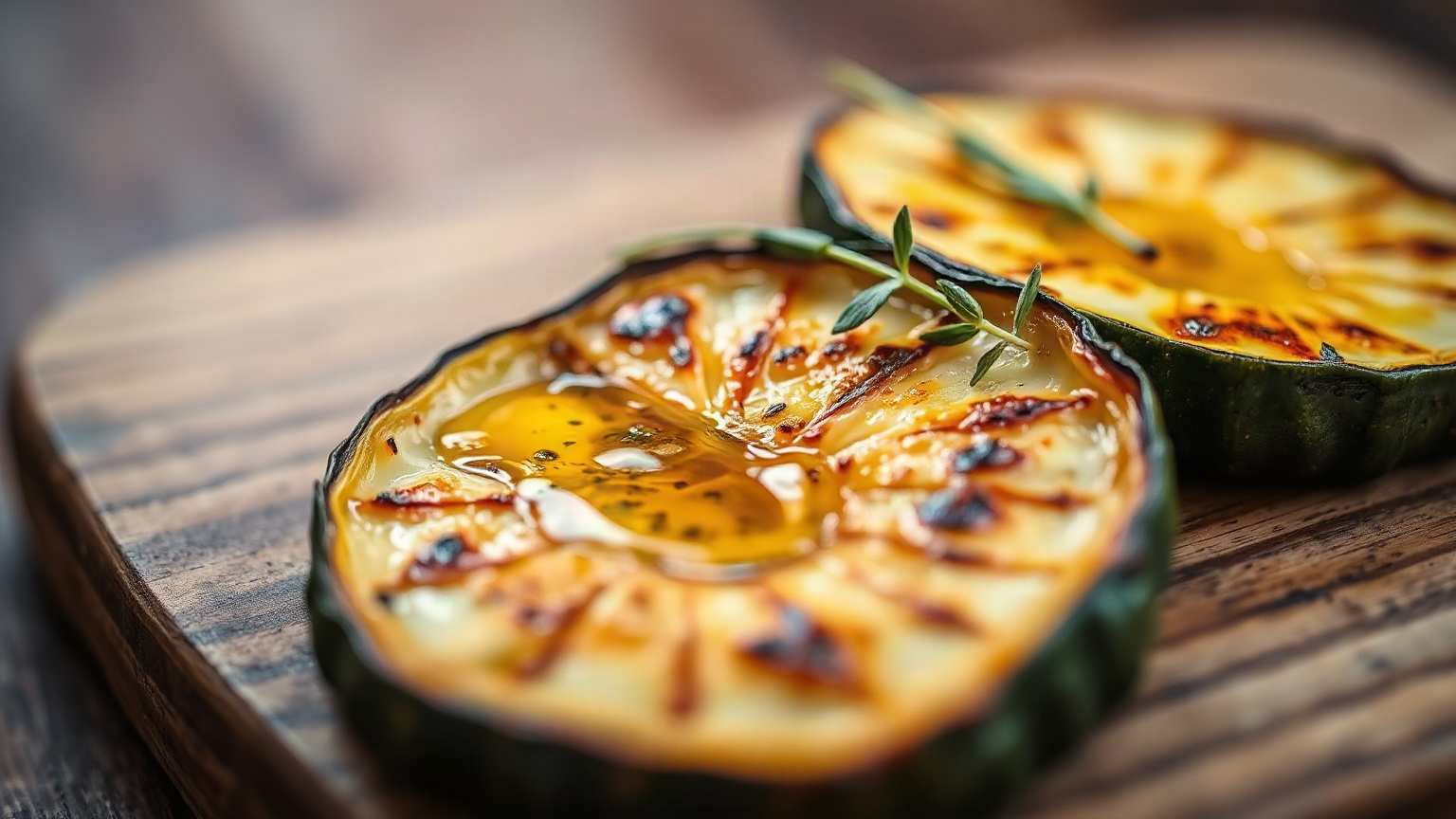
You’re looking for edges that are clearly golden-brown, slightly curled, and a little bit darker than you might expect. The centers should be completely tender — you can check with a fork, but honestly you can usually tell visually. The flat sides sitting on the pan should have a light sear to them. If everything’s still bright green and shiny, it needs more time. The USDA advises cooking vegetables to 165°F internal temperature for food safety purposes, though most cooks judge zucchini by texture and color rather than temperature probes. That’s fine — at 425°F for 13 minutes, the interior hits well above that threshold anyway.
Don’t pull it early because you’re nervous. Slightly over-roasted zucchini is infinitely better than under-roasted. The worst that happens is a few dark edges, which are actually delicious.
The Takeaway
This isn’t complicated. High heat, thin slices, good oil coverage, and a pan that’s not overcrowded. Those four things handle almost every failure mode. The toaster oven is genuinely good at this — better than I expected when I first started cooking vegetables in one instead of my full-size oven. Give 425°F convection a proper try before deciding it doesn’t work, and don’t salt in advance unless you actually have time to do it right. That’s about 90% of what separates great roasted zucchini from a disappointing side dish.
Frequently Asked Questions
What temperature should I roast zucchini in a toaster oven?
425°F on convection roast is the best setting for most toaster ovens. If yours doesn’t have convection, use 450°F on standard bake and check the zucchini at the 10-minute mark. Lower temperatures like 375°F will cook the zucchini but won’t produce the browning that makes it taste good.
How long does zucchini take to roast in a toaster oven?
At 425°F convection, ½-inch half-moons take about 12–15 minutes with no flipping needed. At 450°F standard bake, plan on 10–13 minutes and flip once at the halfway point. Thicker slices or a crowded pan will need more time and will brown less effectively.
Why does my roasted zucchini come out watery?
Watery zucchini is almost always caused by one of three things: the oven temperature wasn’t high enough, the pan was overcrowded, or the zucchini was salted before roasting without being dried properly afterward. Fix any one of those and you’ll see a big difference. The most common culprit is pan crowding — zucchini pieces touching each other steam instead of roast.
Do I need to flip zucchini when roasting in a toaster oven?
With convection at 425°F, no — the circulating air browns all exposed surfaces without flipping. Without convection, a single flip at the halfway point helps even browning. You don’t need to be precise about the timing; just check at around 8–10 minutes and flip if one side looks done and the other doesn’t.
Can I roast zucchini and other vegetables together in a toaster oven?
Yes, but only if the other vegetables have a similar roasting time and moisture content. Cherry tomatoes work well alongside zucchini at 425°F. Harder vegetables like carrots or potatoes take much longer and need a head start. Avoid mixing in anything with high liquid content (like mushrooms in large quantity) because it’ll steam the whole pan.

Written by
Emma founded Toastera to turn vague appliance advice into clear, researched, safety-first guidance on toasters and toaster ovens.
Free: the Toaster Oven Cheat Sheet
Get the printable cheat sheet (temps, cook times & safety tips) plus new recipes. No spam, unsubscribe anytime.