For one or two people, a compact toaster oven (under 0.5 cubic feet) handles 90% of daily cooking tasks just fine — toast, reheating, roasting a chicken breast, even a small frozen pizza. A larger unit makes sense only if you regularly cook full sheet-pan meals, bake standard 9×13 dishes, or want built-in air frying. If you’re genuinely unsure, the compact wins on counter space and electricity costs every time.
Safety First: Toaster ovens run heating elements at temperatures up to 500°F and can cause burns, countertop scorching, or fire if placed too close to walls, cabinets, or flammable materials. Always maintain at least 4 inches of clearance on all sides, never leave a toaster oven unattended on a high broil setting, and keep the crumb tray emptied — built-up grease is a real fire hazard.
Quick Facts Before You Decide
- Compact toaster ovens (0.3–0.5 cu ft) fit a 9-inch pizza or 4 slices of toast and draw roughly 1,200–1,500 watts per session.
- Large toaster ovens (0.6–1.0+ cu ft) can hold a 13-inch pizza or a 9×13 baking pan, but they draw 1,700–1,800 watts and take up 40–60% more counter space.
- For a household of one or two, a compact unit costs significantly less upfront (budget to mid-range) versus premium-tier large models, and uses less electricity daily.
- The biggest practical difference isn’t capacity — it’s preheat time. Large toaster ovens take 8–12 minutes to reach 375°F; compact ones hit it in 4–6 minutes.
- If air frying is your main draw, a mid-size air fryer toaster oven combo covers both needs without going full large-format.
What “Compact” and “Large” Actually Mean in Real Kitchen Terms
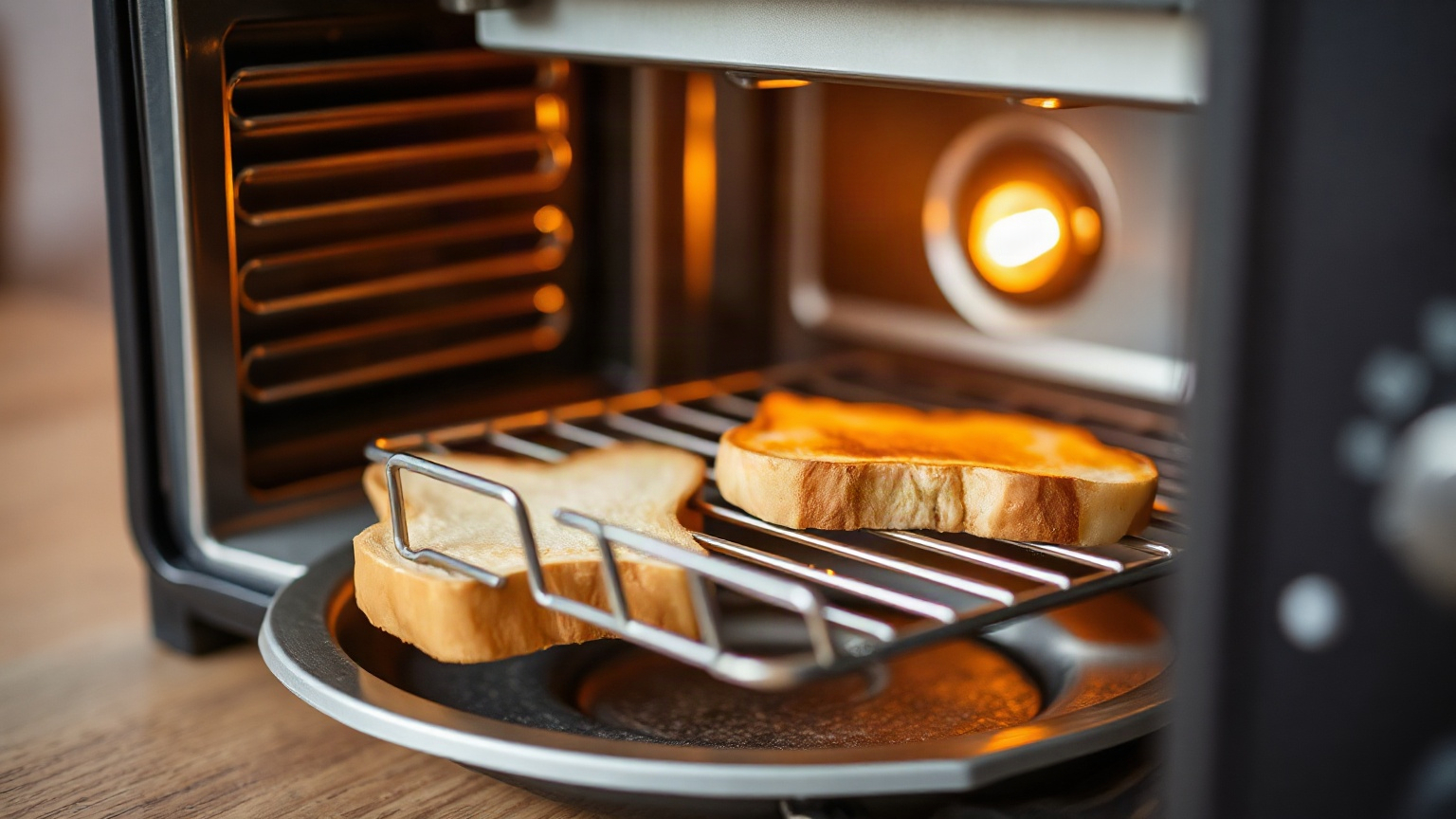
The marketing labels on toaster ovens are honestly a mess. “Compact” on one brand’s box is “large” on another’s. So I go by cubic feet and footprint instead.
A compact toaster oven is roughly 0.3 to 0.5 cubic feet interior space. It’ll sit about 15–17 inches wide on your counter. Four slices of toast, a 9-inch pizza, a couple of chicken thighs on a small rack — that’s the sweet spot. My old Cuisinart TOB-40N lived in this category and I used it daily for almost three years without once wishing it were bigger.
A large toaster oven — something like the Breville Smart Oven Air Fryer or the Cuisinart TOA-70 — runs 0.6 to 1.0+ cubic feet. The footprint jumps significantly. The Breville, for instance, is 21.5 inches wide and nearly 17 inches deep. That’s serious real estate. On a standard 24-inch deep counter, you’re left with about 7 inches of usable workspace in front of it. That’s barely enough to set down a cutting board, which annoyed me more than I expected the first week I had it.
The Honest Case for Staying Small
If you cook for one or two people most nights, you probably don’t need to cook a whole chicken or a full sheet pan of roasted vegetables at once. You’re more likely making a salmon fillet, reheating leftovers, toasting a bagel, or maybe baking two cookies because you refuse to fire up a full oven for two cookies. (Totally reasonable. I’ve done it.)
Compact toaster ovens handle all of that without complaint. They also preheat faster, which is the thing nobody talks about enough. When I’m hungry at 7pm on a Tuesday and want reheated pasta with a crusty top, I do not want to wait 12 minutes for an oven to come to temp. I want four minutes. The compact wins that fight every time. Here’s a detailed breakdown of reheating food in a toaster oven if you want the specifics on that.
Electricity matters too. Running a 1,200-watt compact for 20 minutes costs roughly 4–5 cents. A 1,800-watt large model for the same session? Closer to 7–8 cents. That’s not huge on a per-use basis, but it adds up across a year of daily cooking.
The Models I’d Actually Recommend in the Compact Category
The Hamilton Beach 31127D is a genuinely good budget option — about 0.35 cubic feet, dead simple controls, and it fits under most upper cabinets. It’s not fancy but it toasts evenly and doesn’t take up half your kitchen.
The Cuisinart TOB-40N (the one I used for years) adds a convection setting, which makes a real difference for things like roasted vegetables or reheating pizza without sogging the crust. Mid-range price tier. Worth it.
If you want something that also air fries in a compact footprint, the Ninja Foodi 2-in-1 Flip Toaster is clever — it stores vertically against your backsplash and flips down when you use it. Odd-looking, but brilliant for small kitchens. Check current Ninja Foodi Flip options on Amazon.
When a Larger Toaster Oven Is Actually Worth It
There are real scenarios where going larger pays off, even for a household of two.
You bake regularly. Not just “occasionally heat a frozen cookie” but actual baking — muffins, small loaves of bread, sheet cake. Standard muffin tins and 9×13 pans don’t fit in compact models. If you’re constantly trimming parchment and jury-rigging workarounds, a larger oven fixes that frustration permanently. The right toaster oven baking pan set for compact models exists, but the selection is narrower.
You hate your full-size oven. This one’s underappreciated. Some apartments have awful ovens — runs hot, takes forever, heats unevenly. If your built-in oven is genuinely unreliable, a large toaster oven with solid convection (the Breville Smart Oven Air Fryer Pro is the benchmark here) can replace it almost entirely. That’s a different use case than “I want to toast bread faster.”
You air fry constantly. Small dedicated air fryers exist, but if you want one appliance that does everything at a reasonable quality level, the Cuisinart TOA-70 and the Breville Smart Oven Air Fryer both deliver solid air frying in a large-format toaster oven. The tradeoff is the footprint. Neither of these is small.
The Models Worth Considering If You Go Large
The Breville Smart Oven Air Fryer Pro is the gold standard. Premium price tier, but the build quality, even heating, and cooking versatility are genuinely better than the competition. For two people who cook seriously and have counter space, it’s hard to argue against it. See the Breville Smart Oven Air Fryer Pro on Amazon.
The Cuisinart TOA-70 sits at a mid-range price tier and handles air frying, convection baking, and broiling without the premium Breville price. The air fry performance is a step below Breville, but for most people cooking casually, it won’t matter.
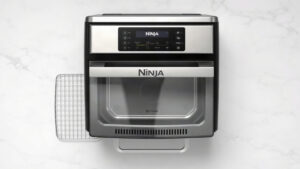
The Ninja Foodi XL Pro Air Fry Oven is a wildcard — it’s massive (practically countertop oven territory), but it can handle a full 13-inch pizza and up to 2 pounds of air-fried food at once. Probably overkill for two people, honestly.
Head-to-Head: Compact vs. Large Toaster Oven for Small Households
| Factor | Compact (Hamilton Beach / Cuisinart TOB-40N) | Large (Breville Smart Oven / Cuisinart TOA-70) |
|---|---|---|
| Interior Capacity | 0.3–0.5 cu ft (9″ pizza, 4 toast slices) | 0.6–1.0+ cu ft (13″ pizza, 9×13 pan) |
| Counter Footprint | ~15–17″ wide, ~12″ deep | ~20–22″ wide, ~16–17″ deep |
| Preheat to 375°F | 4–6 minutes | 8–12 minutes |
| Wattage | 1,200–1,500W | 1,700–1,800W |
| Air Fry Option | Limited (some models) | Yes (most models) |
| Price Tier | Budget to mid-range | Mid-range to premium |
| Best For | Toasting, reheating, small roasts, quick meals | Baking, air frying, replacing a full oven |
The Edge Case Nobody Mentions: Small Apartment, Big Cooking Ambitions
Here’s a scenario the other articles skip entirely. You live alone, but you meal prep on Sundays. You’re roasting two sheet pans of vegetables, baking a small casserole, maybe doing a full chicken. One person, but big-batch cooking habits.
In that case, a large toaster oven starts to make a lot more sense — especially if your apartment oven is small or temperamental. The Cuisinart TOA-70 can roast a 4-pound chicken, which is plenty for two people or solid meal prep for one. You can learn more about optimal rack placement and temperatures in our guide to best mini toaster ovens (and what they genuinely can’t do).
The reverse edge case: two people, but neither of you really cooks. You’re reheating delivery, making toast, occasionally doing frozen appetizers for movie night. A compact is almost extravagant for your needs. A basic two-slot toaster and a microwave might serve you better than any toaster oven, full stop. Don’t buy a toaster oven because you feel like you should have one.
For more context on what these appliances actually do well, the team at Serious Eats has done thorough equipment testing on countertop ovens that’s worth a read if you want a second opinion beyond my own experience.
My Actual Recommendation
For most one-or-two-person households, start compact. Specifically, the Cuisinart TOB-40N if you want convection and reliability at a mid-range price. The Hamilton Beach 31127D if you genuinely just want a no-fuss toaster oven that works.
Go large — specifically the Breville Smart Oven Air Fryer Pro — only if you bake regularly, your built-in oven is genuinely bad, or air frying is something you plan to do multiple times a week. It’s a serious appliance that takes serious counter space. Don’t let the feature list talk you into something your kitchen can’t comfortably accommodate.
And if you’re stuck choosing, ask yourself this: what’s the one cooking task I do most often? If the honest answer is “toast and reheating,” you don’t need 1.0 cubic feet of oven. You need something that preheats in five minutes and doesn’t crowd your counter. Get the compact. You’ll use it more, not less, because it’s always ready to go.
Understanding how hot a toaster gets is also worth a quick look before you decide — it’ll help you understand where toaster ovens actually outperform standard toasters for cooking tasks beyond bread.
Frequently Asked Questions
Is a larger toaster oven worth it for one person?
For most single-person households, no — a compact toaster oven handles 90% of solo cooking without the extra footprint or electricity draw. The exception is if you batch cook on weekends, bake regularly, or want a reliable air fryer built in. In those cases, a mid-size unit like the Cuisinart TOA-70 earns its counter space.
What size toaster oven do I need for two people?
A 0.4–0.5 cubic foot toaster oven comfortably handles meals for two — think two chicken breasts, a small pizza, or four slices of toast. You’d only need to go larger if you’re cooking proteins above 4 pounds, using standard-size baking pans, or cooking multiple dishes simultaneously.
Do large toaster ovens use significantly more electricity?
Yes, but the difference per session is modest — roughly 3–4 cents more per 20-minute cooking session compared to a compact model. Over a year of daily use that adds up to $10–15 more in electricity costs, which is worth knowing but probably not the deciding factor for most people.
Can a compact toaster oven replace a full-size oven for small households?
Partially. A compact toaster oven handles most everyday cooking tasks for one or two people, but it can’t fit standard baking pans, cook large roasts, or run multiple racks at once. If you want to replace your full-size oven entirely, you’d need a large toaster oven with strong convection — not a compact model.
How long does a toaster oven take to preheat?
Compact toaster ovens typically reach 375°F in 4–6 minutes. Large models take 8–12 minutes due to greater interior volume. That preheat gap is one of the most underrated practical differences between the two sizes for everyday use.

Written by
Emma founded Toastera to turn vague appliance advice into clear, researched, safety-first guidance on toasters and toaster ovens.
Free: the Toaster Oven Cheat Sheet
Get the printable cheat sheet (temps, cook times & safety tips) plus new recipes. No spam, unsubscribe anytime.