The Black & Decker 2-slice toaster edges out the Hamilton Beach in most real-world tests, specifically because of more consistent browning across the full slice surface. Hamilton Beach wins on price and is genuinely fine for basic daily use, but if uneven toast drives you crazy, Black & Decker is the better call. Neither is a luxury pick — both sit under $35 — so the choice really comes down to what bothers you most at 7 a.m.
Safety First: Both toasters run hot enough to cause serious burns — heating elements can reach 700–900°F internally. Never insert metal utensils to retrieve stuck bread, and always unplug the toaster before cleaning or attempting to dislodge anything. Keep at least 4 inches of clearance on all sides during use to prevent cabinet or curtain fires.
Key Takeaways
- Black & Decker toasts more evenly across the full bread surface, especially on medium-dark settings (4–5 on its dial)
- Hamilton Beach is typically $5–8 cheaper and has a slightly slimmer footprint — useful in tight kitchens
- Black & Decker’s extra-wide slots (1.5 inches) handle thick bagels and Texas toast without forcing; Hamilton Beach’s slots are standard width and can be a squeeze
- Both have removable crumb trays, but Black & Decker’s slides out more cleanly
- For most people who just want reliable everyday toast: Black & Decker. For someone on a tight budget who toasts standard sandwich bread: Hamilton Beach gets the job done
I’ve been testing toasters and toaster ovens in my home kitchen for a few years now, and I’ll be honest — when I first lined these two up on my counter, I expected them to perform almost identically. They’re both budget picks. They both make toast. How different could they really be? Pretty different, it turns out, in ways that actually matter on a weekday morning.
The Models I Tested
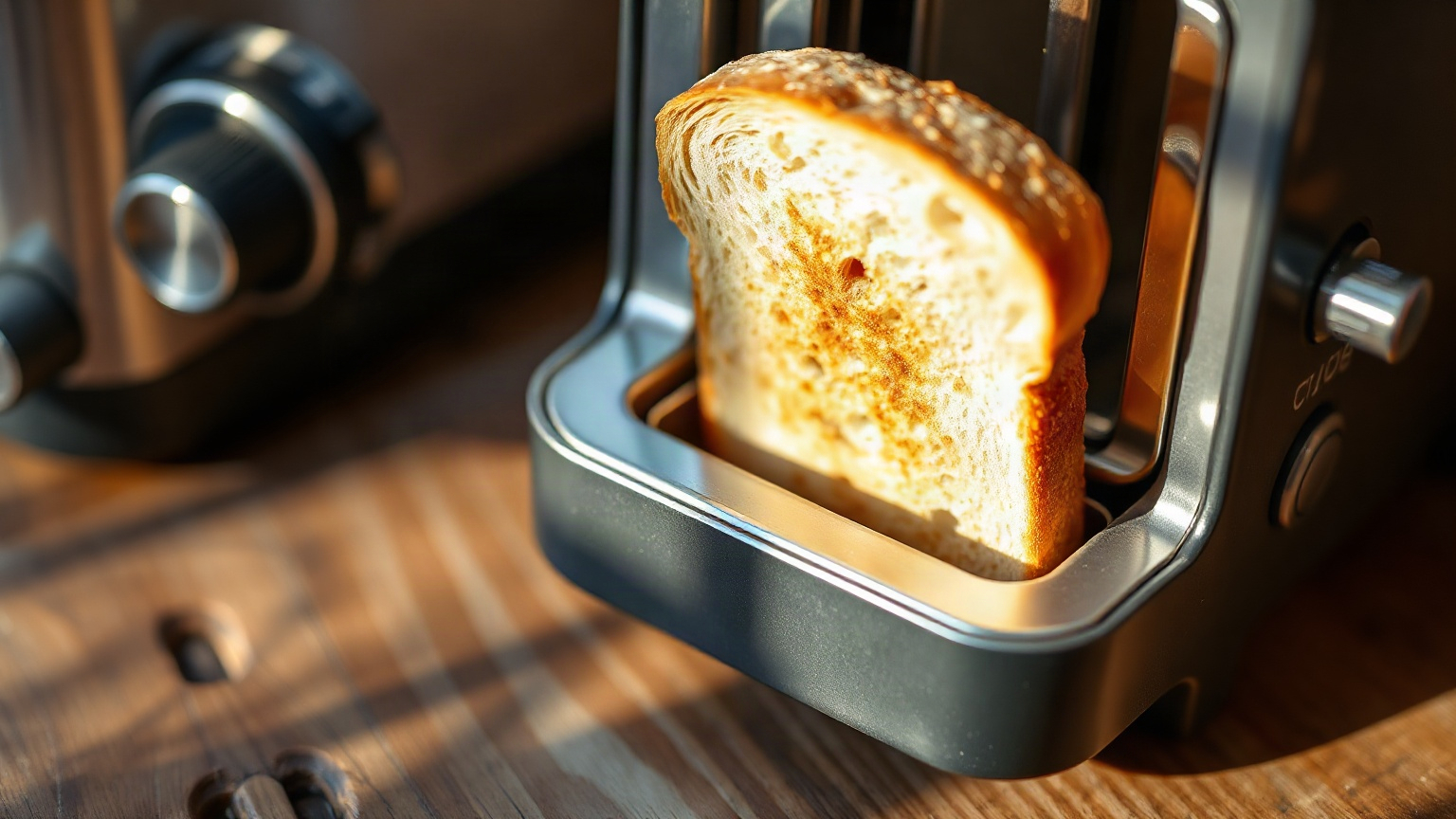
For this comparison, I used the Black & Decker 2-Slice Extra-Wide Slot Toaster (TR1278B) and the Hamilton Beach 2-Slice Toaster (Model 22633). Both are consistently among the top sellers in their category. I ran each one through about a week of daily toasting — sandwich bread, bagels, English muffins, and a frozen waffle or two — before writing a single word about them.
One thing upfront: I’m not a lab. I don’t have a spectrometer or a professional color-matching system for toast shade. What I do have is an infrared thermometer, a notebook, and genuinely strong opinions about cold centers and scorched edges.
Browning Performance: Where the Real Difference Lives
Black & Decker: More Even, More Predictable
On setting 4 of 7, Black & Decker consistently produced toast that was golden across about 90% of the bread surface. The bottom inch or so — right above the crumb tray — was occasionally a shade lighter, but nothing dramatic. I ran the same slice of Pepperidge Farm white bread six times across two days, and the results were impressively consistent. That predictability is underrated. Once you find your setting, you can stop thinking about it.
The extra-wide 1.5-inch slots deserve a mention too. Bagels sat flat rather than at an angle, which directly affects how evenly the cut face toasts. Small detail, big difference.
Hamilton Beach: Decent, But Watch the Edges
Hamilton Beach’s browning is acceptable — and I want to be fair here, because it’s a $25 toaster. But the edges of the bread consistently came out slightly darker than the center on settings 3 and above. On a whole wheat slice, that translated to borderline burnt corners while the middle was just medium. I tried bumping down to setting 2 to compensate, which helped, but then the center was underdone. It’s a bit of a negotiation.
This is probably the single most important difference between these two machines. If you’re toasting standard sandwich bread and you like light to medium toast, Hamilton Beach is totally fine. If you’re doing thicker bread, darker settings, or anything where browning uniformity actually matters, the Black & Decker is noticeably better.
Specs Side by Side
| Feature | Black & Decker TR1278B | Hamilton Beach 22633 |
|---|---|---|
| Slot width | 1.5 inches (extra-wide) | ~1.25 inches (standard) |
| Wattage | 900W | 850W |
| Shade settings | 7 | 6 |
| Special functions | Bagel, Defrost, Cancel | Bagel, Defrost, Cancel |
| Crumb tray | Slide-out, easy to remove | Slide-out, slightly stiff |
| Cord length | ~24 inches | ~24 inches |
| Price tier | Budget (~$30–35) | Budget (~$22–28) |
| Footprint | Slightly wider | Slightly slimmer |
Worth knowing: if you’re curious about how hot a toaster gets internally during a cycle, the answer is much hotter than you’d expect — which is part of why element placement matters so much for even browning.
Build Quality and Everyday Usability
The Crumb Tray Situation
Both have removable crumb trays. Black & Decker’s slides out with a single motion, empties cleanly, and slides back in without rattling. Hamilton Beach’s tray is fine but required a bit of wiggling the first few times — and the first time I pulled it out, I wasn’t paying attention and got crumbs on the counter anyway. Minor. But it’s the kind of friction that adds up.
Controls and Lever Feel
Black & Decker’s lever has a satisfying, solid click when you press it down. Hamilton Beach’s feels a bit plasticky by comparison — it works, but it doesn’t inspire confidence. The shade dials on both are functional. Neither has a digital display, which is fine at this price. If you want more precision and are willing to spend more, that’s a different conversation altogether and might lead you toward something like the best mini toaster ovens that offer more control.
The Bagel Function
Both claim a bagel mode that toasts only the cut face while gently warming the outside. Black & Decker’s worked as advertised — I got a nicely toasted interior and a warm but not dried-out crust. Hamilton Beach’s bagel mode was… okay. The cut side toasted unevenly (back to the edge problem), and the outside was barely warm. Not a dealbreaker, but if bagels are a regular thing for you, Black & Decker handles them better.
The Edge Case Nobody Talks About: Frozen Waffles and Thin Bread
Most reviews compare standard bread. That’s it. But a lot of people are also running frozen waffles, thin-sliced sourdough, or even the occasional pop-tart through their toaster. So I tested those too.
Frozen waffles in the Black & Decker on the defrost setting came out crisp and heated through in one cycle — about 3.5 minutes. Hamilton Beach needed a second cycle about 40% of the time to get the center fully thawed and warm. Thin sourdough was where Hamilton Beach actually held its own better; the lower wattage and shallower heating seemed to be gentler on delicate slices that can go from pale to scorched fast.
So here’s the honest edge case: if you’re primarily toasting very thin artisan bread or crackers on low settings, Hamilton Beach’s slightly lower power is less likely to over-do it. For everything else, Black & Decker handles the range better.
According to Serious Eats’ toaster testing methodology, even browning across the full surface is one of the top indicators of a quality toaster — which tracks with everything I found here.
Who Should Buy Which
Buy the Black & Decker if: you want reliable, consistent browning without thinking too hard about it. You eat bagels. You toast thick bread or frozen items regularly. You’re willing to spend an extra $5–8 for a machine that’s just more satisfying to use.
Buy the Hamilton Beach if: budget is genuinely tight and you’re primarily toasting standard sandwich bread on medium-light settings. It’s not bad. It makes toast. If you’re outfitting a first apartment or a vacation rental kitchen, it’s a perfectly reasonable call.
One last thing nobody says out loud: both of these will probably last you 3–5 years with normal use. Neither is built to last a decade. They’re budget toasters. Plan accordingly.
The Verdict
Black & Decker wins this comparison — not by a huge margin, but by a consistent one. Better browning uniformity, wider slots, a more satisfying build, and a bagel mode that actually works. The Hamilton Beach isn’t a bad toaster; it’s just a slightly compromised one, and those compromises show up every morning.
If you’re spending $30 on a toaster, spend the $30 on the Black & Decker. If you’re spending $25, the Hamilton Beach will do the job — just don’t expect perfection from the edges. And if this comparison has made you realize you actually want something with more capability than a basic 2-slice, it might be worth looking at what you can get in a compact toaster oven instead. Sometimes the best toaster isn’t a toaster at all.
Check out the Black & Decker TR1278B on Amazon if you want to see current pricing and reviews from other users before deciding.
Frequently Asked Questions
Is the Black & Decker 2-slice toaster better than Hamilton Beach?
Yes, for most users the Black & Decker performs better — it browns more evenly, handles thicker items like bagels more reliably, and has a slightly more solid build. Hamilton Beach is a reasonable pick if you’re working with a tighter budget and mostly toast standard sandwich bread on lighter settings.
How hot does a 2-slice toaster get during a cycle?
Internally, toaster heating elements can reach between 700°F and 900°F depending on the shade setting. The exterior surfaces get warm but not dangerously hot under normal conditions. That’s why clearance around the unit matters — and why you should never use metal utensils near the slots.
Which toaster is easier to clean, Black & Decker or Hamilton Beach?
Black & Decker’s crumb tray slides out more smoothly and seats back in cleanly, making daily maintenance a little less annoying. Both trays are removable and washable. Neither toaster should ever be submerged or rinsed directly — just wipe the exterior with a damp cloth and empty the crumb tray regularly.
Can these toasters handle thick bread or bagels?
Black & Decker’s extra-wide 1.5-inch slots comfortably fit most store-bought bagels and thick-cut Texas toast without forcing. Hamilton Beach has standard-width slots (~1.25 inches) that can be tight for larger bagels — you can usually make it work, but it’s a snug fit and can affect how evenly the cut face toasts.
Is it safe to leave a toaster plugged in when not in use?
It’s generally safer to unplug a toaster when you’re not actively using it. Toasters contain heating elements that can, in rare cases, pose a fire risk if crumbs accumulate and the appliance is left energized near flammable materials. Most kitchen safety guidelines, including those from the USDA and consumer safety agencies, recommend unplugging small appliances when not in use as a basic precaution.

Written by
Emma founded Toastera to turn vague appliance advice into clear, researched, safety-first guidance on toasters and toaster ovens.
Free: the Toaster Oven Cheat Sheet
Get the printable cheat sheet (temps, cook times & safety tips) plus new recipes. No spam, unsubscribe anytime.