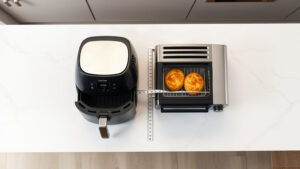
A toaster oven set to 350°F typically runs 25–50°F hotter than a full-size conventional oven at the same dial setting, and if it has a convection fan, you should drop your recipe temperature by another 25°F on top of that. The small cavity heats up fast and loses heat quickly when you open the door, which makes timing less predictable than you’d expect. In practice, that means a recipe calling for 375°F in a standard oven often works best at around 325–350°F in a convection toaster oven.
Safety First: Toaster ovens and convection ovens reach temperatures up to 450–550°F and their exterior walls, racks, and pans stay dangerously hot long after cooking ends. Always use dry oven mitts (not a damp towel), keep the appliance at least 4 inches from walls and cabinetry, and never leave either running unattended on high heat for extended baking sessions. Burns from small appliance racks are surprisingly severe because the metal heats unevenly and fast.
Quick Facts: Toaster Oven vs Convection Oven for Baking
- Standard toaster ovens run 25–50°F hotter than their dial indicates compared to a calibrated full-size oven.
- Convection mode (fan-forced air) in either appliance typically cuts baking time by 20–25% and calls for a 25°F temperature reduction.
- Toaster oven cavities are 0.5–1 cubic foot; most full-size convection ovens are 4–5 cubic feet — that size difference changes browning behavior dramatically.
- Preheat time for a toaster oven averages 5–8 minutes versus 12–18 minutes for a full-size convection oven.
- For most baked goods under 9 inches wide, a quality convection toaster oven produces results nearly identical to a full-size oven — with the right adjustments.
Why the Same Temperature Setting Means Something Different in Each Oven
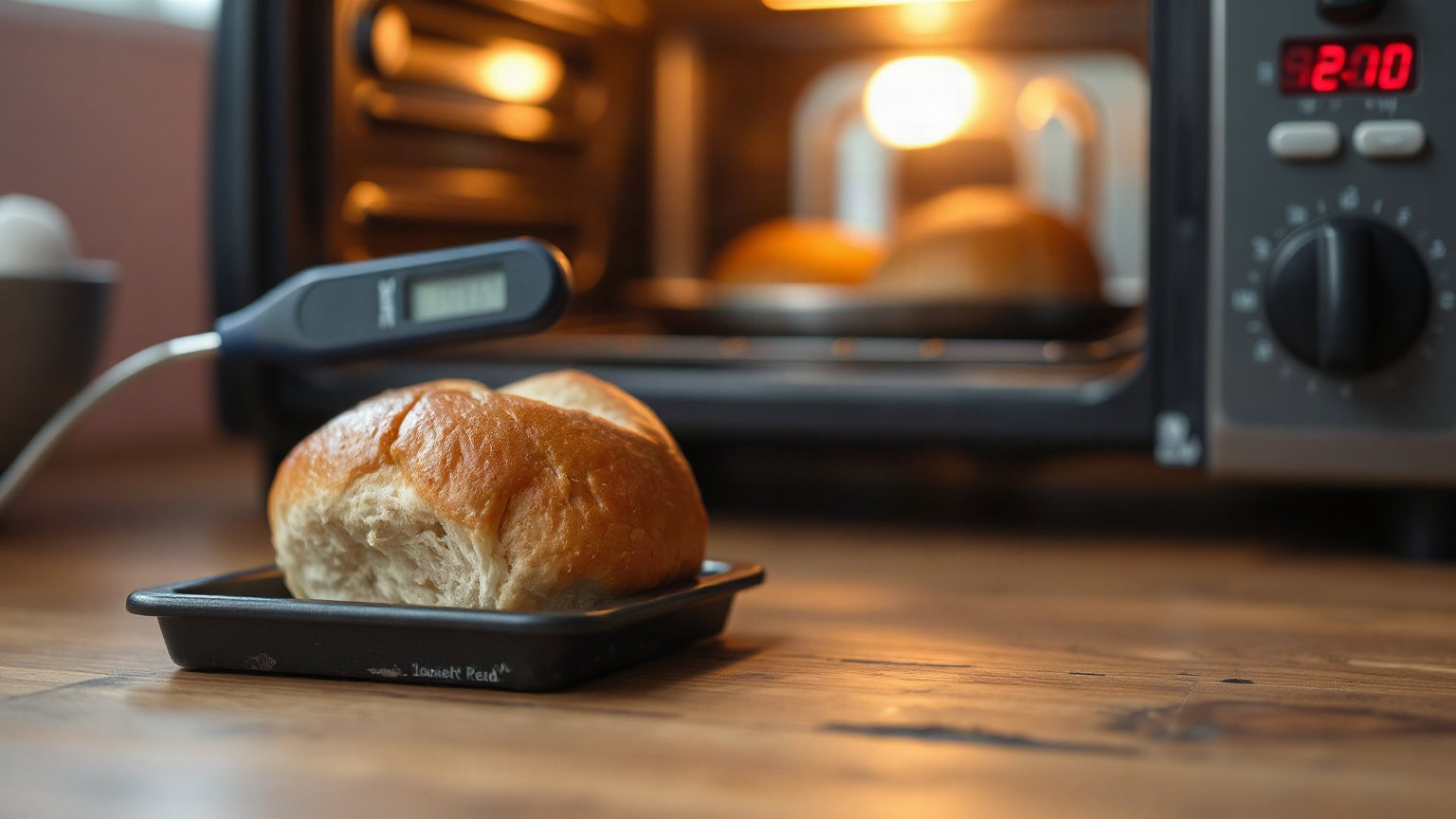
Here’s the thing that tripped me up the first time I tried baking banana bread in my toaster oven: I set it to 350°F, same as the recipe, and pulled out a loaf with a nearly burnt crust and an undercooked center. Frustrating. The problem wasn’t the recipe. It was me assuming the two ovens were interchangeable at face value.
Toaster ovens have a tiny interior — often less than 0.6 cubic feet. The heating elements (usually top and bottom, sometimes a rear element for convection) are physically close to your food. That proximity means radiant heat hits the surface of whatever you’re baking much more aggressively than in a large oven where the elements are farther away. The result? Surface browning happens faster, sometimes before the interior is done.
Full-size convection ovens have much more air volume to heat, so the temperature distribution is more gradual and even. A convection fan in a big oven circulates air across a larger space. The fan in a toaster oven circulates air across a space roughly the size of a shoebox. Same concept, very different effect on your food.
I started keeping an oven thermometer inside my toaster oven permanently. Genuinely one of the most useful $10 things I’ve bought. My Cuisinart toaster oven’s 350°F setting was actually hitting 385°F at the center rack. That gap explains a lot of burnt cookies.
The Convection Factor: What Changes When the Fan Turns On
In a full-size convection oven
A full-size convection oven uses a rear fan and, on better models, an additional heating element behind the fan (sometimes called “true convection” or “European convection”). The moving air strips away the humid boundary layer around your food, which accelerates moisture evaporation and promotes browning. Standard advice from Serious Eats and most culinary sources: reduce temperature by 25°F, or keep the temperature and cut time by about 20–25%.
In a convection toaster oven
The fan effect is amplified because the cavity is so small. Air moves across your food more aggressively relative to the size of the space. I’ve found that in my toaster oven’s convection mode, the 25°F reduction isn’t always enough — for delicate things like shortbread or meringue, I sometimes drop another 10–15°F and watch the clock. Cookies that take 12 minutes in a full-size convection oven might be done in 8 in a convection toaster oven. And I mean done-done, not just set on top.
So for a convection toaster oven: if your recipe says 375°F conventional, subtract 25°F for convection (350°F), then subtract another 25°F for the toaster oven’s hot-running tendency. You’re often looking at 325°F with your eyes on the clock.
Temperature and Timing Cheat Sheet: Side-by-Side Numbers
This is the table I wish someone had handed me when I started experimenting. These aren’t theoretical — they’re based on what actually worked consistently in my kitchen tests across multiple appliances.
| Oven Type | Recipe Calls For | Recommended Setting | Time Adjustment | Notes |
|---|---|---|---|---|
| Full-size conventional | 375°F / 20 min | 375°F | None (baseline) | Standard reference point |
| Full-size convection | 375°F / 20 min | 350°F | –15–20% | Fan circulates large air volume evenly |
| Toaster oven (no fan) | 375°F / 20 min | 340–350°F | –10–15% | Small cavity, close elements = hot spots |
| Convection toaster oven | 375°F / 20 min | 325°F | –20–30% | Aggressive fan + small space = fast cook |
| Toaster oven (top-element heavy) | 375°F / 20 min | 325–340°F | –15–20% | Shield top with foil after 60% of bake time |
That last row is an edge case the other guides mostly skip. Some toaster ovens — especially cheaper models — rely heavily on the top broil element even in “bake” mode. If you notice your baked goods darkening on top before the bottom sets, tent loosely with foil. It’s a small thing that makes a real difference.
Specific Models and How They Actually Perform
The appliance itself matters as much as the settings. Not all convection toaster ovens are created equal, and some full-size convection ovens are also poorly calibrated. Here’s an honest look at some of the popular options.
| Model | Type | Capacity | Convection | Price Tier | Baking Verdict |
|---|---|---|---|---|---|
| Breville Smart Oven Air Fryer Pro | Convection Toaster Oven | ~0.8 cu ft | Yes (Element IQ) | Premium | Best baking consistency I’ve tested; worth the price |
| Cuisinart TOA-70 | Convection Toaster Oven | ~0.6 cu ft | Yes | Mid-range | Runs hot; use thermometer, then great results |
| Ninja Foodi XL Pro | Convection Toaster Oven | ~0.6 cu ft | Yes | Mid-range | Solid; fan is aggressive, drop temp 30°F |
| Hamilton Beach Easy Reach | Toaster Oven (basic) | ~0.42 cu ft | No | Budget | Functional but inconsistent; fine for toast, less so for baking |
| Typical Full-Size Convection (e.g., GE, Whirlpool) | Full-size convection | 4–5 cu ft | Yes | Varies | Most reliable for large batches; slower preheat |
My honest verdict: if you’re baking regularly and have counter space, the Breville Smart Oven Air Fryer Pro is the one I’d actually recommend. It’s not cheap, but it has multiple heating elements that it adjusts intelligently — and its temperature calibration is the most accurate I’ve encountered in a countertop appliance. The Cuisinart TOA-70 is a solid second for the price, just buy a thermometer and plan for it to run about 20–25°F hot.
The Hamilton Beach is fine for reheating and toast. For actual baking? I’d pass. Check out our picks for the best mini toaster ovens if you’re shopping and want more context.
Practical Baking Tips That Actually Change Results
Use an oven thermometer — full stop
I know I already said this, but it bears repeating. Toaster oven thermostats drift. A lot. I’ve tested five toaster ovens in the past two years and not one of them was accurate at every temperature setting. Spend the $10. Leave it in there. Check it before every baking session if you’re making something that matters.
Pan choice is weirdly important
Dark pans absorb more radiant heat, which is already aggressive in a toaster oven. I switched to light-colored aluminum pans for baking and it reduced edge over-browning noticeably. A light aluminum toaster oven baking pan makes a genuine difference, especially for cookies and bars. Silicone mats help too, both for non-stick and for slightly moderating the bottom heat.
Don’t skip the preheat
Toaster ovens heat up fast — usually 5–8 minutes to reach 350°F — but the element cycling is more extreme than in a large oven. Meaning: it overshoots, then pulls back. Letting it preheat for a full cycle (some models do a beep-then-cycle-down routine) before you put food in gives you more consistent results. Put the food in too early and you might catch it at 400°F when the dial says 350°F.
The rack position matters more than you’d think
In a full-size oven, the middle rack is usually the sweet spot for even baking. In a toaster oven, the middle rack puts you closer to the top element than you might realize. I often drop to the lower-middle position for anything that needs to bake through evenly, like muffins or quick breads. For things I want browned on top — like a gratin — the middle or upper position works fine. You’ll find your sweet spot after a few tries. Check out more on reheating food in a toaster oven where rack position also plays a big role.
The edge case with fan-only convection toaster ovens
Some budget toaster ovens advertise “convection” but the fan runs without an extra convection element — it’s just blowing the same radiant heat around. These act differently from true convection. You’ll see faster surface drying and uneven browning. The Food Network has a useful breakdown of true vs. fan-only convection if you want to get into the weeds on that distinction. Practically speaking: if your “convection” toaster oven seems to blow-dry the tops of your baked goods before the inside is done, it’s probably fan-only. Drop the temp more and check early.
So Which Should You Actually Use for Baking?
If you’re baking a single layer of cookies, a small loaf, or anything that fits in a 9-inch pan — a good convection toaster oven is genuinely up to the task. Faster preheat, less energy use, and honestly less of your kitchen getting hot in summer. I use mine over the full-size oven probably 70% of the time.
But if you’re baking multiple trays, a large roast alongside a side dish, or anything that needs truly even heat across a big surface — the full-size convection oven wins on capacity and stability. No contest. Also, for anything with a very precise rise (soufflés, certain cakes), the more stable environment of a full-size oven is just more forgiving. The toaster oven temperature swings during element cycling can be rough on delicate batters.
For a deep look at how hot these appliances actually get at their limits, I covered that in detail over at how hot a toaster gets — worth a read if you’re curious about the upper end of these heating elements.
For a toaster oven wire rack that fits well and improves airflow, that’s another small upgrade that pays off during baking.
The Bottom Line
The temperature difference between a toaster oven and a convection oven isn’t just about spinning a dial to a lower number. It’s about understanding that a smaller space, closer elements, and a more aggressive fan all change how heat reaches your food — and adjusting accordingly. The 25°F reduction rule is a starting point, not a guarantee. Get a thermometer, watch your first bake closely, and take notes. After three or four sessions with a new appliance, you’ll have a feel for it and the adjustments become second nature.
And if you’ve been getting inconsistent results and couldn’t figure out why — chances are your toaster oven has been running hot the whole time. Check it. Fix it. Your baking will immediately improve.
Frequently Asked Questions
Should I reduce the temperature when using a convection toaster oven for baking?
Yes — reduce the recipe temperature by 25°F for the convection fan effect, then consider reducing another 10–25°F to account for the toaster oven’s small cavity and close heating elements. For a recipe calling for 375°F in a conventional oven, starting at 325–340°F in a convection toaster oven is a reasonable first try. Always check early and use an oven thermometer to verify your actual temperature.
What is the temperature difference between a toaster oven and a convection oven?
A toaster oven dial setting typically runs 25–50°F hotter than the equivalent setting on a well-calibrated full-size convection oven, due to the smaller cavity and proximity of heating elements to food. Convection mode in either oven acts as if it’s 25°F hotter still, because moving air cooks food faster. So the cumulative effective difference between a convection toaster oven and a conventional full-size oven can be 50–75°F at the same dial setting.
How long does it take a toaster oven to preheat compared to a convection oven?
Most toaster ovens reach 350°F in 5–8 minutes. A full-size convection oven typically takes 12–18 minutes to reach the same temperature. The trade-off is that toaster ovens also cycle more aggressively through the heating process, meaning you should still wait for a full preheat cycle before baking rather than rushing it.
Can I use a toaster oven instead of a convection oven for baking cookies?
Yes, a convection toaster oven works well for baking cookies — usually better than a toaster oven without a fan, because the moving air promotes even browning. Reduce the temperature by 25–50°F from the recipe, use a light-colored pan, and check them 20–30% earlier than the recipe time suggests. One tray at a time is the limit, but results can be just as good as a full-size oven with the right adjustments.
How do I know if my toaster oven is too hot for baking?
The clearest sign is baked goods that brown or darken on top and edges before the center is fully cooked — that’s the classic symptom of running too hot. An inexpensive oven thermometer (under $15) placed on the center rack will tell you the actual temperature vs. what the dial says. If there’s more than a 25°F gap, adjust your dial setting accordingly every time you bake.

Written by
Emma founded Toastera to turn vague appliance advice into clear, researched, safety-first guidance on toasters and toaster ovens.
Free: the Toaster Oven Cheat Sheet
Get the printable cheat sheet (temps, cook times & safety tips) plus new recipes. No spam, unsubscribe anytime.