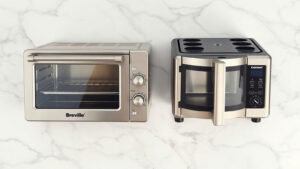
A dorm room toaster oven typically reaches 450°F and runs on 1,200–1,800 watts, which is enough to roast, bake, broil, and toast real food — not just reheat leftovers. Most compact models fit a 9-inch pan and can handle everything from eggs to chicken thighs. If your dorm allows one (more on that below), it’s honestly one of the most practical things you can bring.
Safety First: Toaster ovens produce significant heat and are a leading cause of dorm room fires. Never leave one unattended while in use, keep it at least 6 inches from walls and curtains, always place it on a heat-resistant surface (not a plastic desk), and unplug it completely after every use. Check your specific dorm policy before bringing one — many schools ban appliances over 750 watts or require a UL-listed model.
Quick Facts Before You Start Cooking
- Most dorm-approved toaster ovens cap out at 1,200–1,500 watts and reach 450°F — plenty for real cooking.
- The most common size that fits dorm policies: 0.5–0.8 cubic feet (about the size of a shoebox, roughly).
- Preheat time is fast — usually 5–8 minutes to 350°F, so meals genuinely come together quickly.
- You can cook meat, bake from scratch, roast vegetables, and reheat pizza without a full kitchen.
- Always check your residence hall’s specific wattage and appliance list — policies vary wildly by school.
I’ve tested a lot of these little ovens. The first time I tried to roast broccoli in a 0.6 cubic foot model, I overloaded the pan and ended up with steamed mush instead of anything crispy. Lesson learned: smaller batches, higher heat. Everything below is based on what actually works in a compact machine, not a full-size oven.
Does Your Dorm Actually Allow a Toaster Oven?
This is the question most articles skip over. And it matters a lot.
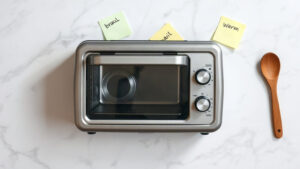
Many universities allow toaster ovens with specific restrictions — usually under 1,200 watts, UL-listed, and with an automatic shut-off. Some ban them outright and only allow microwaves. A few schools have a blanket “no open heating elements” rule, which would include toaster ovens. You need to look at your actual housing agreement, not a general Reddit thread from 2018.
If your school bans toaster ovens but allows microwaves, you’re in a different situation entirely. Some of these recipes can be adapted for microwave cooking, but that’s a separate topic. For this article, I’m assuming you’ve confirmed yours is allowed.
One thing worth having: a compact dorm-safe toaster oven under 1,200 watts that explicitly says “UL Listed” on the box. That phrase matters for dorm compliance.
12 Meals You Can Actually Make (and How)
Not “snacks.” Not “toast with toppings.” Real food. Here’s what works, with temperatures and times that actually apply to a small oven — not a standard 30-inch range.
1. Baked Eggs
Crack two eggs into a small oven-safe ramekin with a bit of butter, salt, and pepper. Bake at 325°F for 12–14 minutes. The whites set, the yolks stay slightly runny. It’s genuinely good and takes almost no effort. I add a spoonful of salsa on top sometimes — works surprisingly well.
2. Chicken Thighs
Bone-in, skin-on thighs at 400°F for 35–40 minutes. That’s it. Season them the night before if you can. The skin gets crispy, the meat stays juicy, and you get actual protein for a few meals. Chicken breasts work too, but thighs are more forgiving in a small oven that has hot spots.
3. Roasted Vegetables
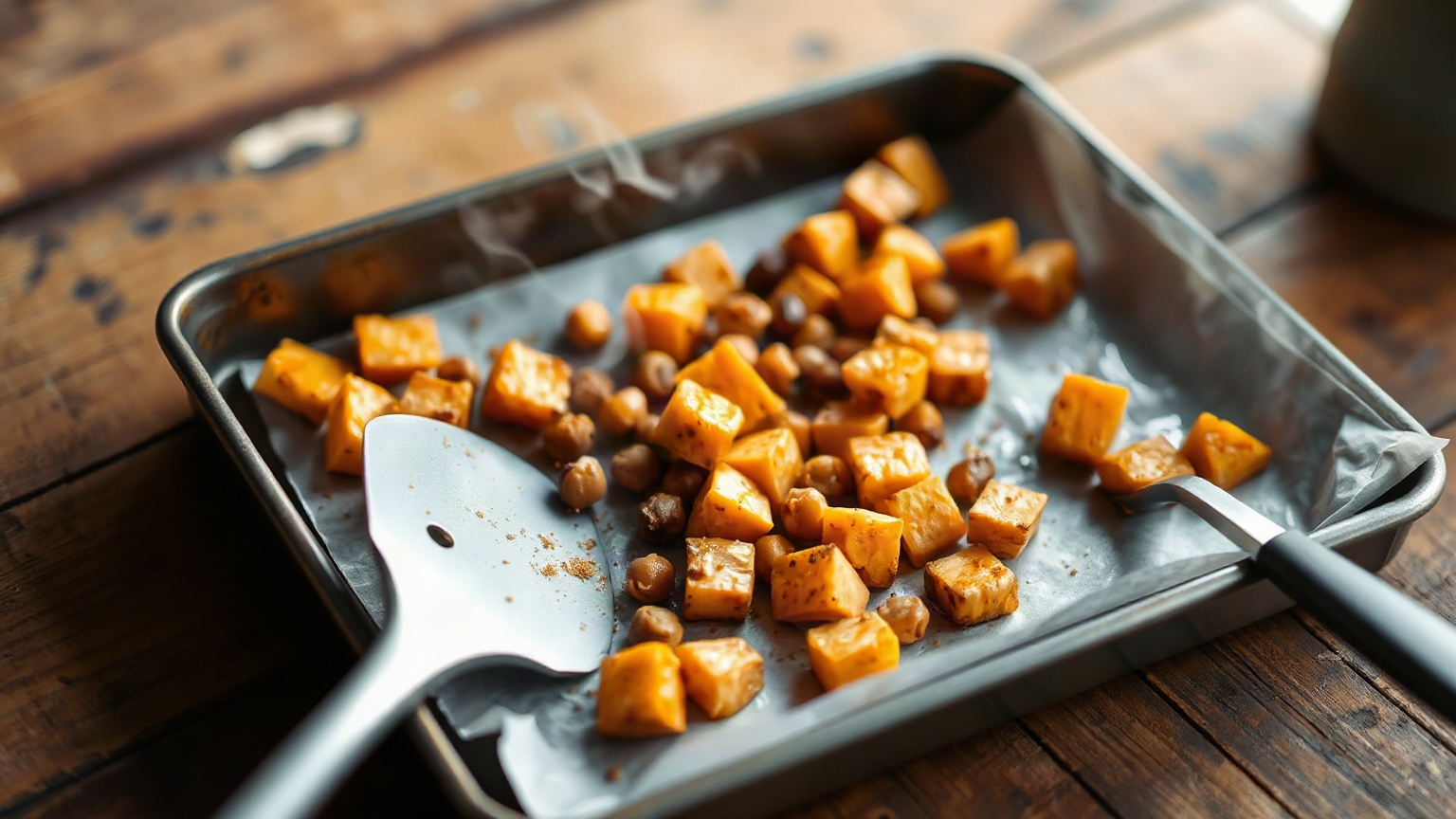
Broccoli, zucchini, cherry tomatoes, bell pepper — 425°F for 15–20 minutes, spread in a single layer. This is where people mess up: single layer is non-negotiable. Pile them and you get steam, not roast. A small toaster oven baking pan with low sides helps the heat circulate.
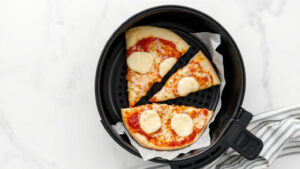
4. Frozen Pizza (Actually Good)
Personal-size frozen pizzas at 400°F for 10–12 minutes on the wire rack (not the pan) come out better than microwave, full stop. The bottom gets slightly crisp instead of soggy. This alone might justify the whole appliance.
5. Quesadillas
Place a tortilla flat on the pan, add cheese and fillings on one half, fold it over. 375°F for 6–8 minutes, flip once at the halfway point. The outside gets toasty and the cheese melts through. Much better than a dry skillet if you don’t have one.
6. Muffins
Yes, actual baked muffins. Use a silicone muffin tray — it fits in most compact ovens and doesn’t need greasing. Box mixes work fine. 350°F for 18–22 minutes. The tops brown a little unevenly, but they’re completely edible and honestly satisfying to make from scratch when you’re four weeks into dining hall food.
7. Salmon Fillet
A single salmon fillet at 400°F for 12–15 minutes depending on thickness. Season with olive oil, salt, garlic powder. Done. I know fish in a dorm room sounds like a terrible idea socially, but if you open the window, it’s fine. Probably.
8. Reheated Leftovers (Way Better Than Microwave)
Pizza, fries, roasted chicken, pasta bakes — the toaster oven reheats food in a way a microwave simply can’t replicate. 350°F for 8–10 minutes keeps textures intact. The microwave turns fries into a soggy disaster. The toaster oven doesn’t.
9. Grilled Cheese
Use the broil setting at 450°F for 3–4 minutes per side. Butter the outside of the bread, add cheese, place on the wire rack. Watch it closely — broil goes from perfect to burnt in about 45 seconds. Ask me how I know.
10. Baked Potato
Poke holes in a medium russet, rub with oil and salt, bake at 400°F for 45–50 minutes. The skin crisps up. Add canned chili or sour cream. This is a full meal for under two dollars and it requires zero cooking skill.
11. Nachos
Layer chips and shredded cheese on the pan, 400°F for 5–7 minutes until the cheese bubbles. Add toppings after. This one’s obvious but it deserves to be on the list because it works perfectly and takes five minutes.
12. Brownies (Edge Case Almost Nobody Mentions)
This is the one the other articles miss. You can bake brownies in a toaster oven using a small loaf pan or a 6-inch square pan. Box mix, 325°F (drop 25°F from box instructions since small ovens run hotter), 28–32 minutes. Check at 25. They come out fudgy and completely normal. It’s a bit odd the first time you pull a pan of brownies out of a shoebox-sized oven, but they taste exactly right.
What You Actually Need (and What’s Overkill)
You don’t need much. A good toaster oven wire rack (use it for anything you want crispy), one small baking pan, and a ramekin or two for eggs and small bakes. That’s genuinely all of it.
What’s overkill: specialty toaster oven mitts (regular oven mitts work fine), a full set of bakeware, and any accessory kit sold specifically for toaster ovens. Skip those.
If you’re still picking a toaster oven, see our roundup of the best mini toaster ovens for small spaces — it covers models that are actually dorm-friendly by wattage.
Dorm Toaster Oven Temperature & Wattage Guide
Small ovens behave a bit differently than full-size ones. Here’s a quick reference for cooking temperatures and what each setting is actually good for:
| Temperature | Wattage Draw (approx.) | Best For | Typical Time |
|---|---|---|---|
| 325°F | ~800W | Muffins, brownies, baked eggs | 15–35 min |
| 350°F | ~900W | Reheating, quesadillas, fish | 8–20 min |
| 375°F | ~1,000W | Chicken breasts, frozen snacks | 20–30 min |
| 400°F | ~1,100W | Chicken thighs, roasted veg, pizza | 12–45 min |
| 425°F | ~1,200W | Crispy vegetables, baked potatoes | 15–50 min |
| 450°F / Broil | ~1,400–1,800W | Grilled cheese, browning tops | 3–8 min |
Notice that broil pulls the most wattage. If your dorm has a strict 1,200-watt cap, skip broil and use 425°F instead — you’ll get similar results with slightly more time. For more on how temperature affects toasting performance, see how hot a toaster gets and why it matters.
The USDA recommends cooking poultry to an internal temperature of 165°F — worth having a cheap instant-read thermometer on hand if you’re cooking chicken regularly. USDA safe minimum internal temperatures are a good reference to bookmark.
Tips That Actually Help in a Small Space
Preheat it. Seriously. I skipped this for the first month and wondered why things cooked unevenly. Five minutes at temperature before the food goes in makes a noticeable difference in a small oven.
Rotate your pan halfway through. Small ovens have hot spots, usually toward the back heating element. Rotating at the midpoint keeps things from burning on one side. You get used to it fast.
Use foil for messy things — nachos, chicken thighs, anything with cheese. It’s not a lazy shortcut; it genuinely saves you from a cleaning nightmare. Just don’t cover the heating elements or block airflow.
Keep a damp cloth nearby. Grease splatters on the inside door happen with almost everything at 400°F or higher. Wiping it down while it’s slightly warm (not hot) after every couple of uses keeps it from turning into a smoke-generating mess.
Serious Eats has a good breakdown of toaster oven cooking techniques if you want to go deeper on method — specifically their notes on convection vs. conventional heat apply directly to compact models.
The Bottom Line
A dorm toaster oven isn’t a compromise appliance. It’s a real cooking tool that happens to be small. If your school allows one, it’ll serve you better than almost anything else you could bring — not because it’s versatile in an abstract sense, but because the 12 things above are actual meals, not snack hacks.
The main limits are batch size (you’re cooking for one or two, not four) and the occasional smoke alarm situation if you skip the cleanup. Both are manageable. The food, when you do it right, is genuinely good. That baked potato with chili has gotten me through more Tuesday nights than I’d like to admit.
Frequently Asked Questions
Can you use a toaster oven in a dorm room?
Many colleges allow toaster ovens in dorm rooms, but policies vary significantly — some require UL-listed models under 1,200 watts, others ban them entirely. Check your specific housing agreement or contact your resident advisor before bringing one. Don’t assume it’s allowed just because a roommate has one.
What can you cook in a toaster oven in a dorm room?
You can cook chicken thighs, baked potatoes, roasted vegetables, eggs, salmon, muffins, brownies, nachos, quesadillas, grilled cheese, frozen pizza, and reheated leftovers — all in a standard compact toaster oven at 325°F–450°F. The main limitation is batch size, not what you can make. Cooking for one or two people is easy; cooking for a group is where it gets awkward.
How hot does a dorm toaster oven get?
Most compact dorm-safe toaster ovens reach a maximum of 450°F, with broil settings drawing 1,400–1,800 watts at peak. That’s hot enough to properly roast, bake, and broil most foods. Keep in mind that small ovens often run 25°F hotter than their dial suggests, so checking food a few minutes early is a good habit.
Is it safe to leave a toaster oven unattended in a dorm?
No — you should never leave a toaster oven unattended while it’s running, especially in a dorm where ventilation is limited and smoke detectors are sensitive. Stay in the room, keep the area clear of paper and fabric, and unplug the unit after every single use. It takes five seconds and prevents a situation that could get you removed from housing.
What size toaster oven fits in a dorm room?
A 0.5 to 0.8 cubic foot toaster oven is the standard dorm-friendly range — it fits a 9-inch pan, handles personal-size pizzas, and sits on most desks without taking over the entire surface. Anything larger starts to draw more watts than most dorm policies allow and takes up space you probably don’t have. Models in this size range typically measure around 16–18 inches wide.

Written by
Emma founded Toastera to turn vague appliance advice into clear, researched, safety-first guidance on toasters and toaster ovens.
Free: the Toaster Oven Cheat Sheet
Get the printable cheat sheet (temps, cook times & safety tips) plus new recipes. No spam, unsubscribe anytime.