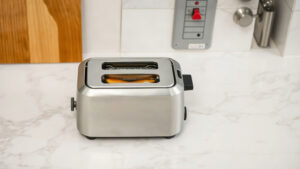
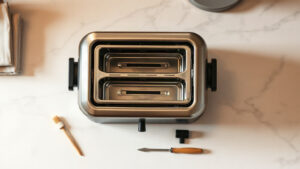
A toaster’s heating elements reach roughly 1,000°F to 1,200°F (540–650°C) at full power — the glowing nichrome wire inside the slots. The bread itself only needs about 310°F to start browning, while the outside casing typically runs 120°F to 200°F — hot enough to burn skin. Here’s what those numbers mean for your daily toasting and safety.
Most people use a toaster every single day without giving much thought to what’s happening inside. But knowing the exact toaster temp — and how it differs from the temperature your bread actually experiences — helps you toast smarter, stay safer, and get better results from your appliance. Whether you’re curious about why your toast burns, worried about fire risk, or just want to know what’s going on inside that chrome box on your counter — this guide covers everything.
How Hot Does a Toaster Get? (The Numbers)
| Where | Typical temperature | What it means |
|---|---|---|
| Heating elements (max setting) | 1,000–1,200°F (540–650°C) | Glowing nichrome wire — the hottest part |
| Bread starts browning | ~310°F (154°C) | Maillard reaction + caramelization begin |
| Bread starts to burn | ~390°F+ (200°C+) | Chars within seconds |
| Outside casing | 120–200°F (49–93°C) | Can burn skin; metal tops run hottest |
| Time for elements to glow | ~10–30 seconds | From a cold start |
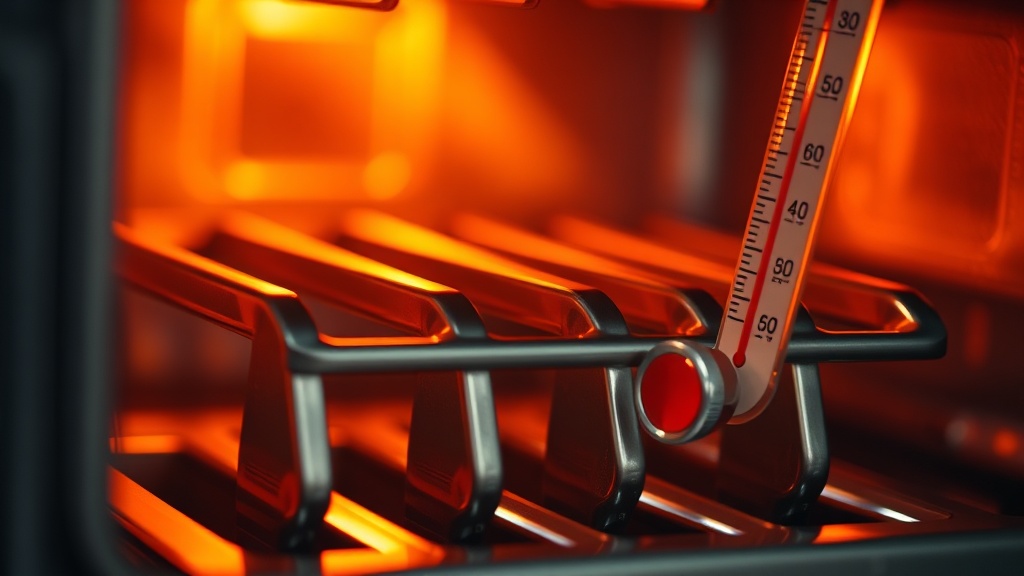
The heating elements inside a standard pop-up toaster can reach temperatures between 1,000°F and 1,200°F (538°C to 649°C) at full power. That’s the nichrome wire coiled inside the slots glowing red-hot. However, the air temperature inside the toaster slot — the temperature your bread actually experiences — is considerably lower, typically ranging between 300°F and 350°F (149°C to 176°C).
The exterior of most toasters stays far cooler than you might expect. The outer casing typically reaches around 100°F to 150°F (38°C to 65°C) during normal operation, which is warm to the touch but not immediately dangerous. The slots themselves are a different story — reaching in while the toaster is operating is extremely hazardous due to the proximity to those glowing elements.
To measure the internal air temperature of your toaster accurately, you can use an oven thermometer placed carefully near the slot opening. This can be useful for diagnosing inconsistent toasting results or checking whether an older toaster is still performing within a normal range.
Quick Facts
- Heating element temperature: 1,000°F–1,200°F (538°C–649°C) at full power
- Internal slot air temperature: 300°F–350°F (149°C–176°C) during normal toasting
- Exterior casing temperature: 100°F–150°F (38°C–65°C) during use
- Typical toaster wattage range: 800W to 1,500W (average around 1,200W)
- Average toast time: 1 to 3 minutes depending on wattage and browning setting
What Affects Toaster Temperature?
Several factors influence how hot your toaster gets and how quickly it reaches that temperature. Understanding these variables helps explain why two toasters set to the same browning level can produce very different results.
Wattage is the single biggest factor. Toasters range from around 800W on the lower end to 1,500W for high-performance models. A 1,500W toaster will heat up faster and reach higher operating temperatures more quickly than an 800W model. The average household toaster sits around 1,200W, which strikes a solid balance between speed and energy efficiency for everyday use.
Browning settings control how long the heating elements stay active, not necessarily how hot they get. When you dial up to a darker setting, you’re extending the toasting time rather than cranking the temperature higher. This is why a higher setting can sometimes dry out bread rather than simply making it darker.
Slot size and design also play a role. Wide-slot toasters designed for bagels or thick artisan bread distribute heat differently than standard narrow-slot models. More space between the bread and the elements means slightly less direct radiant heat reaching the bread surface.
Consecutive toasting cycles matter too. A toaster that’s already been used once or twice will be warmer inside at the start of the next cycle. This is why your second round of toast often comes out darker than the first, even at the same setting. Many modern toasters include a “reheat” or “a bit more” function to compensate for this.
Bread moisture content affects how the heat is absorbed. Fresh bread with higher moisture requires more energy to toast than dry or stale bread. This is why toaster settings that work perfectly for sandwich bread may produce uneven results with sourdough or homemade loaves.
Toaster vs Toaster Oven: Temperature Differences
Pop-up toasters and toaster ovens work on similar principles but operate in very different temperature ranges and use cases. The table below breaks down the key differences at a glance.
| Toaster Type | Heating Element Temp | Internal Air / Slot Temp | Average Toast Time |
|---|---|---|---|
| Standard 2-slice pop-up | 1,000°F–1,100°F (538°C–593°C) | 300°F–325°F (149°C–163°C) | 1–2 minutes |
| 4-slice pop-up toaster | 1,000°F–1,200°F (538°C–649°C) | 300°F–350°F (149°C–176°C) | 1.5–3 minutes |
| Toaster oven (toast mode) | 900°F–1,000°F (482°C–538°C) | 350°F–450°F (176°C–232°C) | 3–5 minutes |
| Commercial/professional toaster | 1,200°F–1,400°F (649°C–760°C) | 400°F–500°F (204°C–260°C) | 45–90 seconds |
Toaster ovens run at higher internal air temperatures because they’re enclosed, allowing heat to build up and circulate. This makes them more versatile — suitable for baking, reheating, and broiling — but they take longer to complete a simple toast cycle compared to a dedicated pop-up toaster. If speed is your priority for morning toast, a high-wattage pop-up toaster will consistently outperform a toaster oven on time.
Want to put those temperatures to use? See how a toaster oven compares to your other countertop appliance in our toaster oven vs. microwave guide, learn the exact settings for baking chicken in a toaster oven, or pick the right model from our roundup of the 10 best mini toaster ovens.
How Hot Is Too Hot? (Safety Guide)
Toasters are one of the most common causes of kitchen fires in the home. Understanding the safety thresholds helps you use your toaster confidently without unnecessary risk.
Clearance distance matters. Your toaster should have at least 4 inches of clear space on all sides and above the slots. Placing a toaster under cabinets or near curtains is a genuine fire hazard, as the heat rising from the slots can be enough to ignite combustible materials over time.
The countertop beneath your toaster can get hot. Prolonged or repeated use can transfer enough heat through the base of the appliance to damage laminate or wooden countertops. A toaster safety mat placed under the appliance provides an effective heat barrier and protects your work surface from discoloration or warping.
Crumb buildup is a primary fire risk. Crumbs accumulate in the tray at the bottom of the toaster and, over time, can ignite when they come into contact with the heating elements. Emptying the crumb tray after every few uses — or at least once a week for regular users — significantly reduces this risk.
Never use metal utensils inside a toaster. The heating elements carry live electrical current during operation. Inserting a metal knife or fork to retrieve stuck bread while the toaster is plugged in can result in electrocution. Always unplug first, allow the toaster to cool, and then use wooden or plastic tongs if needed.
Unplug when not in use. Standby power draw from a plugged-in toaster is minimal, but the risk of a fault or crumb fire remains when the appliance is connected to power. Unplugging when not in use is the simplest safety habit you can adopt.
How to Tell If Your Toaster Is Overheating
A properly functioning toaster runs hot by design — but there’s a difference between normal operating heat and a toaster that’s running dangerously outside its intended range. Here are the signs to watch for.
- Burning smell that isn’t from bread: A plastic or electrical burning odor is a warning sign that insulation or internal components may be overheating.
- Bread burns at low settings: If your bread is coming out charred on setting 2 or 3, the thermostat or timer mechanism may be faulty, causing the elements to run longer than intended.
- Exterior is too hot to touch: The outer casing should be warm but not painful to touch. If the casing feels burning hot, heat is not being managed correctly inside.
- Toast doesn’t pop up: A stuck carriage mechanism means bread stays in contact with the elements past the intended cycle, leading to burning and potential fire.
- Visible sparking or flickering inside the slots: Small sparks from debris are not uncommon, but consistent sparking or arcing from the elements themselves indicates the toaster should be replaced immediately.
If your toaster shows any of these signs, stop using it, unplug it, and replace it. Attempting to repair a faulty toaster at home is not recommended — the internal components operate at voltages and temperatures that make DIY repair genuinely dangerous.
Frequently Asked Questions

Written by
Emma founded Toastera to turn vague appliance advice into clear, researched, safety-first guidance on toasters and toaster ovens.
Free: the Toaster Oven Cheat Sheet
Get the printable cheat sheet (temps, cook times & safety tips) plus new recipes. No spam, unsubscribe anytime.