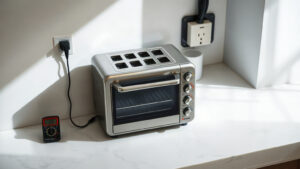
An air fryer won’t turn on for a handful of well-documented reasons: a tripped outlet, an open or misaligned basket, an overheated thermal fuse, or a faulty power switch. Most of these are fixable in under ten minutes without any tools. A small number of cases — a blown internal fuse or a burned-out heating element — do require professional repair or replacement.
Safety First: Before inspecting any internal components of your air fryer, unplug it from the wall and wait at least 30 minutes for residual heat to dissipate. Never probe internal wiring with wet hands or metal objects. If you smell burning plastic or see scorch marks near the power cord, stop using the unit immediately — that’s a fire hazard, not a troubleshooting opportunity.
Quick Facts: Why Your Air Fryer Won’t Turn On
- The most common culprit is a tripped GFCI outlet or overloaded circuit — not the air fryer itself.
- Most air fryers have a safety interlock that prevents startup if the basket isn’t fully seated (many people miss this).
- A thermal fuse rated around 150°C–200°C will blow if the unit overheats, cutting all power permanently until replaced.
- Air fryers typically draw 1,400–1,800 watts, which is enough to trip a 15-amp breaker if other high-draw appliances share the circuit.
- If your unit is under warranty (usually 1–2 years), contact the manufacturer before opening it up — DIY repairs void most warranties.
I’ve tested a lot of countertop appliances in my own kitchen, including several air fryers over the past few years. The first time one of them went completely dead on me, I was convinced it was broken. It wasn’t. The basket had shifted slightly during a shake-and-cook session, the safety interlock disengaged, and the whole unit just… refused to cooperate. Took me an embarrassingly long time to figure that out. So let’s save you that same 25 minutes of confused frustration.
Start Here: The Electrical Basics (Not the Air Fryer)

Before you assume anything is wrong with the air fryer itself, check the power source. I know it sounds obvious. But you’d be surprised.
GFCI Outlets and Tripped Breakers
Kitchens in the US built after 1987 are required to have GFCI (Ground Fault Circuit Interrupter) outlets near water sources. These outlets have a small reset button in the middle — usually labeled “Reset” and “Test.” They trip automatically when they detect a power fluctuation, and they do it silently. No sparks, no warning. The outlet just goes dead.
Plug a lamp or phone charger into the same outlet your air fryer uses. If that doesn’t work either, press the reset button on the outlet. If there’s no reset button, go find your breaker panel and look for any switch that’s flipped to the middle position. Flip it fully off, then back on.
Extension Cords Are a Bad Idea Here
Air fryers pull serious wattage — typically 1,400 to 1,800 watts depending on the model. Running that through a standard household extension cord, especially a cheap one rated for 10 amps or less, can cause voltage drop that prevents startup or, worse, overheats the cord. If you’re using an extension cord, plug the air fryer directly into a wall outlet instead and try again.
The Basket Safety Interlock: The Fix Nobody Talks About
This one trips people up constantly. Almost every modern air fryer has a mechanical safety switch built into the basket compartment. When the basket is properly inserted and clicked into place, it depresses a small pin or lever that completes the circuit. If the basket is even slightly out of alignment — a millimeter off, honestly — the switch doesn’t engage and the unit won’t power on at all.
Remove the basket completely. Look inside the compartment for a small plastic or metal pin (usually at the back or bottom). Make sure it’s not stuck or visibly damaged. Reinsert the basket firmly until you hear or feel it click. Then try powering on again.
I’ve seen this happen with Cosori, Ninja, and Instant Vortex models after the basket was washed and replaced quickly while still slightly wet — the moisture causes the basket to stick just barely short of fully seated. Annoying, but totally fixable.
Overheating and Thermal Fuses: When the Air Fryer Protects Itself
Air fryers have thermal cutoffs — basically fuses that blow if the internal temperature exceeds a threshold, usually somewhere between 150°C and 200°C (300°F–390°F). This can happen if the unit was used in an enclosed space, if the vents were blocked, or if something went wrong with the thermostat and the unit ran too hot.
How to Tell If the Thermal Fuse Is Blown
If your air fryer was running fine, you walked away for a bit, came back and found it completely off and now it won’t turn back on — that’s the thermal fuse. The unit will show zero signs of life. No display, no beeps, nothing. And it won’t fix itself with a reset button.
A thermal fuse is a one-time device. Once it blows, it stays blown. Replacing it requires opening the unit, locating the fuse (usually near the heating element), testing it with a multimeter for continuity, and swapping it out. Fuses themselves cost almost nothing — under $5 for a pack online. The labor of doing it yourself is real though, and again, this voids your warranty.
Preventing Overheats in the First Place
Give your air fryer at least 5 inches of clearance on all sides, especially the back vent. Don’t put it under cabinets if you can help it. And never run it for more than the maximum recommended continuous time — most models cap out at 60 minutes per session before needing a cooling break.
Power Switch and Control Panel Failures
If you’ve ruled out the outlet, the basket interlock, and overheating, the power switch itself might be the problem. Mechanical switches wear out. Digital touchscreens can fail — particularly if moisture got behind the panel from steam or cleaning spray.
The replacement power switches for common air fryer models are available online and reasonably inexpensive. But identifying the right part requires knowing your exact model number (usually on a sticker on the bottom of the unit).
One edge case I haven’t seen covered elsewhere: some digital air fryers with touchscreens have a child lock feature that disables all controls. It’s usually activated by holding a specific button for 3–5 seconds. Check your manual — if the display is on but nothing responds, child lock is worth ruling out before you assume the panel is dead.
Common Causes at a Glance
| Cause | Symptoms | DIY Fix? | Difficulty |
|---|---|---|---|
| Tripped GFCI / breaker | No power to outlet at all | Yes | Easy |
| Basket not fully seated | Unit dead, no display | Yes | Easy |
| Extension cord voltage drop | Unit struggles or won’t start | Yes | Easy |
| Thermal fuse blown | Completely dead after overheating | Yes (voids warranty) | Moderate |
| Faulty power switch | No response to button press | Yes (voids warranty) | Moderate |
| Child lock engaged | Display on, no controls respond | Yes | Easy |
| Burned heating element | Fan runs but no heat, then shutdown | Not recommended | Hard |
| Faulty control board | Random behavior or total failure | Not recommended | Hard |
When Oil or Grease Gets Into the Electronics
This one’s less common but it happens — especially in basket-style fryers used heavily for chicken wings or anything fatty. Grease can migrate through the basket and drip down toward the heating element housing or, in some designs, toward the lower electronics cavity.
If you suspect grease contamination, unplug the unit and let it sit for 24 hours upside down on paper towels to drain. Then clean the interior with a dry cloth — not water, not spray cleaner. If there’s visible oil near any wiring or the main board, the safest call honestly is to contact the manufacturer or replace the unit. Grease + electricity is not a combination you want to experiment with.
For what it’s worth, using a parchment liner designed for air fryers under fatty foods dramatically reduces dripping. I use them for anything with a marinade. Saves a lot of cleanup too.
If you’re wondering whether a different style of countertop appliance might serve you better for some of these use cases, our roundup of the best mini toaster ovens is worth a look — toaster oven air fryer combos tend to have more accessible interiors and are easier to clean around the heating elements.
Should You Repair It or Replace It?
Honest opinion: if the fix requires opening the unit and the air fryer cost under $60, just replace it. The time and risk usually aren’t worth it. If it’s a higher-end model — something like a Breville or Ninja Foodi XL — repair makes more sense. Contact the manufacturer first. Many brands will replace the unit or send parts if you’re within warranty, and some will help even just outside it if you ask nicely.
You can find Ninja Foodi replacement parts on Amazon for a lot of common failures. Same goes for Cosori and Instant Pot branded models. Just search your model number plus the part you need.
The U.S. Consumer Product Safety Commission maintains a recall database — it’s worth a quick search of your model number before spending money on repairs, in case the failure you’re seeing is part of a known defect with an active recall.
Wrapping Up
Most dead air fryers aren’t actually dead. Work through the checklist in order: outlet first, then basket seating, then overheating, then switch. You’ll catch the problem in one of those steps the majority of the time. The thermal fuse and switch repairs are doable if you’re comfortable with basic electronics, but they do require opening the unit and they will void your warranty — keep that in mind.
And if you’re shopping for a replacement and want something that plays nicely with other cooking methods, our guide to reheating food in a toaster oven might give you some ideas for how a toaster oven air fryer combo could actually simplify your countertop setup.
Frequently Asked Questions
Why is my air fryer not turning on even though it’s plugged in?
The most likely culprit is a tripped GFCI outlet or a basket that isn’t fully seated, which disengages the internal safety interlock. Test the outlet with another device first, then remove and firmly reinsert the basket until it clicks. If neither fixes it, the thermal fuse may have blown from overheating.
Can an air fryer be repaired if it won’t turn on?
Yes, many failures — including blown thermal fuses and faulty power switches — can be repaired at home if you’re comfortable with basic electronics. That said, any repair that requires opening the unit will typically void the manufacturer’s warranty, so contact customer support first if the unit is under a year or two old.
How do I reset my air fryer when it won’t turn on?
Most air fryers don’t have a dedicated reset button — but unplugging the unit for 10–15 minutes can clear minor electrical glitches in the control board. For units with digital displays, also check whether the child lock feature has been accidentally activated, which disables all controls even when power is present.
Why did my air fryer stop working in the middle of cooking?
Mid-cook shutdowns are almost always caused by overheating — the thermal cutoff triggers to protect the unit. This happens when vents are blocked, the air fryer is used in an enclosed space, or the cooking session ran too long without a break. Let it cool for 30 minutes with good airflow and try again; if it won’t restart at all, the thermal fuse may have blown permanently.
Is it safe to use an air fryer that keeps turning off by itself?
No — repeated unexpected shutdowns are a sign the thermal protection is triggering too often, which points to a ventilation problem, a failing thermostat, or a defective unit. Using it as-is risks a more serious failure. Address the root cause (clear the vents, check placement) before using it again, and if the problem continues, stop using it and contact the manufacturer.

Written by
Emma founded Toastera to turn vague appliance advice into clear, researched, safety-first guidance on toasters and toaster ovens.
Free: the Toaster Oven Cheat Sheet
Get the printable cheat sheet (temps, cook times & safety tips) plus new recipes. No spam, unsubscribe anytime.