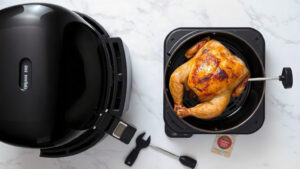
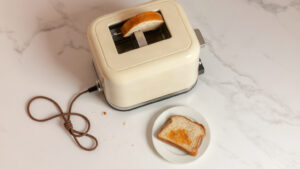
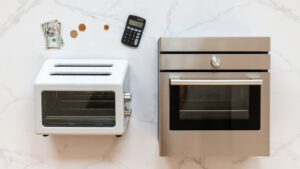
Yes, air fryers use a heating element — but not exactly like a toaster oven does. Both appliances convert electricity into heat through a resistive coil, but an air fryer pairs that element with a high-speed fan that circulates hot air at aggressive speeds (typically 1,500–1,800 RPM), while most toaster ovens rely on radiant heat from exposed elements with only passive or gentle convection. That difference in airflow is what makes food crisp so much faster in an air fryer and why the two machines aren’t as interchangeable as manufacturers sometimes suggest.
Safety First: Both air fryers and toaster ovens reach internal temperatures of 400°F or higher. Never place either appliance directly against a wall or under a cabinet without adequate clearance (at least 5 inches on all sides). The exterior of an air fryer basket and the door of a toaster oven can cause serious burns — always use silicone-tipped tongs or oven mitts when handling food. Unplug both appliances before cleaning heating elements or the interior cavity.
Quick Facts: Air Fryer vs Toaster Oven Heating
- Both appliances use a resistive metal heating element, but air fryers add a mandatory high-speed fan; toaster ovens may or may not include convection.
- Air fryer elements typically draw 1,200–1,800 watts and reach cooking temps of 350–400°F in under 3 minutes; most toaster ovens take 5–8 minutes to preheat.
- Toaster ovens have significantly more usable interior space for the same exterior footprint — useful when you’re cooking a full tray of food rather than a quick snack.
- Air fryers brown food through rapid moisture removal at the surface; toaster ovens brown through direct radiant heat from exposed elements above and below.
- Combo units (like the Breville Smart Oven Air Fryer or Ninja Foodi) exist, but they still make engineering trade-offs — they’re not equal to a dedicated unit of either type.
What’s Actually Inside Each Appliance
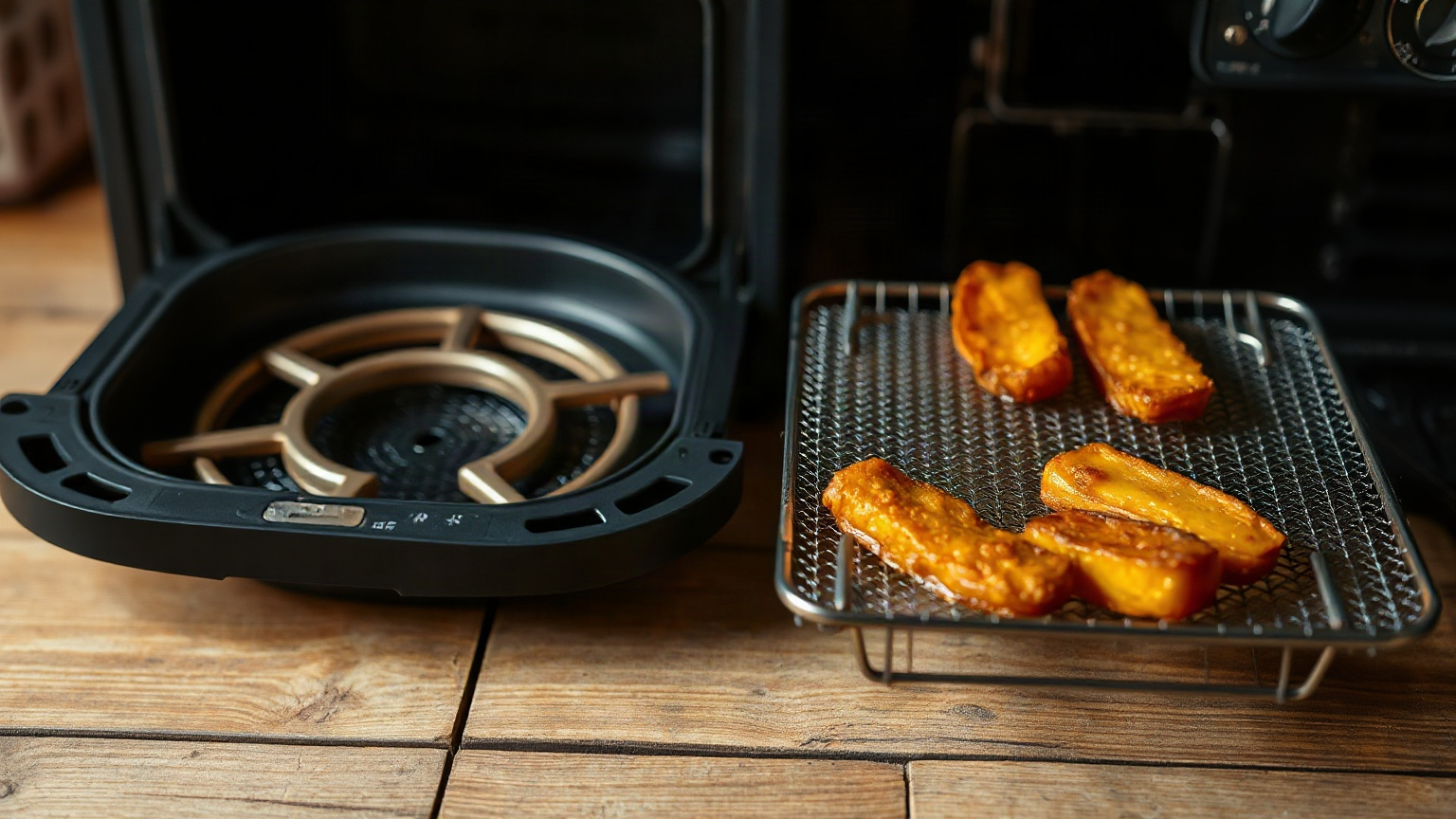
The heating element in an air fryer is almost always a nichrome coil — the same basic material used in toasters and toaster ovens for decades. Nichrome (an alloy of nickel and chromium) resists electricity, generates heat as a byproduct, and doesn’t oxidize at high temperatures. So far, identical to a toaster oven.
Here’s where it splits. In a toaster oven, those elements sit above and below the cooking rack, radiating heat outward in all directions. Some toaster ovens add a convection fan — a small motor that circulates air — but it’s typically set to one speed and blows gently. The food sits relatively still in a stable hot environment, browning from radiant energy and gradually from the surrounding hot air.
An air fryer’s element is almost always positioned at the top of the cavity, directly beneath the fan. The fan is not an afterthought. It’s the primary cooking mechanism. It strips the humid boundary layer from the surface of your food continuously, which is what creates crispiness. No fan, no crisp — the element alone wouldn’t do it. I learned this the hard way the first time I tried reheating leftovers in an air fryer with the basket too full. The food steamed instead of crisped because the airflow was blocked. Same element, completely different result.
Temperature, Wattage, and Preheat Time — The Real Numbers
People underestimate how much wattage matters in day-to-day use. Here’s a comparison of common configurations:
| Appliance Type | Typical Wattage | Max Temp | Avg Preheat Time | Fan Speed |
|---|---|---|---|---|
| Compact Air Fryer (3–4 qt) | 1,200–1,500W | 400°F | 2–3 min | High (1,500–1,800 RPM) |
| Toaster Oven (basic) | 1,200–1,500W | 450°F | 6–10 min | None |
| Toaster Oven (convection) | 1,500–1,800W | 450°F | 5–7 min | Low–Medium |
| Air Fryer Toaster Oven Combo | 1,700–1,800W | 450°F | 3–5 min | High (air fry mode) |
The preheat difference is real and it affects daily habits. I almost always reach for the air fryer on weeknights because I don’t want to wait 8 minutes to preheat a toaster oven for a single chicken breast. That’s a minor thing, but minor things add up over 300 dinners a year.
Worth knowing: at the same wattage, an air fryer will cook food faster because the forced airflow improves heat transfer efficiency. A piece of salmon at 375°F takes roughly 10–12 minutes in a toaster oven and 7–8 minutes in an air fryer at the same stated temperature. The element isn’t hotter — the food just absorbs energy more efficiently.
How Each Method Actually Browns Food
Radiant Heat (Toaster Oven)
Toaster oven elements glow orange when fully heated. That glow is infrared radiation transferring energy directly to your food’s surface without needing air as a medium at all. It’s why a slice of bread in a toaster oven browns unevenly if the rack position is wrong — whatever faces the element directly gets more energy than the rest. Toaster elements can reach surface temperatures well above 450°F, and the food closest to them browns first regardless of the air temperature in the cavity.
This radiant quality is actually useful for some things. Broiling a piece of fish, melting cheese on a casserole, or getting a crust on a piece of bread — radiant heat does that faster and more directly than circulated air does. It’s a toaster oven strength that gets ignored in the air fryer hype cycle.
Convective Heat (Air Fryer)
Air fryers brown through a different mechanism: rapid evaporation. The hot, moving air continuously pulls moisture from the food surface, keeping it dry and hot. Dry surfaces above 300°F undergo Maillard browning — that’s the same chemical reaction behind browned bread, seared steak, and roasted vegetables. According to Serious Eats, Maillard reactions require a surface dry enough that the temperature can exceed water’s boiling point (212°F). In an air fryer, the fan does exactly that — it keeps the surface dry and hot simultaneously.
That’s also why frozen foods work so well in an air fryer. The fan drives off the ice steam fast enough that the surface dries and crisps before the interior turns to mush. A convection toaster oven can do this, but slower and less aggressively.
The Edge Case Most Reviews Miss: Humidity and Food Type
Here’s something I haven’t seen covered anywhere: air fryers actively work against you with certain high-moisture foods. Vegetables with lots of water content — zucchini, mushrooms, fresh tomatoes — release steam faster than the fan can remove it in a compact basket. The result is that the food cooks in its own steam and comes out soft rather than crisp. The fix is to cook in smaller batches with space between pieces, or to use a toaster oven set to convection instead.
Toaster ovens handle large-format cooking better in general. A full-size toaster oven baking pan gives you 12×12 inches of cooking surface. Most air fryer baskets give you 8–10 inches diagonally, and circular. For a family-sized batch of roasted vegetables or a 9-inch pizza, the toaster oven isn’t even a contest.
The other edge case: delicate things. Thin herbs, light pastries, bread topped with seeds. The air fryer fan can blow lightweight toppings off food mid-cook. I once tried making everything bagel toast in my air fryer and lost half the seasoning to the fan. Toaster oven, with its radiant heat and no turbulence, handles delicate toppings without issue.
Specific Models Worth Knowing
If you’re trying to decide which appliance to buy, the category you pick matters less than finding a good model within that category. These are the ones I’d actually recommend.
| Model | Type | Capacity | Price Tier | Best For |
|---|---|---|---|---|
| Breville Smart Oven Air Fryer Pro | Combo | Large (1 cu ft) | Premium | Serious home cooks who want one appliance |
| Cuisinart TOA-70 | Combo | Medium | Mid-range | Decent all-rounder, easier to find on sale |
| Ninja Foodi 2-Basket AF300 | Air Fryer | Medium (dual basket) | Mid-range | Households cooking two things at once |
| Hamilton Beach Sure-Crisp | Combo | Small-Medium | Budget | First-time buyers who want to test the concept |
My honest take: if you already own a decent convection toaster oven, you probably don’t need an air fryer. The speed difference is real but marginal enough that most people adapt. If you’re starting from scratch and mostly cook for one or two people, a compact dedicated air fryer is faster, easier to clean, and uses less energy for small meals. For families or anyone who bakes, a full-size combo unit like the Breville Smart Oven Air Fryer Pro is worth the investment — it’s the closest thing to getting both appliances without doubling your counter space. The Cuisinart TOA-70 is a reasonable middle-ground if the Breville price is hard to justify.
The Ninja Foodi dual-basket is genuinely useful if your household has clashing preferences at dinner — cook chicken in one basket and vegetables in another at different temperatures simultaneously. That’s not something any toaster oven does. For reheating food, both appliances outperform a microwave, but the air fryer is faster for single servings. See also our picks for the best mini toaster ovens if counter space is tight and you’re leaning toward that category.
Skip the Hamilton Beach unless budget is the absolute constraint. It works, but the fan is audibly louder than the others and the air fry performance isn’t as crisp in practice. It’s a fine starter unit and nothing more.
Which Should You Actually Buy?
The honest answer: for 1–2 people focused on speed and crispiness, get a dedicated air fryer. For 3+ people, anyone who bakes, or anyone who wants to roast large cuts of meat, get a convection toaster oven or a combo unit. The Breville is the clear pick for combo units if you can swing the price. The Ninja dual-basket is the pick if your household eats differently and you’re tired of negotiating timing.
Both appliances use the same basic heating technology. The fan is what actually separates them. Buy based on how you cook — not based on which one sounds more modern.
Frequently Asked Questions
Does an air fryer use a heating element like a toaster oven?
Yes — both use resistive nichrome heating elements that convert electricity to heat. The difference is that air fryers pair that element with a mandatory high-speed fan, while toaster ovens rely primarily on radiant heat from exposed elements with optional or no convection. The fan is what gives air fryers their speed and crispiness advantage.
Can an air fryer replace a toaster oven?
For most quick, small-batch cooking tasks — yes. But a toaster oven handles larger food formats, broiling, baking, and delicate toppings better than a standard air fryer does. If you regularly cook for more than two people or bake anything, a toaster oven (or a combo unit) is the more practical choice.
Is a convection toaster oven the same as an air fryer?
Not exactly. A convection toaster oven and an air fryer both use fans, but the air fryer’s fan runs at much higher speeds and the basket design forces air around food more aggressively. Convection toaster ovens circulate air more gently, which is better for baking but results in slower browning compared to a true air fryer.
How hot does an air fryer heating element get?
The element itself can exceed 500°F internally, but the cooking temperature inside the cavity is regulated to the set temperature — typically between 200°F and 400°F for most recipes. The element cycles on and off to maintain that temperature while the fan runs continuously, which is why air fryers preheat so quickly (usually under 3 minutes).
Do air fryers use more electricity than toaster ovens?
Not necessarily more in terms of wattage — both typically draw 1,200–1,800 watts. But because air fryers cook faster, they’re often running for less time per meal, which can mean lower total energy use per cooking session. For a detailed look at how heating affects energy draw, see the U.S. Department of Energy’s guidance on kitchen appliance efficiency.

Written by
Emma founded Toastera to turn vague appliance advice into clear, researched, safety-first guidance on toasters and toaster ovens.
Free: the Toaster Oven Cheat Sheet
Get the printable cheat sheet (temps, cook times & safety tips) plus new recipes. No spam, unsubscribe anytime.