A retro 2-slice toaster typically lasts between 5 and 10 years with normal use, though some cheaper models start showing problems — uneven toasting, sluggish levers, burning smells — well before the five-year mark. Build quality and how often you clean the crumb tray are the two biggest factors separating a toaster that makes it a decade from one that dies in three. If yours is already smelling a little off or toasting unevenly, it’s usually not the heating elements failing first — it’s something more mundane.
Safety First: Never operate a retro toaster with a damaged cord, a jammed lever, or visible rust near the heating elements. A crumb tray that’s left full can ignite during a toasting cycle — empty it at least once a week if you use the toaster daily. Always unplug before cleaning, and never shake the toaster over the sink or run water into the slots. If you notice a burning smell that isn’t coming from the bread, unplug immediately and don’t use it again until you’ve identified the source.
Quick Facts: Retro 2-Slice Toaster Lifespan
- Most retro 2-slice toasters last 5–10 years; well-maintained premium models can exceed that
- The number one silent killer is crumb buildup, not heating element failure
- Budget retro toasters (under $40) tend to show mechanical issues — sticky levers, inconsistent browning — within 2–3 years
- Mid-range models from brands like Smeg, KitchenAid, and Cuisinart generally offer better internal components and longer warranties
- How you use it matters: thick bread, frozen waffles on a high setting daily, and never cleaning the crumb tray is a reliable way to shorten the lifespan considerably
What “Retro” Actually Means for Lifespan
The retro aesthetic — think rounded chrome bodies, pastel enamel finishes, chunky levers — doesn’t automatically mean better build quality. It’s mostly cosmetic. A lot of the retro-styled toasters you see at big-box stores are using the same internal components as any generic toaster, just dressed up with a vintage shell. That’s not necessarily bad. But it means you can’t judge the lifespan by how solid it feels in your hand or how good it looks on the counter.
I’ve had a Smeg TSF01 on my counter for going on seven years now. It still works fine, but I’ll be honest: the lever feels a little looser than it did in year one, and I’ve had to bump the browning dial half a notch darker to get the same result I was getting at the medium setting before. That’s normal wear. What’s not normal — and what I’ve seen on cheaper retro models tested here — is when that drift happens within 18 months.
The shell material matters more than people realize. Cheap retro toasters with plastic bodies (even ones with a chrome-effect coating) trap heat differently than steel ones, and that heat stress accumulates over time. It won’t cause a fire, but it does accelerate the degradation of internal wiring insulation. Something to know.
The Real Lifespan Numbers — and What Affects Them
Build Quality Tiers
Not all retro toasters are created equal, and the price gap is a decent (not perfect) proxy for internal quality. Here’s roughly how the tiers break down from what I’ve seen:
| Price Tier | Examples | Expected Lifespan | Common Failure Point |
|---|---|---|---|
| Budget (under $40) | Generic/unbranded retro styles | 2–4 years | Lever mechanism, uneven elements |
| Mid-range ($50–$100) | Cuisinart CPT-180, Hamilton Beach retro styles | 4–7 years | Browning dial inconsistency |
| Premium ($100–$200+) | Smeg TSF01, KitchenAid KMT2115 | 7–12 years | Crumb tray latch, cosmetic wear |
That KitchenAid KMT2115, by the way, is worth looking at if you want something that actually holds up. It’s not the most exciting retro design — kind of boxy — but the lever action is still crisp after years of use in ways that cheaper alternatives aren’t. The KitchenAid retro 2-slice toaster line is mid-to-premium depending on the colorway and model year.
How Frequency of Use Changes Everything
A toaster used twice a day, every day, is going through thousands of cycles a year. The heating elements in a standard 2-slice toaster run at around 900–1,200 watts and heat up to roughly 300–400°F inside the slot — you can read more about how hot a toaster gets if you’re curious about the specifics. That thermal cycling — heat up, cool down, heat up — is mechanical stress on every component, particularly the spring mechanism in the lever and the connections at the element terminals.
If you’re toasting once or twice a week? Your toaster will probably outlive your interest in it. Daily use is where the variance between cheap and quality starts to show up meaningfully, usually by year three.
What’s Quietly Killing Your Retro Toaster
Crumb Buildup (The Big One)
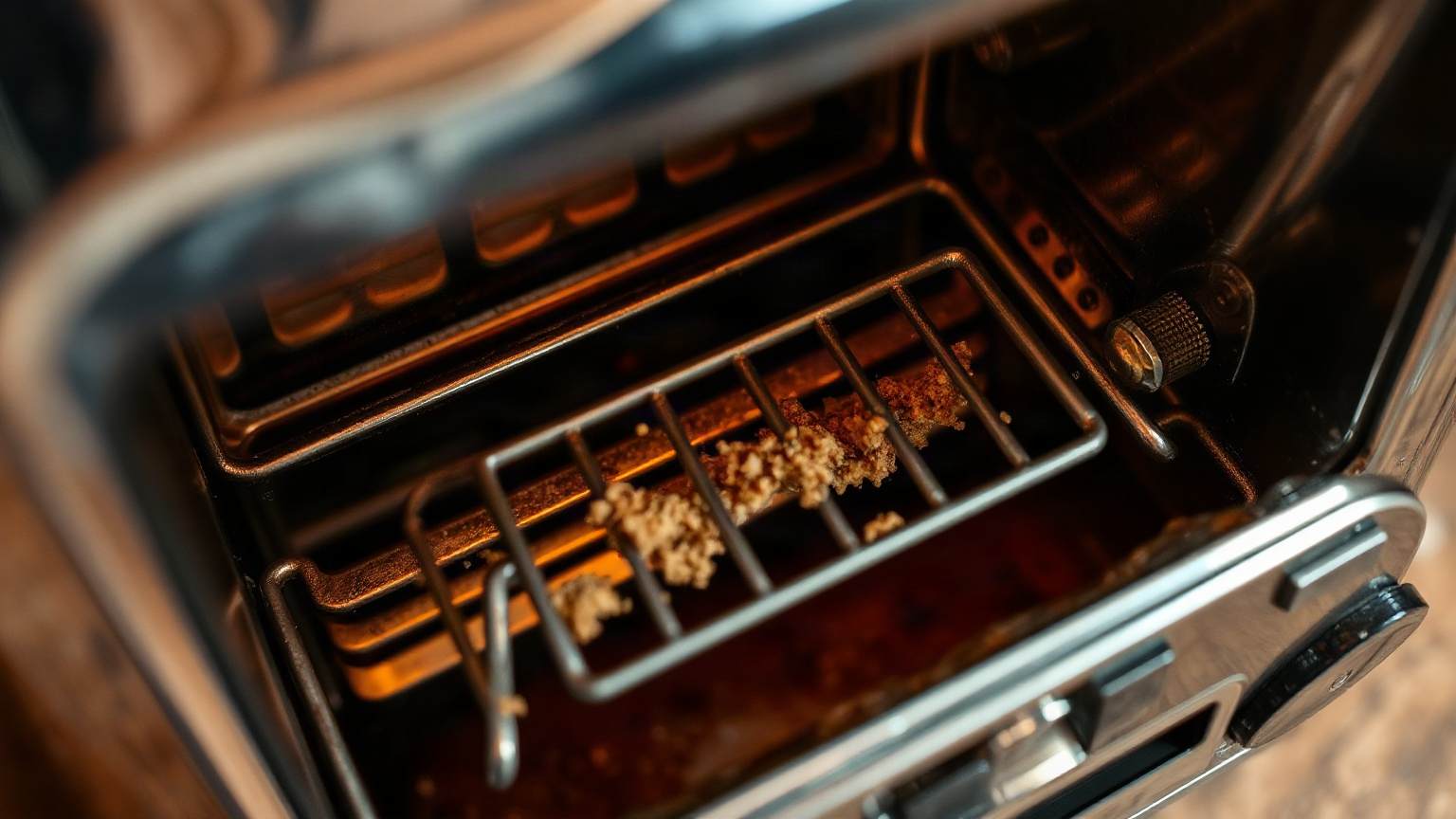
I know. Everyone knows to clean the crumb tray. Almost no one does it as often as they should. Here’s why it matters more than it sounds: crumbs at the bottom of the toaster don’t just sit there harmlessly. They accumulate near the heating elements, and during a cycle those elements can reach temperatures that will ignite dry bread debris. At minimum, a full crumb tray causes localized hot spots that contribute to uneven toasting and stress the lower element over time.
The fix is easy. Pull the crumb tray, dump it over the bin, wipe it with a dry cloth. Takes 30 seconds. I do mine every Sunday morning mostly because I hate the smell of slightly scorched crumbs with my coffee. But even once a week is enough for most people.
The Lever Mechanism
This is usually the first thing to actually fail on a retro toaster. The lever spring is under stress every single cycle. On cheaper toasters, that spring is lighter gauge and the locking mechanism uses plastic parts that gradually wear. You’ll notice it as a “soft” feeling when you push the lever down, or a lever that pops up before the toast is finished. Neither is fixable at home in any practical way.
When the lever starts feeling wrong, the toaster’s clock is ticking. Some people tape the lever down or use a clip. Don’t. That bypasses the auto-eject mechanism and is a fire risk — the toaster won’t pop up when it’s done.
Moisture and Steam
Frozen waffles and frozen bread release a lot of steam when they heat. So does slightly stale bread. That steam has nowhere to go except through the toaster’s internal cavity, and over time it corrodes the element connections. This is slower damage — you won’t notice it right away. But if you’re regularly toasting frozen items, expect more element inconsistency earlier than the lifespan estimates above suggest.
Also: placing a toaster directly under a cabinet with limited airflow above it accelerates this. Retro toasters need a little breathing room, ideally six inches of clearance above the slots. Most kitchens don’t have that. Something I wish the manuals made clearer.
The Browning Dial
It’s a cheap rheostat on most toasters. It works by varying the resistance in the circuit, which controls how long the cycle runs. On budget models, this component degrades — sometimes it’ll skip settings entirely, or suddenly the “3” position produces results that “5” used to give you. This is frustrating because it doesn’t prevent the toaster from working, it just makes it unreliable. And unreliability is often what actually prompts people to replace a toaster, even if it’s technically still functional.
How to Actually Extend the Life of Your Retro Toaster
Beyond cleaning the crumb tray (seriously, just do it), there are a few things that make a real difference:
- Unplug it when you’re not using it. Not just for safety — the constant low-level current draw through a plugged-in toaster adds minor heat stress to components over years.
- Don’t force thick bread. Most retro 2-slice toasters have slots designed for standard sandwich bread. Forcing a thick-cut sourdough loaf down into tight slots bends the internal guides and can damage the elements if the bread contacts them directly.
- Start at a medium setting. I usually run at the “4” position on a 1–6 scale for standard sandwich bread — it takes about 2.5 to 3 minutes and gives consistent results without hammering the elements at max heat every cycle. High settings aren’t bad occasionally, but daily max-heat use does accelerate element wear.
- Keep it away from steam sources. The area next to the kettle or directly below a steaming pot seems convenient but it’s not ideal long-term. I’ve made this mistake.
If you’re buying a new one and care about longevity, pay attention to the warranty. The Smeg TSF01 comes with a 2-year warranty; the KitchenAid models often have one-year. Neither is exceptional, but a manufacturer willing to offer two years is implicitly telling you something about the confidence they have in their components. You can browse Smeg retro 2-slice toasters on Amazon to compare current colorway options and read what long-term owners say in the reviews — the 1-star reviews are especially useful for spotting failure patterns.
And if the retro aesthetic isn’t strictly necessary for you, it’s genuinely worth considering whether a compact toaster oven might serve you better overall. I’ve written about the best mini toaster ovens if you want to compare options — they do more, they’re easier to clean, and some of the smaller ones take up less counter space than you’d expect.
Signs It’s Time to Replace It (Not Repair It)
Toasters aren’t worth repairing. I know that’s slightly sad to say about a beloved kitchen object, but the labor cost of opening one and replacing an element or lever spring almost always exceeds the cost of the toaster itself. The exceptions are very high-end models — there are repair shops that will service Dualit toasters, for example, because the elements are designed to be replaceable and the machines cost $200+.
For most retro 2-slice toasters, replace when you see:
- A persistent burning smell that doesn’t go away after thoroughly cleaning the crumb tray (indicates debris caught near the elements, or degrading wiring insulation)
- Toast that’s charred on one side and barely browned on the other, consistently, across all settings
- The lever failing to hold or failing to release properly
- Any visible sparking — this one’s immediate and non-negotiable
- The toaster tripping your circuit breaker
Uneven toasting that’s mild and gradual? Clean the crumb tray, adjust the dial, and keep using it. That’s just age, not danger. The Serious Eats guide to toasters is good if you want an external reference on what to look for in a replacement — they test things rigorously. And the retro 2-slice toasters with stainless steel bodies tend to hold up better cosmetically than the enamel-coated versions if that’s a factor for you.
The Bottom Line
A well-made retro 2-slice toaster, cleaned regularly and used sensibly, can easily last a decade. Most of them don’t reach that because they’re neglected — crumb trays left full, run at max heat daily, never unplugged. The aesthetic is lovely, but the lifespan is almost entirely up to how you treat the thing. If yours is under three years old and already giving you trouble, that’s a build quality issue, not bad luck. Consider it information for next time.
The retro toaster isn’t going to change your mornings dramatically. But a good one, properly maintained, should be a quiet, reliable presence on your counter for years. That’s honestly all I want from mine.
Frequently Asked Questions
How long does a retro 2-slice toaster last on average?
A retro 2-slice toaster typically lasts 5 to 10 years, depending on build quality and maintenance. Budget models under $40 often show mechanical issues by year 2 or 3, while premium models like the Smeg TSF01 or KitchenAid KMT2115 can run reliably for a decade with basic care. Cleaning the crumb tray regularly and not forcing the toaster to run at maximum heat every cycle are the two things that make the biggest difference.
What is the most common reason a toaster stops working?
The lever mechanism is usually the first thing to fail — the spring weakens or the locking tab wears down, causing the lever to feel soft or pop up early. Crumb buildup near the heating elements is the most common cause of burning smells and uneven toasting, and it’s also a fire risk if left unaddressed. Element failure does happen, but it usually comes later and is harder to diagnose without disassembling the toaster.
Is it safe to leave a retro toaster plugged in all the time?
It’s not an immediate danger, but it’s not ideal. A plugged-in toaster draws a small standby current and stays slightly warm, which adds cumulative heat stress to internal components over years. More importantly, a crumb-filled toaster left plugged in is a minor fire risk — if something (a dish towel, plastic wrap) falls against it, the residual warmth can be enough to cause problems. Unplugging when not in use is the safer habit.
How hot does a retro toaster get inside?
The heating elements inside a standard 2-slice toaster reach approximately 300–400°F during a normal toasting cycle. The exterior of the toaster stays much cooler, but the slots themselves can be hot enough to cause burns immediately after use. You can read a more detailed breakdown of how hot a toaster gets internally versus on the surface if you want the specifics.
Can a retro toaster be repaired if it stops working?
Practically speaking, no — not for most models. The cost of repair almost always exceeds the replacement cost of the toaster, and finding replacement parts for specific retro models is difficult. The exception is high-end brands like Dualit, which design their toasters with replaceable heating elements and have an established repair ecosystem. For most retro toasters in the $50–$150 range, replacement is the more sensible choice once a core component fails.

Written by
Emma founded Toastera to turn vague appliance advice into clear, researched, safety-first guidance on toasters and toaster ovens.
Free: the Toaster Oven Cheat Sheet
Get the printable cheat sheet (temps, cook times & safety tips) plus new recipes. No spam, unsubscribe anytime.