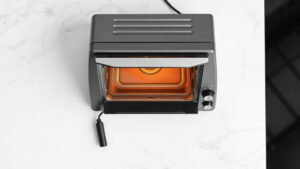
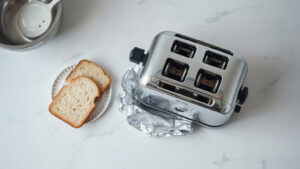
A toaster oven can cook just about anything you’d make in a full-size oven — roasted chicken thighs, baked potatoes, sheet pan veggies, even a small lasagna. Most compact models reach 450°F, which is plenty for real cooking. In an RV, that’s not a backup appliance; it’s often your whole kitchen.
Safety First: Always place your toaster oven on a heat-stable, flat surface at least 4 inches from cabinet walls and curtains — RV interiors are small and flammable. Never leave it running unattended while driving or when parked with the windows closed in hot weather. Use oven mitts rated for 450°F, not dish towels. If you’re running it on shore power, check that your hookup can handle 1,200–1,800 watts continuously before you start a long bake.
Quick Facts: RV Toaster Oven Cooking
- Most countertop toaster ovens pull 1,200–1,800 watts — confirm your campsite’s amp rating before plugging in.
- A 0.5–0.8 cubic foot interior is usually enough for two people; plan on fitting one standard 9×11 pan.
- Convection mode (available on many mid-range models) cuts cook time by roughly 20–25% and matters more in a small oven than a big one.
- You can bake, broil, roast, toast, and reheat — all without firing up the propane stovetop.
- Parchment paper is your best friend in a toaster oven; it prevents sticking and keeps cleanup down to almost nothing.
I’ve cooked in a toaster oven on the road more times than I can count. First trip I tried it, I burned a frozen pizza because I didn’t account for how much faster the top element works in a small cavity. Now I know better. Here’s what I actually make, in roughly the order I’d recommend you try them.
Why a Toaster Oven Makes Sense in an RV (And What It Won’t Do)
RV kitchens are tiny. Propane stovetops work fine for scrambled eggs and boiling pasta, but anything that needs dry heat — a crispy skin, a browned crust, a bubbling cheese top — propane can’t do that the same way. A toaster oven fills that gap without taking up much counter space.
That said, it won’t bake a full-size turkey or fit a 13×9 casserole dish. And if you’re boondocking without hookups, running a 1,500-watt appliance on battery power will drain your bank fast. It’s a shore power appliance, mostly. Good to know upfront.
If you’re still shopping for the right unit, our roundup of the best mini toaster ovens covers the compact models that actually fit in a Class B or small Class C without overhanging the counter edge.
10 Real Meals You Can Cook in a Toaster Oven on the Road
1. Sheet Pan Chicken Thighs
This is the one I make most. Season bone-in, skin-on thighs with salt, pepper, garlic powder, a little smoked paprika. Put them skin-side up on a toaster oven baking pan and roast at 400°F for 38–42 minutes. The skin gets genuinely crispy. I flip them exactly once, at the 20-minute mark — no need for more fuss than that. Internal temp should hit 165°F; I always check with a thermometer because undercooked chicken is not a fun campsite experience.
2. Baked Potatoes
Poke them, rub with oil and salt, 400°F for 50–60 minutes depending on size. Honestly, toaster oven baked potatoes might come out better than microwave ones — the skin actually crisps up. Medium russets take about 55 minutes in my experience. Don’t wrap them in foil if you want that skin crisp.
3. Roasted Vegetables
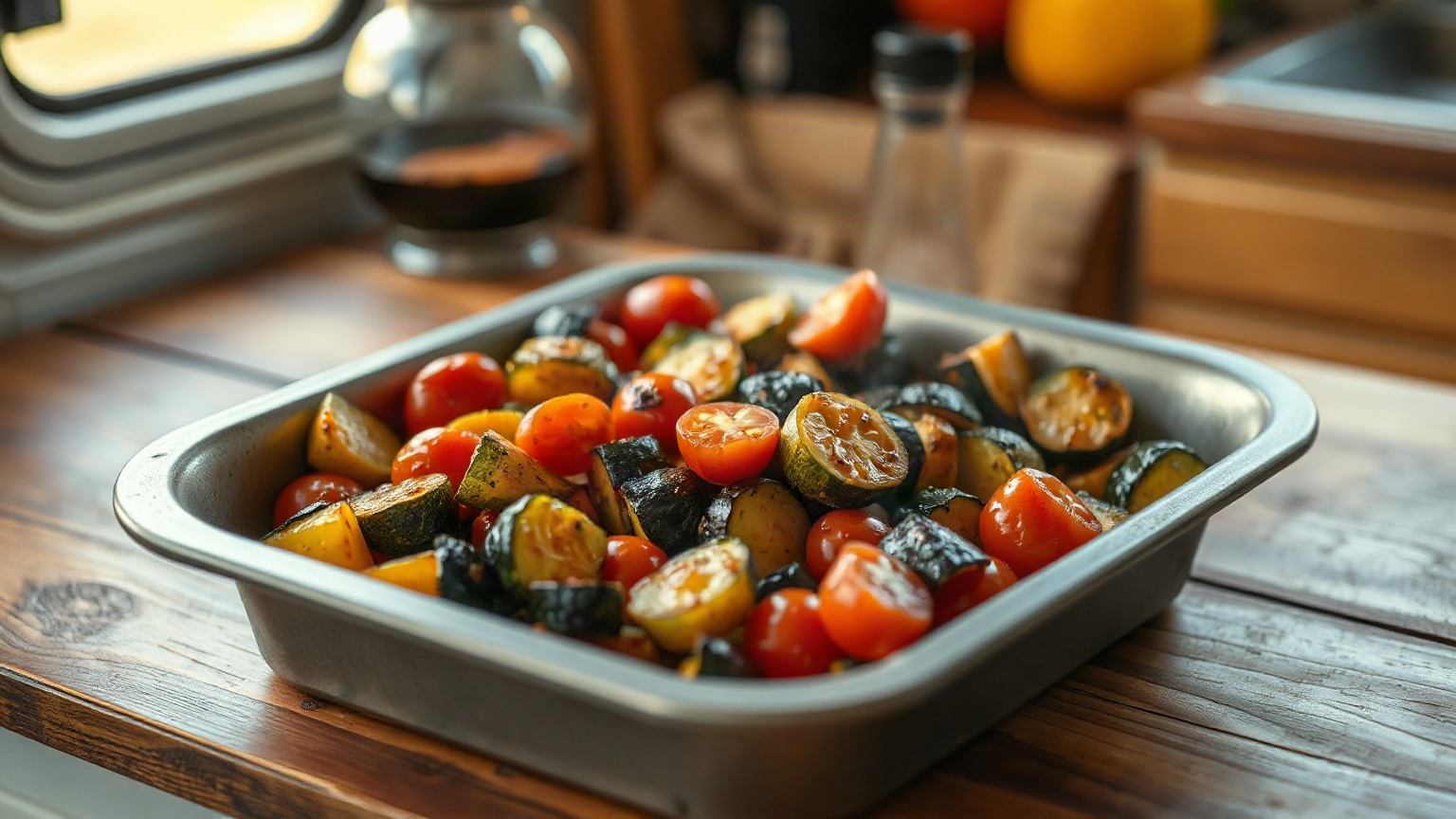
Broccoli, zucchini, bell peppers, asparagus — whatever the camp store or farmers market had. Toss with olive oil and salt. Spread in a single layer (this part matters; don’t crowd them or they steam instead of roast). 425°F, 18–22 minutes, flip once. Easy, and it makes the whole RV smell good.
4. Personal Pizzas
Grab a premade flatbread or naan from the grocery store. Add sauce, cheese, whatever toppings. 425°F for 8–10 minutes. I put it directly on the rack (no pan) for a crisper bottom. That first time I burned the pizza I mentioned? I had it on bake instead of convection bake and had it too close to the top element. Now I keep it on the middle rack and use convection when available. Broiling the last 90 seconds gets the cheese bubbly and slightly charred, which is the whole point.
5. Salmon Fillets
This surprised me the first time — a toaster oven does salmon beautifully. 400°F, skin-side down, about 12–14 minutes for a 1-inch-thick fillet. Season simply: olive oil, salt, lemon, dill. The USDA recommends fish reach 145°F internal temp, and I’d actually pull salmon at 130–135°F if you like it less overdone — your call. No smoke, no smell that lingers the way stovetop fish does. Big win for small spaces.
6. Quesadillas
Not the most glamorous meal, but fast and practical after a long driving day. Assemble your quesadilla, place it on the rack, 375°F for 7–8 minutes, flip carefully halfway. The cheese melts evenly and the tortilla gets toasty without burning. I’ll sometimes slide a piece of parchment under it to catch any cheese drips.
7. Frittata (In a Small Cast Iron or Oven-Safe Pan)
This one requires a 6-inch oven-safe skillet. Sauté your fillings on the propane burner, pour in beaten eggs, transfer to the toaster oven at 350°F for 12–15 minutes until the center is just set. It’s genuinely impressive for a campsite breakfast. And it uses only one pan total, which matters when you have a postage-stamp-sized sink.
8. Reheating Leftovers Properly
This isn’t glamorous but it’s where the toaster oven earns its counter space. Reheated pizza, leftover roasted chicken, day-old fries — a toaster oven restores actual texture in a way a microwave never will. 325–350°F for 8–12 minutes, usually. Check out the full breakdown on reheating food in a toaster oven if you want exact times by food type.
9. Garlic Bread and Toasted Sandwiches
Butter, garlic, parsley on a split baguette. Broil for 3–4 minutes. Watch it — broil mode in a compact oven is aggressive. Same approach works for a melt-style sandwich: build it, broil 2–3 minutes until the cheese is browned. These little things make camp cooking feel like actual cooking instead of just fuel intake.
10. Brownies or Muffins (Small Batch)
An underrated move. Use a box mix and halve the recipe. Pour into a small loaf pan or silicone muffin molds — silicone works great here because it’s flexible and stores flat. 325°F, reduce your time by about 20% from the box instructions because the small cavity heats faster. Brownies in a 6×4 pan take around 22–25 minutes. The first time I tried this I pulled them too early because the toothpick trick felt uncertain — give them an extra 3 minutes if you’re unsure, then check again.
What to Pack: The Gear That Actually Matters
You don’t need much. A quarter-sheet pan (9×13 is too big for most RV toaster ovens; 7×9 or 9×11 fits better). A toaster oven wire rack if yours didn’t come with one. Parchment paper — the pre-cut sheets are worth it. A small instant-read thermometer. That’s genuinely all you need for 90% of the meals above.
One thing nobody tells you: bring a silicone trivet or pot holder that can sit on your counter. The side vents on a toaster oven throw a lot of heat sideways, and RV counters are often laminate that can discolor or warp if something hot sits too close for too long.
Toaster Oven Wattage vs. Power Source: A Practical Guide for RVers
This is the thing most toaster oven articles skip entirely, and it matters a lot on the road.
| Power Source | Typical Available Wattage | Can It Run a Toaster Oven? | Notes |
|---|---|---|---|
| 30-amp shore hookup | Up to 3,600W | Yes, easily | Standard for most RV parks |
| 50-amp shore hookup | Up to 12,000W | Yes, no issue | Premium sites, newer rigs |
| Generator (2,000W inverter) | ~1,600–1,800W usable | Yes, but just barely | Don’t run other high-draw appliances simultaneously |
| Battery/inverter (lithium) | Varies, often 1,000–2,000W | Briefly, with caution | Drains fast; not for long bakes |
| Battery/inverter (AGM) | Often 500–1,000W sustained | Mostly no | Most compact toaster ovens need 1,200W minimum |
If you’re at a 30-amp site sharing power with an air conditioner, be careful. Running the AC and the toaster oven simultaneously can trip your breaker. I learned that the hard way on a July afternoon in Texas. Turn the AC to fan-only while you’re cooking, then flip it back.
The Edge Case Nobody Mentions: High Altitude Baking in an RV
If you’re camping in Colorado, Utah, or anywhere above 5,000 feet, your baking will behave differently. Leavening acts faster, liquids evaporate quicker, and your brownies might come out dry or over-risen. For box mix baked goods above 5,000 feet: reduce baking powder or soda by about 25%, add an extra tablespoon of liquid, and increase your oven temp by 15–25°F. It sounds fussy but it makes a real difference. Serious Eats has a solid breakdown on high-altitude baking adjustments if you want the full science behind it.
Also worth knowing: if you’re parked in direct sun in summer, your toaster oven’s exterior can get alarmingly hot to the touch even when off. Keep it out of direct sunlight when possible, and always let it cool for at least 15 minutes before you pack it away or move it to storage.
Wrapping Up
A toaster oven isn’t a compromise in an RV. Used right, it’s a fully capable cooking tool that handles everything from weeknight chicken thighs to campsite brownies. The key variables are wattage management and not overcrowding your pan. Everything else is just normal cooking — with a better view out the window. If you want to understand how temperatures compare between toaster ovens and standard toasters, the guide on how hot a toaster gets is worth a quick read before you buy anything.
Start with the chicken thighs. You’ll see what I mean.
Frequently Asked Questions
Can you use a toaster oven in an RV on battery power?
You can run a toaster oven briefly on a lithium battery bank with a quality inverter, but most toaster ovens draw 1,200–1,800 watts, which drains batteries quickly. A 40-minute bake at 400°F could pull 800–1,200 watt-hours from your bank. AGM batteries typically can’t sustain the load at all — this is really a shore power or generator appliance for anything longer than quick toast.
What size toaster oven fits best in an RV?
A 0.5–0.8 cubic foot capacity is the sweet spot for most RV kitchens — large enough to fit a 9×11 pan or four chicken thighs, small enough to tuck under most upper cabinets. Measure your counter depth and clearance height before buying; many RV counters are shallower than a standard kitchen counter. Units around 20 inches wide are typical in this range.
Is it safe to use a toaster oven while the RV is moving?
No. Never operate a toaster oven — or any cooking appliance — while the RV is in motion. Road vibration can shift the appliance, and an open heating element in a moving vehicle is a serious fire risk. Always park, level if possible, and confirm you have stable shore power or generator power before turning it on.
What can you cook in a toaster oven in an RV besides toast?
Quite a lot — roasted chicken, baked potatoes, salmon, sheet pan vegetables, personal pizzas, frittatas, quesadillas, garlic bread, reheated leftovers, and small-batch baked goods like brownies or muffins. The main limitation is pan size, not cooking capability. If it fits in the cavity, you can almost certainly cook it.
How much electricity does a toaster oven use in an RV?
Most toaster ovens rated 1,200–1,800 watts will draw around 10–15 amps on a 120V circuit. On a standard 30-amp RV hookup, that’s one-third to half your total available amperage. If you’re also running an air conditioner (typically 13–15 amps on start), you can easily trip a 30-amp breaker — so cook with the AC on fan-only or shut off other high-draw appliances while baking.

Written by
Emma founded Toastera to turn vague appliance advice into clear, researched, safety-first guidance on toasters and toaster ovens.
Free: the Toaster Oven Cheat Sheet
Get the printable cheat sheet (temps, cook times & safety tips) plus new recipes. No spam, unsubscribe anytime.