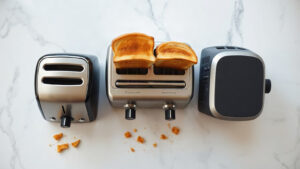
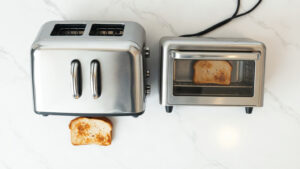
For most people, a compact toaster oven between 0.5 and 0.8 cubic feet handles 90% of everyday cooking tasks just fine. Full-size models (1.0–1.5 cubic feet) only pull ahead when you’re regularly cooking for four or more people, baking full-size sheet pans, or roasting a whole chicken. If you’re cooking solo or for two, a compact unit will almost certainly do more than you expect — and take up considerably less counter real estate doing it.
Safety First: Toaster ovens run heating elements at temperatures up to 500°F and draw 1,200–1,800 watts of power. Always leave at least 4 inches of clearance on all sides, never place one directly under overhead cabinets, and keep the crumb tray cleaned out regularly — built-up grease in a hot oven is a real fire risk. Use oven mitts, not dish towels, when pulling racks.
Key Takeaways
- Compact toaster ovens (under 0.8 cu ft) fit 1–2 people’s needs perfectly well and typically run 1,200–1,500 watts
- Full-size models (1.0–1.5 cu ft) are worth the counter space if you cook for a family, bake full 9×13 pans, or want air fryer capacity above 4 quarts
- The Breville Smart Oven Air Fryer Pro is the best full-size pick; the Cuisinart TOA-28 is my top compact recommendation
- Preheat time and actual interior temp accuracy matter more than raw wattage numbers on the box
- Most households buying full-size models end up only using 60% of the capacity on a typical weeknight
What “Compact” and “Full-Size” Actually Mean in Toaster Oven Terms
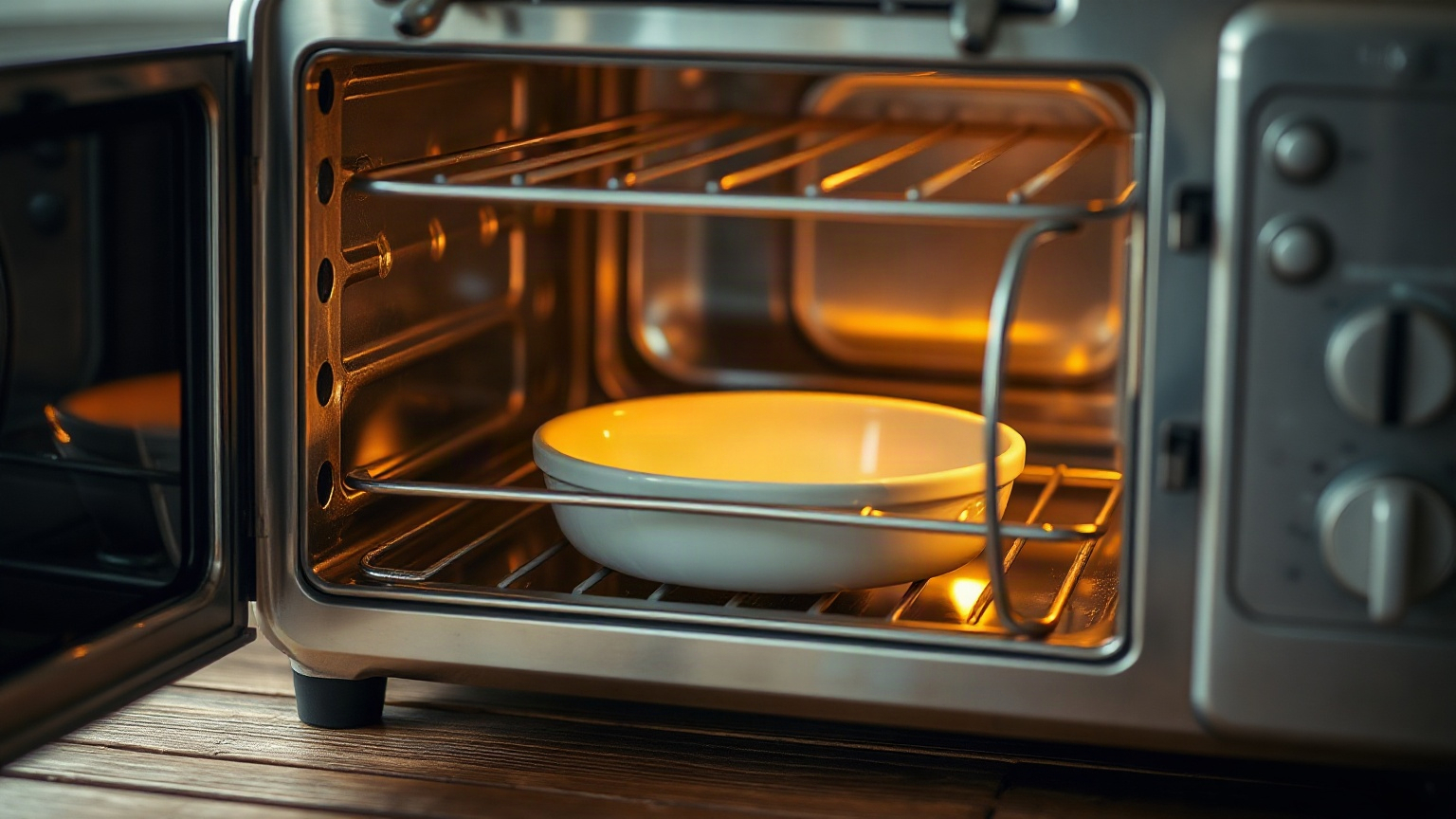
The labeling on toaster oven boxes is a mess, honestly. “Compact” can mean anything from a tiny 4-slice unit the size of a shoebox to something that fits a 9-inch pizza. “Full-size” gets thrown at anything above that. Here’s how I’d cut it practically:
Compact units typically have an interior volume of 0.4 to 0.8 cubic feet. They’ll fit a 9- to 11-inch pizza, a 9×9 baking pan, or four slices of toast. The footprint on your counter is usually around 15–17 inches wide. Full-size models clock in at 1.0 cubic feet and above, accommodate 12–13 inch pizzas, fit a standard 9×13 casserole dish, and stretch to 18–22 inches wide. Some of the bigger Breville and Cuisinart units are genuinely close to a small countertop convection oven at that point.
The capacity jump sounds modest. It doesn’t feel modest when you’re trying to cook two chicken thighs and a tray of vegetables at the same time.
Compact vs Full-Size: A Side-by-Side Breakdown
I’ve run both sizes through the same set of tasks in my own kitchen — roasting vegetables, baking muffins, air frying frozen fries, and the deeply important job of making good toast at 7 a.m. Here’s what I actually found, broken out by category.
| Factor | Compact (0.4–0.8 cu ft) | Full-Size (1.0–1.5 cu ft) |
|---|---|---|
| Interior Volume | 0.4–0.8 cubic feet | 1.0–1.5 cubic feet |
| Typical Wattage | 1,200–1,500W | 1,500–1,800W |
| Max Pan Size | Up to 9×11 inches | Up to 9×13 inches (full sheet) |
| Pizza Capacity | 9–11 inch | 12–13 inch |
| Counter Footprint | ~15–17 inches wide | ~18–22 inches wide |
| Preheat to 400°F | 5–8 minutes | 8–12 minutes |
| Price Range | Budget to mid-range ($50–$150) | Mid-range to premium ($150–$400+) |
| Best For | 1–2 people, small kitchens | Families, bakers, frequent cooks |
Toast Quality
Compact ovens actually have an edge here, slightly. The heating elements are closer to the bread, which means more direct, even browning. I ran the same slice of sourdough through a Cuisinart TOA-28 (compact) and a Breville Smart Oven Air Fryer Pro (full-size) on the same shade setting. The compact oven browned more evenly on the bottom. The Breville needed a shade bump. Not a dealbreaker, but worth knowing if toast is a primary use case for you.
Baking and Roasting
This is where full-size wins clearly. A compact oven at 375°F struggles with a full batch of cookies because there isn’t enough airflow around the pan. You end up with overdone edges and underdone middles. I burned the edges of a batch of snickerdoodles in a compact unit the first time I tried it — set to 350°F, same time I’d use in my wall oven, and they still scorched. The closer proximity to the heating elements is a double-edged thing. Full-size ovens have more breathing room, so convection fans actually do what they’re supposed to do.
For reheating food in a toaster oven, both sizes work fine. It’s really the original cooking tasks that separate them.
Air Frying
The honest answer: compact air fryer toaster ovens top out at around a 2–3 quart effective air fry basket capacity. That’s fine for a single serving of fries or a couple of chicken wings. Full-size models with dedicated air fry modes — like the Breville Smart Oven Air Fryer Pro or the Ninja Foodi XL — can handle a full pound of wings without crowding. Crowding is the enemy of crispy. If air frying is a big reason you’re buying, go full-size.
The Real Models Worth Considering (And My Actual Opinions)
There are a lot of toaster ovens out there, and most of the mid-tier ones are fine. These are the ones I’d actually point someone toward based on what I’ve used and what I’ve seen hold up.
Best Compact: Cuisinart TOA-28
This is a mid-range compact with an air fry function that actually works. It fits a 6-slice toast capacity, handles an 11-inch pizza, and the temperature accuracy is better than most in its class — I checked it with an oven thermometer and it ran only about 10°F under the set temp at 400°F, which is genuinely good for this category. The interior is easy to wipe down. My one complaint: the dial controls feel a little plasticky, and the timer dings loudly enough to startle you. But the cooking results? Solid.
Best Budget Compact: Hamilton Beach 31127D
Around $50, it toasts, bakes, and broils. That’s genuinely it. No air fry, no convection. But if someone just needs a small oven on a tight budget, this one is reliable and doesn’t pretend to be something it isn’t. Check out some of the best mini toaster ovens if this category is where you’re shopping.
Best Full-Size: Breville Smart Oven Air Fryer Pro
Premium price, genuinely premium performance. The temperature accuracy is excellent. It has 13 preset functions, a true convection fan, and the interior is large enough to fit a 9×13 pan flat, which matters for casseroles. It’s a big unit — plan for about 21 inches of counter width — but it’s the one I’d recommend if you’re replacing your wall oven for most day-to-day cooking. Serious Eats has noted it as a benchmark in this category, and I’d agree.
Best Full-Size Mid-Range: Cuisinart TOA-70
The Cuisinart TOA-70 sits between the budget and premium brackets. Good air fryer performance, fits a 13-inch pizza, and the interior light is actually useful (you’d be surprised how many ovens skip this). The rack positions are a bit awkward to adjust with oven mitts on — that’s my real pet peeve with this model — but the cooking performance is consistent.
The Ninja Foodi XL Pro
Worth a mention specifically because Ninja’s fans are enthusiastic to a degree I find slightly suspicious, but the product is genuinely capable. The XL Pro is a full-size unit with serious air fry capacity. It’s not as elegant as the Breville and the control panel is busy, but it performs. Good pick if you air fry frequently and don’t want to pay Breville prices.
Who Should Buy Compact (And Who’s Kidding Themselves)
Buy compact if: you cook for one or two people most nights, your kitchen counter is genuinely limited, your primary use cases are toast, reheating, and the occasional roasted vegetable, and you’re not doing serious baking.
Don’t buy compact if you think you’ll “mostly use it for small stuff” and then immediately try to roast a whole chicken in it on week two. I’ve seen this happen. The chicken was fine, technically, but it took 25 minutes longer and the juices were spattering directly onto the heating elements by the end. Not ideal.
The edge case most reviews miss: compact ovens struggle with anything that needs to rotate or sit tall. A large baked potato, for instance, often can’t sit upright without touching the top element in a compact unit. Full-size wins there, automatically.
Also worth knowing: compact toaster ovens actually preheat faster because the smaller interior volume heats up quicker. I measured 5 minutes to 400°F in the Cuisinart TOA-28 versus 10 minutes in the Breville. For weeknight cooking when you just need to reheat leftovers or run something under the broiler, that difference is real. You can read more about how hot a toaster gets and what that actually means in practice.
The Verdict: Bigger Isn’t Automatically Better
Here’s my honest take after testing both sizes repeatedly: most single people and couples would be perfectly happy with a good compact unit and wouldn’t miss the extra capacity at all. The Cuisinart TOA-28 handles 80% of what a home cook actually does on a weekly basis. If you bake regularly, cook for a family, or want real air fryer performance, then yes — step up to full-size. The Breville Smart Oven Air Fryer Pro is worth the money if you’re in that camp and plan to use it seriously. The Ninja Foodi XL Pro is a solid choice if you want full-size air frying at a lower price point.
But stop assuming bigger means better. A compact oven that gets used every day beats a full-size one gathering dust on the counter because it’s too annoying to move things around to fit it. Buy for how you actually cook, not for aspirational cooking you imagine you might do someday. For more guidance from the USDA on safe food temperatures when cooking in any countertop oven, their safe temperature chart is worth bookmarking.
Frequently Asked Questions
Can a compact toaster oven replace a full-size oven for everyday cooking?
For one or two people, yes — with some limitations. A compact toaster oven handles toast, roasting vegetables, reheating, baking small batches, and broiling without issue. Where it falls short is anything requiring a large pan, tall items, or cooking multiple dishes simultaneously.
How much counter space does a full-size toaster oven take up?
Most full-size toaster ovens run 18 to 22 inches wide and 14 to 17 inches deep. You also need at least 4 inches of clearance on each side and above for safe heat venting, so budget roughly 26–30 inches of total width on the counter. That’s a significant chunk of a small kitchen.
Is a compact toaster oven good for air frying?
Compact toaster ovens with air fry functions work, but the effective capacity is small — typically enough for one serving of fries or a few wings. If air frying is a primary reason you’re buying, a full-size model gives you meaningfully better results because there’s more room for hot air to circulate around the food.
What’s the difference in wattage between compact and full-size toaster ovens?
Compact toaster ovens typically draw 1,200 to 1,500 watts. Full-size models generally run 1,500 to 1,800 watts. The higher wattage helps larger ovens maintain temperature under load, but it also means slightly higher energy use per session — though the faster cooking times in convection mode often offset that difference.
Which toaster oven size is better for a small apartment?
Compact is almost always the right call for a small apartment, especially if counter space is tight. A unit like the Cuisinart TOA-28 handles most real cooking tasks for one or two people while fitting comfortably on a 16-inch counter section. If your apartment has very limited counter space, check the specific footprint dimensions before buying — “compact” labels vary more than they should.

Written by
Emma founded Toastera to turn vague appliance advice into clear, researched, safety-first guidance on toasters and toaster ovens.
Free: the Toaster Oven Cheat Sheet
Get the printable cheat sheet (temps, cook times & safety tips) plus new recipes. No spam, unsubscribe anytime.