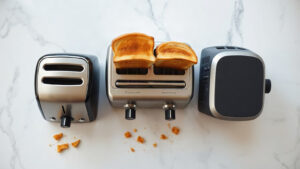
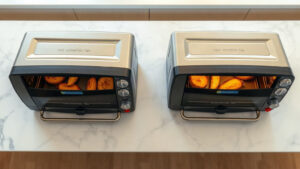
A pop-up toaster wins on speed for a single slice — it typically toasts bread in 2 to 4 minutes, while a toaster oven takes 4 to 8 minutes to preheat and toast. The reason is simple: a toaster’s heating elements surround the bread directly at close range, transferring heat almost instantly, whereas a toaster oven has to heat a larger air cavity first. For one slice of toast on a weekday morning, the pop-up toaster is faster and cheaper to run, full stop.
Safety First: Both toasters and toaster ovens reach internal temperatures well above 300°F and have exposed or near-exposed heating elements. Never leave either appliance unattended while in use, keep them at least 4 inches from cabinet walls or curtains, and always unplug before cleaning. Burns from reaching into a hot toaster oven cavity are more common than people expect — use tongs or a rack, not your fingers.
Quick Facts
- A pop-up toaster toasts a single slice in roughly 2–4 minutes, start to finish, with zero preheat time.
- A toaster oven typically needs 3–5 minutes to preheat before it even starts browning your bread, pushing the total to 6–9 minutes for one slice.
- Pop-up toasters draw 800–1,500 watts but run for such a short burst that they use far less energy per slice than a toaster oven running at 1,200–1,800 watts for a longer cycle.
- Toaster ovens shine when you’re toasting more than two slices, want browning control, or need to do anything beyond plain toast.
- For a single slice, most people (including me) are better served by a good pop-up toaster — unless counter space or versatility already pushed them toward a toaster oven.
How Each Appliance Actually Works
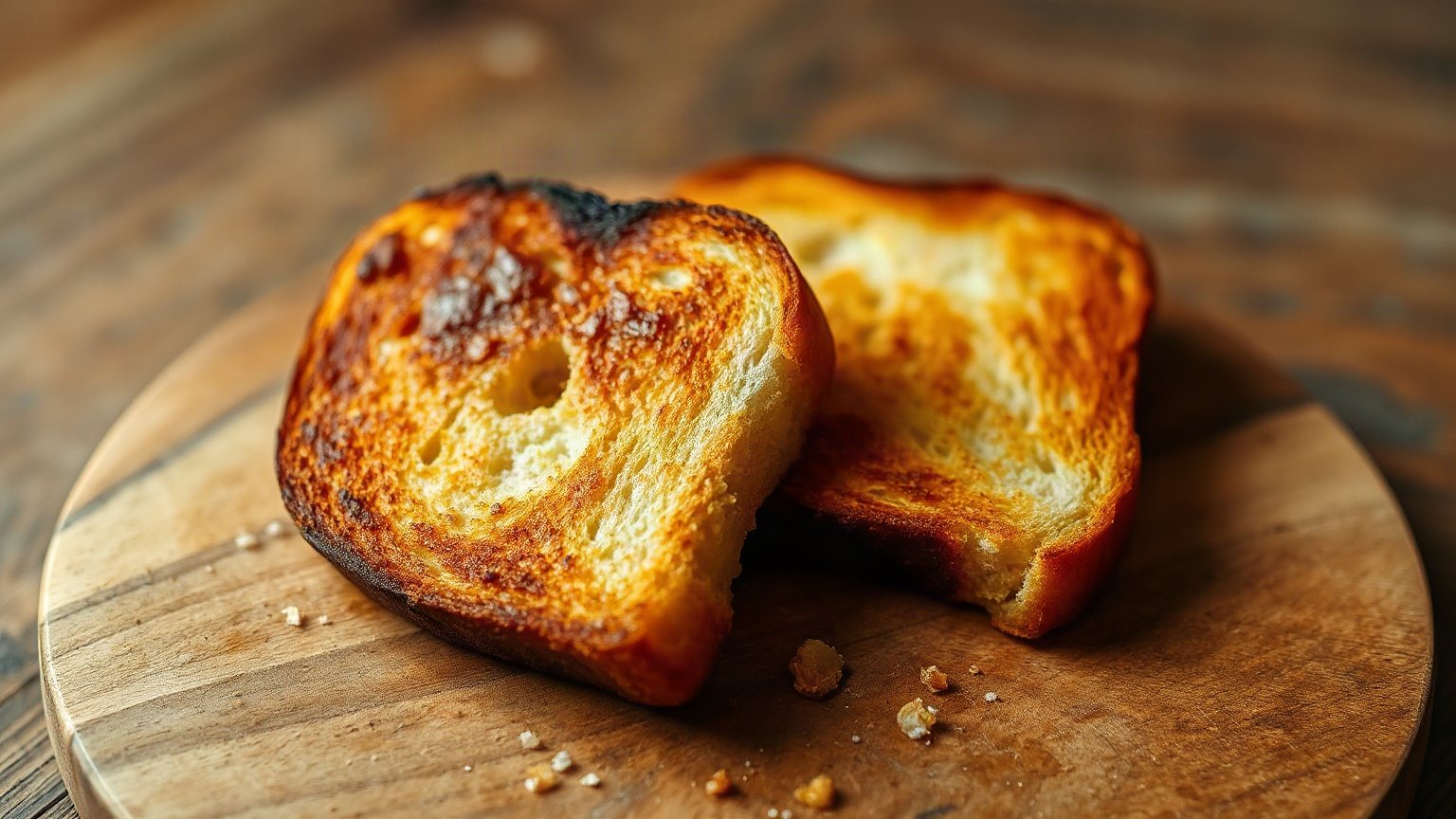
The mechanics here explain the speed difference better than any chart. In a pop-up toaster, two sets of nichrome wire heating elements sit a half-inch or less from each face of the bread. The moment you push the lever down, those elements are glowing at somewhere between 300°F and 500°F within seconds. The bread is basically sandwiched inside a focused column of radiant heat. No air to warm up. No cavity. Just direct, close-range radiation straight onto the bread’s surface. That’s why you get a finished slice so fast. You can read more about the specifics over in our piece on how hot a toaster gets, but the short version is: very hot, very fast.
A toaster oven works differently. It’s a small convection or radiant oven, and it has to bring the entire interior air temperature up before the toast really starts cooking properly. Some models — especially older, non-convection ones — are genuinely slow to preheat. I have a mid-range Cuisinart that I love for roasting vegetables, but the first time I tried to make toast in it on a rushed morning, I stood there waiting for what felt like forever while the elements slowly cranked up. Lesson learned.
Actual Time Comparison: Pop-Up Toaster vs Toaster Oven for One Slice
I ran this more times than I’d like to admit, using the same cheap sandwich bread (plain white, nothing fancy), a standard two-slice pop-up toaster set to medium, and a toaster oven set to its “Toast” function at 450°F. Here’s what the clock actually said.
| Appliance | Preheat Time | Toast Time (1 slice) | Total Time | Wattage (approx.) |
|---|---|---|---|---|
| Pop-up toaster | 0 min | 2–4 min | 2–4 min | 800–1,500W |
| Toaster oven (no convection) | 3–5 min | 3–4 min | 6–9 min | 1,200–1,800W |
| Toaster oven (with convection) | 2–4 min | 2–3 min | 4–7 min | 1,500–1,800W |
Convection helps close the gap — the fan circulates hot air and speeds browning noticeably. But even the fastest toaster oven I tested still lagged behind the pop-up toaster by a couple of minutes when I was only making one slice. For four slices? The tables turn pretty quickly. A Breville Smart Oven Air Fryer can knock out four perfectly even slices at once, something a standard two-slice toaster can’t do without two rounds.
Which Costs More to Run?
Speed and energy cost are related but not the same thing. A toaster oven might draw more watts, but if it toasted just as fast, the cost difference would be tiny. The problem is it doesn’t toast just as fast. It runs longer, and at equal or higher wattage. That combination adds up.
Let’s put rough numbers on it. The average US electricity rate is around 16 cents per kWh (this fluctuates by state, obviously). A 1,200-watt pop-up toaster running for 3 minutes uses about 0.06 kWh — roughly a tenth of a penny. A 1,500-watt toaster oven running for 7 minutes uses about 0.175 kWh — still less than half a cent, but nearly three times more energy per slice. Multiply that by 365 mornings and it’s a few dollars a year. Not life-changing, but not nothing either.
My honest take: for one or two slices a day, run a pop-up toaster. If you’re already heating the toaster oven for something else — reheating leftovers, say, or melting cheese on a bagel — toss your bread in and it costs you essentially nothing extra. We cover that angle in our guide to reheating food in a toaster oven, which is worth a read if you’re using yours for more than just toast.
When the Toaster Oven Is Actually the Better Choice
I don’t want to make this sound like the toaster oven is bad at toast. It’s not. The results are genuinely good — sometimes better. Here’s where I’d pick the toaster oven without hesitation.
Thicker Bread, Bagels, and English Muffins
Thick-cut bread — the stuff from an actual bakery, not the sliced sandwich loaf — often doesn’t fit in a standard pop-up toaster slot. I’ve destroyed a sourdough heel trying to force it in. A toaster oven fits almost anything flat. Bagels, English muffins, Texas toast, thick focaccia slices — all go in without drama. The rack-based approach gives you more control over browning level too, since you can pop the door open and check without committing to a full cycle.
Toast With Toppings
Avocado toast is one thing. But if you want to put cheese on bread and broil it, or top something with an egg before browning — a pop-up toaster obviously can’t do that. The toaster oven handles open-faced things beautifully. Grab a decent toaster oven baking pan and it becomes a surprisingly useful little broiler.
You’re Already Making Something Else
If the toaster oven is already hot and you need toast alongside whatever you’re cooking, don’t turn on a second appliance. Just slide the bread in. This is probably the most practical argument for toaster-oven toast — not as a primary toasting method, but as an opportunistic one.
Specific Models Worth Knowing About
If you’re deciding which appliance to actually buy based on your toasting habits, the model matters more than the appliance category.
For pop-up toasters, the Breville Die-Cast 2-Slice is probably the best toaster I’ve used that doesn’t feel excessive. Even browning, wide slots, and it doesn’t jam on thicker bread the way cheaper models do. The Cuisinart CPT-180 is a solid budget pick — I’d take it over most of the generic options that flood Amazon. Neither will win design awards but both actually work.
For toaster ovens, the Breville Smart Oven Air Fryer Pro is the one I’d buy if I had to pick one appliance to handle everything. Convection is fast, the toast function is legitimately good, and it’s big enough for a 12-inch pizza. The Cuisinart TOA-70 is a step down in price but still capable — I’ve seen it recommended by Serious Eats for good reason. The Hamilton Beach countertop convection models are budget-friendly but slower to preheat in my experience. Worth knowing if speed is your priority. And if you’re tight on counter space, our roundup of the best mini toaster ovens is a good place to start.
The Verdict
For a single slice of toast, a pop-up toaster is faster, cheaper to run, and simpler. That’s not a close call. It does one job and does it quickly. The toaster oven is a more capable appliance overall — it’ll handle bagels, open-faced melts, reheating, and actual cooking — but it’s slower and costs more to operate for plain toast. If your morning routine is grab-bread-push-lever-pour-coffee, buy a good two-slice toaster and be done with it. If you need the oven’s versatility or you’re already making something in it anyway, the toast will be fine in there. Just don’t expect it to be faster. It won’t be.
Frequently Asked Questions
How hot does a toaster get compared to a toaster oven?
A pop-up toaster’s heating elements can reach between 300°F and 500°F internally, and because they sit so close to the bread, the surface of the toast sees intense direct radiant heat almost immediately. A toaster oven typically operates at 350°F to 450°F for toasting, but the heat is spread across a larger space, which is why it feels less intense for a quick single slice. The toaster runs hotter at the point of contact; the oven runs longer overall.
Is it cheaper to use a toaster or toaster oven for toast?
A pop-up toaster is cheaper to use for toast because it runs for a much shorter time, even if both appliances draw similar wattage. At typical US electricity rates, a pop-up toaster costs roughly a third of a cent per slice, while a toaster oven costs closer to a full cent per slice due to the longer preheat and cook cycle. Over a year of daily use, the difference adds up to a few dollars — not dramatic, but consistently in the toaster’s favor.
Can a toaster oven make toast as well as a regular toaster?
Yes, a toaster oven can make good toast — the browning is even and you have more control over the results, especially with thicker bread. The main trade-off is time: a toaster oven adds 3 to 5 minutes of preheat before toasting even begins, which matters when you’re in a hurry. For quality alone, a good toaster oven on the toast setting performs well; for speed and convenience with a single slice, a pop-up toaster still wins.
How long does it take a toaster oven to toast one slice of bread?
From a cold start, a toaster oven typically takes 6 to 9 minutes total to toast a single slice — roughly 3 to 5 minutes of preheat followed by 3 to 4 minutes of actual toasting. Models with convection fans can shave this down to around 4 to 6 minutes total. A pop-up toaster completes the same task in 2 to 4 minutes with no preheat at all.
Is it safe to leave a toaster plugged in when not in use?
It’s generally safe to leave a toaster plugged in, but unplugging it when not in use is the more cautious habit, especially if you have kids, pets, or a cluttered counter where things might fall into the slots. Pop-up toasters don’t draw power when idle, but crumbs build up over time and can become a fire risk if the appliance is left plugged in near a heat source or gets bumped. Unplugging and emptying the crumb tray weekly takes about 30 seconds and is worth making a habit.

Written by
Emma founded Toastera to turn vague appliance advice into clear, researched, safety-first guidance on toasters and toaster ovens.
Free: the Toaster Oven Cheat Sheet
Get the printable cheat sheet (temps, cook times & safety tips) plus new recipes. No spam, unsubscribe anytime.