To reheat restaurant fried rice in a toaster oven without drying it out, spread it in a thin layer in an oven-safe dish, add a small splash of water or broth, cover tightly with foil, and bake at 325°F for about 12–15 minutes. The low-and-slow approach lets the steam do the work instead of the dry heat stripping every last bit of moisture from the rice. Skip the foil or crank the temp too high and you’ll end up with a dish of little beige pebbles.
Safety First: Toaster ovens run hot and the interior walls, rack, and baking pan all reach temperatures that cause serious burns. Always use oven mitts rated for at least 400°F when removing dishes, and never line the bottom tray with aluminum foil (it can trap heat and create a fire risk). Keep the toaster oven on a stable, heat-resistant surface away from cabinets and curtains while it’s running.
Key Takeaways
- 325°F is the sweet spot — high enough to heat through, low enough not to dessicate the rice.
- Always add moisture (1–2 tablespoons of water, chicken broth, or even soy sauce) before covering with foil.
- Thin, even layers heat faster and more evenly than a big mound in the center of the dish.
- Let the rice rest 2 minutes after pulling it out — it finishes steaming in the dish.
- Cold straight-from-the-fridge rice needs about 2–3 extra minutes compared to room-temp rice.
Why Fried Rice Dries Out (and Why Your Toaster Oven Is Actually Great for This)
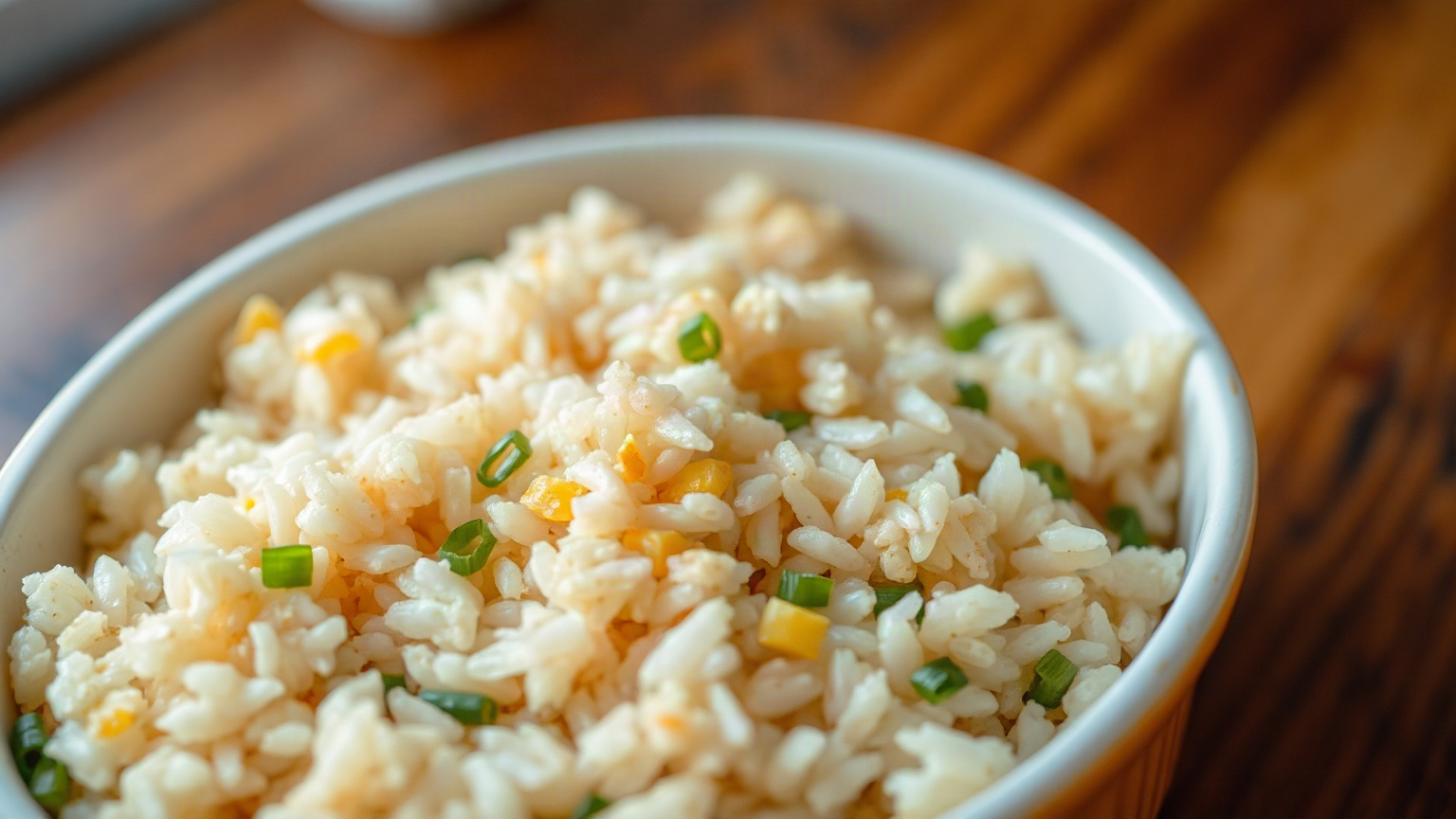
Fried rice is already a second-cook product. The restaurant made it by tossing day-old rice in a screaming-hot wok with oil, eggs, and aromatics. That process drove off a lot of the moisture intentionally — it’s what gives good fried rice that slightly chewy, separated texture. So by the time it’s sitting in your fridge in a takeout container, there’s not a ton of water left to lose before things go wrong.
The microwave is the enemy here. It blasts steam unevenly, turns some grains gummy while leaving others weirdly crunchy, and the hot spots can practically fry the egg pieces a second time. A dry oven at 400°F is not much better — it just desiccates everything fast.
A toaster oven, though? It’s actually well-suited for this. The compact interior heats up quickly, the temperature is controllable, and you can cover a dish with foil to trap steam in a way you can’t do in a microwave. I’ve reheated fried rice in every appliance I own and the toaster oven — specifically on a bake setting, not convection — consistently gives me the best texture. For more on general reheating technique, check out my guide on reheating food in a toaster oven.
What You’ll Need Before You Start
Nothing fancy. But a few things actually matter here.
You need an oven-safe dish that fits your toaster oven. A small ceramic baking dish, a metal cake pan, or a toaster oven baking pan all work. Avoid anything with plastic handles — obvious, but worth saying. You’ll also want aluminum foil and something to add moisture. I usually keep low-sodium chicken broth in the fridge for exactly this kind of thing, but plain water works fine. A tablespoon of soy sauce stirred in is actually my personal preference; it boosts the flavor slightly while adding the steam you need.
A toaster oven wire rack with a baking pan underneath can be handy if you want a slightly crispier bottom layer — more on that in the edge cases section below.
Step-by-Step: How to Reheat Fried Rice in a Toaster Oven
Step 1: Preheat to 325°F
Preheat the toaster oven to 325°F on the bake setting. Not 350°F, not 400°F. I made the mistake of going 375°F my first time doing this and the edges of the rice were borderline crispy before the middle was even warm. 325°F gives you a gentler, more even heat that plays nicely with the foil tent you’re about to create.
Step 2: Prep the Rice
Dump the fried rice into your baking dish and spread it out. Try to keep it no more than an inch thick — honestly closer to ¾ inch is better. Break up any clumps with a fork or your hands. If the rice is refrigerator-cold, let it sit on the counter for 10 minutes first. That’s not strictly required, but it cuts your oven time down and reduces the risk of the outside overcooking before the center heats up.
Drizzle 1½ to 2 tablespoons of liquid over the top. Broth, water, or a mix of soy sauce and water (maybe a teaspoon of soy to a tablespoon of water) all do the job. Stir it in just slightly — don’t go crazy, just enough to distribute it.
Step 3: Cover Tightly with Foil
Cover the dish snugly with aluminum foil. Press it down around the edges. The whole point is to trap the steam from that liquid you added so it circulates through the rice instead of evaporating out the top. If you’re using a dish with a lid, that works even better — mine is a Pyrex baking dish and the glass lid seals it nicely.
Step 4: Bake for 12–15 Minutes
Slide the covered dish into the preheated toaster oven. For a typical takeout container’s worth (roughly 2–3 cups of rice), plan on 12 minutes if the rice is room temperature and 15 minutes if it came straight from the fridge. At the 10-minute mark, carefully lift a corner of the foil and check. The rice should look fluffy and steam should escape when you open it. If it still looks cold and dense, give it 3 more minutes.
Step 5: Rest, Then Stir
Pull the dish out, keep the foil on, and let it rest for 2 minutes. I know that feels excessive for leftovers. But the steam that’s still trapped in there keeps working, and the rice grains relax. After 2 minutes, remove the foil, give everything a good stir, and taste for seasoning. Sometimes a tiny hit of soy sauce or sesame oil at this stage is all it needs.
Temperature and Timing Reference Table
Here’s a quick reference depending on your starting conditions. These are tested numbers, not guesses.
| Rice Starting Temp | Amount (cups) | Toaster Oven Temp | Time (covered) | Notes |
|---|---|---|---|---|
| Room temperature (~70°F) | 1–2 cups | 325°F | 10–12 min | Check at 10 min |
| Refrigerator cold (~38°F) | 1–2 cups | 325°F | 14–16 min | Add extra ½ tbsp liquid |
| Refrigerator cold (~38°F) | 3–4 cups | 325°F | 18–20 min | Spread extra thin, check at 16 min |
| Frozen (fully frozen) | Any | 325°F | 25–30 min | Thaw in fridge overnight when possible |
Edge Cases and Tricky Situations
What If You Want Some Crispiness?
Some people genuinely like a little crust on the bottom of reheated fried rice — that scorched, slightly sticky layer you sometimes get at a good Chinese restaurant. You can get close to this in a toaster oven. Follow the covered method for the first 10 minutes, then remove the foil, drizzle a tiny amount of neutral oil (like half a teaspoon of vegetable oil) over the top, and switch the toaster oven to 375°F for another 4–5 minutes uncovered. Watch it. It goes from “nicely browned” to “burnt corners” faster than you’d expect.
Reheating Fried Rice with Shrimp or Egg
Protein is the tricky part. Shrimp overcooks almost instantly — it’s already cooked in the original dish, so any additional heat has to be minimal. For shrimp fried rice specifically, I’d drop the temp to 300°F and check at 10 minutes. Rubbery shrimp is not salvageable. Egg pieces in the rice are more forgiving, though they can get a little leathery if you go too long. The 325°F / 12-minute method handles egg pretty well in my experience. According to the USDA food safety guidelines, reheated leftovers should reach an internal temperature of 165°F — a food thermometer is the only way to actually verify this, and it’s worth doing if you’re feeding anyone who’s immunocompromised.
When Your Toaster Oven Is Tiny
Not everyone has a full-size toaster oven. If you’re working with a compact 2-slice model, you might not fit a standard baking dish in there at all. In that case, divide the rice into two smaller batches and reheat them separately. Trying to cram everything in and covering it poorly is worse than reheating in two rounds. If you’re shopping for an upgrade, check out our picks for the best mini toaster ovens that actually fit a usable baking dish.
What About Convection Mode?
Skip it for fried rice. Convection circulates hot air, which is exactly what you don’t want when you’re trying to retain moisture. It’ll dry the edges out aggressively. The standard bake setting is what you want here — the heat element works without the fan stripping away your steam. Serious Eats has a great breakdown of what makes fried rice great to begin with, and understanding the original method helps you understand why convection is counterproductive when reheating it.
Common Mistakes That Ruin Leftover Fried Rice
- Skipping the moisture addition — this is the single biggest reason reheated rice turns into gravel.
- Going too hot, too fast. High heat (above 375°F) evaporates your added liquid before it can steam the rice properly.
- Piling the rice in a thick mound instead of spreading it flat. The center never heats through before the outside overcooks.
- Opening the foil too early. Every time you check, you let steam escape. Trust the timer and check once at the right moment.
- Not stirring after resting. The bottom layer will be hotter than the top. A good stir redistributes everything and evens out the texture.
The Bottom Line
Reheating fried rice well isn’t complicated, but it does require a bit of intentionality. The toaster oven on bake at 325°F, a splash of liquid, and a tight foil cover — that combination does most of the work for you. The rest is just timing and not rushing it. I’d take leftover fried rice reheated this way over a fresh microwave version any day. It actually tastes like rice again instead of a styrofoam approximation of it.
If you’re curious about how the toaster oven’s heating elements actually work and why temperature control matters so much for tasks like this, the article on how hot a toaster gets is worth a read. And if you’re in the market for a toaster oven that actually holds temperature accurately, that matters more than most people realize for consistent results.
Frequently Asked Questions
How long does it take to reheat fried rice in a toaster oven?
At 325°F with foil, most portions of restaurant fried rice take 12–15 minutes if refrigerator cold, or about 10–12 minutes if at room temperature. Larger quantities (3–4 cups) may need up to 20 minutes. Always spread the rice thin and check it once partway through rather than lifting the foil repeatedly.
What temperature should I use to reheat fried rice in a toaster oven without drying it out?
325°F is the right target for reheating fried rice without drying it out. Higher temperatures (above 375°F) evaporate added moisture too quickly before the rice has a chance to absorb it. The lower temperature, combined with a foil cover, creates a gentle steam environment that keeps the rice fluffy.
Do I need to add water when reheating fried rice in a toaster oven?
Yes — adding 1½ to 2 tablespoons of water, broth, or diluted soy sauce is not optional if you want moist results. Fried rice has already had most of its moisture cooked out during the original preparation, so it needs liquid reintroduced before reheating. Without it, even a foil cover won’t prevent the rice from drying out.
Can I reheat frozen fried rice in a toaster oven?
You can, but it’s better to thaw the rice in the refrigerator overnight first. If you must go from frozen, use 325°F covered with foil and plan on 25–30 minutes, adding an extra tablespoon of liquid. Check the internal temperature with a food thermometer — it should reach 165°F throughout before eating.
Is a toaster oven better than a microwave for reheating fried rice?
For texture, yes — a toaster oven consistently produces better results than a microwave for fried rice. The microwave heats unevenly, often creating gummy spots and rubbery egg pieces while leaving parts of the rice underheated. The toaster oven’s controlled, indirect heat with a foil cover produces more uniform, fluffy results, though it does take longer.

Written by
Emma founded Toastera to turn vague appliance advice into clear, researched, safety-first guidance on toasters and toaster ovens.
Free: the Toaster Oven Cheat Sheet
Get the printable cheat sheet (temps, cook times & safety tips) plus new recipes. No spam, unsubscribe anytime.