An air fryer keeps turning off before food is done almost always because of one of three things: the unit’s thermal protection has kicked in due to overheating, something is blocking the airflow vents, or there’s a power supply problem interrupting the cooking cycle. Less commonly, a faulty door switch or a dying thermal fuse is the culprit. Fix the root cause and the problem goes away — usually without a service call.
Safety First: Before inspecting any internal component, unplugging the power cord, or cleaning near the heating element, always unplug your air fryer and let it cool completely for at least 30 minutes. Never operate an air fryer on a carpet, inside a cabinet, or directly against a wall — restricted airflow can cause surface temperatures to climb high enough to ignite nearby materials. If you smell burning plastic or see smoke that isn’t from your food, stop using the unit immediately and don’t plug it back in until you’ve identified the source.
Quick Facts Before You Start Troubleshooting
- Most air fryers shut off automatically when internal temps exceed roughly 400–430°F (204–221°C) to protect the motor and heating element — this is a feature, not a defect.
- A blocked exhaust vent can push interior temps past the safety threshold in as little as 8–10 minutes, even at a “normal” cooking temperature like 375°F.
- Grease buildup on the heating coil is one of the most overlooked causes — a thin layer of baked-on grease acts like insulation and causes uneven, excessive heat spikes.
- A shared circuit with a microwave, kettle, or other high-draw appliance is enough to trip a breaker and kill your cook mid-cycle.
- If your air fryer is under warranty, opening the casing to inspect the thermal fuse will void it — call the manufacturer first.
The Most Common Reason: Overheating and Thermal Cutoff
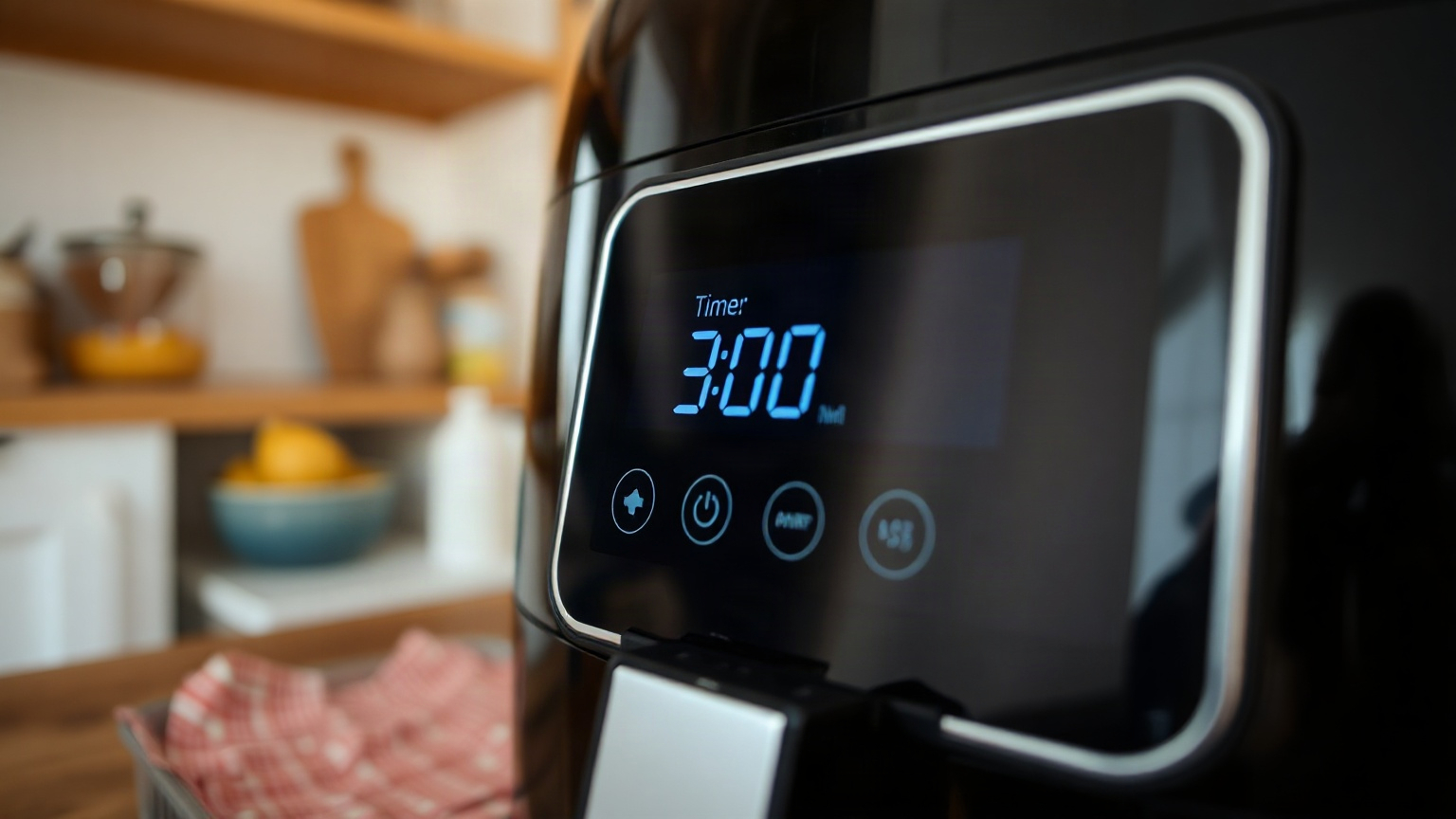
Every air fryer has a thermal cutoff — a small safety device that kills power the moment internal temperature crosses a dangerous threshold. It’s not dramatic. The unit just stops, mid-cook, as if someone pulled the plug. No warning light on most budget models, which is endlessly annoying.
I first ran into this with a 5.8-quart basket-style unit I was testing. I’d crammed it into a corner of my kitchen counter, maybe four inches from the backsplash. The exhaust vent on the back was blowing hot air directly against the tile, and that hot air had nowhere to go. The fryer shut off at the 12-minute mark every single time I tried to make chicken thighs at 400°F. Moved it to the center of the counter with at least six inches of clearance on all sides. Problem gone immediately.
The fix sounds almost too simple. But airflow is genuinely the first thing to check.
How Much Clearance Does an Air Fryer Actually Need?
Most manufacturers specify a minimum of 5 inches on the sides and back, and at least 8 inches above the unit. I’d go 6 inches minimum on the back if you can swing it — especially with toaster-oven-style air fryers, which vent from the rear and sides simultaneously. Never use one inside a closed cabinet or on a shelf with restricted overhead space. I know that sounds obvious but I’ve seen some creative placement decisions at friends’ houses.
Overfilling the Basket
Stuffing the basket too full isn’t just a food-quality issue — it directly causes overheating. When air can’t circulate through the food, the heating element works harder to compensate, interior temps spike, and the thermal cutoff trips. Fill the basket no more than halfway to two-thirds for best results. Single layer is ideal for anything that needs actual crispiness. Stacked frozen fries will shut your machine down before they’re done, and they’ll be soggy anyway. Not worth it.
Grease Buildup: The Silent Shutdown Trigger
This one catches people off guard. You clean the basket. You wipe the drawer. But the heating coil up top? Often ignored for months. Baked-on grease on the heating element creates hot spots — localized areas where temps spike well above the set cooking temperature. The temperature sensor reads the spike, the cutoff triggers, and your salmon goes cold at the nine-minute mark.
Cleaning the coil is straightforward once the unit is completely cool and unplugged. Flip it upside down (basket-style fryers), look at the coil, and if it looks dark brown or has visible buildup, you’ve found your problem. A soft toothbrush and a tiny amount of baking soda paste will do it. Don’t soak anything, don’t spray cleaners directly onto the element. Wipe dry, let it air out for 20 minutes before using again.
Fatty foods make this worse faster. Bacon, sausages, chicken thighs with the skin on — if you’re cooking these weekly, clean the coil monthly. For lighter use, every 2–3 months is probably fine. This single maintenance step fixes a surprising number of mysterious shutdown problems.
Power Supply and Electrical Issues
Air fryers draw a lot of power. A typical 5-quart model pulls 1,400 to 1,700 watts. A larger 10-quart or combo toaster-oven-air-fryer can hit 1,800 watts. That’s serious load for a standard 15-amp circuit.
Shared Circuits and Tripped Breakers
If your air fryer shuts off at unpredictable times — not always at the same point in the cook cycle — check what else is on that circuit. Plug the air fryer into an outlet in a different room, one you know isn’t shared with the microwave or kettle. If the problem disappears, you’ve found it: the circuit was overloaded. The air fryer itself is fine.
A dedicated 20-amp circuit is ideal for any high-wattage kitchen appliance. If you’re renting, that’s not always possible. At minimum, don’t run the air fryer and the microwave at the same time on the same circuit. I know it’s inconvenient. But tripping a breaker mid-cook is way more inconvenient.
Extension Cords and Power Strips
Don’t use them. I know that’s blunt, but it’s the right answer. Most power strips and extension cords aren’t rated for the sustained current draw of an air fryer, and a cord that’s undersized for the load will heat up, throttle power, or trip its own internal protection — killing your cook. Plug the air fryer directly into a wall outlet. This isn’t optional safety theater; undersized cords genuinely cause fires.
Hardware Faults: Door Switches, Thermal Fuses, and Control Boards
If you’ve ruled out airflow, grease, and power issues, the problem is probably inside the unit. There are a few hardware culprits worth knowing about.
The Door or Basket Switch
Air fryers have a safety switch that cuts power when the basket or door is open. If that switch is loose, sticky, or worn, it can intermittently read as “open” even when the basket is properly seated — and the unit shuts off. Test this by pushing the basket in firmly and wiggling it slightly. If the unit turns off and on as you do this, the switch is the issue. On most basket-style fryers, this is a relatively inexpensive repair, but it does require opening the housing.
A Blown Thermal Fuse
The thermal fuse is a one-shot device — once it trips (usually because of a serious overheating event), it won’t reset. The unit will either stop working entirely or shut off almost immediately after you start it. Unlike the thermal cutoff, which is resettable, a blown thermal fuse means the fuse needs physical replacement. This is a $5–$15 part, but if your unit is under warranty, let the manufacturer handle it. Testing requires a multimeter and some comfort with disassembly.
Control Board Issues
Rare, but it happens — especially on units that have been exposed to steam, liquid, or significant grease infiltration. A failing control board can cause random shutoffs that don’t correlate with temperature or power fluctuation. If everything else checks out and the unit keeps dying, a control board replacement or a new unit is the realistic answer. Honestly, if the air fryer is more than two or three years old and it’s a budget model, replacing it is probably more cost-effective than chasing a board repair.
An Edge Case Most Guides Miss: Steam and Moisture
Here’s something I haven’t seen covered in most troubleshooting articles: cooking high-moisture foods can trigger shutdowns too. Vegetables with high water content — broccoli, zucchini, mushrooms — release significant steam during cooking. If you’re using a smaller air fryer in a tight space, that steam can accumulate near the unit’s vents and get pulled into the intake. Excessive moisture near the temperature sensor or control components can cause erratic readings and unexpected shutoffs.
The fix is simple: pat wet vegetables as dry as possible before air frying. A quick press with paper towels matters more than people realize. It also helps the food actually crisp up, which is kind of the whole point of using an air fryer in the first place. Win-win.
And if you’re reheating food in a toaster oven, many of the same airflow and moisture principles apply — worth a read if you’re getting similar issues there.
Quick Comparison: Shutdown Causes and How to Test Each One
| Cause | How It Shows Up | Quick Test | Fix |
|---|---|---|---|
| Blocked airflow / bad placement | Shuts off after 8–15 minutes, often consistently | Move unit to open counter, 6″ clearance all sides | Reposition; never use in enclosed space |
| Overfilled basket | Cuts out mid-cook, food not done | Cook a smaller batch | Fill basket max 2/3 full; single layer when possible |
| Grease buildup on heating coil | Shuts off at unpredictable times, may smell slightly burnt | Inspect coil (unplugged, cooled) for brown/black buildup | Clean coil with toothbrush + baking soda paste |
| Circuit overload | Shuts off when another appliance runs | Plug into outlet on different circuit | Dedicate a circuit; don’t share with microwave/kettle |
| Extension cord / power strip | Random shutoffs, possible cord warmth | Plug directly into wall | Always use wall outlet directly |
| Faulty basket/door switch | Shuts off when basket is bumped or jostled | Wiggle basket while running — does it cut out? | Repair or replace switch; contact manufacturer |
| Blown thermal fuse | Unit shuts off seconds after starting | Test with multimeter for continuity | Replace fuse (or unit if out of warranty) |
| High-moisture foods / steam | Shuts off cooking wet vegetables or thawed frozen food | Pat food dry before cooking | Dry ingredients; improve kitchen ventilation |
What to Do If None of This Works
If you’ve worked through the table above and the air fryer is still shutting off, contact the manufacturer’s support line before doing anything else. Most brands — Cosori, Ninja, Instant, Philips — have decent warranty support and will often replace a unit that’s less than a year old with minimal hassle. Have your purchase receipt and model number ready.
If you’re shopping for a replacement and want something more reliable, I’d lean toward units with better build quality and more accessible vent design. The Cosori Pro II has been consistent in my testing, and the Ninja Foodi line tends to have solid thermal management. Both are mid-range and genuinely worth the money. For a roundup of compact options that are less prone to overheating in tight kitchens, the best mini toaster ovens guide covers some crossover picks. And if you want context on how hot these appliances actually run internally, the breakdown on how hot a toaster gets gives useful background on thermal management across appliance types.
For food safety context — especially relevant if your food only partially cooked before the shutdown — the USDA food safety guidelines are the reliable reference for safe internal temperatures. Partially cooked poultry is not something to guess about.
One more thing worth picking up if you’re serious about air frying: a good air fryer rack and accessory set elevates food off the basket floor, dramatically improving airflow under the food. It reduces hot spots and actually helps with the overheating problem, because the air can circulate more efficiently. I use one almost every cook now.
Final Thoughts
The frustrating thing about an air fryer shutting off mid-cook is that it’s almost never a mysterious defect. It’s usually placement, cleanliness, or load — things entirely within your control. Start with airflow, check the coil, isolate the circuit. Those three steps solve probably 80% of cases.
The hardware faults — door switches, thermal fuses — are real but less common, and they usually announce themselves with a specific pattern (shuts off immediately, or only when the basket is jostled). If you can describe the pattern clearly, you can diagnose it. And if the unit’s old and the repair cost approaches replacement cost? Buy new. Life’s too short to nurse a failing air fryer.
Frequently Asked Questions
Why does my air fryer keep turning off after a few minutes?
It’s almost certainly overheating, usually caused by blocked vents, an overfilled basket, or grease buildup on the heating coil. Move the unit to an open counter with at least 6 inches of clearance on all sides, clean the coil if it looks dark, and try a smaller batch of food. If the unit shuts off within the first 60 seconds every time, a blown thermal fuse is more likely.
Can an air fryer overheat and cause a fire?
Yes — though most modern air fryers have thermal cutoffs specifically to prevent this. The risk is highest when the unit is placed in an enclosed space, run on an undersized extension cord, or has significant grease buildup near the heating element. Always use the air fryer on a clear, heat-resistant surface with proper clearance, and clean it regularly. The USDA recommends keeping cooking appliances away from flammable materials at all times.
Why does my air fryer shut off when I open the basket?
That’s normal — air fryers are designed to pause or stop when the basket is removed, as a safety feature. The unit should resume or restart when you push the basket back in. If it won’t restart after the basket is reinserted, the door safety switch may be faulty or misaligned, and the basket isn’t registering as properly closed.
How do I reset an air fryer that keeps shutting off?
Unplug the unit, let it cool completely for 20–30 minutes, then plug it back in and restart. Many thermal cutoffs reset automatically once the temperature drops. If the unit still shuts off immediately after this cool-down reset, the thermal fuse (a non-resettable component) has likely blown and needs replacement. Check your model’s manual — some units also have a small reset button on the back or bottom.
Is it safe to use an air fryer that keeps turning off?
It depends on the cause. If it’s turning off due to overheating from poor placement or a dirty coil, fixing those issues makes it safe to use again. If there’s a hardware fault — especially a failing control board, damaged wiring, or a burning smell that isn’t from your food — stop using it immediately. A unit that shuts off randomly and smells like burning plastic should not be plugged in again until inspected by a qualified technician or replaced.

Written by
Emma founded Toastera to turn vague appliance advice into clear, researched, safety-first guidance on toasters and toaster ovens.
Free: the Toaster Oven Cheat Sheet
Get the printable cheat sheet (temps, cook times & safety tips) plus new recipes. No spam, unsubscribe anytime.