Your air fryer is leaving food soggy on the bottom because hot air isn’t circulating under the food — usually due to overcrowding, excess moisture, too much oil, or skipping the preheat. The basket design means food sitting directly on a flat surface blocks airflow from below, trapping steam instead of venting it. Fix the root cause and you’ll get that crisp underside you’re actually after.
Safety First: Air fryers operate at temperatures up to 400°F or higher. Never line the bottom of the basket with foil or parchment paper that blocks the vent holes — this restricts airflow, can cause overheating, and in worst cases may be a fire risk. Always keep the basket at least an inch from the unit’s sides and check that the drip tray is in place before cooking.
Quick Facts: Why Air Fryers Make Food Soggy on the Bottom
- Overcrowding the basket cuts airflow and traps steam — keep food in a single layer with at least ½ inch of space between pieces.
- Wet food surfaces are the single biggest cause of sogginess. Pat proteins and vegetables completely dry before they go in.
- Too much oil does the opposite of what you’d think — more than about 1–2 teaspoons for a full basket actually steams food instead of crisping it.
- Skipping the preheat (usually 3–5 minutes at your target temp) means food starts cooking in a cold environment, releasing moisture before crisping starts.
- Shaking or flipping halfway through is not optional for most foods — the contact side will steam in its own moisture without it.
I’ve run into every single one of these. The first time I made frozen fries in my air fryer, they came out somehow worse than the oven — pale, soft, a little sad. Took me an embarrassingly long time to realize I was just dumping too many in at once. Here’s what’s actually going on, cause by cause.
The Real Problem: Air Fryers Cook With Circulating Hot Air, Not Magic
An air fryer is essentially a compact convection oven with a very powerful fan. That fan drives hot air around the food at high speed, which strips moisture from the surface and creates the Maillard reaction — the browning that makes things taste good. But here’s the thing: that process only works if the hot air actually reaches all sides of the food. If something is blocking the airflow, especially underneath, you get steaming instead of crisping.
Steam is the enemy of crunch. It keeps the surface wet, prevents browning, and makes the bottom layer of whatever you’re cooking go soft. Most air fryer baskets have perforated bottoms for exactly this reason — the holes let air push up through and around food. Block those holes (with foil, parchment, or just too much food) and you’ve turned your air fryer into a very fast steamer.
The Five Reasons Your Food Is Coming Out Soggy
1. You’re Overcrowding the Basket
This is the most common mistake, full stop. When you stack food or pack it in too tightly, two things go wrong simultaneously. The hot air can’t circulate around each piece. And the moisture that cooks off has nowhere to go — it just sits there, collecting at the bottom of the basket, effectively steaming everything from below.
The fix is annoying but non-negotiable: single layer only, with visible gaps between pieces. For something like chicken wings, I leave at least ¾ of an inch between each one. If you’ve got more food than fits, cook in batches. Yes, it takes longer. No, there’s no shortcut that actually works. Serious Eats tested this extensively and found that halving the basket load consistently improved browning and texture — not a marginal improvement, a dramatic one.
2. The Food Was Wet Before It Went In
Raw chicken thighs straight from the package. Vegetables rinsed and tossed in immediately. Marinated anything dripping with liquid. These all share the same problem: too much surface moisture going in means the air fryer spends the first several minutes just evaporating water instead of browning.
Pat everything dry. Like, really dry — use paper towels and press down firmly. For proteins, I’ll sometimes leave them uncovered in the fridge for 30 minutes before air frying, which draws more moisture to the surface and lets it evaporate. For marinated food, drain it and blot it before it goes in the basket. The marinade flavor stays in the meat; the excess liquid just causes problems.
Frozen foods are a specific edge case worth mentioning — one that a lot of articles skip. Frozen fries, nuggets, or fish fillets often come with a thin layer of ice crystals on the surface. If you cook them straight from frozen without shaking the basket, that meltwater pools at the bottom and steams the lower layer. Cook frozen foods at a slightly higher temp (about 400°F) and shake the basket at the 5-minute mark, before they’ve fully thawed, to break up any pooling moisture early.
3. Too Much Oil (Yes, Really)
People assume more oil means crispier food. It doesn’t. In an air fryer, a light coating — we’re talking 1 to 2 teaspoons spritzed or brushed across an entire basket of food — is all you need. Use more than that and the oil doesn’t get hot enough to crisp before it starts dripping to the bottom of the basket, where it sits under the food and creates, again, steam.
I use a small oil mister for this instead of pouring straight from the bottle. Way more control. A quick two-second mist over each side of the food is usually enough. If you’re cooking something naturally fatty like salmon or chicken thighs, you often don’t need to add oil at all.
4. Skipping the Preheat
Not every recipe makes a big deal of this, but it matters. If you put food into a cold air fryer and then turn it on, the food starts releasing moisture before the environment is hot enough to evaporate it quickly. That slow start is where sogginess often begins.
Most air fryers need 3 to 5 minutes to preheat at your target temperature. Some models preheat faster — my current countertop unit hits 375°F in about 3 minutes. Check your manual, but if it doesn’t specify, 3 minutes at your cooking temp is a safe default. It’s a small step that makes a noticeable difference, especially for anything breaded.
5. Not Shaking or Flipping Halfway Through
The bottom of the basket is always the wettest spot. Even if you’ve done everything else right, food sitting in one position for the entire cook time will have a softer underside than the top. Shake the basket or flip pieces at the halfway point — usually around the 8–10 minute mark for a 15–20 minute cook. This exposes the previously bottom-side to direct hot airflow and gives moisture a chance to escape.
For small things like fries or chickpeas, shaking works fine. For larger pieces — chicken breasts, fish fillets, stuffed mushrooms — use tongs to flip each one individually. A quick shake won’t cut it for anything with significant surface area that needs even contact with the hot air.
A Quick Comparison: What Changes When You Fix Each Issue
| Problem | What Happens If You Don’t Fix It | The Fix | Expected Result |
|---|---|---|---|
| Overcrowded basket | Steaming, uneven cook, soggy bottom layer | Single layer, ½–¾ inch gaps, cook in batches | Even browning on all sides |
| Wet food surface | Slow start, moisture pools, no browning | Pat dry with paper towels; fridge-dry proteins 30 min | Faster crisping, better Maillard browning |
| Too much oil | Oil drips to bottom, steams food from below | Max 1–2 tsp per basket load; use an oil mister | Even light crunch without greasiness |
| No preheat | Food releases moisture before heat kicks in | 3–5 min preheat at target temp before loading | Immediate surface crisping from the start |
| No flipping/shaking | Bottom stays moist, top overcooks | Shake or flip at halfway mark | Consistent texture top and bottom |
The One Upgrade That Helps Most: A Proper Rack
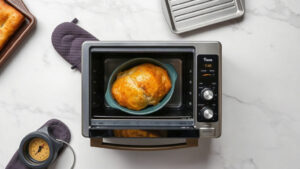
If your air fryer has a flat-bottomed basket or you’re using it as a toaster oven with an air fry function, getting a small elevated wire rack makes a genuine difference. Lifting food even half an inch off the basket floor dramatically improves airflow underneath. I use one for fish especially, where the bottom otherwise goes weirdly soft even with a quick flip.
For people using a toaster oven with air fry capability — which is a lot of us, honestly — this matters even more. Check out our guide to reheating food in a toaster oven for rack placement tips that apply equally well to air frying. And if you’re shopping for a new unit and want one with a better basket design, our list of best mini toaster ovens has options with well-designed airflow baskets worth considering.
One more thing that rarely gets mentioned: the drip tray. If yours is coated in old grease and residue, that residue smokes and steams at high heat, adding moisture to the cooking environment. Clean the drip tray every 2–3 uses. Takes 90 seconds and actually affects how your food comes out. Food Network’s air fryer cleaning guide has a solid breakdown of what to wipe down and how often.
The Edge Case Nobody Talks About: High-Water-Content Vegetables
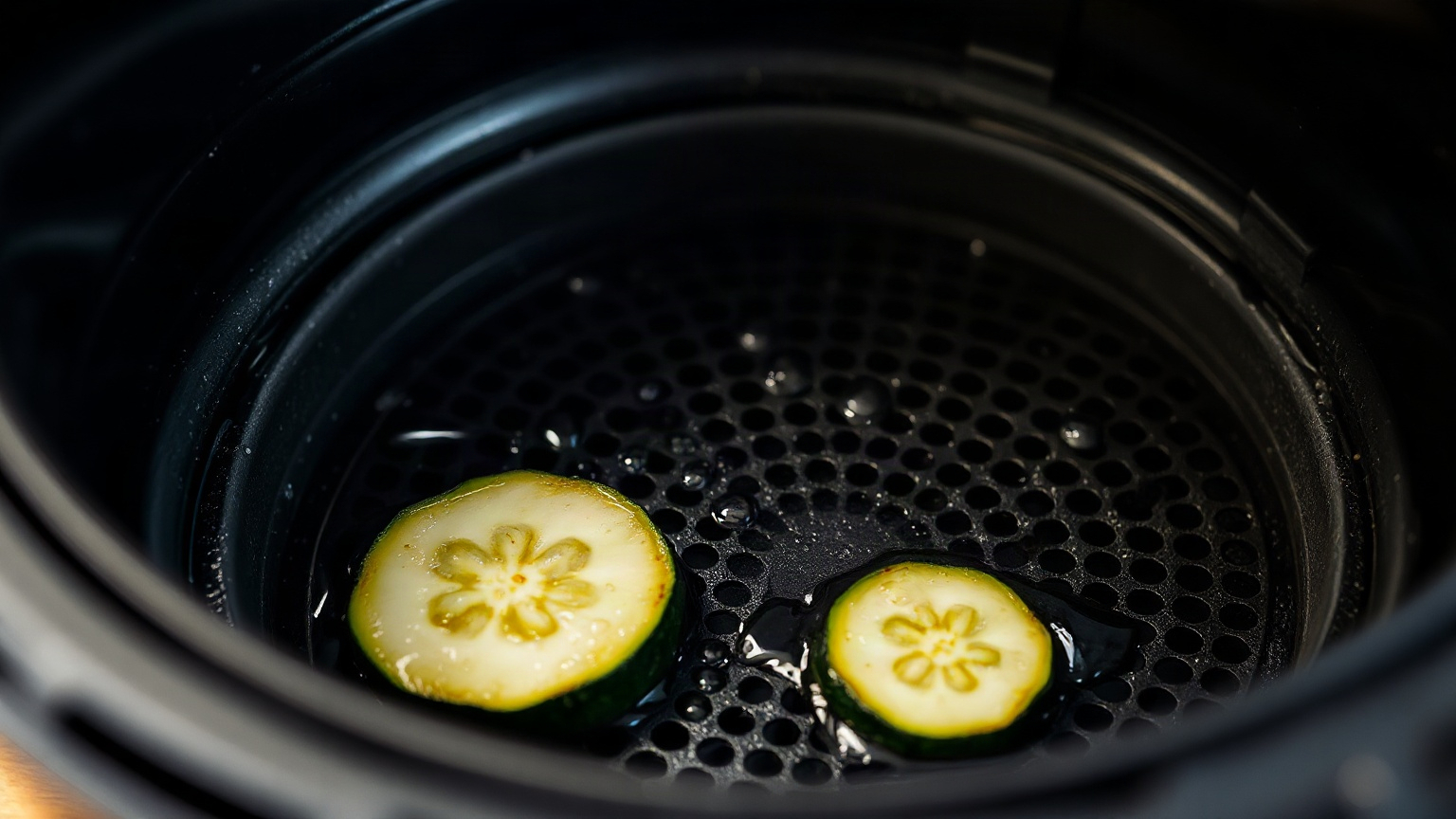
Zucchini, mushrooms, tomatoes, eggplant — these vegetables have very high water content and behave differently from, say, broccoli or bell peppers. Even if you dry them perfectly and space them well, they’ll release a significant amount of moisture during cooking, which pools under them in the basket.
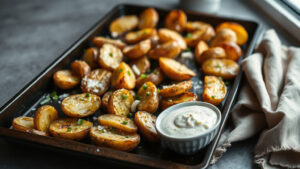
Two things help here specifically. First, salt them lightly and let them sit on a paper towel for 10–15 minutes before air frying. They’ll release some of that water before they ever hit the basket. Second, cook them at a higher temperature — 400°F rather than 375°F — and for a shorter time. High heat vaporizes the released moisture faster than it can collect. Mushrooms especially benefit from this; at 375°F they steam, at 400°F for 10–12 minutes they actually get that slightly caramelized edge that makes them good.
This is the kind of food-specific behavior that general “avoid sogginess” advice tends to gloss over. Different foods need different handling, and high-moisture vegetables are genuinely their own category.
Wrapping Up
Soggy air fryer food almost always traces back to one of five things: overcrowding, wet food, excess oil, no preheat, or no flip. Fix the one that matches your situation and you’ll notice the difference immediately — not after some gradual improvement, but on the very next batch. The air fryer is genuinely a good tool when you work with its mechanics rather than against them. Dry surfaces, hot start, room to breathe, and a flip at the halfway point. That’s really most of it.
If you’re curious how the cooking temperatures here compare to what your toaster oven runs at, our piece on how hot a toaster gets puts some of those numbers in useful context.
Frequently Asked Questions
Why is the bottom of my air fryer food always soft even when the top is crispy?
The bottom of the basket is where moisture collects as it cooks off the food. Hot air circulates primarily around and above the food, not as strongly below it, so the contact side stays wetter. Flipping or shaking halfway through the cook time, and making sure there’s airflow under the food (with a rack or by not overcrowding), solves this in most cases.
Does putting foil in the air fryer make food soggy?
Yes, if the foil covers the perforated holes in the basket bottom — which it almost always does — it blocks the upward airflow that crisps the underside of food. The trapped air under the foil becomes humid and steamy rather than dry and hot. If you need to use foil to catch drips, use a small piece that leaves the edges of the basket open, or better yet, just clean the drip tray more regularly.
Should I preheat my air fryer before cooking?
Yes. Preheating for 3–5 minutes at your target temperature means food hits a hot environment immediately, which vaporizes surface moisture quickly and starts browning right away. Without preheating, food releases moisture into a warming (not hot) space, and that moisture sits around long enough to make the surface soggy before browning can occur.
Why is my frozen food soggy in the air fryer?
Frozen foods have ice crystals on the surface that melt into liquid water at the start of cooking, and that water collects at the bottom of the basket. Cooking at 400°F and shaking the basket at the 5-minute mark — before the food has fully thawed — breaks up pooling meltwater and keeps it from steaming the bottom layer. Don’t go below 390°F for frozen foods, or the defrosting phase lasts too long.
How much oil should I use in an air fryer to avoid soggy food?
For a standard 4–6 quart basket loaded with food, 1 to 2 teaspoons of oil is usually the right amount. More than that and excess oil drips to the basket floor where it heats and steams the food from below rather than coating and crisping it. An oil mister gives you the most even, controlled coverage and is worth having if you use your air fryer often.

Written by
Emma founded Toastera to turn vague appliance advice into clear, researched, safety-first guidance on toasters and toaster ovens.
Free: the Toaster Oven Cheat Sheet
Get the printable cheat sheet (temps, cook times & safety tips) plus new recipes. No spam, unsubscribe anytime.