Air fryers rattle for a handful of specific, fixable reasons: a loose basket, a foreign object caught in the fan, accumulated grease on internal components, or a fan blade that’s slightly out of balance. Most rattling noises disappear once you’ve identified the source and spent five minutes addressing it. A few cases do signal something more serious, and I’ll walk you through how to tell the difference.
Safety First: Never open your air fryer’s outer casing while it’s plugged in — the internal fan and heating element carry live voltage during and immediately after operation. If you suspect a broken fan blade or loose internal component, unplug the unit and let it cool for at least 20 minutes before inspecting. If you see sparks, smell burning plastic, or the rattle starts suddenly during cooking, switch the unit off at the wall immediately and don’t use it again until it’s been inspected.
Quick Facts: Air Fryer Rattling Noise
- The most common cause is a misaligned or slightly warped basket that vibrates against the drawer housing — takes about 30 seconds to check and fix.
- Fan-related rattles (the second most common cause) are louder than basket rattles and tend to pulse rather than rattle continuously.
- A grease or crumb buildup of as little as 2–3mm on a fan blade is enough to throw it off-balance and create noise.
- Loose screws on the outer housing account for a surprising number of rattles — especially on budget models after three to six months of use.
- If the rattle started after a drop or collision, assume a broken internal component until proven otherwise and don’t use the unit.
The Basket Is Almost Always the First Thing to Check
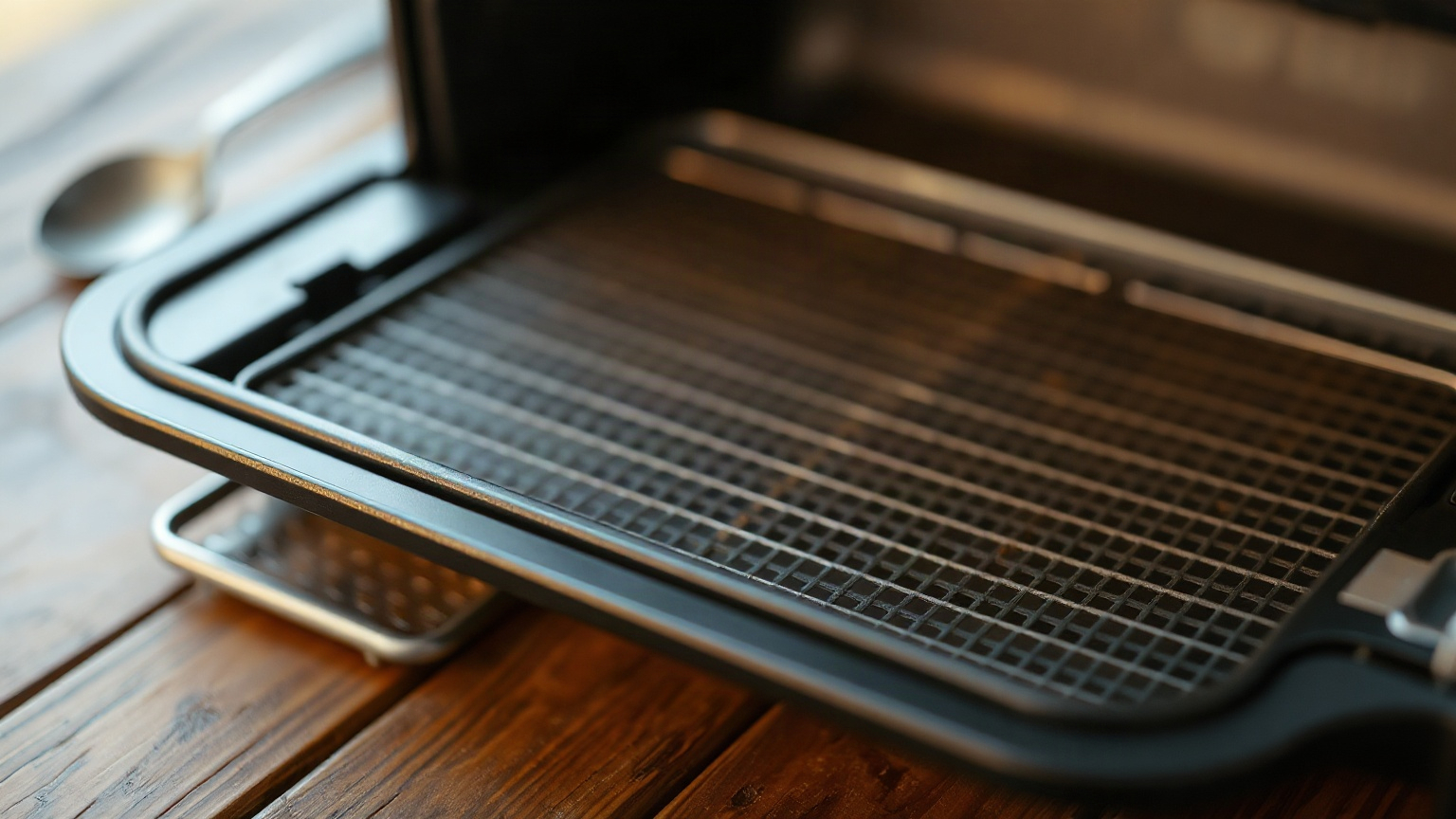
Pull the basket out. Look at the edges where it sits in the drawer. If there’s any warping — even a subtle bow of 1–2mm — that basket will rattle every time the fan kicks hot air around it. I’ve tested this myself on a Cosori 5.8-quart unit. The basket looked fine until I set it on a flat counter and pressed the corners. One corner lifted noticeably. That tiny gap was enough to create an intermittent clicking rattle at high fan speeds.
Also check that the basket is fully seated. I know that sounds obvious. But air fryer drawers have a locking click, and if you haven’t pushed it in past that click, the basket sits slightly high and vibrates freely against the outer drawer. Annoying, loud, and completely preventable.
The Crisper Plate (the Insert Tray) Is Its Own Problem
Most air fryers include a perforated crisper plate that sits inside the basket. That plate can shift around during cooking — especially if you’re shaking the basket mid-cycle. A loose crisper plate produces a low-frequency rattle that sounds like it’s coming from inside the food chamber, which it is. Pull it out, reposition it centered in the basket, and push the drawer back in firmly. That alone fixes probably 40% of the “my air fryer suddenly started rattling” complaints I’ve seen in appliance forums.
Fan-Related Rattles: What They Sound Like and Why They Happen
The fan in a typical air fryer spins at somewhere between 1,500 and 2,500 RPM depending on the model and power setting. At those speeds, even small imbalances create significant vibration. A fan rattle is usually rhythmic — almost like a playing card in bicycle spokes, but faster. It’ll often get louder as the unit heats up, because metal components expand slightly and any loose fit gets worse.
Grease and Crumbs on the Fan Blade
This is the cause most people miss completely. You clean the basket, you wipe the interior walls, but the fan blade — which sits behind a vent above the food chamber — collects a fine spray of atomized grease during every cooking session. Over time that film hardens. It doesn’t coat the blade evenly, so one side gets heavier than the other. Off-balance. Rattle starts.
According to Serious Eats’ air fryer testing team, grease migration into the fan housing is one of the primary reasons air fryers degrade in performance over 12–18 months of regular use. Cleaning the fan blade every 4–6 weeks if you cook greasy foods (bacon, wings, anything breaded) is genuinely worth the effort.
To clean it: unplug the unit, let it cool completely, then use a small cleaning brush set designed for air fryers to scrub the fan blade through the upper vent. A damp cotton swab works well for getting into tight spots. Don’t use a lot of water. And don’t spray anything directly into the vent.
A Damaged or Warped Fan Blade
If the rattle appeared suddenly after the unit was dropped, moved roughly, or shipped, a bent or cracked fan blade is the likely culprit. This is not a DIY fix. A cracked blade spinning at 2,000+ RPM is a safety issue, not just an annoyance. Contact the manufacturer — most brands (Ninja, Cosori, Instant, Philips) have warranty replacement programs, and a 12-month warranty is standard. Some rattles people assume are “normal wear” are actually warranty claims waiting to happen.
Loose Screws, Housing Vibration, and Other Physical Causes
Budget air fryers often use lightweight outer housings with screws that work themselves loose over months of thermal cycling — the constant heating and cooling causes slight expansion and contraction, and eventually something shifts. Run your hand along the base and sides of the unit while it’s running (not touching vents). If you can feel a buzz in a specific panel that goes away when you press it lightly, that’s your answer.
Tightening the outer screws is straightforward enough with a small Phillips head. But check first that there’s nothing underneath the unit vibrating against it — a rubber mat, a baking sheet on the counter below, or even an adjacent appliance. I once spent a good ten minutes convinced my air fryer had developed a problem, only to realize it was sitting on top of a silicone trivet that was amplifying vibration from the counter itself. Embarrassing. Easily fixed.
The Surface Your Air Fryer Sits On Matters More Than You’d Think
Hard surfaces like granite or tile countertops reflect and amplify vibration. A heat-resistant silicone mat placed under the air fryer can dampen a lot of ambient vibration noise. It also protects your countertop from heat damage, so it’s doing two jobs at once. Not a miracle cure if the fan is actually broken, but for normal fan-operation vibration that transmits into a hard surface, it makes a real difference.
When the Rattle Is Actually Normal (And When It Absolutely Isn’t)
Not every sound is a problem. Air fryers make noise. The fan is loud by design — it’s circulating air at high speed to achieve that rapid convection effect. A consistent hum or whooshing sound throughout cooking is completely normal. Even a slight clicking when the unit first heats up is normal thermal expansion.
| Sound Type | Likely Cause | Normal or Concerning? | Action |
|---|---|---|---|
| Steady hum/whoosh | Fan operation | Normal | None needed |
| Clicking on startup | Thermal expansion | Normal | None needed |
| Intermittent rattle | Loose basket or crisper plate | Normal, fixable | Reseat basket firmly |
| Rhythmic rattle during cook | Unbalanced fan (grease buildup) | Concerning over time | Clean fan blade thoroughly |
| Sudden loud rattling | Foreign object or broken blade | Stop and inspect | Unplug immediately |
| Rattling + burning smell | Debris on heating element | Stop immediately | Unplug, cool, inspect/replace |
The Edge Case Nobody Mentions: Cooking Light Foods at High Temp
Here’s one I haven’t seen covered elsewhere. If you’re air frying light foods — thin potato chips, rice paper, fresh herbs — at temperatures above 380°F, the fan can actually move those foods around inside the basket. A chip that gets caught between the crisper plate and the basket wall creates a flapping, rattling noise that sounds exactly like a mechanical issue. It’s not. It’s just your food misbehaving. Use a rack or a small oven-safe weight to keep light items in place, or drop your temp to around 350°F and extend the cook time slightly. I do this with homemade kale chips — 325°F for 12 minutes instead of 375°F for 6, and no rattling, better texture too.
For more on managing tricky foods in these appliances, the Food Network’s air fryer tips have a few useful notes on airflow management for light ingredients.
Step-by-Step: How to Find and Fix Your Air Fryer’s Rattle in Under 10 Minutes
- Step 1 — Unplug and cool. Never diagnose a rattle on a hot unit. Twenty minutes cooling minimum.
- Step 2 — Check the basket. Remove it, set it on a flat surface, press each corner. Re-insert firmly until you hear the click.
- Step 3 — Check the crisper plate. Make sure it’s centered and lying flat in the basket. Give it a gentle wiggle — it should barely move.
- Step 4 — Inspect the fan vent. Shine a torch through the upper vent. Look for visible grease buildup, food debris, or anything that doesn’t belong there.
- Step 5 — Check the outer housing. Press each panel. If any flex, check the screws on that panel.
- Step 6 — Consider the surface. Move the unit to a different surface to rule out counter vibration. A folded towel works for a quick test.
- Step 7 — Test run. Plug back in, run at 375°F for three minutes, empty basket. Listen carefully. If the rattle is gone, done. If it persists and sounds internal, contact the manufacturer.
If your air fryer is also struggling with uneven cooking results and not just noise, it might be worth reading up on how to reheat food in a toaster oven for comparison — sometimes switching techniques makes a bigger difference than chasing down appliance quirks. And if the unit is aging badly, checking out the best mini toaster ovens might make more sense than continued troubleshooting.
Final Thoughts
The vast majority of air fryer rattles are basket or crisper plate issues — annoying, completely harmless, and fixed in thirty seconds. Fan rattles from grease buildup are the next tier up: more work to fix, but still a DIY job if you’re comfortable with a cleaning brush and some patience. Anything that starts suddenly, involves a smell, or gets worse over time deserves more caution. Don’t ignore a worsening rattle the way you’d ignore a squeaky cabinet hinge. These are appliances running at 400°F with high-speed internal fans. Worth taking seriously.
Most people troubleshoot their air fryer noise once, fix it, and never think about it again. The ones who keep having problems are usually skipping regular cleaning of the fan area. Add it to your rotation every month if you cook with your air fryer more than three or four times a week. That’s genuinely all it takes.
Frequently Asked Questions
Why is my air fryer making a rattling noise?
The most common cause is a loose or misaligned basket that vibrates against the drawer housing during fan operation. The second most common cause is a crisper plate that’s shifted off-center inside the basket. Less frequently, grease buildup on the fan blade creates an imbalance that produces a rhythmic rattling sound.
Is a rattling air fryer dangerous?
A loose basket or crisper plate rattle is not dangerous — it’s purely mechanical and easy to fix. A fan blade rattle is worth investigating promptly, because a cracked or severely unbalanced blade spinning at high RPM is a potential safety concern. If the rattle is accompanied by any burning smell or smoke, stop using the unit immediately and unplug it.
Why did my air fryer suddenly start rattling?
Sudden rattles usually mean something has shifted or broken — a basket that got bumped and is now slightly misaligned, a crisper plate that moved, or (less commonly) a fan blade damaged by a dropped item. If the unit was recently moved or dropped, inspect the fan blade through the upper vent carefully before using it again.
How do I stop my air fryer from rattling?
Start by removing the basket and re-inserting it firmly until it clicks into place. Then check that the crisper plate sits flat and centered inside the basket. If the rattle persists, clean the fan blade through the upper vent using a small brush to remove grease buildup, and check whether the outer housing has any loose screws.
Can food inside the air fryer cause a rattling noise?
Yes. Light foods like thin chips, rice paper, or leafy greens can be moved by the fan at high temperatures and rattle against the basket walls or crisper plate. This is especially common at temperatures above 380°F. Lowering the temperature by 20–30°F and extending cook time slightly usually solves it, or use a small rack to weigh items down.

Written by
Emma founded Toastera to turn vague appliance advice into clear, researched, safety-first guidance on toasters and toaster ovens.
Free: the Toaster Oven Cheat Sheet
Get the printable cheat sheet (temps, cook times & safety tips) plus new recipes. No spam, unsubscribe anytime.