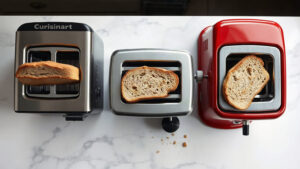
The air fryer wins for crispiest frozen french fries, full stop. Circulating hot air at 400°F with almost no surface area wasted means every fry gets blasted from multiple angles — you get a genuinely crunchy exterior in about 12 minutes. A toaster oven can absolutely produce good fries, but it takes more effort and the results are slightly less consistent, especially with thicker cuts.
Safety First: Both air fryers and toaster oven air fryers run heating elements at 400°F or higher. Never reach into either appliance while it’s operating, keep the basket or rack away from flammable surfaces when removing it, and use oven mitts — the metal trays and baskets retain heat longer than you’d expect. If you’re using a toaster oven with a crumb tray, clean out any accumulated oil before cooking at high heat to reduce smoke and fire risk.
Quick Takeaways
- Air fryers reach peak crispiness faster — 10 to 15 minutes at 400°F, no preheating required for most models.
- Toaster ovens need preheating (10 minutes minimum) and do better with a wire rack instead of the solid tray to let hot air circulate underneath.
- Thin-cut or shoestring fries favor the air fryer; thick steak fries or waffle fries are more forgiving in a toaster oven.
- Overcrowding is the number-one mistake in both appliances — it steams the fries instead of crisping them.
- If you only have a toaster oven, a quick mid-cook flip and an extra 2–3 minutes at the end makes a bigger difference than any other trick.
Why Frozen Fries Go Soggy (And What Actually Stops It)
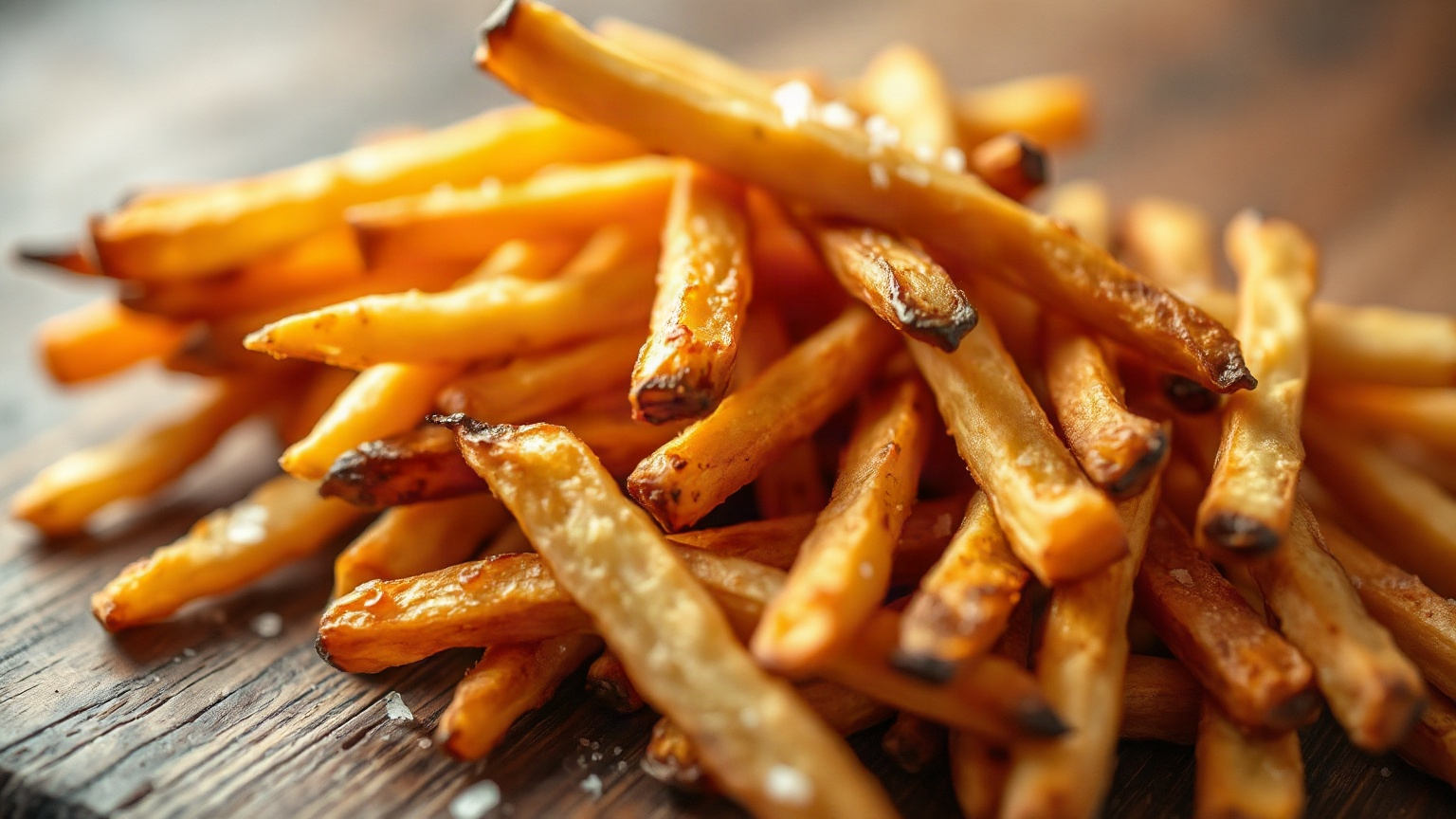
Frozen fries are already partially cooked — most are par-fried at the factory. So what you’re really doing at home is driving off moisture and re-crisping the outer starch layer. Steam is the enemy. Any trapped moisture around the fries basically poaches them from the outside, and you get that sad limp situation even though they look golden.
This is why both appliance choice and how you load them matters so much. A conventional oven with a solid sheet pan is the worst offender because steam just sits there. An air fryer basket fixes this almost completely — the perforations let moisture escape while hot air keeps cycling. A toaster oven sits somewhere in the middle, and that’s not a knock on it, it just means you have to be smarter about setup.
One more thing: don’t thaw the fries first. I made this mistake once thinking it would speed things up. It doesn’t. It just releases more water and you end up with mush.
Air Fryer: The Faster, Crispier Option
Temperature and Timing
400°F is your number. Set the air fryer, give it about 3 minutes to come up to temp (some models preheat themselves, some don’t — check your manual), then dump the frozen fries in a single layer. I say “single layer” loosely — you can stack them slightly, but if you’re piling in a full bag at once, split it into two batches.
Thin shoestring or crinkle-cut fries: 10 to 12 minutes, shake halfway. Steak fries or the thicker pub-style ones: 13 to 16 minutes, still shake halfway. The shake is not optional. The fries on the bottom get more contact heat and will brown faster — without the shake, the top ones steam more than they crisp.
The Ninja Foodi and similar basket-style air fryers handle frozen fries almost effortlessly. The Cosori, the Instant Vortex — honestly, pretty much any basket air fryer does a solid job here. It’s hard to mess up unless you seriously overload the basket.
The One Thing Air Fryers Do Better
Speed and consistency. The confined space means every surface of the fry sees hot moving air. No cold spots, no uneven browning from one side of the tray being closer to the heating element. I’ve run this test more times than I’d like to admit, and the air fryer produces fries that crunch when you bite them — not just on the first one right out of the basket, but on the third one two minutes later.
Toaster Oven: Slower, But Not Bad — If You Set It Up Right
The Setup Makes or Breaks It
The toaster oven’s main problem for fries is airflow — or the lack of it. Most people use the solid baking tray that comes with the unit. That traps steam directly underneath each fry, and the bottom goes soft while the top (maybe) browns. The fix is simple: use a raised wire rack inside your toaster oven. Put the wire rack on the baking tray, spread the fries on the rack, and now hot air circulates underneath too. This one change gets you maybe 70–80% of the way to air fryer results.
Preheat fully. I know, it’s annoying. But 10 minutes at 425°F — yes, slightly higher than the air fryer setting because toaster ovens don’t circulate air as aggressively — makes a real difference in that initial hit of heat the fries need. I’ve tested skipping the preheat and skipping it costs you at least 3–4 minutes of cook time and softer fries overall.
Temperature and Timing for Toaster Oven Fries
425°F, wire rack, single layer. Thin fries: 15 to 18 minutes total, flip once at the halfway mark. Thicker cuts: 20 to 25 minutes, flip once. If your toaster oven has a convection setting, use it — that fan changes everything and brings results much closer to a dedicated air fryer. With convection on, you can drop to 400°F and shave a few minutes off.
The other trick that the Reddit thread on this topic actually got right: blast them under the broil setting for the final 2 minutes. Watch closely — it goes from golden to burned faster than you’d think. But that last broil hit adds a crisp layer that the toaster oven otherwise struggles to achieve on its own.
Head-to-Head: Air Fryer vs Toaster Oven for Frozen Fries
| Factor | Air Fryer (Basket) | Toaster Oven (Standard) | Toaster Oven (Convection) |
|---|---|---|---|
| Preheat Time | 2–3 minutes | 10 minutes | 8 minutes |
| Cook Temp | 400°F | 425°F | 400°F |
| Cook Time (thin fries) | 10–12 min | 18–20 min | 14–16 min |
| Cook Time (thick fries) | 13–16 min | 22–26 min | 18–22 min |
| Crispiness Result | Excellent | Fair to Good | Good to Very Good |
| Batch Capacity | Small–Medium | Medium–Large | Medium–Large |
| Even Browning | Very Even | Inconsistent | Mostly Even |
| Cleanup | Easy (basket) | Moderate | Moderate |
One thing that table doesn’t capture: if you’re feeding more than two people, the air fryer’s small basket becomes a real limitation. You’d have to run two batches, and by the time the second batch is done, the first batch has cooled. For a family of four, honestly, a toaster oven wins on pure practicality even if the crispiness isn’t quite as impressive. Worth keeping in mind.
The Edge Cases: What Neither Article Usually Mentions
Waffle Fries and Curly Fries Are Different
Waffle fries have all those ridges that trap steam. In an air fryer, those ridges are actually an advantage — more surface area for crisping. But in a toaster oven? Those ridges face the tray and you get a soft underside no matter how careful you are. For waffle fries specifically, the air fryer wins by a wider margin than it does for regular cuts.
Curly fries are weird because they tangle. In an air fryer basket they form a jumbled pile, which sounds bad but actually works because the spiral shape creates natural air gaps. In a toaster oven they’re harder to arrange and you get uneven results. Air fryer again.
Stale Frozen Fries (The Freezer Burn Problem)
If your fries have been in the freezer too long and have frost on them or have that dry white freezer-burn look, no appliance is going to fully save them — but the air fryer gets closer. The aggressive air circulation at least removes exterior moisture fast enough to get some crispiness before they dry out completely. A toaster oven will produce a leathery result with freezer-burned fries. This isn’t a situation anyone plans for, but it happens.
Using a Toaster Oven Air Fryer Combo
This deserves its own mention. Models like the Breville Smart Oven Air Fryer Pro or the Cuisinart TOA-70 blur this whole comparison. They’re toaster ovens with a true air fry mode — meaning a fan that runs at high speed while maintaining high heat. If you have one of these, use the air fry setting, not the bake setting, and you’ll get results almost identical to a basket air fryer but with more capacity. It’s the best of both situations and honestly what I’d recommend if you’re buying something new and cook for more than one person. For a broader look at sizing options, the best mini toaster ovens guide covers some solid compact options too.
For anything involving reheating leftovers — not just fries — the approach changes slightly. Check out the full breakdown on reheating food in a toaster oven for more on that.
Serious Eats has a good deep-dive on the science of why starch behaves the way it does at high heat, which explains the whole crispy-vs-soggy thing better than I can in a paragraph.
My Actual Verdict
If you have a basket air fryer and you’re cooking for one or two people, use it. 400°F, 12 minutes, shake the basket once, done. The fries are genuinely crispy and you’re barely thinking about it.
If you have a standard toaster oven, it can work — but you need the wire rack, the full preheat, and the broil finish. Skip any of those steps and you’re settling for mediocre results. Fair warning.
If you’re buying something new and want one appliance that handles fries well and also does everything else, get a toaster oven with a true air fry mode. The Breville Smart Oven Air Fryer Pro is expensive but genuinely good. The Cuisinart TOA-70 is a step down in price and still performs well on fries. Either one makes this whole debate irrelevant.
For more on how toaster oven heating elements compare across different tasks, how hot a toaster gets breaks down the heat range differences in more detail.
Frequently Asked Questions
Can you cook frozen french fries in a toaster oven without them getting soggy?
Yes, but setup matters more than it does in an air fryer. Use a wire rack instead of the solid tray, preheat fully to 425°F, and don’t skip flipping halfway through. A 2-minute broil at the end is optional but makes a noticeable difference in final crispiness.
What temperature and time should I use for frozen fries in an air fryer?
400°F for 10 to 15 minutes, depending on thickness — shoestring fries are done around 10 to 12 minutes, steak fries need closer to 15. Shake the basket halfway through. No oil is needed since frozen fries already have oil on them from the par-frying process.
Is an air fryer or toaster oven better for frozen french fries?
An air fryer produces crispier results faster, especially for thin-cut fries. A toaster oven works better when you’re cooking a larger batch, since the basket in most air fryers is too small to handle more than a serving or two without crowding. A toaster oven with a built-in air fry function is the best option if you want both capacity and crispiness.
Do I need to preheat my air fryer for frozen fries?
A short preheat of 2 to 3 minutes helps but isn’t strictly required for most basket air fryers — they heat up fast enough that the fries start crisping within the first couple minutes regardless. Toaster ovens absolutely need a full preheat; skipping it results in noticeably softer fries because the initial heat burst is what starts crisping the outer starch layer.
Why are my frozen fries still soggy after air frying?
Overcrowding is almost always the culprit. When fries are stacked too deep, they steam each other instead of crisping. Cook in a single loose layer, run two smaller batches if needed, and make sure you shake the basket at least once mid-cook. If your air fryer runs hot (some do), try bumping it up to 410°F on the second batch and see if that helps.

Written by
Emma founded Toastera to turn vague appliance advice into clear, researched, safety-first guidance on toasters and toaster ovens.
Free: the Toaster Oven Cheat Sheet
Get the printable cheat sheet (temps, cook times & safety tips) plus new recipes. No spam, unsubscribe anytime.