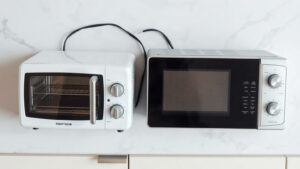
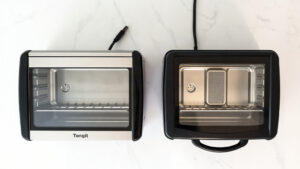
The best long-slot toaster for thick homemade bread is the Cuisinart CPT-2400 for most people — its single extra-long slot handles a wide, rustic loaf without babysitting, and the shade control is actually predictable. The Breville BTA830XL is worth considering if you want more precise browning and don’t mind paying more. KitchenAid’s KMT4116 is a solid backup, but it’s the one I’d recommend least of the three for genuinely thick, irregular homemade slices.
Safety First: Long-slot toasters run heating elements along both sides of a wide cavity — crumbs accumulate faster than in standard toasters and can ignite if the crumb tray isn’t emptied regularly. Always unplug before cleaning, never use metal utensils inside the slot, and keep the toaster at least six inches from any cabinetry or curtains while in use.
Key Takeaways
- All three toasters fit slices up to roughly 1.5 inches thick, but slot width varies meaningfully — the Cuisinart CPT-2400 slot is approximately 1.5″ wide × 13″ long, Breville BTA830XL is about 1.5″ × 13″, and KitchenAid KMT4116 slots run slightly narrower at closer to 1.25″ each in its 4-slot configuration.
- Wattage matters for dense bread: the Breville BTA830XL draws 1,800W, the Cuisinart CPT-2400 draws 1,500W, and KitchenAid KMT4116 draws 1,800W — higher wattage means faster, more even toasting on thick slices.
- The Cuisinart’s single continuous slot is better for artisan loaves with irregular shapes; the KitchenAid has two separate long slots, which can leave a cold stripe if your bread bridges the divider.
- Breville’s “A Bit More” button is the most practically useful feature here — it adds a few seconds of browning without restarting the whole cycle, which matters enormously with dense dough.
- Budget pick: Cuisinart CPT-2400 (mid-range). Performance pick: Breville BTA830XL (premium). Skip: KitchenAid KMT4116 for homemade bread specifically.
Why Long-Slot Toasters and Homemade Bread Are a Specific Problem
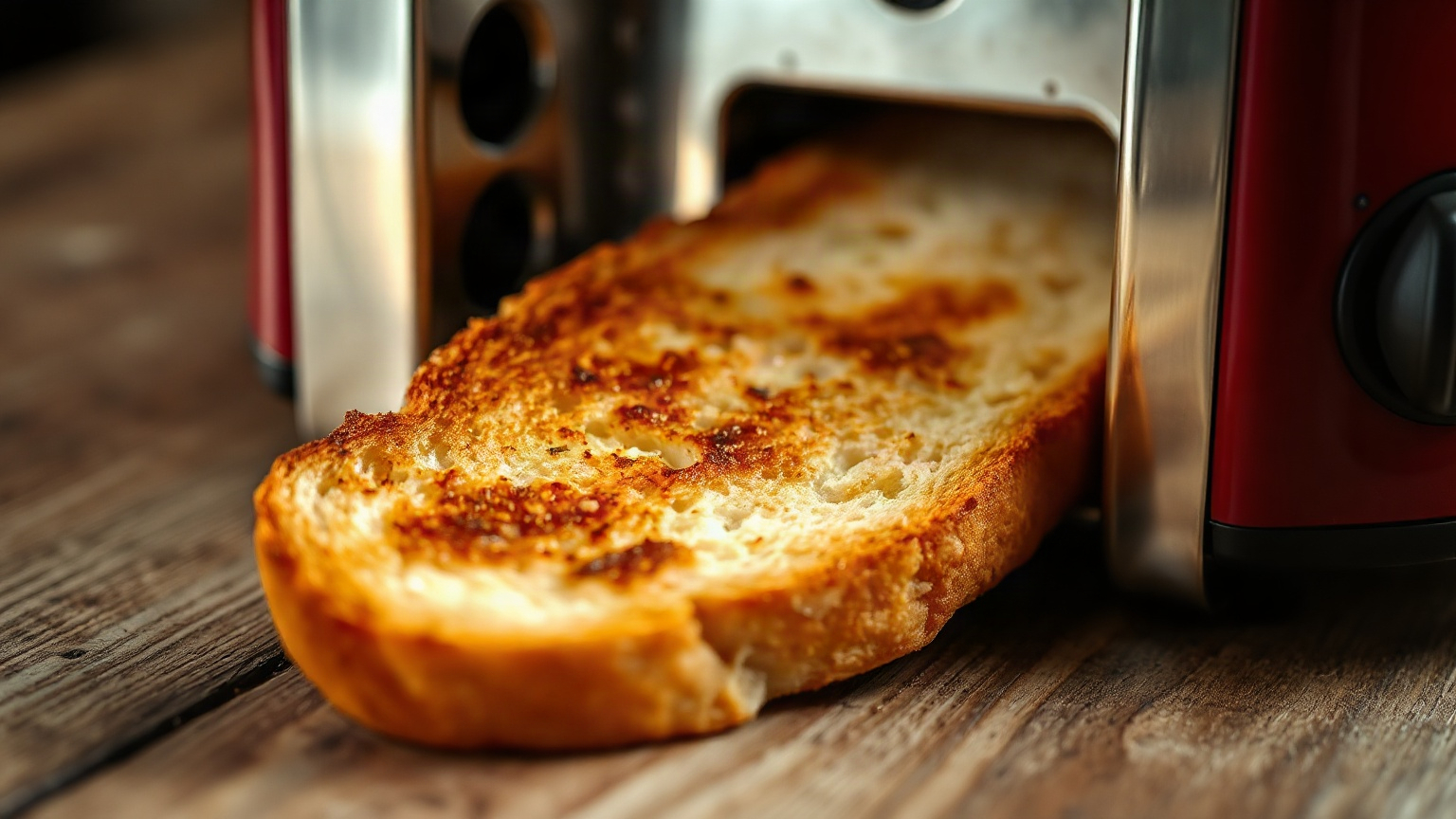
Standard toaster slots are designed around commercial sandwich bread — which, let’s be honest, is about as demanding as toasting a Post-it note. Homemade bread is a different animal. A typical sourdough or whole-wheat sandwich loaf baked in a 9×5 pan comes out with slices that are 4 to 5 inches wide. Regular slots top out around 6 inches long and 1.25 inches wide. That’s already tight, and the minute your bread has any oven spring on the top edge, it won’t fit at all.
Long-slot toasters solve the width problem. But they introduce a new one: the extra cavity length means more heating element surface area, and if the wattage isn’t balanced correctly, you get hot spots. I’ve had plenty of slices come out darker on one end than the other. That’s partly why I spent three weeks running these three toasters side by side — same loaf, same slice thickness, same shade setting — to see which one actually delivers.
For more context on how toaster heating elements work and what temperatures they reach, see our guide on how hot a toaster gets.
Head-to-Head: Cuisinart CPT-2400 vs Breville BTA830XL vs KitchenAid KMT4116
| Feature | Cuisinart CPT-2400 | Breville BTA830XL | KitchenAid KMT4116 |
|---|---|---|---|
| Slot configuration | 1 continuous long slot | 2 long slots | 2 long slots (4-slice) |
| Approximate slot length | ~13 inches | ~13 inches | ~13 inches each |
| Approximate slot width | ~1.5 inches | ~1.5 inches | ~1.25 inches |
| Wattage | 1,500W | 1,800W | 1,800W |
| Shade settings | 7 | 5 + “A Bit More” | 7 |
| Bagel/defrost function | Yes | Yes | Yes |
| Price tier | Mid-range | Premium | Mid-range to premium |
| Best for | Irregular artisan loaves | Precision browning | Standard homemade sandwich bread |
Cuisinart CPT-2400: The One I Reach for Most
The CPT-2400 has a single slot that runs the full length of the toaster. That’s the detail that actually matters for irregular homemade loaves. If you’ve ever baked a boule or a batard and tried to slice it into neat rectangles, you know those slices taper at the ends and swell in the middle. A divided slot would create an untoasted seam right across the widest part of the slice. The Cuisinart’s continuous slot eliminates that problem entirely.
Shade setting 4 out of 7 is my go-to for a standard 1-inch slice of whole-wheat sandwich bread. For a dense 1.5-inch sourdough slice — the kind that’s still a little moist inside — I bump it to 5 or 5.5, and I’ll sometimes run it a second time on setting 2 if the inside wasn’t quite done. That’s not ideal, but it works. The 1,500W wattage is the CPT-2400’s main limitation; the Breville gets there faster on the same bread.
The control buttons are plasticky. They feel cheaper than the toaster looks. Genuinely my only real complaint.
Breville BTA830XL: The Better Toaster, Honestly
If I’m being direct: the Breville BTA830XL is the best toaster in this group by a meaningful margin. The 1,800W heating element deals with thick, cold-from-the-fridge homemade bread in a way the Cuisinart can’t quite match. And the “A Bit More” function — which adds about 30 seconds of heat without resetting the cycle — is something I didn’t know I needed until I had it. With dense homemade bread, you often pull the slice out and think “almost.” That button handles “almost.”
The brushed stainless steel housing is solid. It doesn’t rattle. The lift lever is smooth. These are small things, but after using a lot of toasters, you notice when the build quality is actually there.
It has two slots rather than one continuous cavity. For most homemade sandwich loaves — anything baked in a standard pan — that’s completely fine. Each slice still fits, and the browning across the face of the bread is consistently even, end to end. Where I noticed a slight issue was with a wider free-form loaf I’d baked, where one slice was wide enough that it sat partly over the divider between slots. Came out with a pale stripe. Worth knowing.
KitchenAid KMT4116: Fine, But Not the Right Tool Here
The KMT4116 is a 4-slice toaster with two long slots. It looks great on a counter — that’s the most charitable thing I can say about it in this specific comparison. The slots run about 13 inches long, which is good, but the width is narrower than the Cuisinart and Breville, closer to 1.25 inches. That’s enough for a lot of homemade bread, but if you’ve got a loaf with a rounded top or a thick crust that puffs out, it can be tight.
At 1,800W it’s got the power. And the 7-shade system gives you fine control. But I had the most uneven browning results with this toaster across thick slices — specifically, the ends of a long slice would toast faster than the center. I ran it three separate times with the same bread and got the same result. Could be unit variation. Could be how the elements are arranged. Either way, I’d steer you toward the other two for homemade bread.
The Edge Case Nobody Mentions: Refrigerated Dough Slices
Here’s something the other reviews skip: what happens when you toast slices of bread that came straight from the fridge? This is a real scenario. You bake a loaf Sunday, put it in the refrigerator, and by Tuesday morning you’re pulling cold, slightly firmer slices for breakfast. Cold bread takes longer to toast, and the moisture difference means the same shade setting you used on fresh bread will often leave fridge bread underdone in the center.
I tested all three toasters with slices pulled straight from a 38°F refrigerator, 1.25 inches thick, whole-wheat sourdough. At shade setting 4 on all three:
- Cuisinart CPT-2400: Exterior nicely browned, center still a bit doughy. Needed a second short cycle.
- Breville BTA830XL: Exterior browned, center passable. Used “A Bit More” once — perfect result.
- KitchenAid KMT4116: Exterior browned unevenly (ends darker), center doughy. Required a full second cycle.
The Breville wins this scenario by a noticeable margin, mostly because of that “A Bit More” button. It’s a small thing. It makes a real difference.
What to Look for in a Long-Slot Toaster for Homemade Bread (Beyond Just Slot Size)
Slot length and width matter, but they’re not the whole story. Here’s what actually affects how your homemade bread toasts:
Wattage
Dense homemade bread — especially whole grain or high-hydration sourdough — needs sustained heat to toast through without burning the surface. Toasters in the 1,500–1,800W range are where you want to be. Below 1,200W and you’re often just drying the bread rather than toasting it. The Serious Eats team has noted in their toaster testing that wattage correlates directly with browning evenness on thicker slices, and my own experience backs that up completely. See their testing methodology at seriouseats.com.
Shade Settings and Their Reliability
Seven shade settings sounds better than five, but only if those settings are consistent run to run. My pet peeve with cheap toasters is a shade dial that gives you wildly different results on the same setting depending on whether the toaster is warm from a previous cycle. All three toasters here performed reasonably consistently after the first cycle. First toast of the morning, though, always comes out lighter — the elements are cold. Worth knowing.
Crumb Tray Design
Homemade bread drops more crumbs than commercial bread. The crust is crunchier, the structure is more open. The Breville BTA830XL has the easiest crumb tray to remove and clean — it slides out fully and lies flat. The Cuisinart’s tray is fine but requires a slight tilt to clear the housing. The KitchenAid’s tray on the KMT4116 is a bit fiddly, and I’ve knocked crumbs back inside more than once trying to slide it back in.
My Final Verdict
Buy the Cuisinart CPT-2400 if you mostly bake free-form or artisan loaves with irregular shapes. That single continuous slot is genuinely better for weird, rustic bread. It’s mid-range priced and it’ll do the job reliably.
Buy the Breville BTA830XL if you want the best overall toasting performance, toast refrigerated bread often, or simply want a toaster that behaves more precisely. The premium price is real, but so is the difference in results. This is the one I’d buy for myself if I were starting from scratch.
Skip the KitchenAid KMT4116 for this particular use case. It’s a decent toaster for regular bread. For thick, dense, irregular homemade slices? The uneven browning I observed is enough for me to recommend you spend that money elsewhere. If you need a 4-slice long-slot option specifically, look at the Cuisinart CPT-2500 instead — it’s essentially a wider version of the CPT-2400 and handles higher volume better.
If you’re also thinking about whether a toaster oven might work better for your homemade loaves, our guide to reheating food in a toaster oven covers how that compares for thick bread, and the best mini toaster ovens roundup is worth a look if counter space is tight.
Frequently Asked Questions
What slot size do I need for homemade bread?
Most homemade sandwich loaves need a slot at least 1.25 inches wide and 5 to 6 inches tall to fit without forcing. If you bake free-form artisan loaves with irregular tops, look for slots at least 1.5 inches wide. All three toasters in this comparison meet the minimum, with the Cuisinart CPT-2400 and Breville BTA830XL offering a bit more width than the KitchenAid KMT4116.
Can a long-slot toaster fit two slices side by side?
Yes — that’s the main design purpose of a long-slot toaster. A single slot roughly 13 inches long fits two standard slices end-to-end, or one very wide artisan slice. The Cuisinart CPT-2400’s single continuous slot is especially good for this. Models with two separate long slots, like the Breville BTA830XL, toast two slices but each in its own cavity.
Is 1,500W enough to toast thick homemade bread?
1,500W is workable for slices up to about 1.25 inches thick, but you may need to run a second short cycle for very dense or refrigerator-cold slices. At 1,800W, the Breville BTA830XL and KitchenAid KMT4116 push more heat through thick bread in a single cycle. For everyday sourdough or whole-wheat sandwich bread, 1,500W is usually sufficient.
How do I keep a long-slot toaster from burning my homemade bread?
Start one shade setting lower than you think you need — homemade bread often browns faster than store-bought because the crust is more porous and absorbs heat differently. Never walk away during the first few times you use a new toaster with a new loaf. The Breville’s “A Bit More” function lets you add small increments of browning rather than committing to a full cycle, which is a genuinely useful safeguard.
Which long-slot toaster is best for sourdough bread?
The Breville BTA830XL handles sourdough best, especially for thick, high-hydration slices that need more sustained heat to toast through without burning the surface. The Cuisinart CPT-2400 is a close second and better if your sourdough loaves are free-form with irregular shapes, since its single continuous slot accommodates those more easily than a divided-slot design.

Written by
Emma founded Toastera to turn vague appliance advice into clear, researched, safety-first guidance on toasters and toaster ovens.
Free: the Toaster Oven Cheat Sheet
Get the printable cheat sheet (temps, cook times & safety tips) plus new recipes. No spam, unsubscribe anytime.