The air fryer wins for frozen pizza rolls — it gets them crispier faster, with less risk of the dreaded blowout, as long as you don’t overcrowd the basket. A toaster oven works fine too, but it takes a few more minutes and the bottoms can go a bit soft if you’re not using a rack. If you’ve got the counter space for an air fryer and you eat pizza rolls more than occasionally, it’s genuinely worth it.
Safety First: Both air fryers and toaster ovens reach temperatures above 400°F and retain heat in their casings long after you turn them off. Never reach into a hot basket or onto a hot rack with bare hands — use silicone-tipped tongs or oven mitts. Keep both appliances at least 6 inches from walls and cabinets, and never walk away while cooking something with high oil or fat content like frozen pizza rolls, which can splatter and smoke at high heat.
Quick Takeaways
- Air fryers cook frozen pizza rolls in about 6–8 minutes at 380°F and produce a noticeably crispier shell than a toaster oven
- Toaster ovens need around 400–425°F and 10–13 minutes; using a wire rack instead of the tray makes a real difference
- Overcrowding is the number one cause of exploded pizza rolls in an air fryer — single layer, always
- Toaster ovens are better if you’re cooking a large batch at once (20+ rolls), since most air fryer baskets are smaller
- Neither method requires preheating for more than a couple of minutes, though a brief preheat does help with crisping
Why Pizza Rolls Are Weirdly Tricky to Cook Well
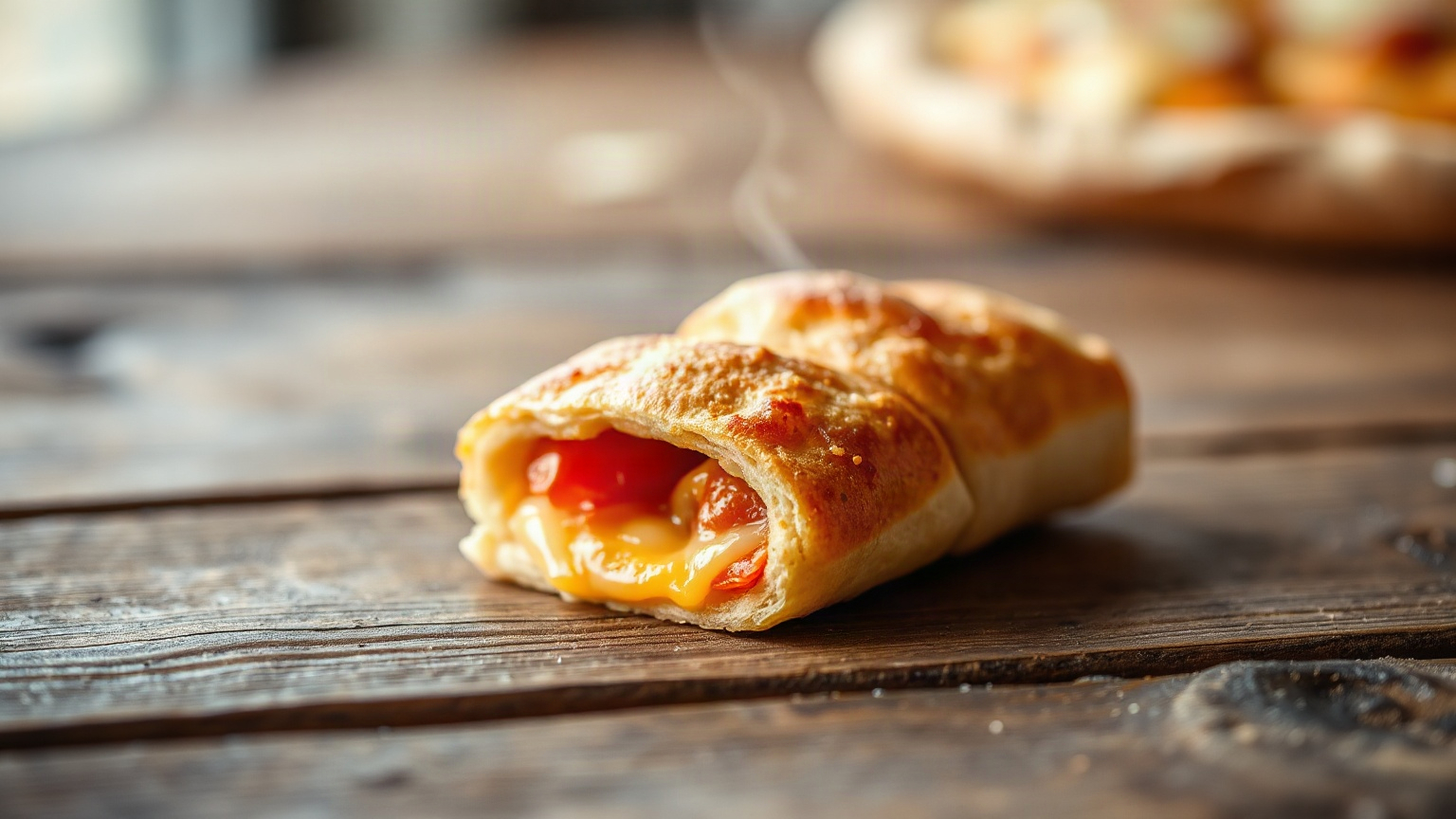
Pizza rolls look simple. Frozen little dough pockets. How hard can it be? But there’s a narrow window between “still cold in the middle” and “erupting lava pocket that burns the roof of your mouth and leaves a cheesy crater on your pan.” I’ve hit both extremes more times than I’d like to admit.
The challenge is that the filling heats up faster than the dough shell. So by the time the outside looks golden, the inside has been boiling for a minute already. The seams are weak. Push that too far and you’ve got a mess. The goal is a shell that’s fully cooked and snappy on the outside, with filling that’s hot and molten but contained.
That’s why cooking method actually matters here. It’s not just about convenience. The way heat circulates around the roll — and from which direction — affects whether you end up with a crispy little pillow or a deflated, greasy splat.
Air Fryer: The Case For It
I’ll be direct: the air fryer is my go-to for pizza rolls. The circulating hot air hits them from all sides, so the whole surface crisps up evenly. You don’t get that one soft, pale underside you sometimes see with oven methods.
Settings and Timing
I cook them at 380°F for 6 minutes, shake the basket once at the 3-minute mark, then check. If they’re not quite golden, I give them another 90 seconds. That’s it. The shake is not optional — the ones that sit still the whole time get one soft spot where they were touching the basket.
Don’t go higher than 390°F. I tried 400°F once thinking it’d be faster, and three of them exploded within the first four minutes. The outside cooked so fast it locked in the pressure before the seams had time to soften properly. 380°F is the sweet spot.
The Overcrowding Problem
Single layer. This is non-negotiable. When I stack them, the ones on top get crispy and the ones underneath get steamed. Steamed pizza rolls are not good. They’re soft, slightly rubbery, and sad. If you’ve got a crowd to feed, cook in batches.
Most standard air fryer baskets hold about 15–20 rolls comfortably in a single layer. That’s usually enough for a snack. If you need more than that, you’ll be doing multiple rounds, which is where the toaster oven starts to look more practical.
Which Air Fryer Models Work Best
Not all air fryers are equal here. The Ninja Foodi and Cosori Pro Air Fryer both have good basket sizes and consistent heat distribution — I’ve tested both and they handle pizza rolls well without hot spots that lead to uneven cooking. Drawer-style air fryers with a mesh basket tend to outperform the oven-style ones for this specific task, because the airflow underneath the food is better.
If you’re using a toaster oven with an air fry mode (like the Breville Smart Oven Air Fryer or Cuisinart TOA-70), you’ll still get good results, but it’s slightly closer to the toaster oven experience than a dedicated basket fryer. Good, just not quite the same crunch.
Toaster Oven: When It Actually Makes More Sense
The toaster oven is slower, but it’s not bad. And for certain situations it’s actually the better choice.
Settings and Timing
Set it to 400°F, convection if you have it. Preheat for about 3 minutes first. Then cook for 10–12 minutes, flipping or rotating the rolls halfway. The convection setting makes a noticeable difference — it speeds things up and helps with crisping. Without convection, add another 2 minutes and accept slightly softer skins.
Use a wire rack rather than the flat baking tray. Elevating the rolls — wait, I mean getting them off the solid surface — lets hot air circulate underneath and prevents the bottom from going soggy. First time I made them in a toaster oven I just threw them on the tray. The bottoms were pale and chewy. Not great.
You can also check out more tips on reheating food in a toaster oven if you’re new to getting the most out of yours.
Batch Size Advantage
This is where the toaster oven genuinely wins. A standard 6-slice toaster oven can fit 25–30 pizza rolls in a single layer with room to spare. For feeding a group, that matters. You’re not running back-to-back batches — everyone eats at the same time, which is worth something.
If you’re shopping for a toaster oven that can handle bigger batches, the best mini toaster ovens guide has a few solid options in different size categories.
Head-to-Head Comparison
| Factor | Air Fryer | Toaster Oven |
|---|---|---|
| Cook time (from frozen) | 6–8 minutes | 10–13 minutes |
| Crispiness | Excellent — all-over crunch | Good — slightly softer bottom |
| Blowout risk | Low at 380°F, higher above 390°F | Low — gentler, more even heat |
| Batch size | 15–20 rolls (single layer) | 25–30 rolls |
| Preheat needed | 1–2 minutes | 3–5 minutes |
| Cleanup | Easy (basket wash) | Medium (rack + tray) |
| Best for | Small batches, max crunch | Bigger groups, less fuss |
How to Avoid the Exploding Pizza Roll Problem
Both methods can lead to blowouts if you’re not careful. Here’s what I’ve learned the hard way.
Don’t thaw them first. I know that sounds counterintuitive, but thawed pizza rolls have a different internal pressure dynamic — the filling gets loose and runny before the skin has time to firm up. Straight from frozen is the right call.
Don’t use cooking spray in the air fryer basket if the rolls already have oil on them (and most brands do). Extra oil in a hot, enclosed space creates more smoke and can accelerate cooking in uneven ways. The rolls have enough fat to crisp without help.
And don’t walk away. These aren’t set-and-forget foods. The difference between perfect and exploded is about 90 seconds at high heat. Check them at the minimum time and add from there.
For more context on how high these appliances actually run, it’s useful to understand how hot a toaster gets at different settings — the temperatures involved here are genuinely high enough to cause serious burns.
Serious Eats has a good breakdown of why resting food after cooking matters, and the same principle applies here — letting pizza rolls sit for 60 seconds after cooking lets the internal pressure settle and dramatically reduces the chance of burning your mouth on molten filling.
My Honest Pick
If I’m making pizza rolls for myself or one other person, I’m using the air fryer. Every time. The speed, the texture, the way they come out all-over golden — it’s just better. 380°F, 6–8 minutes, single layer, one shake. Done.
But if I’m making them for a group — game night, kids’ birthday, whatever — the toaster oven is the smarter move. I’d rather have 30 decent rolls ready at the same time than 15 perfect ones coming out in staggered waves while people stand around waiting.
The USDA’s safe internal temperature guidelines note that fully cooked, commercially frozen products like pizza rolls just need to reach a safe serving temperature — which both methods handle fine. The question really is just about texture and batch size.
One more thing: if you’re constantly oscillating between these two appliances and thinking about getting a combo unit, the Breville Smart Oven Air Fryer Pro is genuinely good at both tasks — it’s the one I’d buy if I had to pick just one appliance. The Cuisinart TOA-70 is a solid mid-range option too. Both handle pizza rolls well in air fry mode.
Frequently Asked Questions
What temperature do you cook frozen pizza rolls in an air fryer?
380°F is the right temperature for frozen pizza rolls in an air fryer. Higher than 390°F increases the risk of blowouts before the dough has fully set. Cook for 6–8 minutes, shaking the basket once at the halfway point.
Can you cook frozen pizza rolls in a toaster oven?
Yes — set it to 400–425°F and cook for 10–13 minutes, using a wire rack rather than a flat tray so the bottoms don’t go soggy. Convection mode helps a lot if your toaster oven has it. Flip them halfway through for even crisping.
Why do my pizza rolls explode in the air fryer?
The most common cause is cooking at too high a temperature — above 390°F, the outside sets and seals before the internal pressure can release gradually. Overcrowding also causes uneven heat that can lead to blowouts on some rolls while others undercook. Stick to 380°F and a single layer.
How many pizza rolls fit in an air fryer?
Most standard 5–6 quart air fryer baskets fit 15–20 pizza rolls in a single layer, which is the maximum you should cook at once. Stacking or overlapping them leads to steaming rather than crisping, and the results are noticeably worse.
Is an air fryer or toaster oven better for frozen snacks overall?
For small batches of anything you want crispy — pizza rolls, mozzarella sticks, tater tots — the air fryer produces better texture faster. A toaster oven is the better choice for larger quantities or anything that benefits from more even, surrounding heat, like a small frozen pizza or anything in a baking dish.

Written by
Emma founded Toastera to turn vague appliance advice into clear, researched, safety-first guidance on toasters and toaster ovens.
Free: the Toaster Oven Cheat Sheet
Get the printable cheat sheet (temps, cook times & safety tips) plus new recipes. No spam, unsubscribe anytime.