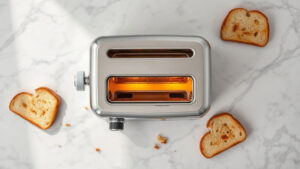
The best 4-slice toaster for most households is the Breville Die-Cast 4-Slice — it toasts evenly, handles thick bread without drama, and lasts. But if your budget is tight or your counter space is limited, there are real alternatives worth knowing about. I tested three specific models over several weeks to give you a straight answer based on actual use, not spec sheets.
Safety First: Toaster heating elements reach temperatures between 700°F and 1,200°F internally. Never operate a toaster near water, never insert metal utensils to retrieve stuck bread, and always unplug the unit before cleaning or clearing a jam. Keep the toaster at least 4 inches from curtains, cabinets, or anything flammable. Empty the crumb tray weekly — built-up crumbs are a genuine fire hazard.
Quick Takeaways Before You Read Further
- A 4-slice toaster is worth buying if your household regularly feeds 3 or more people at breakfast, or if you batch-toast for meal prep.
- Slot width matters more than most buyers realize — standard slots (~1.2 inches) will frustrate you if you bake your own sourdough or buy thick Texas toast.
- The Breville Die-Cast 4-Slice hits the sweet spot for quality and longevity; the Hamilton Beach 4-Slice is the honest pick for budget households; and the Cuisinart CPT-435 is the one to consider if you want something in between with a little more style.
- All three models tested here use 1,500–1,800 watts, which is fairly typical — you can learn more about how hot a toaster gets internally if you want the full picture on heat output.
- Crumb tray design is the most-overlooked feature. I mention it for each model because cleaning a bad one is genuinely annoying.
Why 4-Slice? And Who Actually Needs One
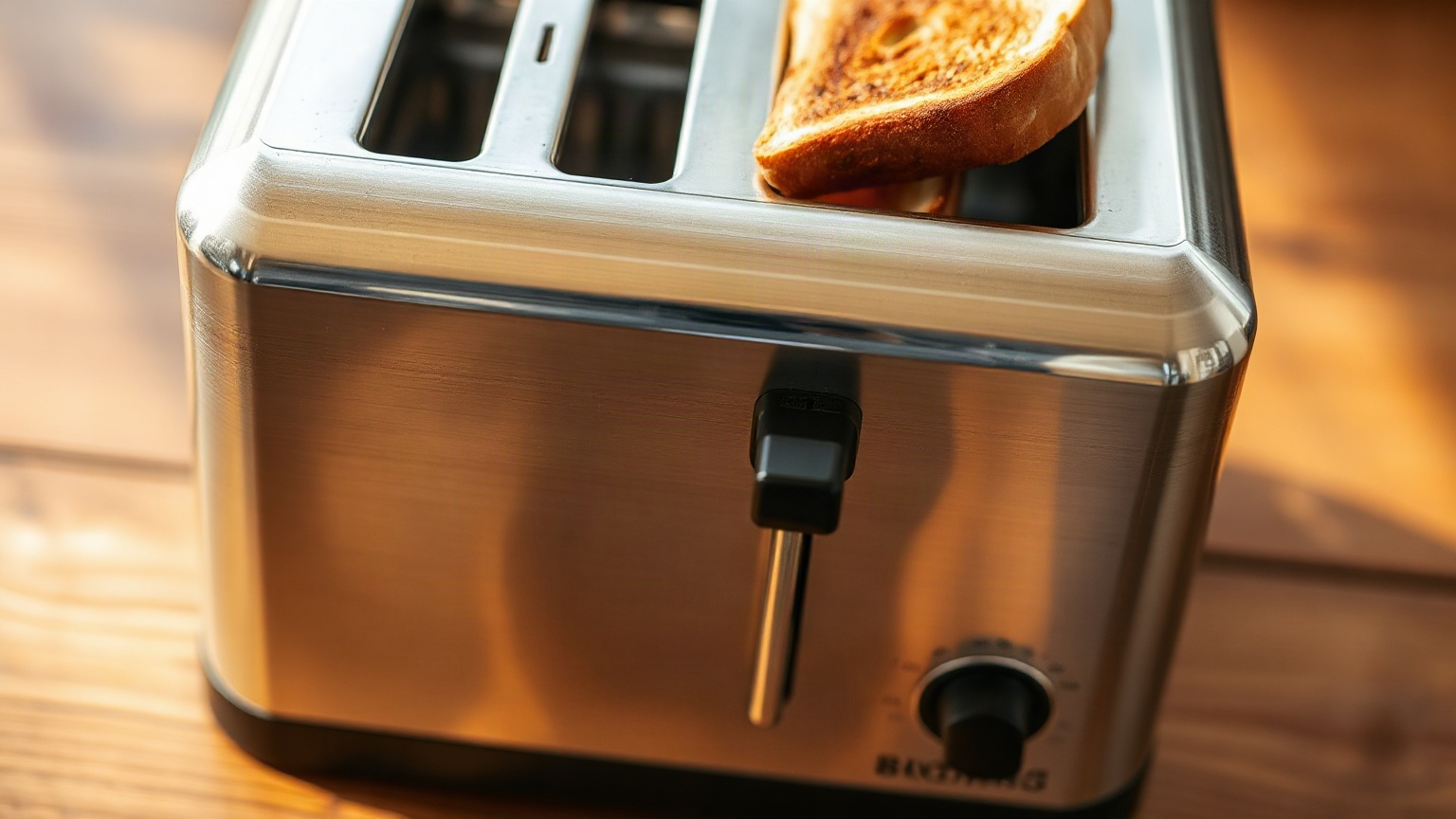
Honest answer: not everyone does. If you’re solo or living with one other person and you eat toast maybe twice a week, a 2-slice is probably fine. But the moment you’re feeding a family of three or more on a weekday morning — or you batch-toast English muffins on Sunday and refrigerate them — the 4-slice format stops feeling like a luxury. It’s just practical.
The other case people don’t talk about: small offices. I’ve seen a Hamilton Beach 4-slice sitting on the break room counter at two different workplaces, and honestly, it made total sense. Quick turnaround, wide slots, simple controls. Nobody needs a precision toasting experience at 8:47 a.m. before a meeting.
One thing worth flagging: 4-slice toasters take up considerably more counter real estate than 2-slice models. Before you buy, measure your counter. The Breville Die-Cast 4-Slice, for instance, is about 12 inches wide and 8 inches deep. That’s not huge, but it’s not nothing either.
The Three Models I Actually Tested
I ran each of these for at least two weeks in my own kitchen. Standard white sandwich bread, a thick-cut sourdough I get from the farmers market, frozen waffles (my guilty secret), and English muffins. I looked at evenness, speed, slot depth, the crumb tray situation, and how annoying — or not — the controls are at 6:30 a.m.
Hamilton Beach 4-Slice Toaster — Budget Pick
This is the Hamilton Beach 4-slice toaster most people have seen at Walmart or Target. It’s not glamorous. The plastic housing feels exactly like what it is. But here’s the thing — it works. Set it to a 4 out of 6 for standard sandwich bread and you’ll get consistent, medium-golden toast every time.
The slots are on the narrow side (roughly 1.25 inches), which meant my sourdough required a firm push-down that felt slightly wrong. It handled it fine, but it’s a tight fit. Frozen waffles slid in without issue.
The crumb tray pulls out from the bottom — one piece, slides the full length. Easy to clean. I appreciated that more than I expected to.
My main complaint: the cancel button requires an almost aggressive press. I missed it twice the first morning. Not a dealbreaker, just a minor irritant.
Price tier: budget. This is the pick if you need a functional, no-fuss 4-slice and you’re not looking to spend more than $30–$40.
Cuisinart CPT-435 4-Slice Toaster — Mid-Range Pick
The Cuisinart CPT-435 is a step up in every visible way. Stainless steel exterior, slightly wider slots (around 1.5 inches), and a bagel function that actually works — it toasts the cut side and just warms the outer crust, which is how it should be done. I’ve used other toasters that claim a bagel function and basically just toast both sides normally. Not this one.
Speed was noticeably better than the Hamilton Beach — about 20 seconds faster on the same setting for the same bread. Whether that matters at breakfast is debatable, but it was measurable.
The crumb tray is two separate pieces, one per pair of slots. That annoyed me slightly because you have to remember to clean both. But it’s not a serious issue.
This is the one I’d recommend for someone upgrading from a cheap toaster for the first time, or for a household of 3-4 where aesthetics matter a little. It looks genuinely nice on the counter.
Price tier: mid-range. Typically $50–$80.
Breville Die-Cast 4-Slice Toaster — Premium Pick
The Breville Die-Cast 4-Slice is, frankly, a different category of toaster. The die-cast metal housing feels almost heavy in a reassuring way. The slots are wide (up to 1.7 inches), and there’s a “Lift and Look” function that lets you peek at your toast mid-cycle without resetting the timer. That sounds minor until you’re trying to perfectly toast a thick slice and you’ve burned it three times previously on other machines.
The “A Bit More” button is something I use almost every day now. One press adds a short burst of heat after the cycle finishes — useful when I want just slightly more color on something but don’t want to restart entirely. First time I tried it, I held it too long and activated it twice. Don’t do that.
Evenness across all four slots was the best of the three. No pale corners, no hot spots. That’s partly the build quality and partly the consistent wattage regulation (this model runs at 1,800 watts).
The crumb tray is one wide piece that slides out cleanly. Good design.
Price tier: premium. Usually $100–$150. Worth it if you toast daily and plan to keep the machine for 5+ years. Not worth it if you toast occasionally.
Side-by-Side Comparison
| Feature | Hamilton Beach 4-Slice | Cuisinart CPT-435 | Breville Die-Cast 4-Slice |
|---|---|---|---|
| Price Tier | Budget ($30–$40) | Mid-range ($50–$80) | Premium ($100–$150) |
| Slot Width | ~1.25 inches | ~1.5 inches | ~1.7 inches |
| Wattage | ~1,500W | ~1,500W | ~1,800W |
| Bagel Function | Basic | Good (one-side focus) | Excellent |
| Crumb Tray | Single, full-length | Two separate pieces | Single, wide |
| Standout Feature | Simplicity, price | Speed, looks | Lift & Look, A Bit More button |
| Best For | Budget households, offices | Families of 3–4 | Daily users who want longevity |
The Edge Case Most Reviews Skip: Thick and Specialty Bread
Most toaster reviews test standard sandwich bread and call it done. But if you regularly buy artisan sourdough, bake your own bread, or eat brioche (no judgment), slot width becomes the whole conversation.
A 1.5-inch slot can handle most bakery loaves fine. A 1.25-inch slot will technically fit them, but you’re pushing hard and the bread makes contact with the heating element walls in a way that produces uneven results — sometimes one side gets noticeably darker. I saw this happen repeatedly with the Hamilton Beach when I used a wide sourdough slice. The toast was fine, but there was a distinct darker stripe on one side.
Gluten-free bread is another thing nobody mentions. GF loaves tend to be denser and hold more moisture, which means they need longer toast cycles or higher settings to avoid coming out soggy in the middle. On the Breville, I used setting 5 of 6 for a GF sandwich loaf — same bread came out underdone at setting 4. Your mileage will vary, but start higher than you think and adjust down.
If you’re into reheating food in a toaster oven for more complex tasks — reheating pizza, roasting small batches of vegetables — a slot toaster alone might not cut it and you’d want something more versatile. Worth thinking about before you buy.
My Honest Verdict: Which One Should You Actually Buy
If you want a single clear answer: get the Breville Die-Cast if you can afford it and you use a toaster regularly. It’s built to last, it toasts beautifully, and the small quality-of-life features (Lift and Look, the A Bit More button) genuinely earn their place after about the third day of use.
If the Breville’s price feels hard to justify, the Cuisinart CPT-435 is the move. It covers most households’ real needs — four slices at once, decent slot width, a bagel function that works — without asking you to spend $130.
And if you’re furnishing an office break room, buying a toaster for a college dorm situation, or just replacing a broken one with zero enthusiasm, the Hamilton Beach does the job without drama. It won’t impress anyone, but it won’t let anyone down either.
For anyone whose kitchen is already crowded, it might also be worth checking out the best mini toaster ovens — a small toaster oven can cover toast plus a dozen other cooking tasks, which sometimes makes the dedicated toaster redundant.
Serious Eats has a thoughtful breakdown of what makes toasters worth buying from a food-first perspective that’s worth reading if you’re still on the fence. And Food Network’s toaster roundup has useful notes on browning consistency across brands.
The Bottom Line
A 4-slice toaster is a simple appliance, but the difference between a good one and a frustrating one shows up every single morning. Spend where it makes sense for your household, pay attention to slot width if you eat anything other than standard sandwich bread, and clean the crumb tray more often than you think you need to. That last one is both a practical tip and, honestly, a fire safety thing. Don’t ignore it.
Frequently Asked Questions
What is the best 4-slice toaster for a family of 4?
The Breville Die-Cast 4-Slice is the best choice for a family of four that toasts daily. Its wide slots accommodate different bread types, it toasts all four slots evenly, and the build quality means it’ll handle years of heavy use without the housing warping or the controls becoming unreliable. The Cuisinart CPT-435 is a solid second if the Breville’s price is out of reach.
How hot does a 4-slice toaster get inside?
The heating elements in a standard 4-slice toaster reach between 700°F and 1,200°F during operation. The bread surface itself typically reaches 300°F–400°F, which is what produces browning through the Maillard reaction. You can read more detail about how hot a toaster gets if you want the full breakdown.
Is it safe to leave a 4-slice toaster plugged in?
Most modern toasters are safe to leave plugged in when not in use, but it’s not best practice. A plugged-in toaster can still pose a fire risk if there are crumb buildup or electrical faults, and it draws a small amount of standby power. Unplugging after use is the safest habit, particularly if you have children or pets in the kitchen.
What slot width do I need for thick bread?
For standard sandwich bread, slots of 1.25 inches work fine. For thick-cut artisan bread, brioche, or bakery sourdough, look for slots at least 1.5 inches wide — preferably closer to 1.7 inches. Forcing wide bread into narrow slots causes uneven toasting and can damage the bread’s crust on the sides that press against the heating elements.
How often should I clean my 4-slice toaster?
Empty the crumb tray at least once a week with regular use — more often if you toast daily or use bread that sheds a lot of crumbs (seeded loaves, for example). Built-up crumbs can catch fire when the heating elements activate. Wipe the exterior with a damp cloth monthly, and never use water inside the toaster or clean it while plugged in.

Written by
Emma founded Toastera to turn vague appliance advice into clear, researched, safety-first guidance on toasters and toaster ovens.
Free: the Toaster Oven Cheat Sheet
Get the printable cheat sheet (temps, cook times & safety tips) plus new recipes. No spam, unsubscribe anytime.